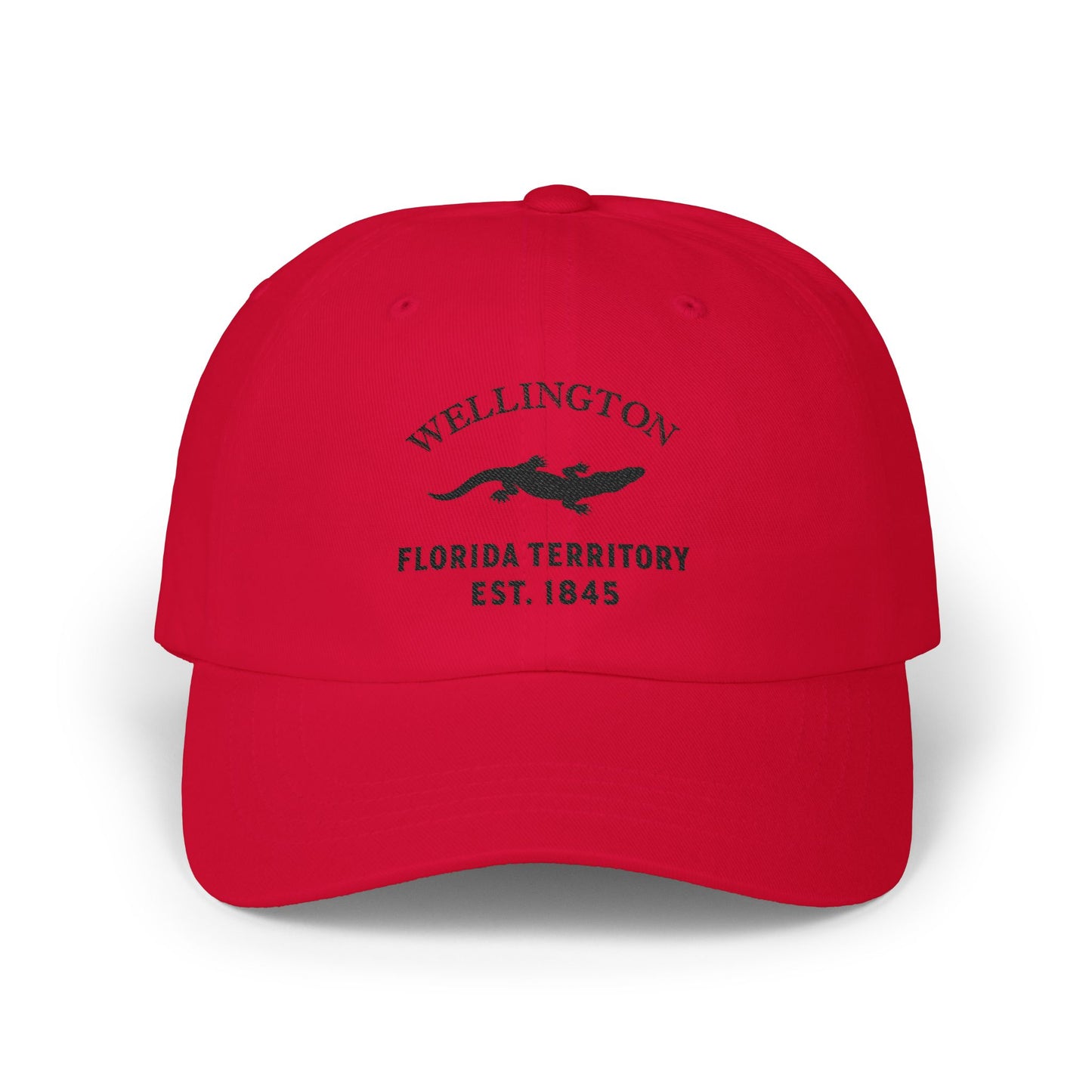
Wellington began as a Harvard accountant's joke about his own initials. In the 1950s a Massachusetts investor and aviator named Charles Oliver Wellington assembled some eighteen thousand acres of waterlogged Everglades-edge swampland in central Palm Beach County and named it the Flying Cow Ranch — "Cow" for his initials, C.O.W., and "Flying" because he flew his own planes, with a landing strip running along what is still called Flying Cow Road today. The land flooded constantly — its southwestern boundary is the Everglades itself — so in 1953 the Acme Drainage District was created to engineer the swamp into farmland, and the reclaimed acres grew citrus and, at their height, some two thousand acres of strawberries, claimed for a time as the world's largest strawberry patch. After Wellington's death in 1959 the ranch passed to his family and then to developers; Palm Beach County approved a planned community in 1972, and in 1977 polo arrived, and everything changed. Wealthy owners from nearby Palm Beach looked west for room to keep horses, build rings, and lay out polo fields, and the old strawberry country became horse country. The Village of Wellington incorporated on December 31, 1995, and in 2002 set aside thousands of acres as an Equestrian Preserve, threaded by dozens of miles of public bridle trails. Today, at the height of the winter season, tens of thousands of horses are stabled here, drawn by show jumping, dressage, and polo, and Wellington calls itself the Winter Equestrian Capital of the World. It is a town that lives on engineered land, where the high water table is never far below the footing and the old wetland logic still runs underneath the manicured rings — flat, subtropical, hurricane-country South Florida, where horses move with bright precision on land that remembers being water. From a Harvard aviator's Flying Cow Ranch and the world's largest strawberry patch to the horse country of South Florida, that is the unlikely arc of Wellington.
Wellington, Florida, began as swampy ranchland before developers drained sections in the mid-twentieth century. Its earliest history ties to cattle ranching, citrus farming, and wild marshes where settlers carved a living from challenging terrain. By the 1950s, Charles Oliver Wellington purchased thousands of acres, envisioning a planned community where equestrian culture and suburban life could flourish. Wellington’s founding reflected Florida’s broader story: taming wilderness through persistence and investment, while still shaped by the natural environment’s storms and floods. This unique balance of frontier resilience and ambition created a foundation for what would become a distinctive Florida town.
Why People Visit Wellington Florida
Wellington is the Winter Equestrian Capital of the World and one of South Florida's most distinctive towns: a place built on the reclaimed swampland of a Harvard aviator's Flying Cow Ranch, the one-time world's largest strawberry patch, now home to tens of thousands of horses every winter. It blends horse-country culture with Everglades-edge wildlife preserves and wetland parks — show jumping, dressage, and polo on one side, boardwalks and birdwatching towers on the other. From the C.O.W. ranch and the strawberry fields to the bridle trails and the polo grounds, history and everyday culture sit side by side. Strawberry patch to horse country. The winter capital of the riding world.