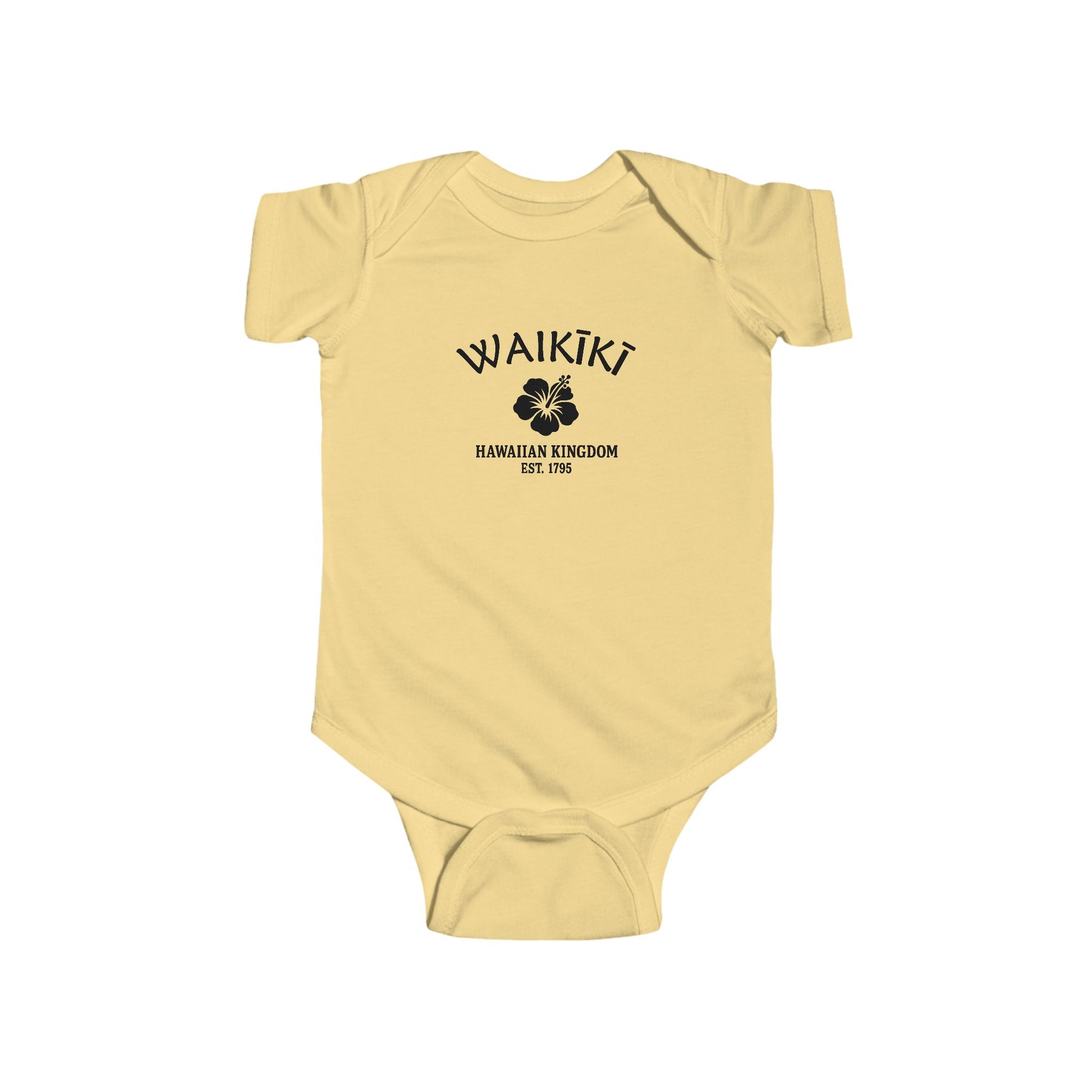
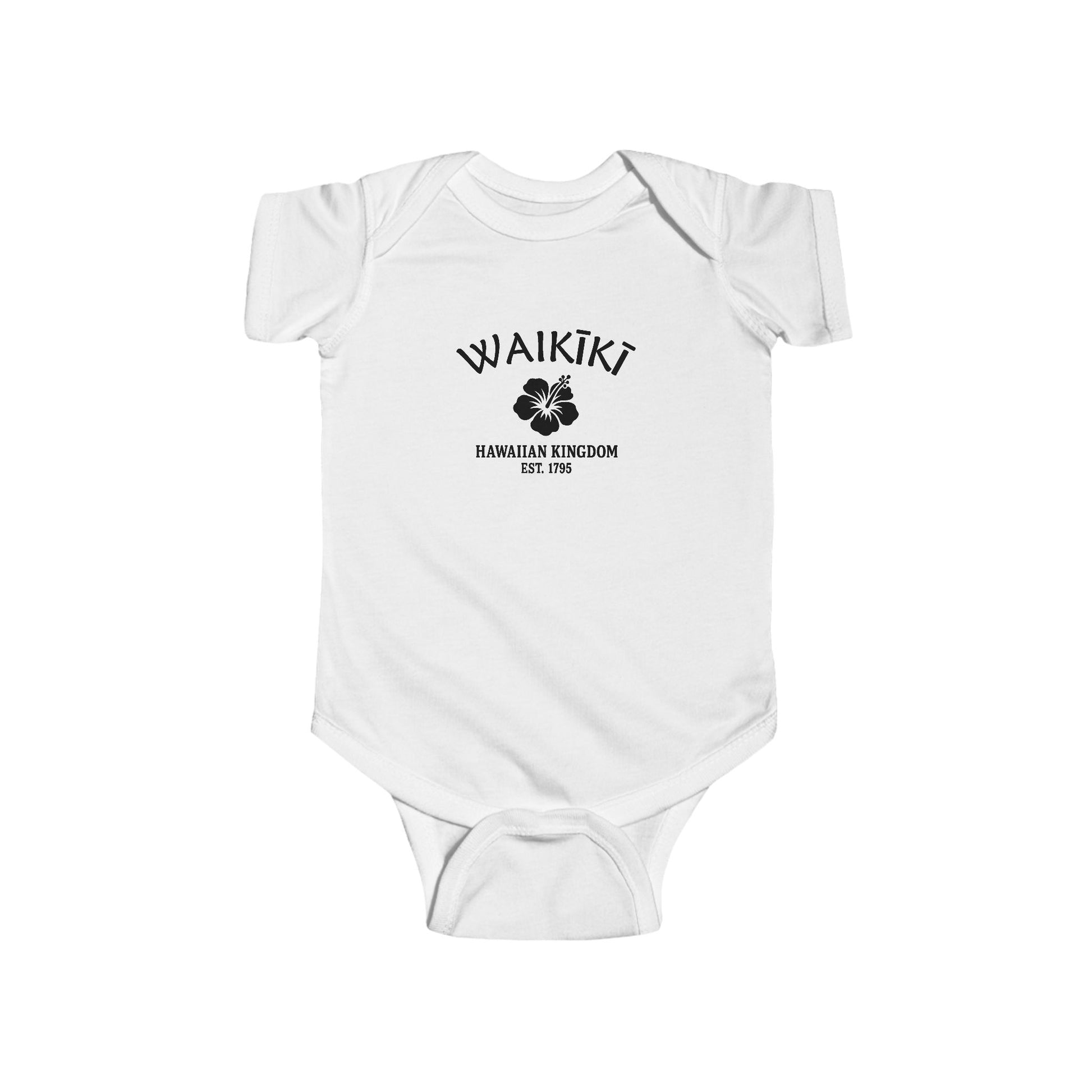
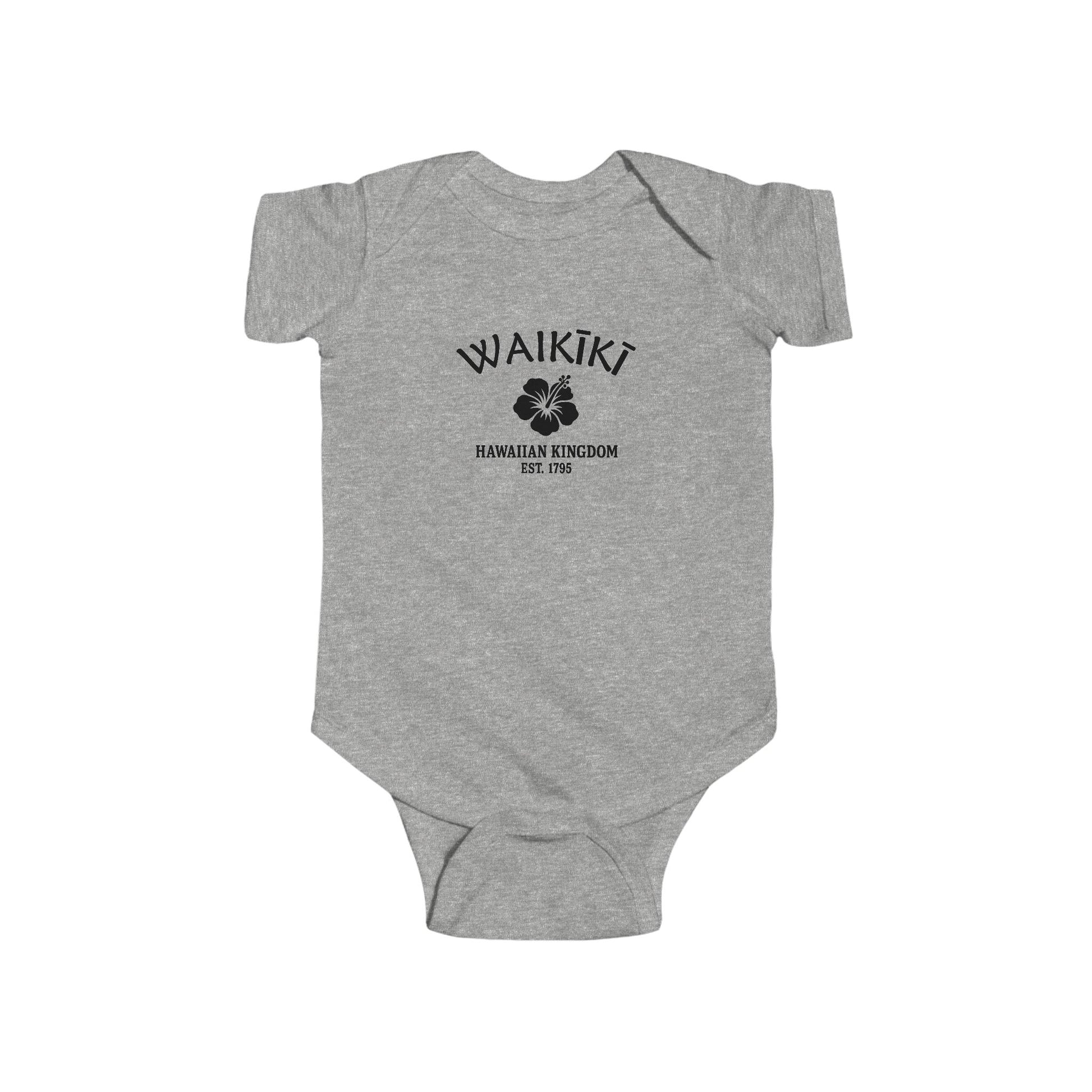
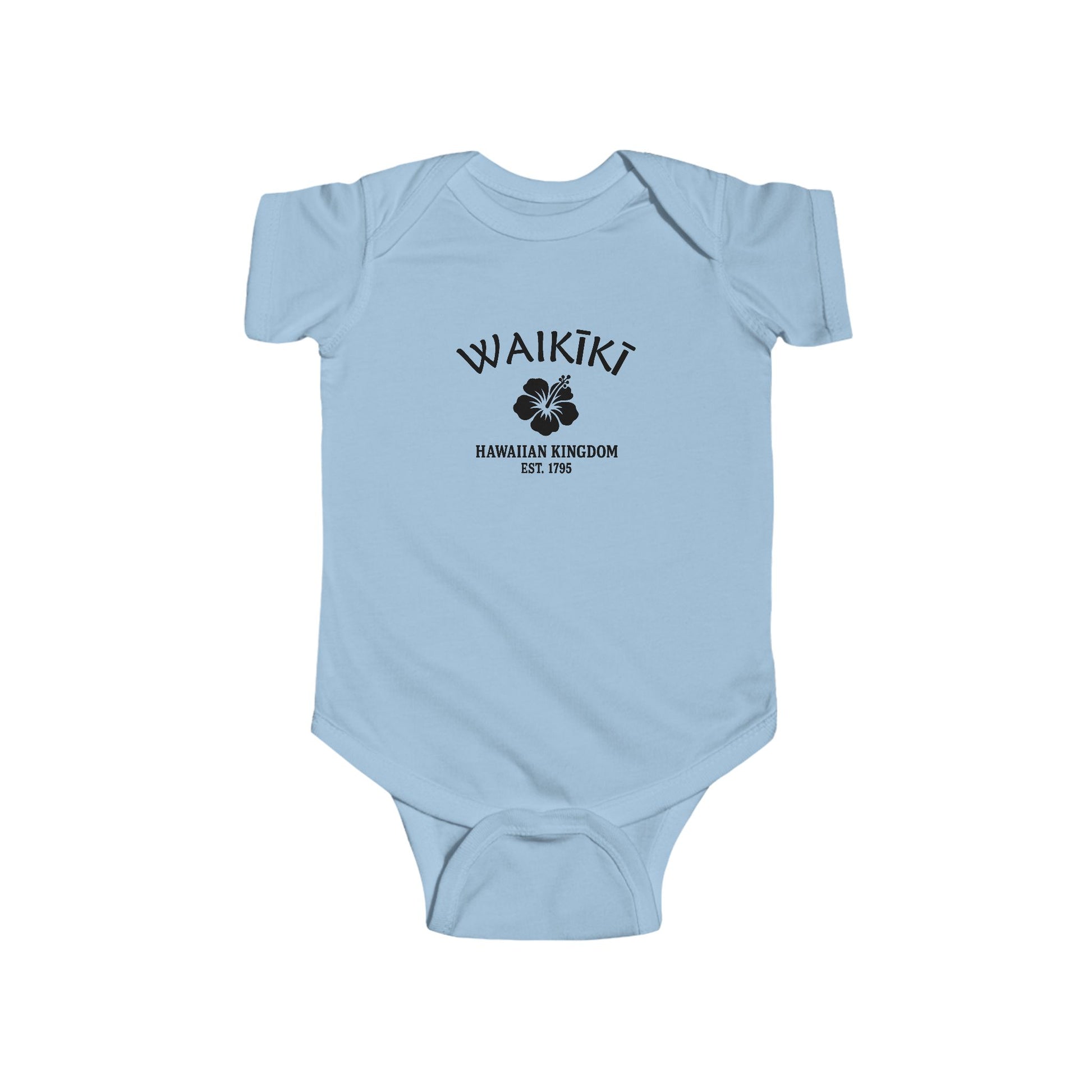
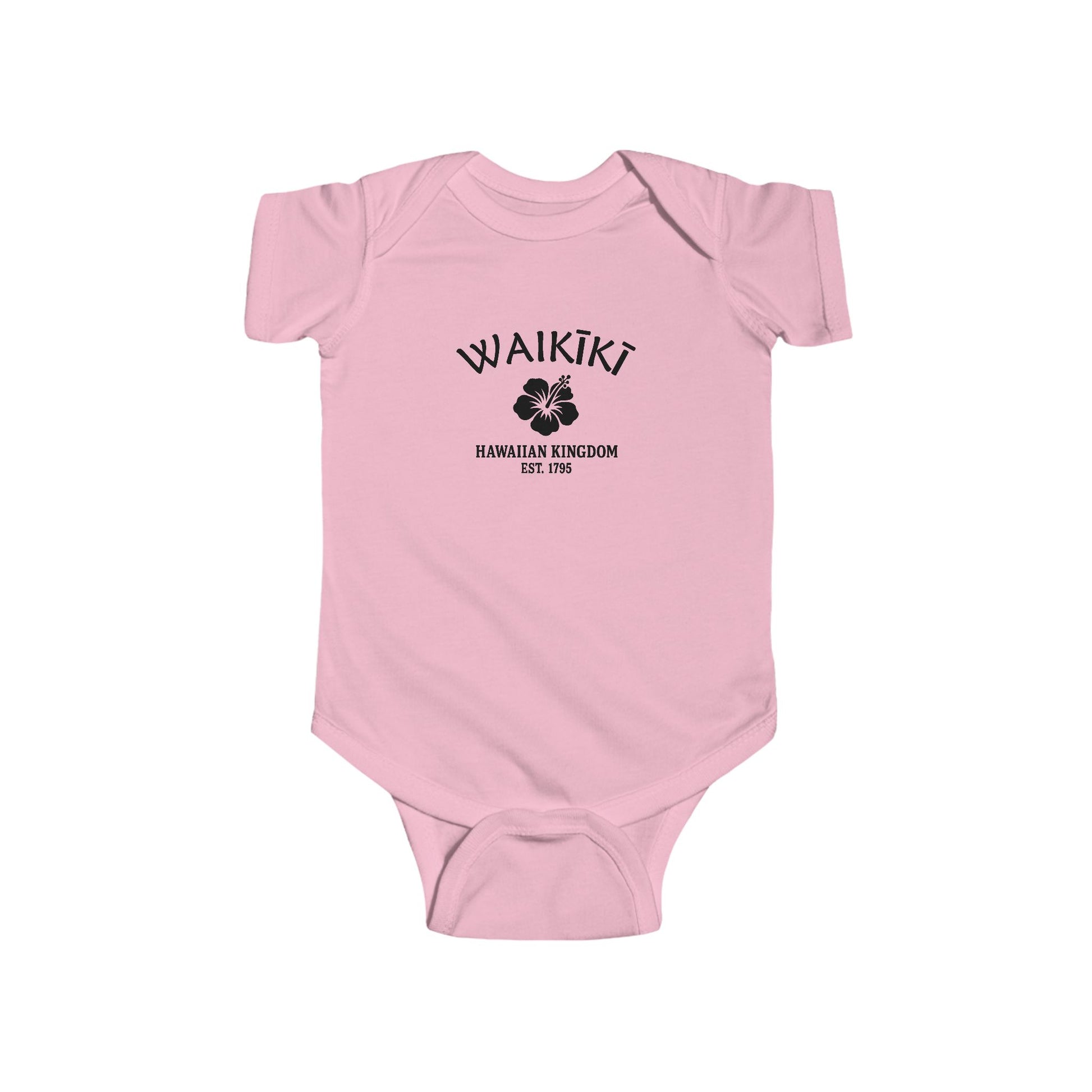
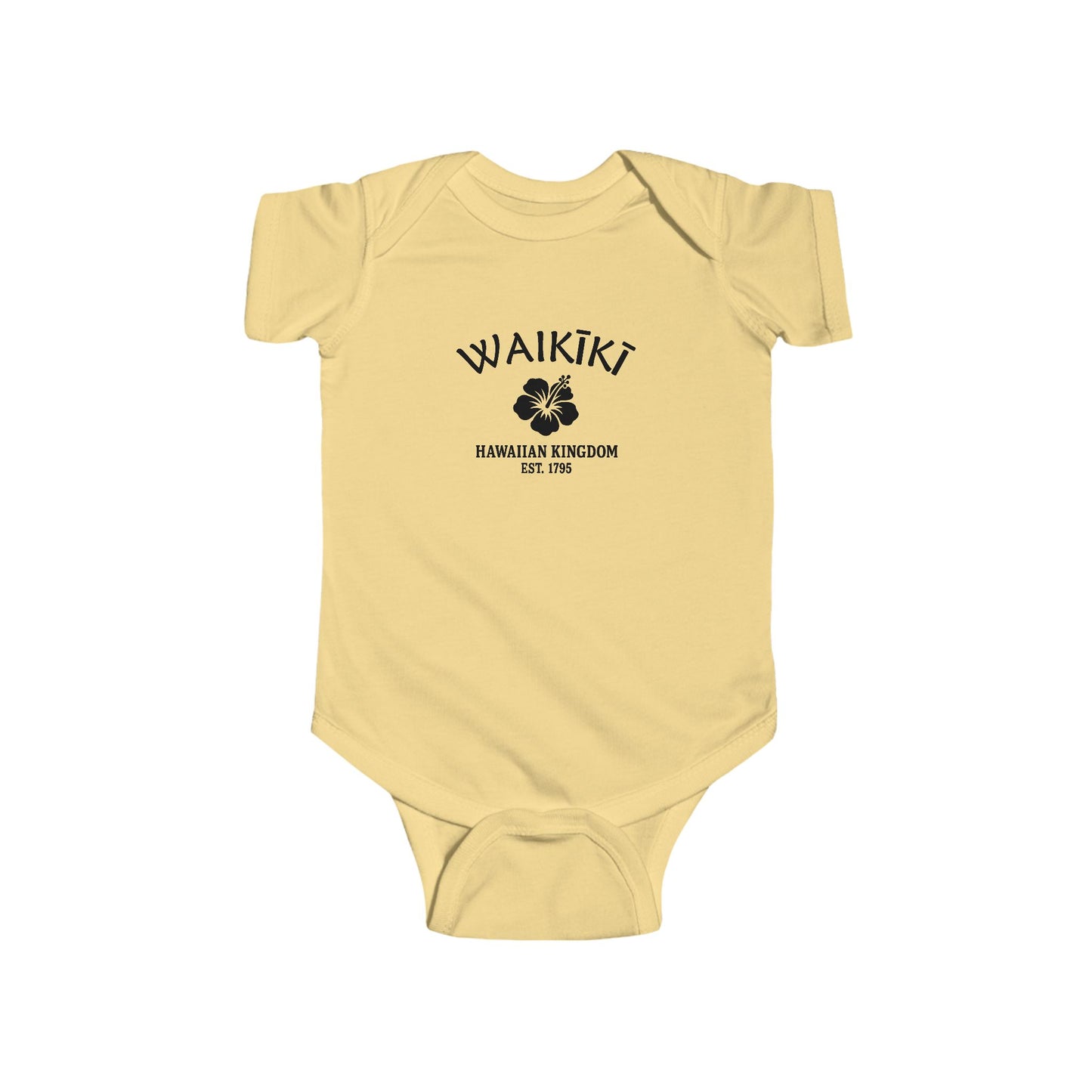
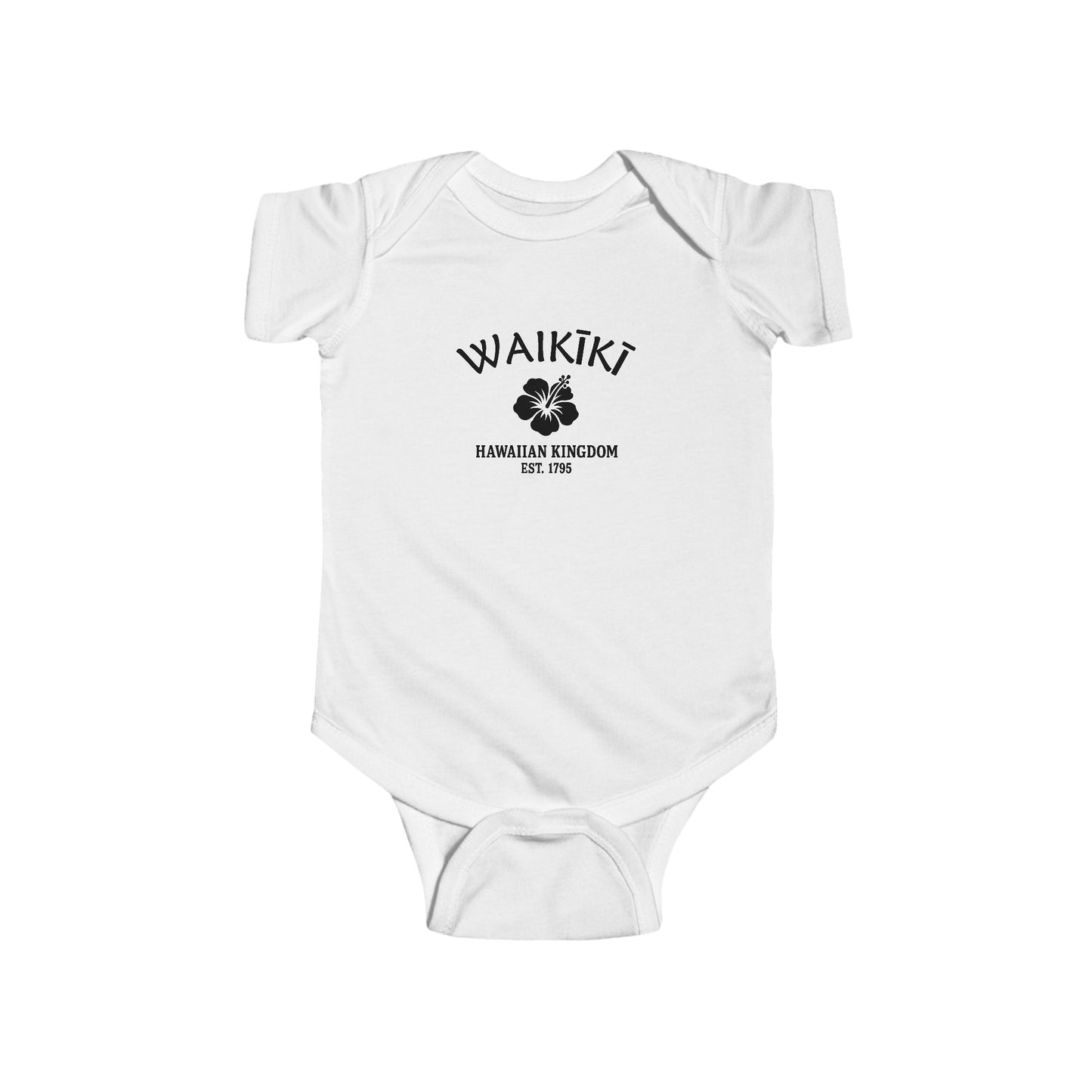
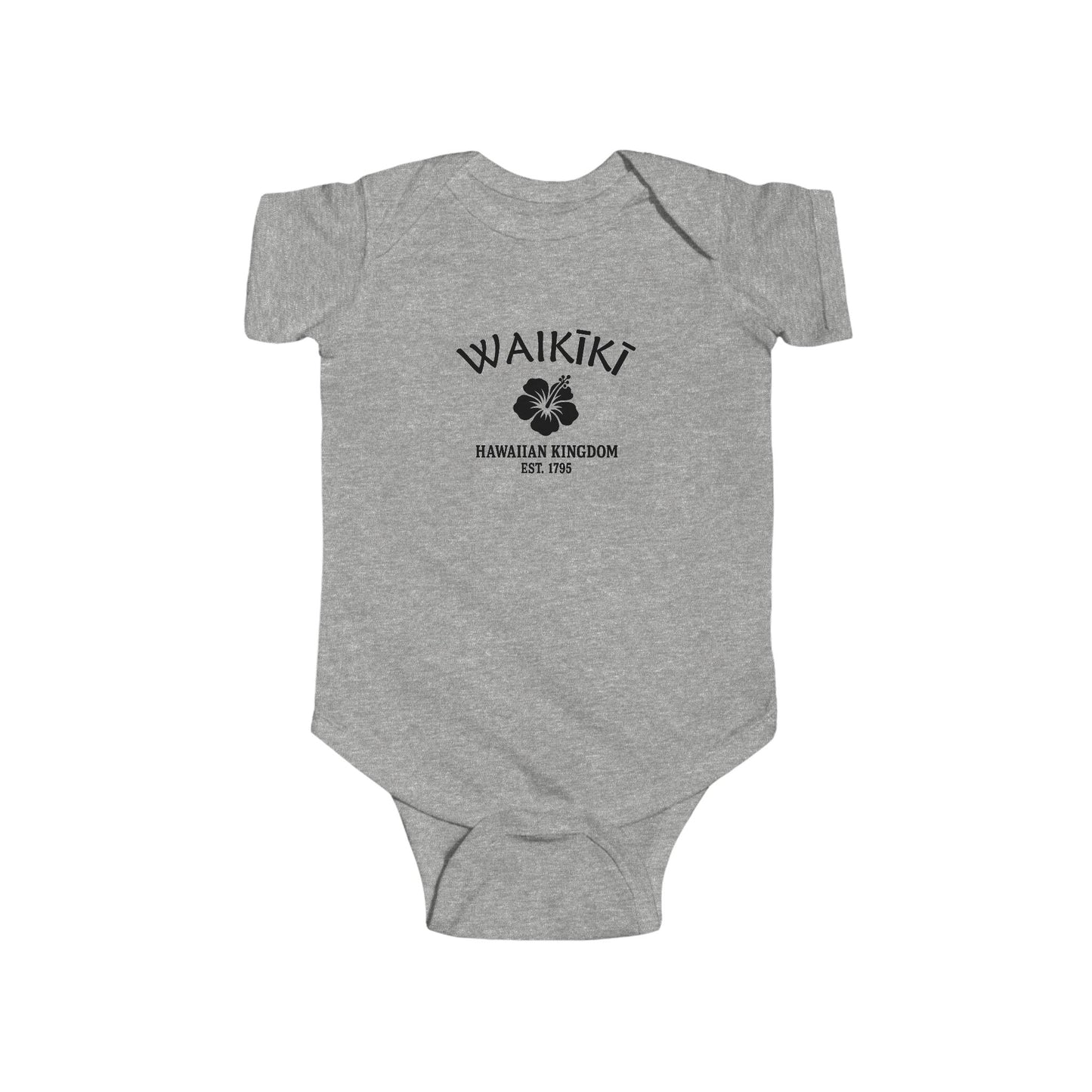
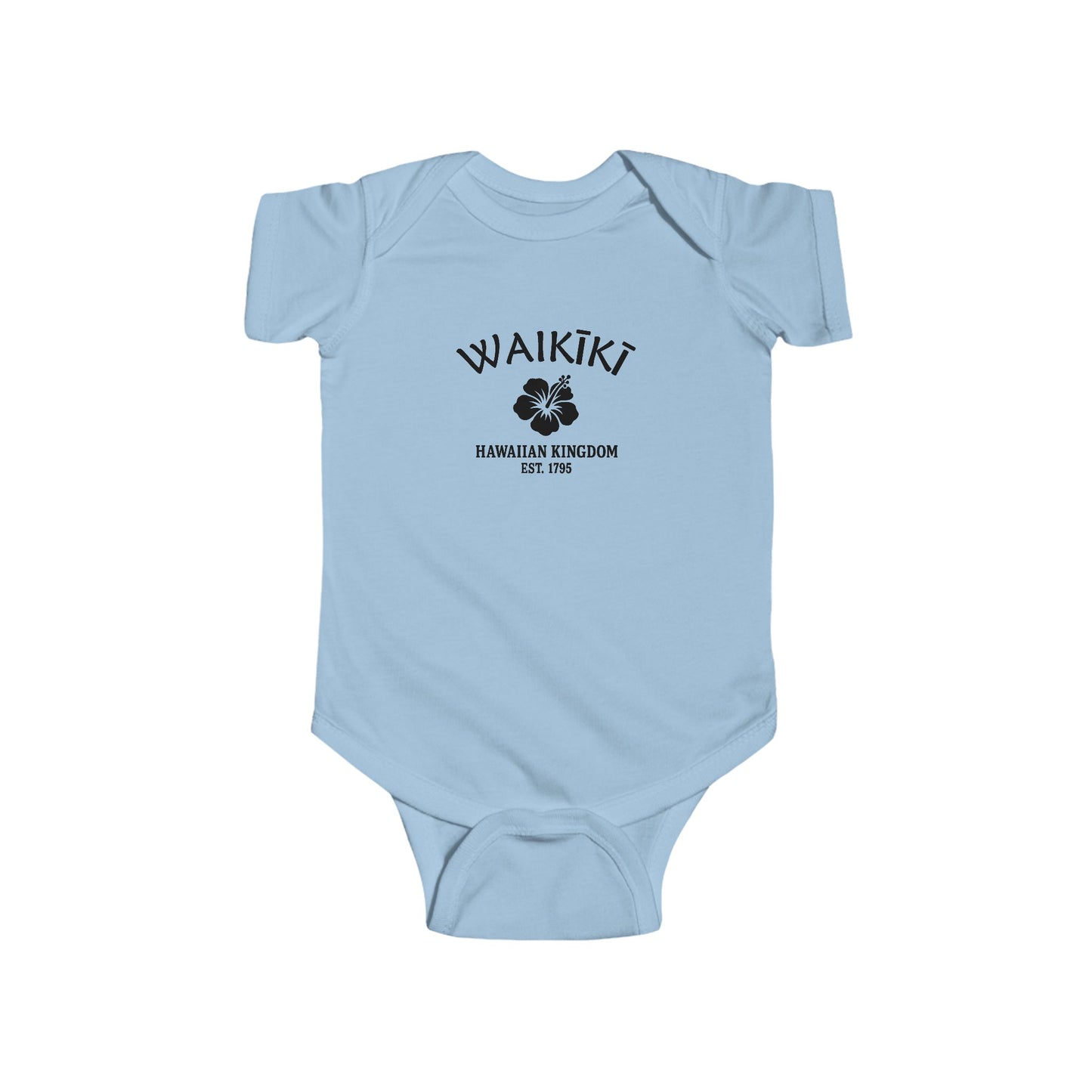
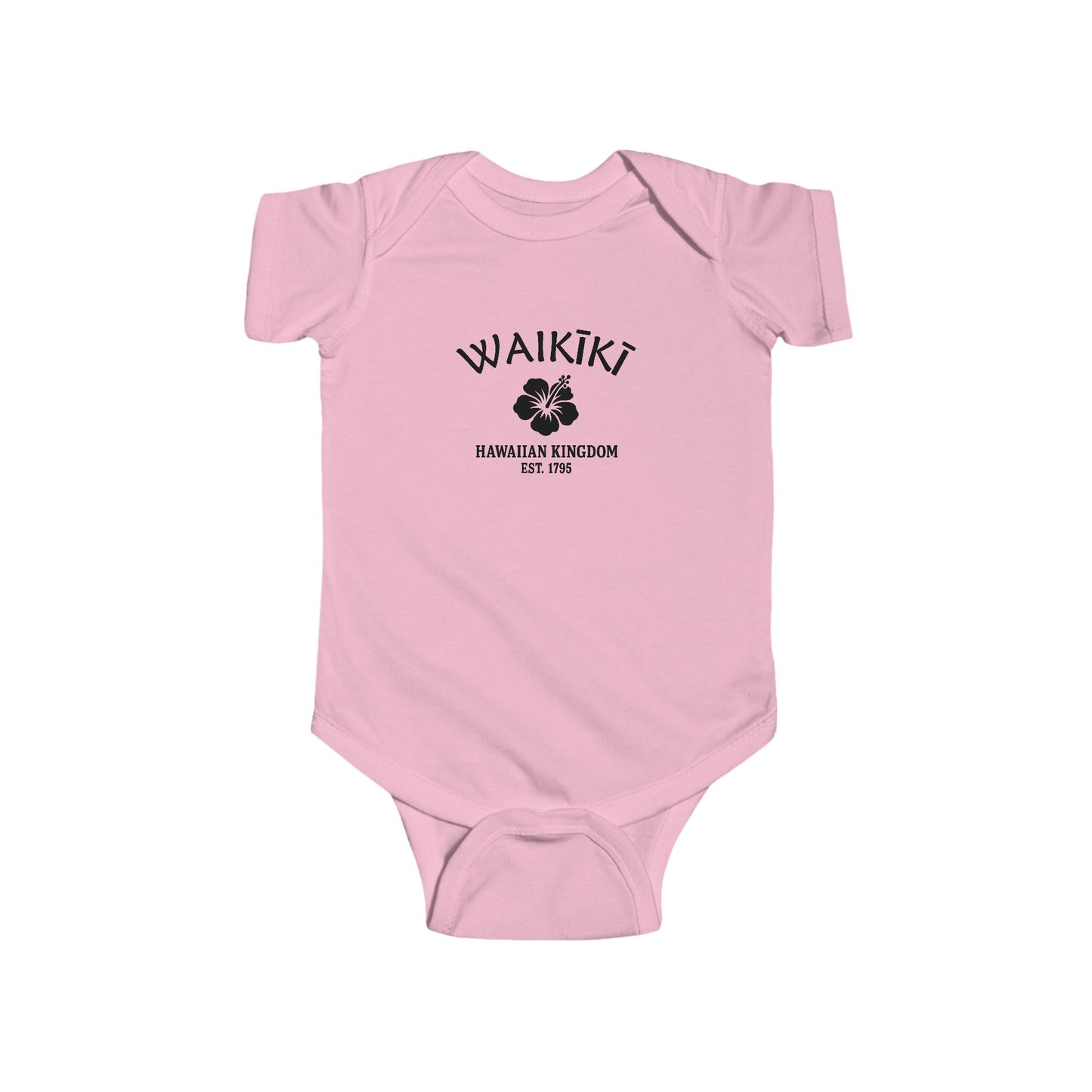
Our Waikīkī design wears the hibiscus, Hawaiʻi's flower, beneath the words “Hawaiian Kingdom · Est. 1795” — a date that belongs to Waikīkī more than to most, for this was the Kingdom's first capital in that founding year. Rendered in clean black and white, like an old travel decal or luggage label, it is a heritage mark — a nod to the islands' own story and to the deep Hawaiian identity of Waikīkī, the spouting waters. It is worn for the place and its people, not for any single chapter of its past.
From the mid-1400s, Hawaiians turned that wetland into one of the most productive landscapes in the islands. They built loʻi kalo — irrigated taro terraces — and loko iʻa, walled fishponds, laced together by ʻauwai (irrigation channels), raising taro, fish, and seaweed in steady abundance. Waikīkī was a breadbasket and a center of power: high chiefs kept residences and heiau here, drawn by the food, the fresh water, and the surf. At Kālia, on the western shore, a family of fishers and watermen worked the ponds — and among their descendants would be a boy named Duke Kahanamoku.
Why People Visit Waikīkī
Waikīkī offers a whole world in two miles of sand: the birthplace of modern surfing, royal history beneath the hotels, Diamond Head at the end of the beach, and the easy warmth of Hawaiian hospitality. It is the most famous beach in the Pacific — and for the surfers, paddlers, and families who live and gather here, simply home.
