


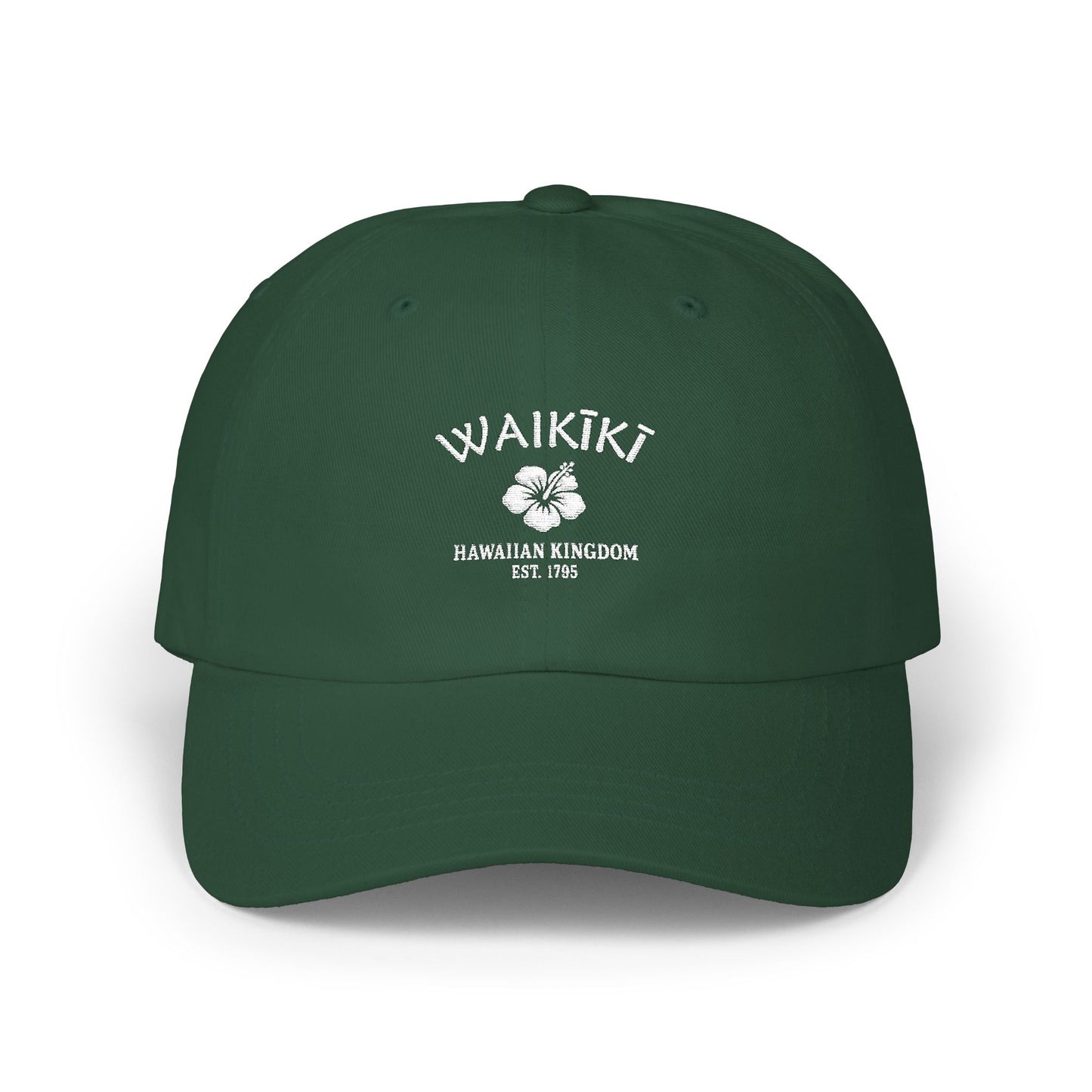
Today Waikīkī is where the world learns to surf. The royal sport the aliʻi rode here became a global one through Duke Kahanamoku, the Kālia boy turned Olympic champion, whose bronze statue now stands on the sand with arms spread wide in welcome. Outrigger canoes still launch through the breakers, hula and music drift from the beachfront, and beneath the towers the old name endures — Waikīkī, the spouting waters, a royal shore that taught the world to ride the waves. Our designs carry that older, deeper name with pride.
For centuries Waikīkī was the playground of the aliʻi, who rode its long, gentle waves on koa-wood longboards — heʻe nalu, the sport of kings, born on these very shoulders of surf. It was a seat of power, too. In 1794 Kamehameha landed his war canoes on this beach in the campaign that would unite the islands, and after his victory Waikīkī served as the young Kingdom's first capital, in 1795 and 1796. He built a home at Helumoa and, in 1809, moved his court here — to the same grove where the Pink Palace stands today.
Why People Visit Waikīkī
Waikīkī offers a whole world in two miles of sand: the birthplace of modern surfing, royal history beneath the hotels, Diamond Head at the end of the beach, and the easy warmth of Hawaiian hospitality. It is the most famous beach in the Pacific — and for the surfers, paddlers, and families who live and gather here, simply home.
