


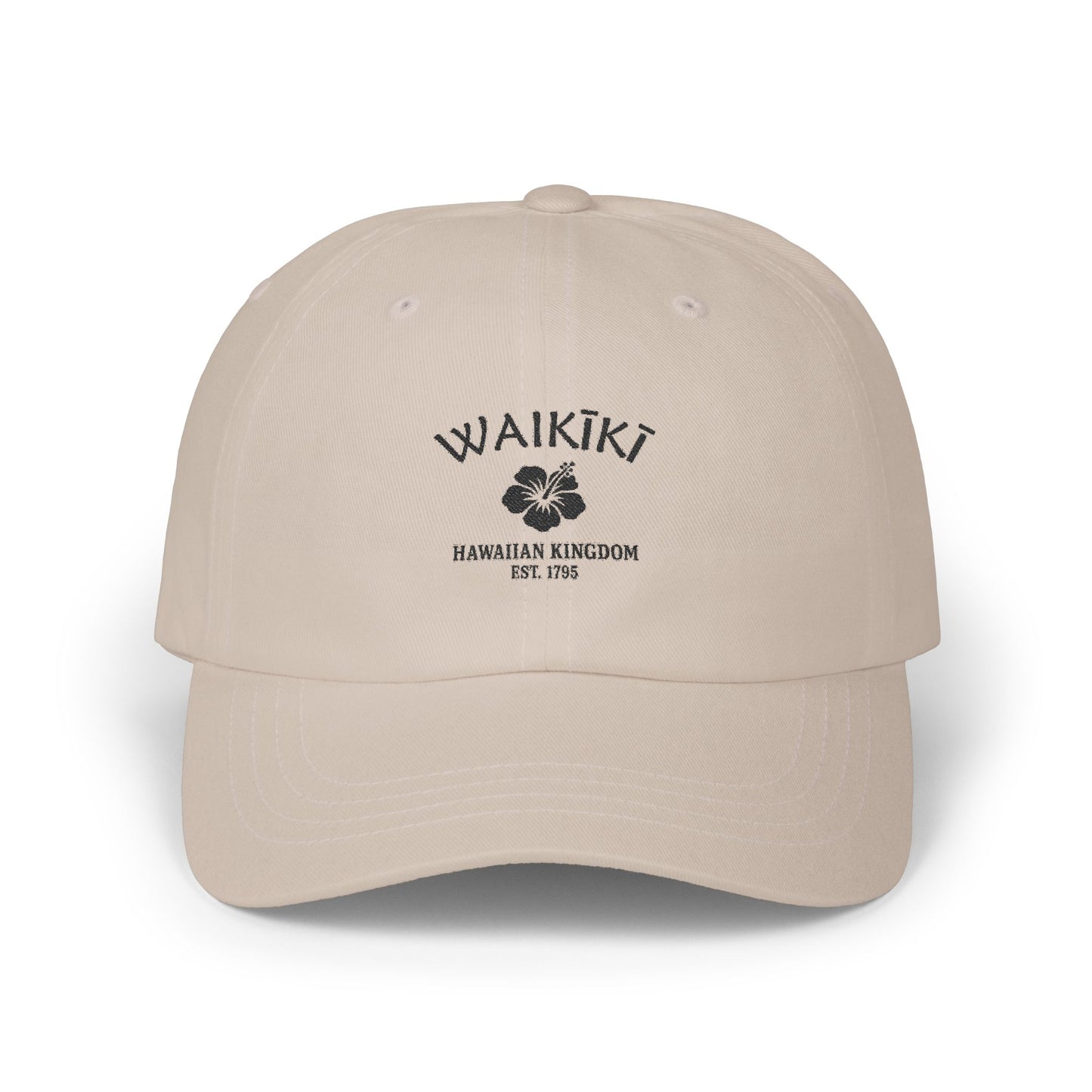
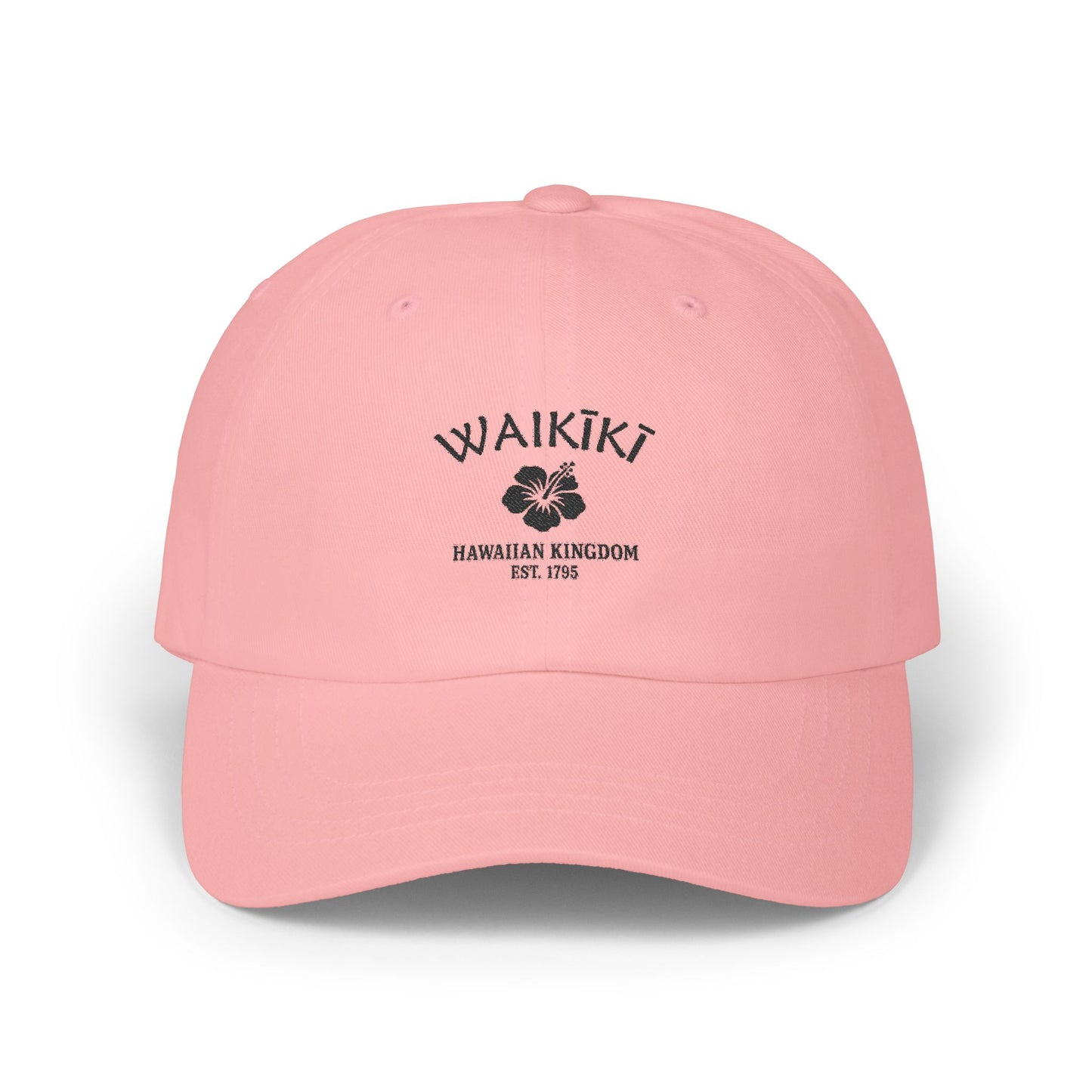
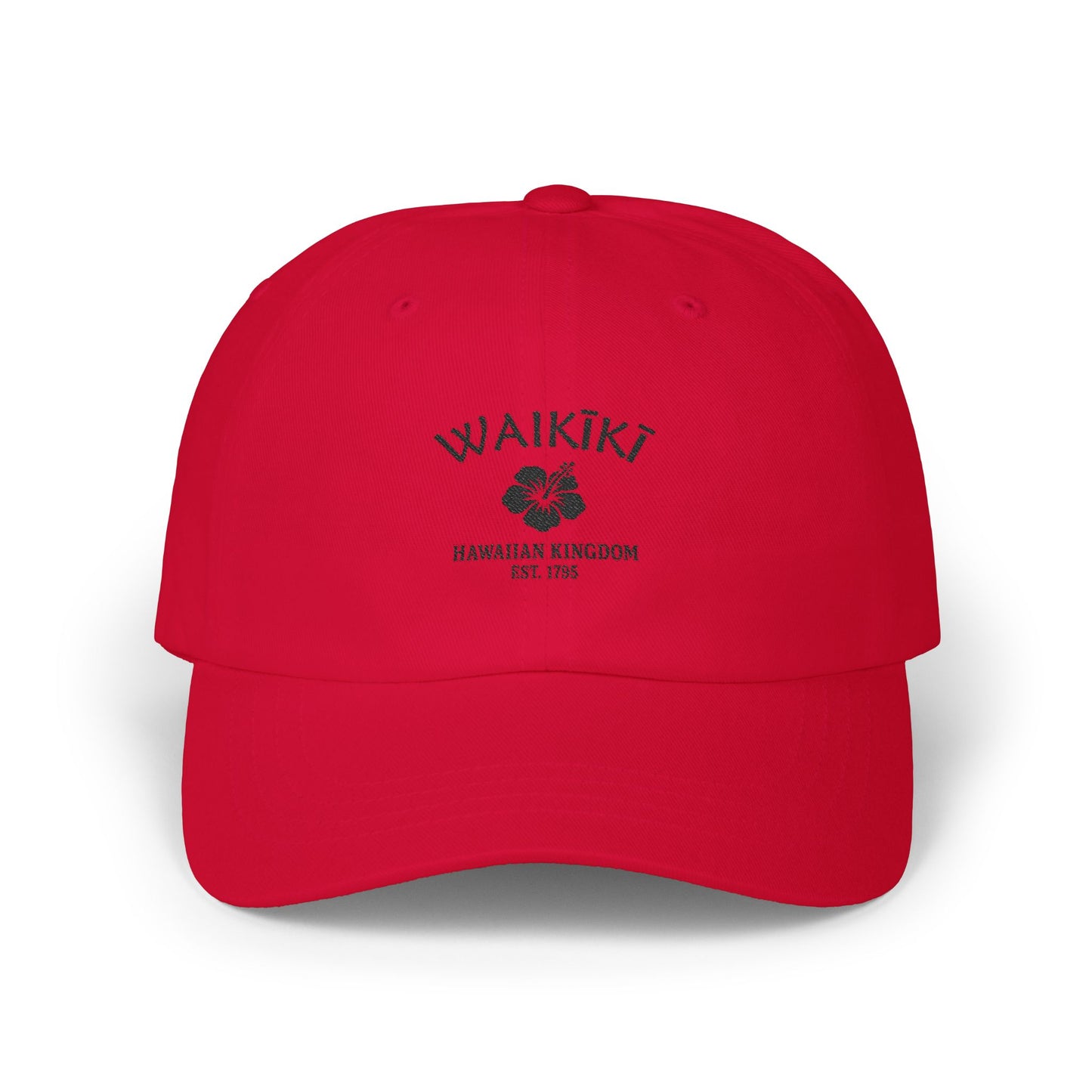
Our Waikīkī design wears the hibiscus, Hawaiʻi's flower, beneath the words “Hawaiian Kingdom · Est. 1795” — a date that belongs to Waikīkī more than to most, for this was the Kingdom's first capital in that founding year. Rendered in clean black and white, like an old travel decal or luggage label, it is a heritage mark — a nod to the islands' own story and to the deep Hawaiian identity of Waikīkī, the spouting waters. It is worn for the place and its people, not for any single chapter of its past.
The resort era grew out of that royal ground. In the 1880s King Kalākaua cut the first real road to Waikīkī, opening it to recreation; by 1893 the little Sans Souci had become one of Hawaiʻi's first beach resorts, and Robert Louis Stevenson lingered there. The Moana Hotel — the “First Lady of Waikīkī” — opened in 1901, and in 1927 the Matson Line raised the Royal Hawaiian, the Pink Palace itself, on the Helumoa grove. Elegant ships carried mainland visitors to its doors, and Waikīkī began its second life as the most famous beach in the Pacific.
Why People Visit Waikīkī
Waikīkī offers a whole world in two miles of sand: the birthplace of modern surfing, royal history beneath the hotels, Diamond Head at the end of the beach, and the easy warmth of Hawaiian hospitality. It is the most famous beach in the Pacific — and for the surfers, paddlers, and families who live and gather here, simply home.
