




The Tyler area was long the homeland of the Caddo people. The town itself was laid out in 1846 as the seat of the new Smith County, named for President John Tyler, the advocate of Texas annexation, and incorporated in 1850. Early Tyler lived on cotton, cattle, and peaches, trading along wagon roads and, soon, the railroad. When the peach crop failed in the early twentieth century, growers turned to roses; the first azaleas went into the neighborhoods in 1929, and within a generation the rose and nursery trade had become the thing the town was known for. When East Texas oil arrived in 1930, Tyler became an oil-administration center too — but it was the roses that gave the town its name.
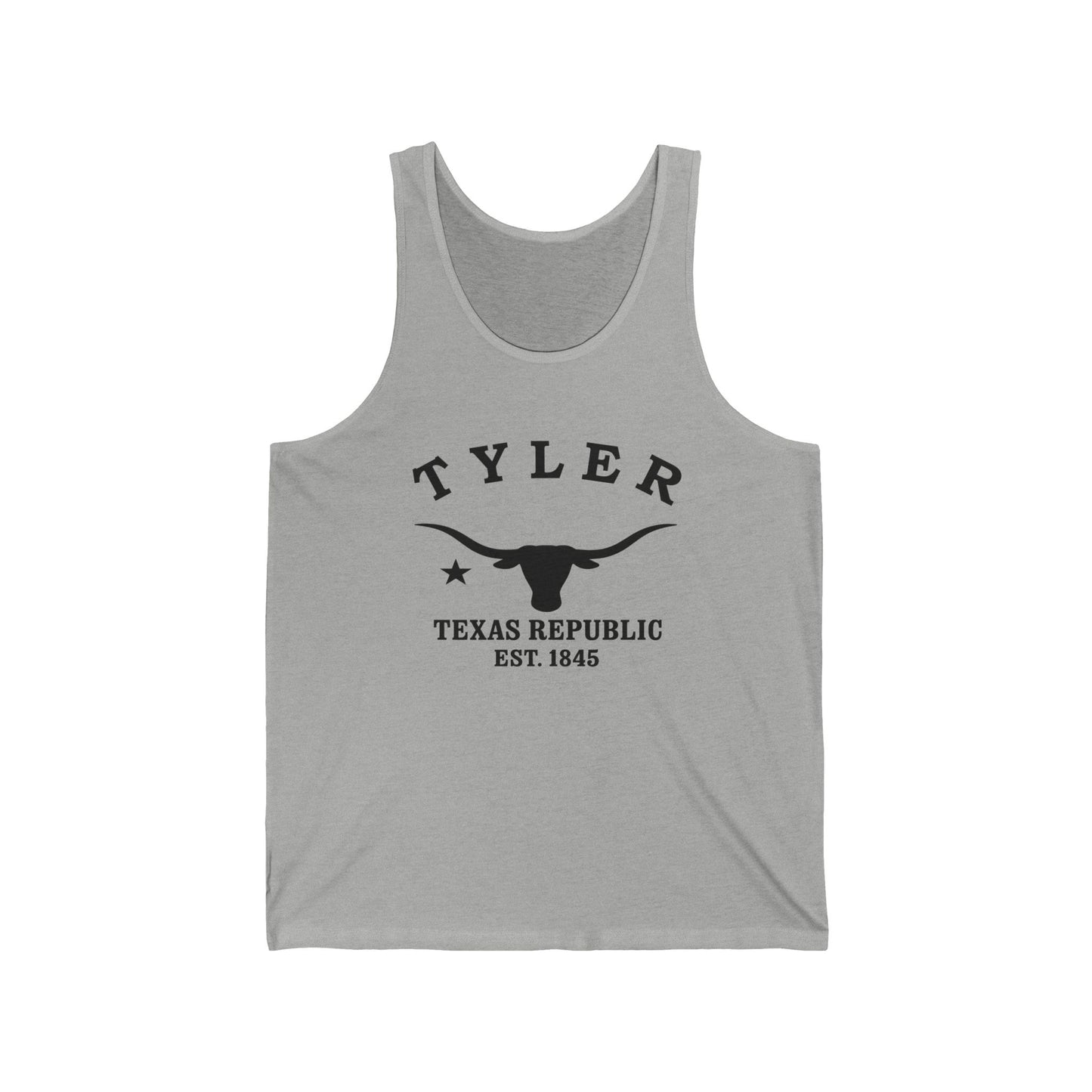
Our Tyler logo carries the same emblem every Merlin Classics Texas place wears — a Texas longhorn and the Lone Star, above "Texas Republic, Est. 1845," rendered in hand-printed black and white with a worn, vintage feel. The longhorn and star are the Texas mark, the through-line that ties Tyler to every other Texas place we make. What makes this one Tyler is everything around it: the Rose Capital, the garden in bloom, the azalea-lined streets of the Piney Woods. On a tee or a cap it reads less like a souvenir and more like a piece of East Texas — Est. 1845, worn plain.
Why People Visit Tyler Texas
- Walk the Tyler Municipal Rose Garden — fourteen acres and tens of thousands of bushes, the nation's oldest and largest, with the Rose Museum.
- Time a fall trip to the Texas Rose Festival, held every October since 1933, for the Rose Show and parade.
- Drive or stroll the Azalea & Spring Flower Trail through the historic brick-street neighborhoods at peak spring bloom.
- See the giraffes and big cats at the 85-acre Caldwell Zoo.
- Hike the pines and paddle the CCC-built lake at Tyler State Park.
- Tour the Goodman-LeGrand House and Museum, a Victorian mansion and city park downtown.
- Come hungry around the holidays — East Texas smokehouse tradition runs deep, and a hickory-smoked turkey is a Tyler-area Thanksgiving staple.
