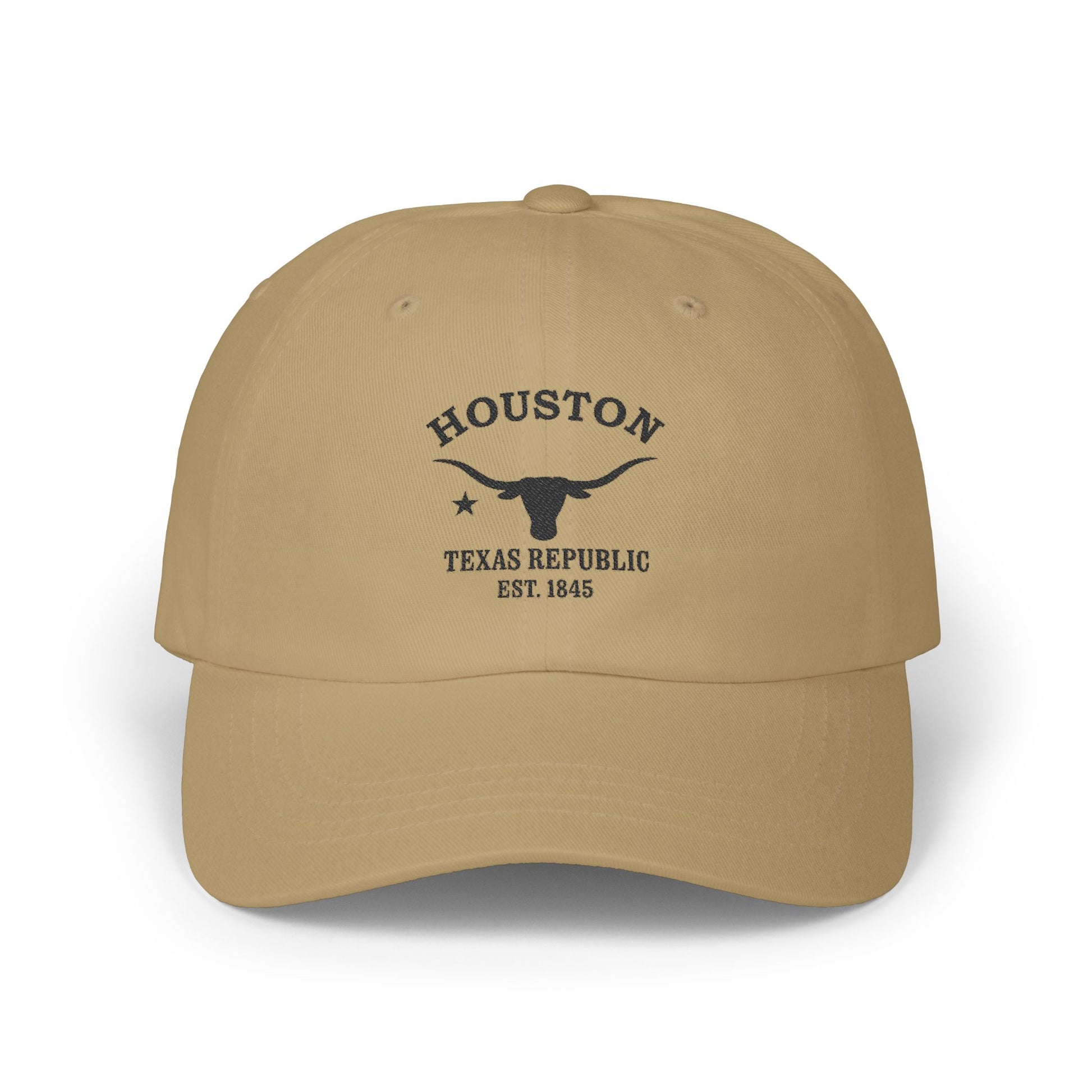
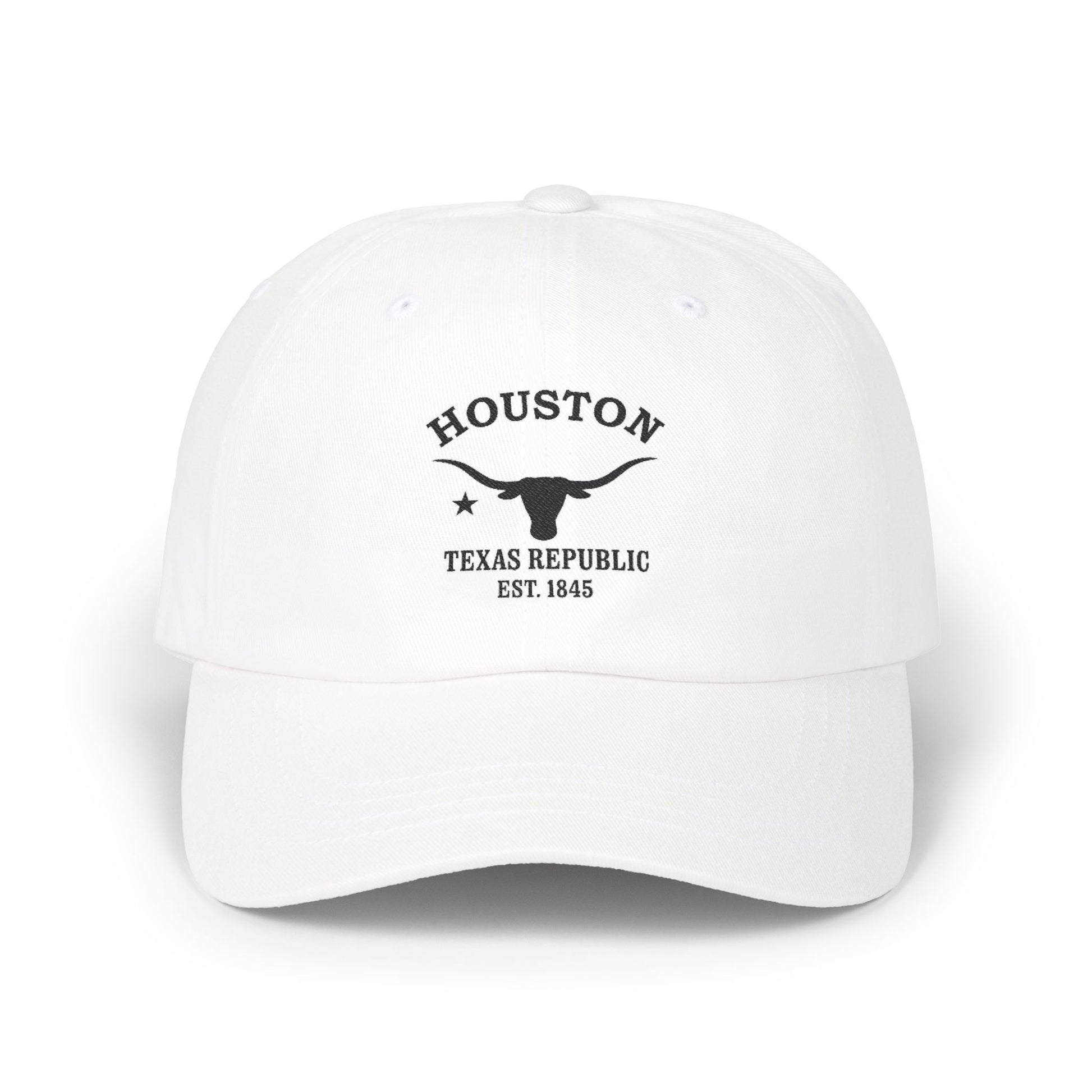
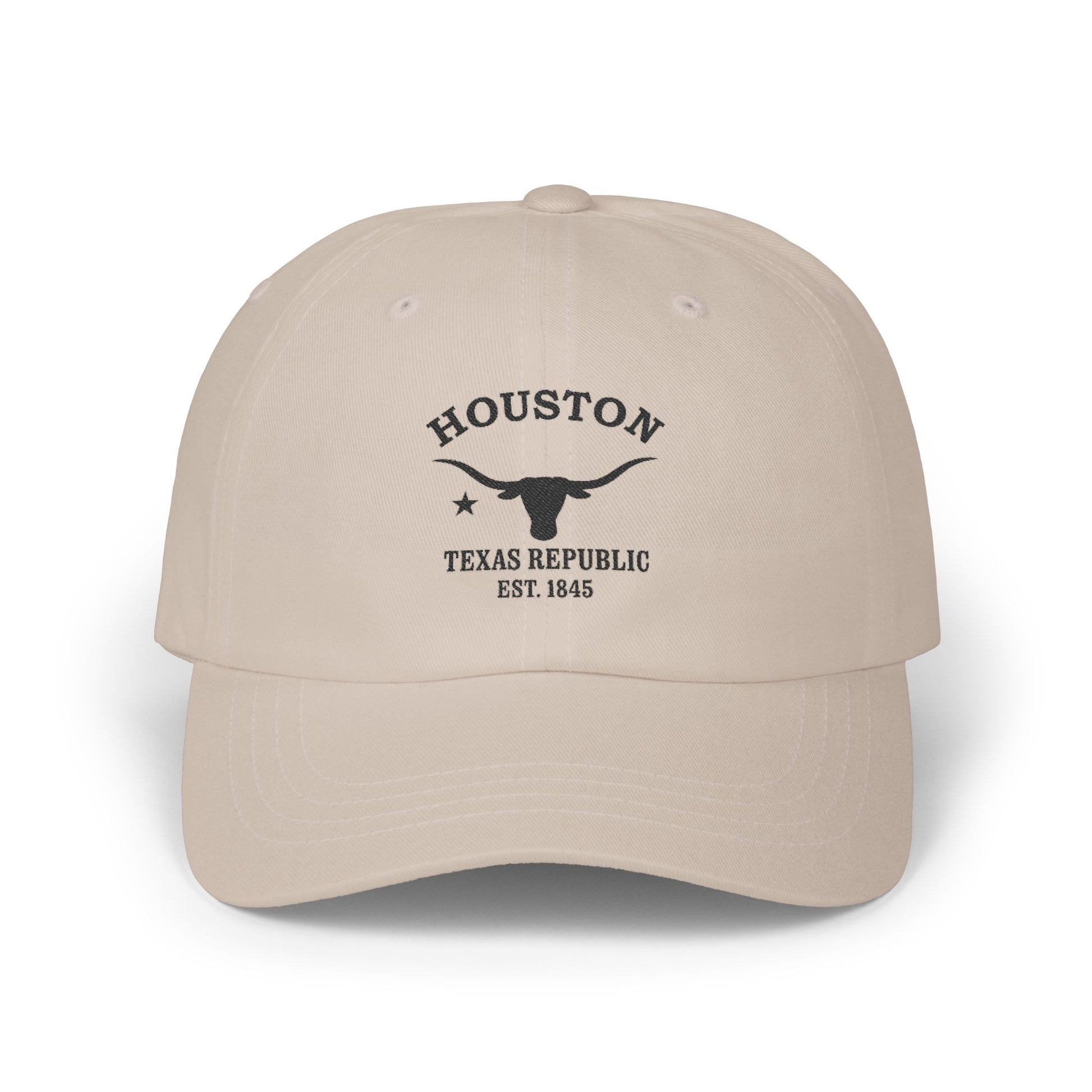
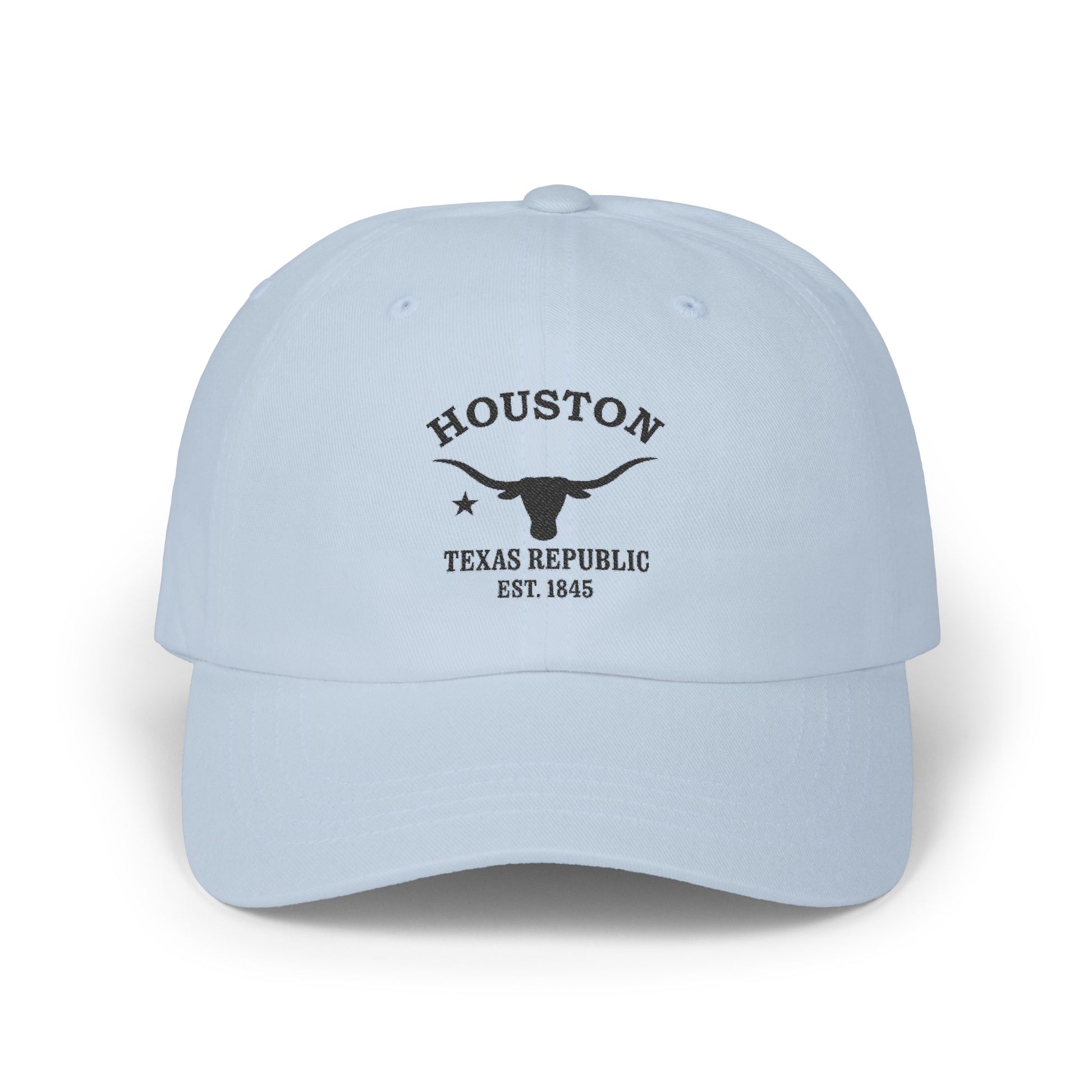
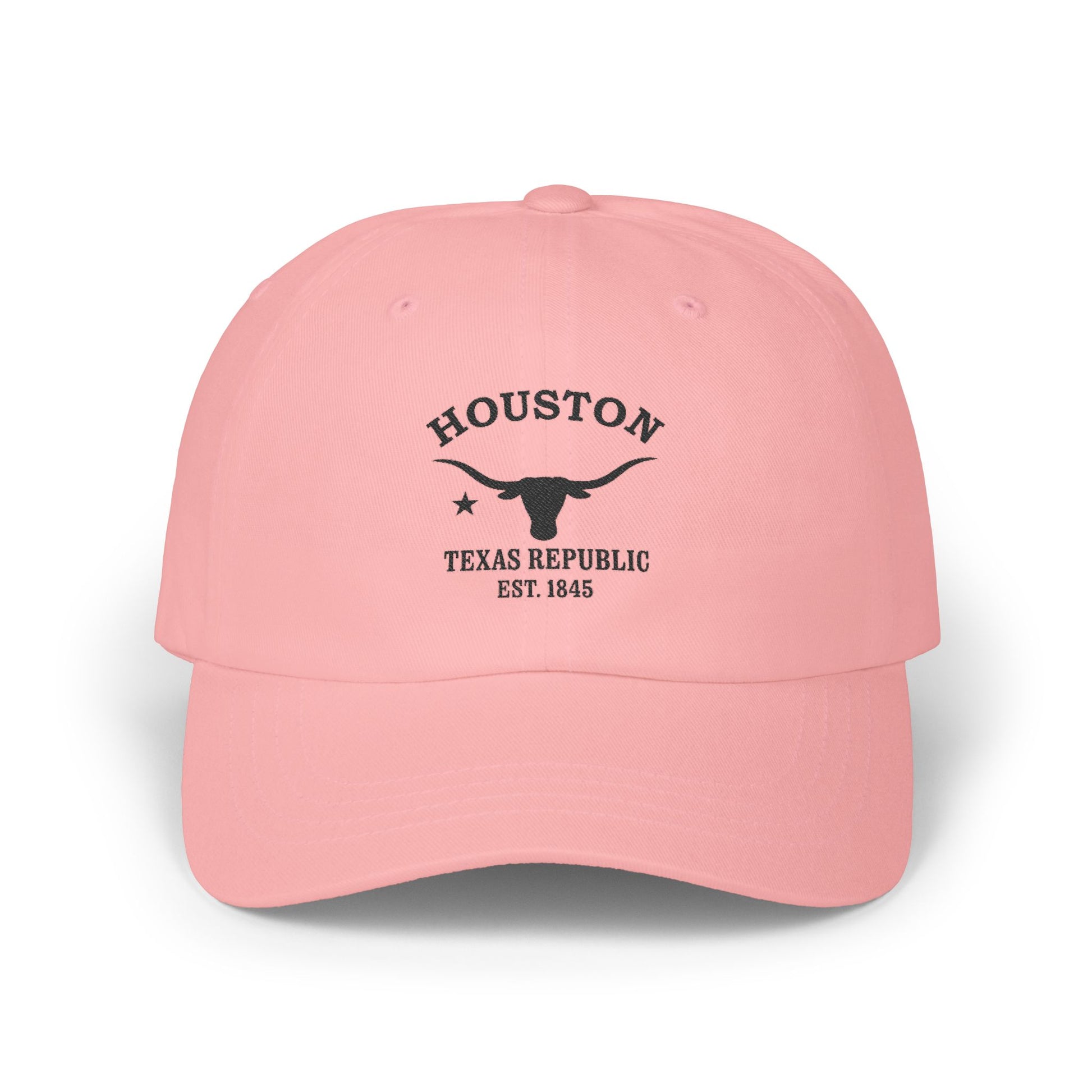
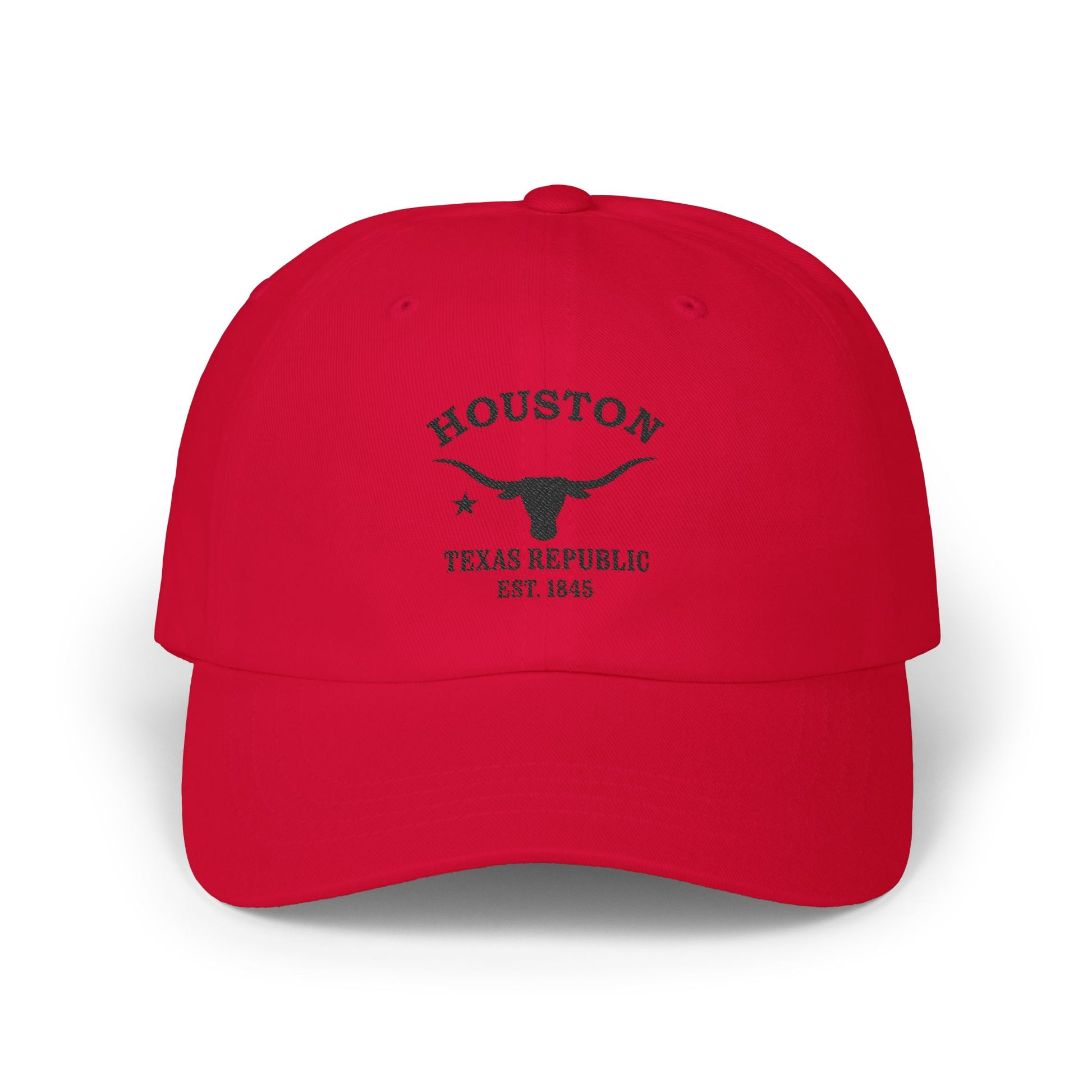
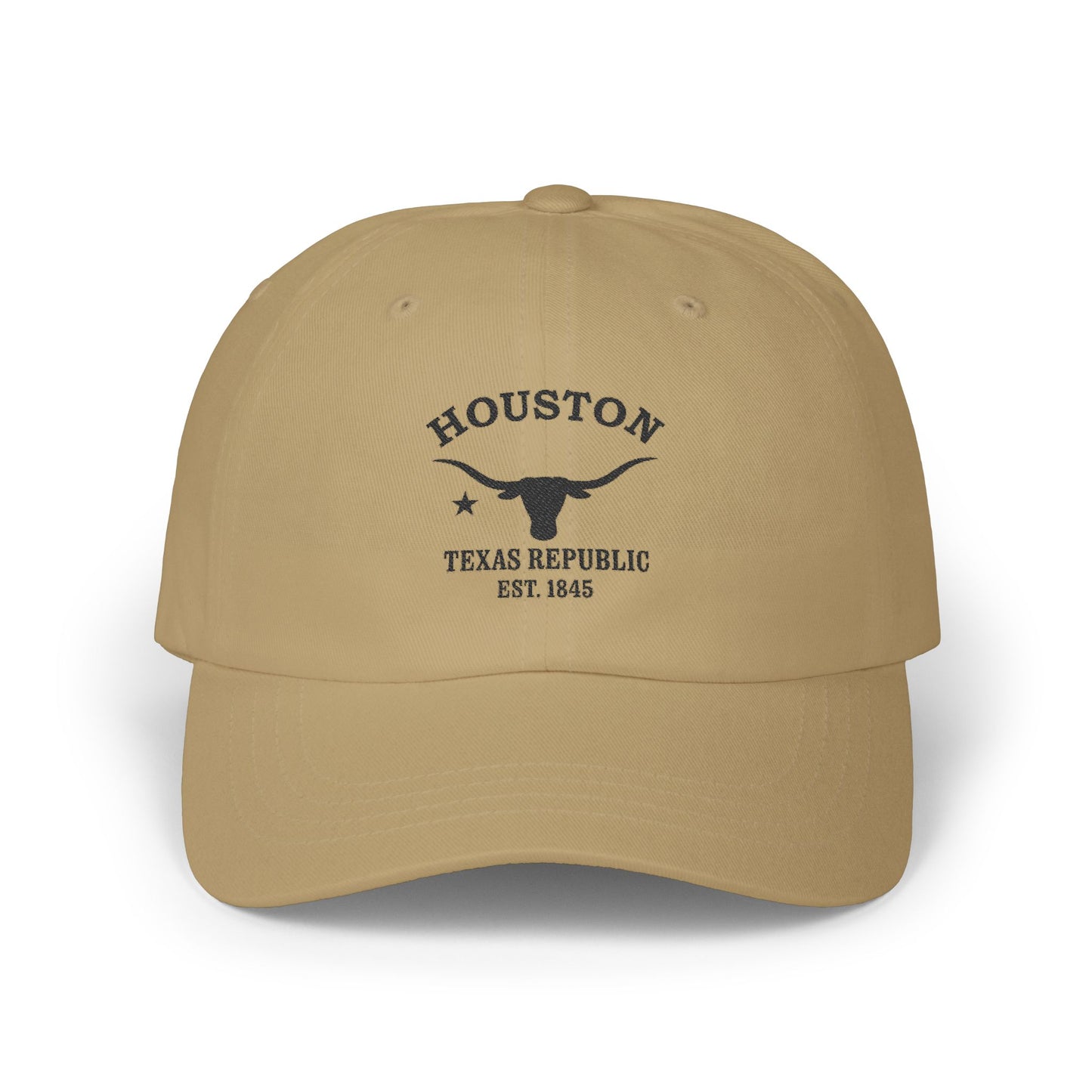
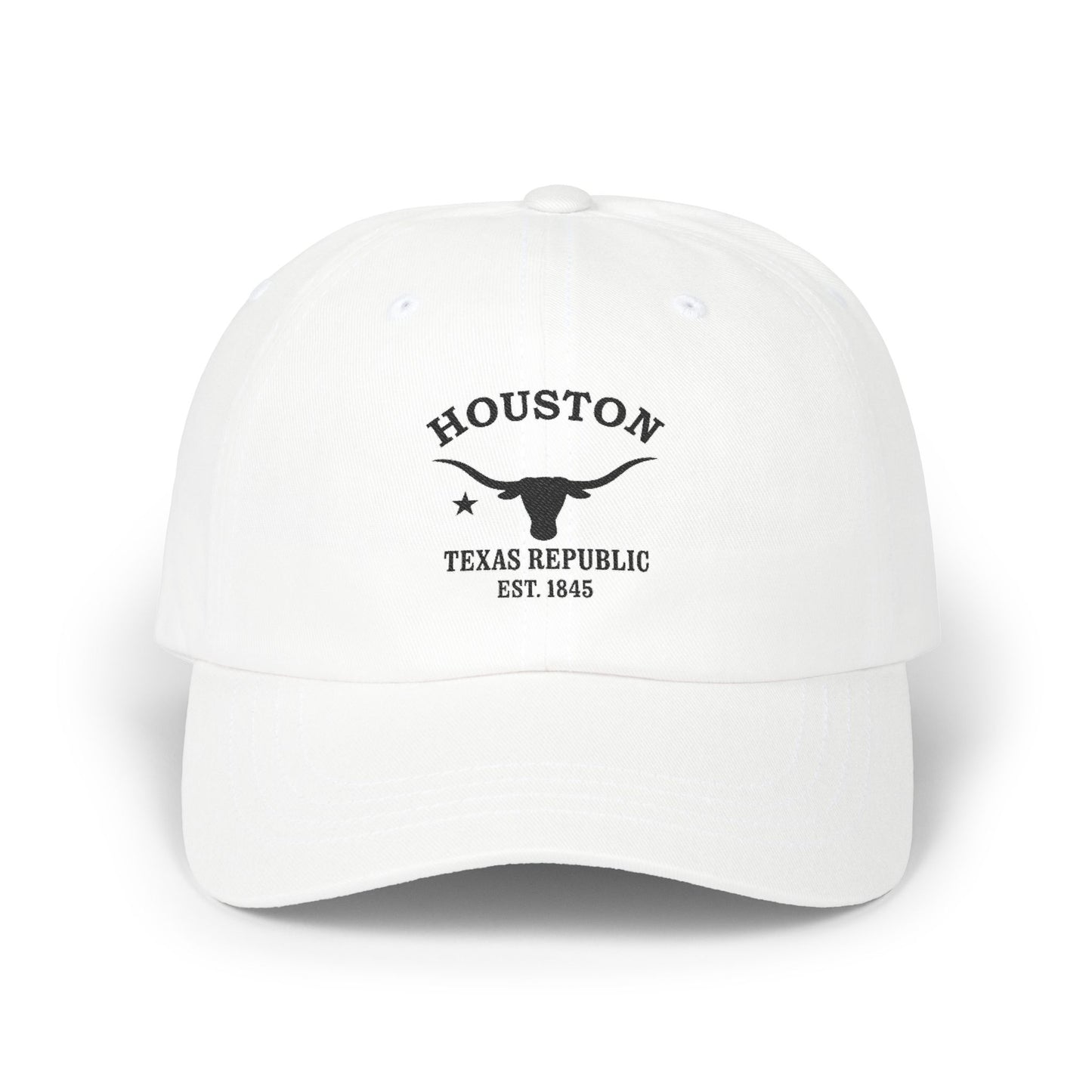
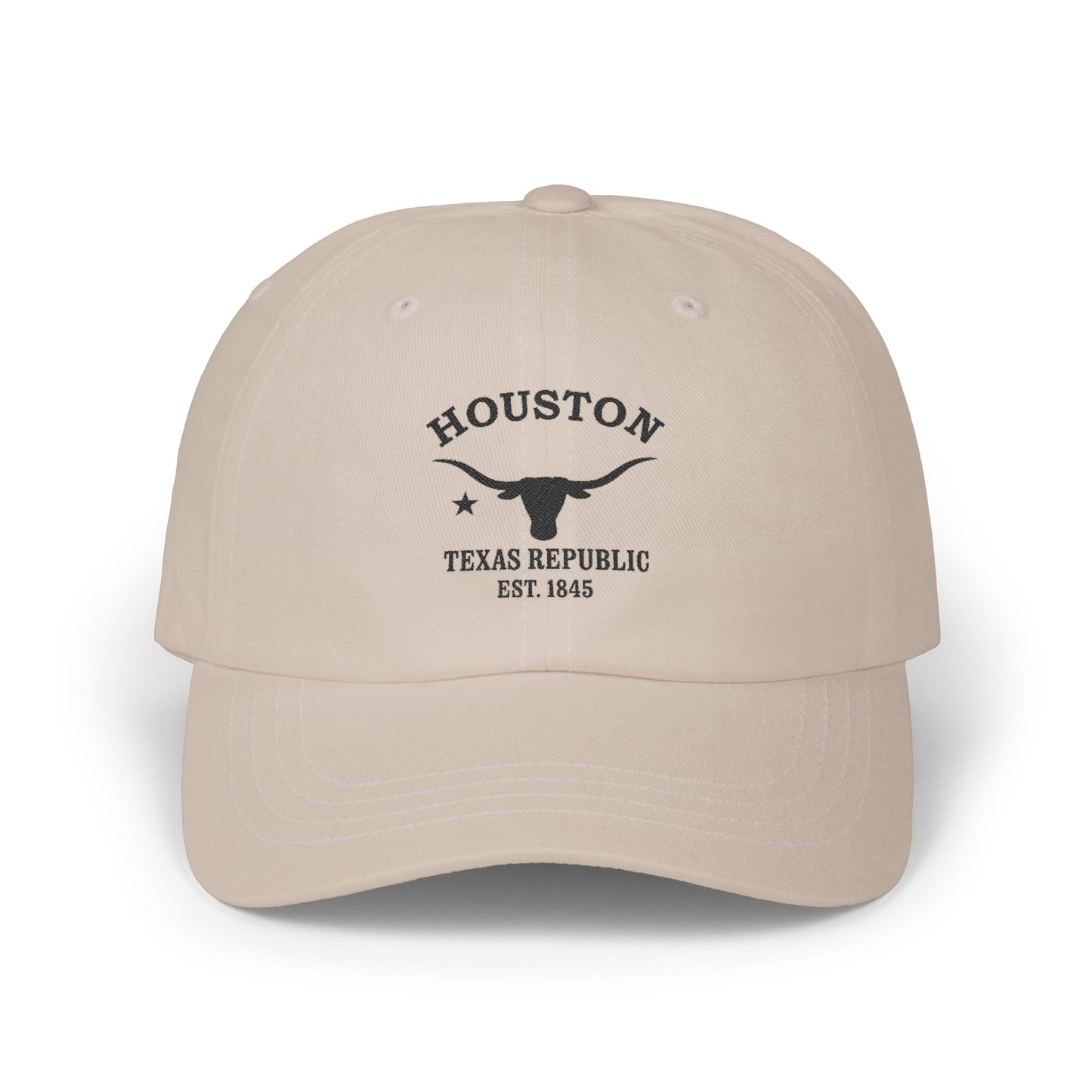
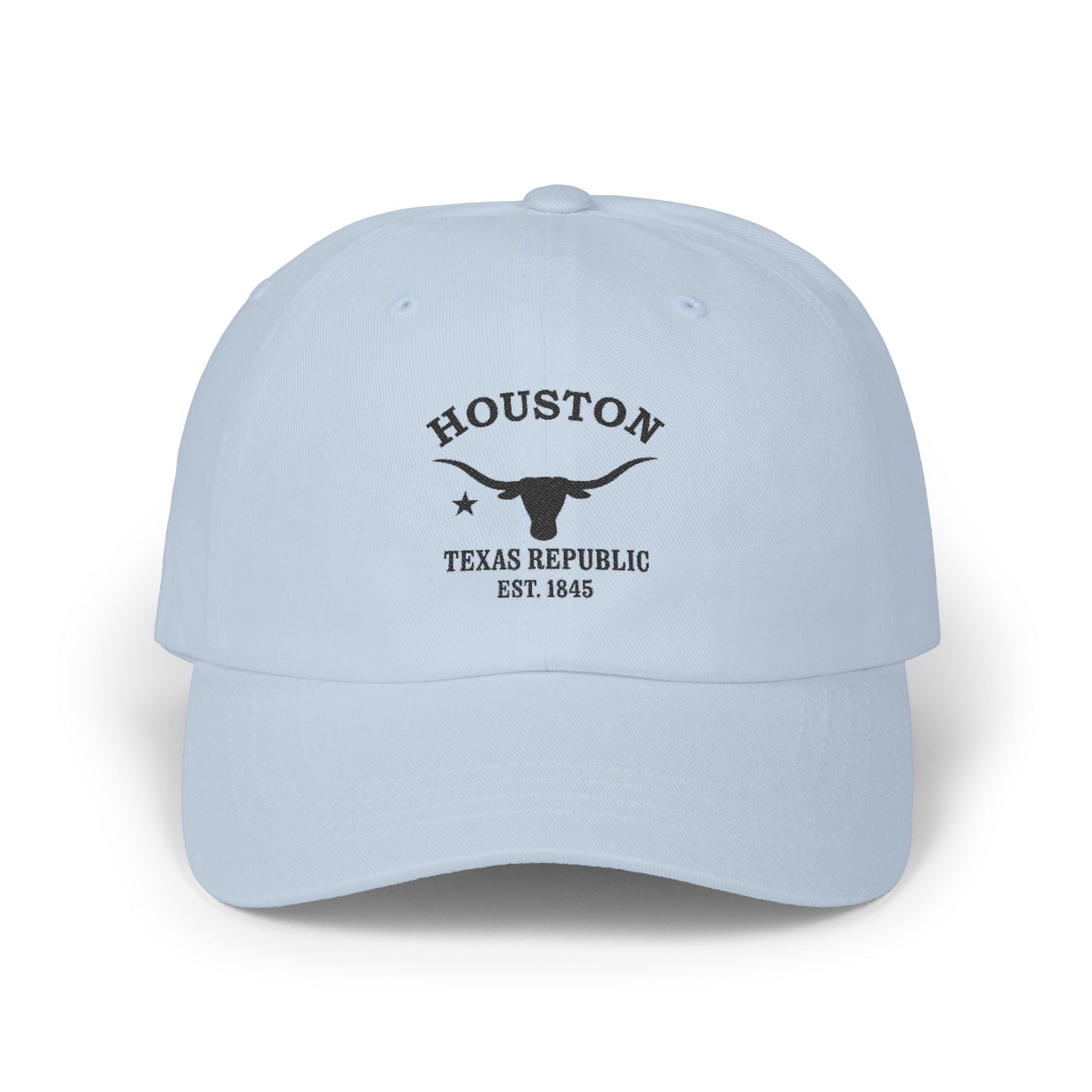
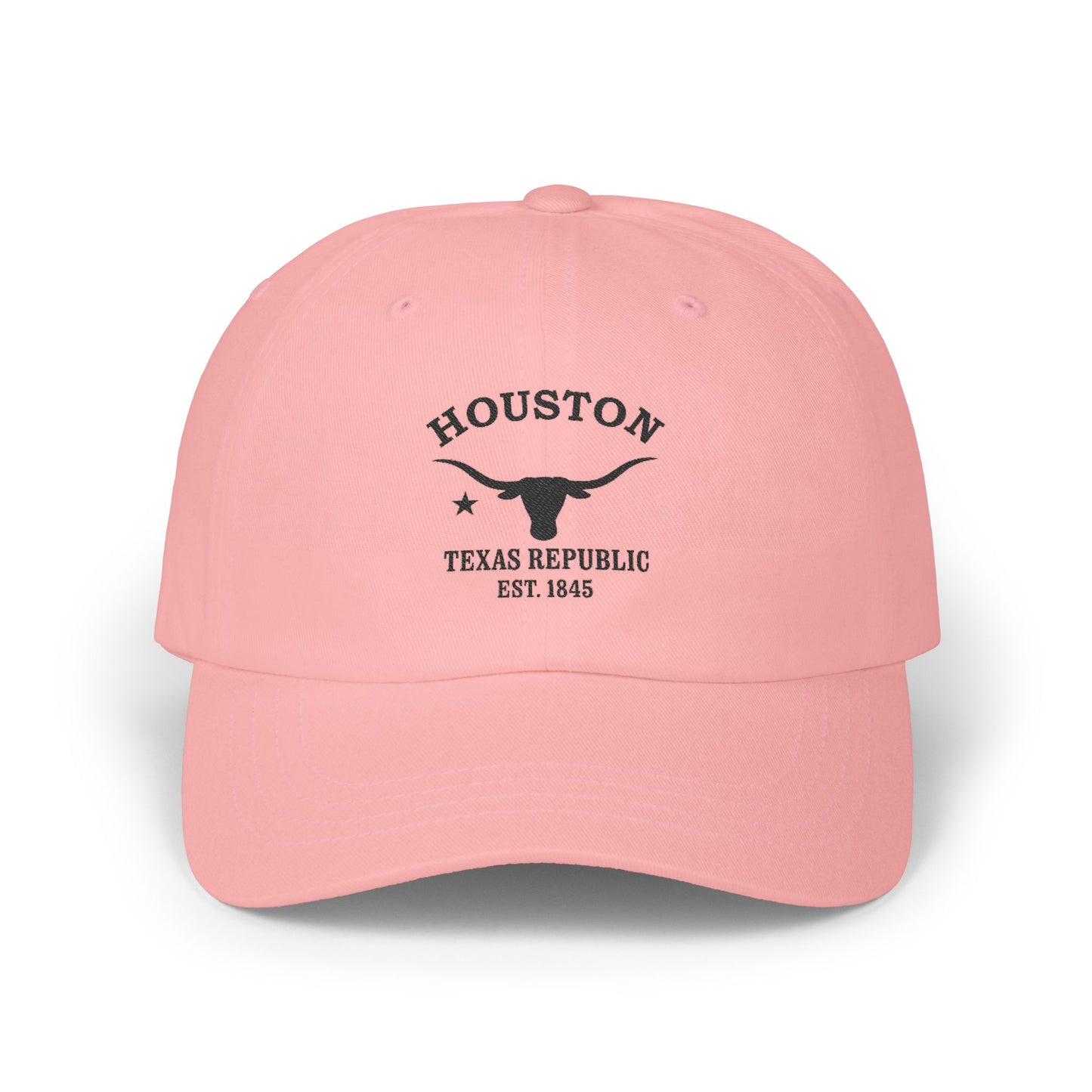
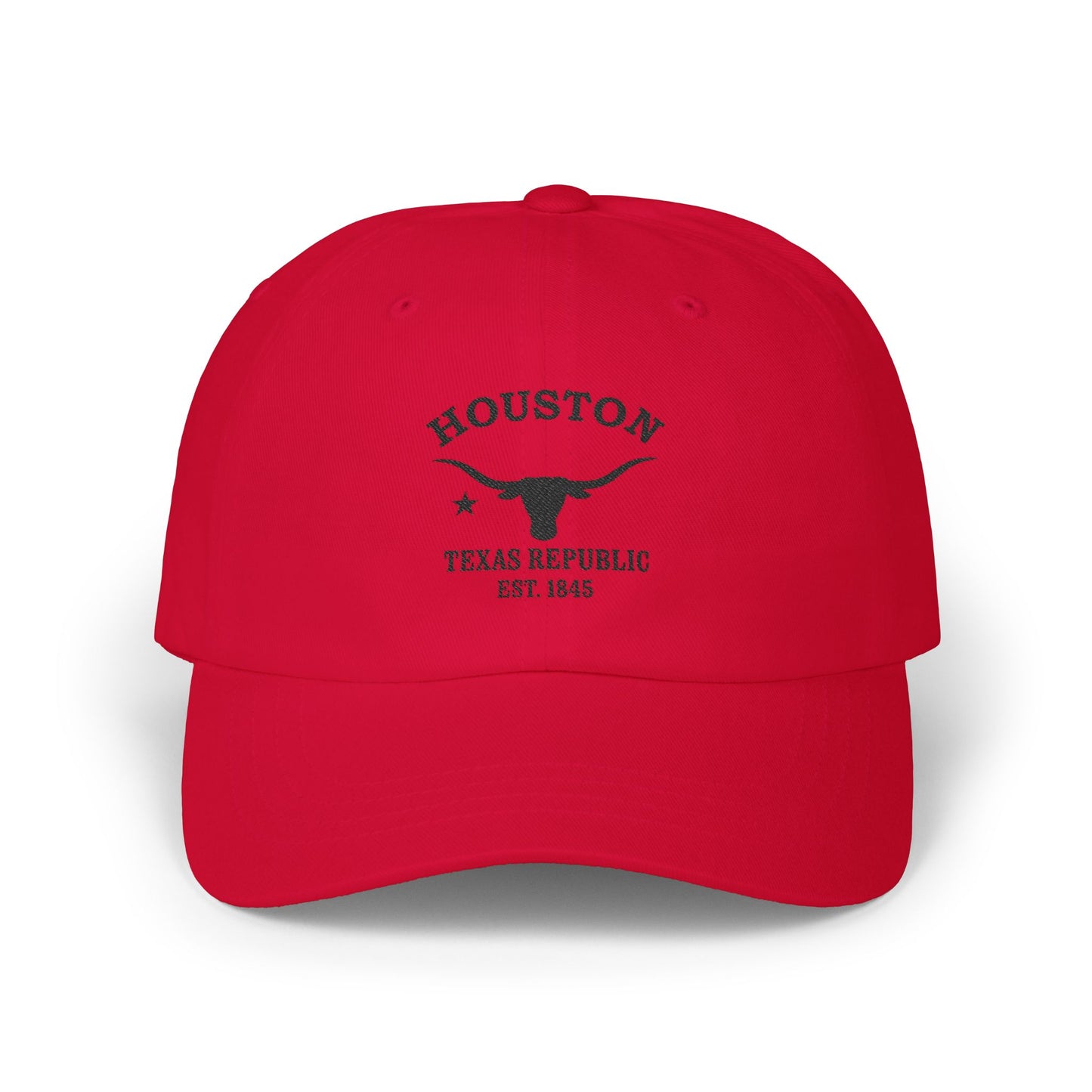
Our Houston retro logo features the longhorn and Lone Star, symbols of Texas resilience and ambition. The longhorn evokes frontier toughness and ranching strength, while the star reflects independence and pride. Black-and-white styling feels authentic and vintage, echoing rodeo posters and industrial signage. On merchandise, the motif communicates durability and authenticity, not polish or flash. It bridges Houston's cattle heritage and modern space identity, embodying toughness and ambition alike. Just as Houston transformed from swamp town to Space City, the logo reflects strength and resilience in vintage style, honoring the city's layered Texas heritage.
Mission Control since 1961. The word "Houston" started showing up on television sets and radio static across the world the year humans first reached for the moon, and it never stopped. Before all that, Houston was a small clearing on a slow brown bayou. In 1836 two real-estate-speculator brothers from upstate New York — Augustus Chapman Allen and John Kirby Allen — bought 6,642 acres along Buffalo Bayou and laid out the streets of a town with the ink still wet on Texas independence. Four months earlier, on April 21, 1836, General Sam Houston had defeated Santa Anna at the Battle of San Jacinto in eighteen minutes of fighting and won the Texas Revolution. The Allen brothers named their new town after him. By 1837 Houston was the capital of the Republic of Texas; it held the capital for two years before President Mirabeau Lamar moved it inland to Austin in 1839. The town stayed. Cotton came through, then railroads, then the 1901 Spindletop strike at Beaumont made East Texas the center of American oil and Houston the place where that oil got refined, shipped, and financed. In 1914 the Houston Ship Channel was completed, dredged fifty miles from downtown to the Gulf of Mexico, and a swampy inland bayou town became one of the busiest ports in the world. Then in September 1961 the NASA Manned Spacecraft Center — later renamed the Lyndon B. Johnson Space Center — opened twenty-five miles southeast of downtown. From that moment forward, every American crewed mission to space was directed from Mission Control in Houston. On April 13, 1970, when the Apollo 13 oxygen tank ruptured 200,000 miles out, the call back to earth was "Houston, we've had a problem here." The Apollo 11 lunar landing in July 1969 had been called from the same building, by Charles Duke, with the line "Roger, Tranquility, we copy you on the ground." Today Houston is the fourth-largest city in the United States, 666 square miles inside the city limits, with no zoning code, the largest medical complex in the world, the largest rodeo in the world every March, the Astrodome that opened in 1965 as the first fully enclosed multi-purpose stadium ever built and was promptly nicknamed the Eighth Wonder of the World, and a port handling more foreign tonnage than any other in the country. From a 6,642-acre real-estate bet on a bayou in 1836 to Mission Control for the human race in 1961, in less than a century and a half.
Why People Visit Houston Texas
- Tour NASA Johnson Space Center and Space Center Houston, with spacecraft, mission artifacts from the Apollo and Shuttle programs, and views into the historic Mission Control room.
- Walk Buffalo Bayou Park, the green corridor along the bayou with skyline overlooks, kayak access, and bridges connecting downtown to the Heights.
- Visit the San Jacinto Battleground State Historic Site twenty-two miles east of downtown, where the 1836 battle won Texas independence — the 567-foot San Jacinto Monument is taller than the Washington Monument.
- Tour the Museum of Fine Arts Houston, holding broad collections and rotating exhibitions in the city's museum district.
- Visit the Houston Museum of Natural Science, with dinosaurs, gems, paleontology, and planetarium shows in Hermann Park.
- Walk through Sam Houston Park, the historic district downtown that preserves the city's oldest 1820s-1900s buildings on the original townsite.
- Relax at Discovery Green, the twelve-acre downtown park with lawns, public art, and water features.
- Visit the Menil Collection, the modernist museum complex designed by Renzo Piano that opened in 1987.
- See the Rothko Chapel, the 1971 interfaith chapel housing fourteen Mark Rothko paintings.
- Walk The Heights, the historic Victorian and Craftsman neighborhood just northwest of downtown.
- Attend the Houston Livestock Show and Rodeo every February-March — the largest livestock show and rodeo in the world, drawing more than 2.5 million attendees annually since 1932.
