


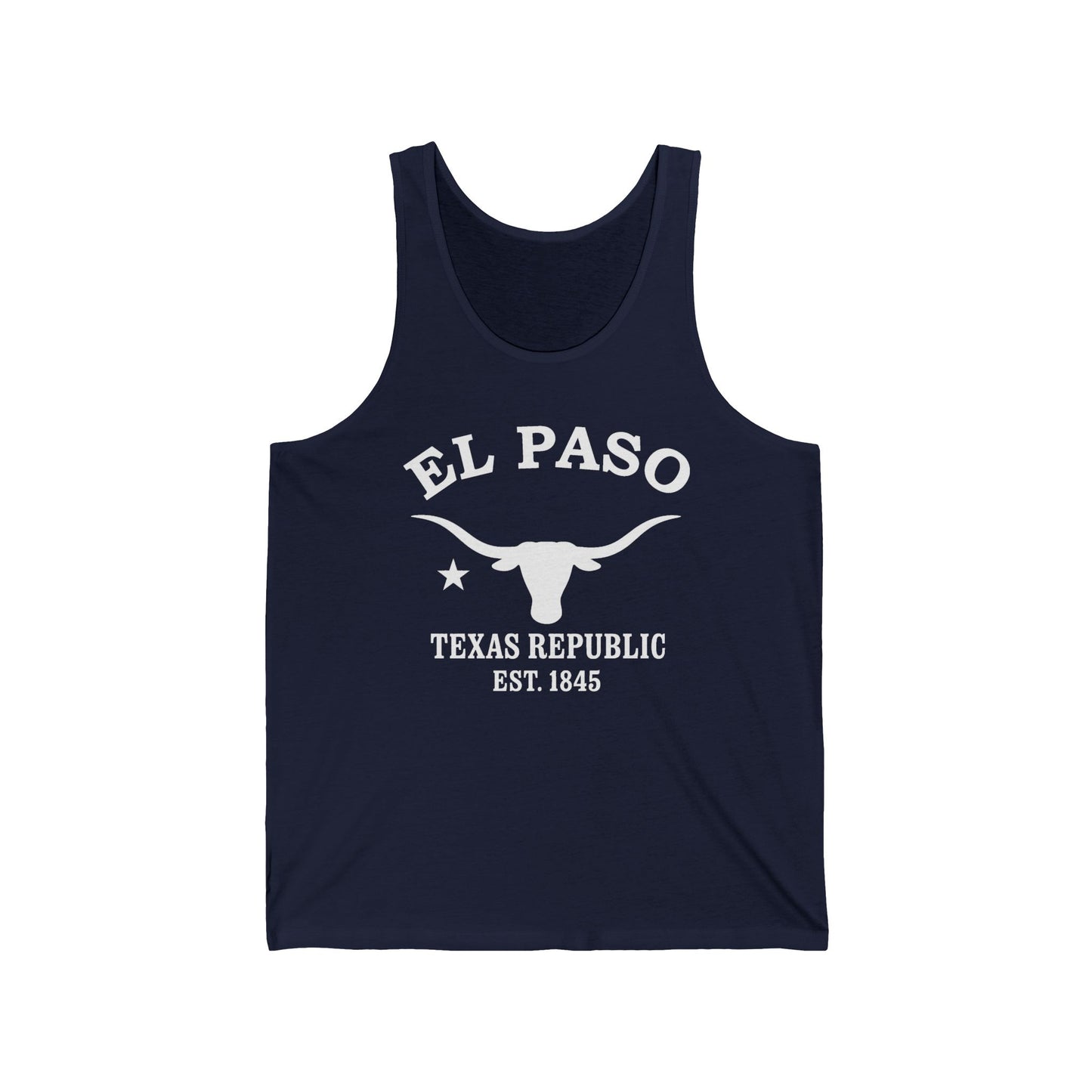
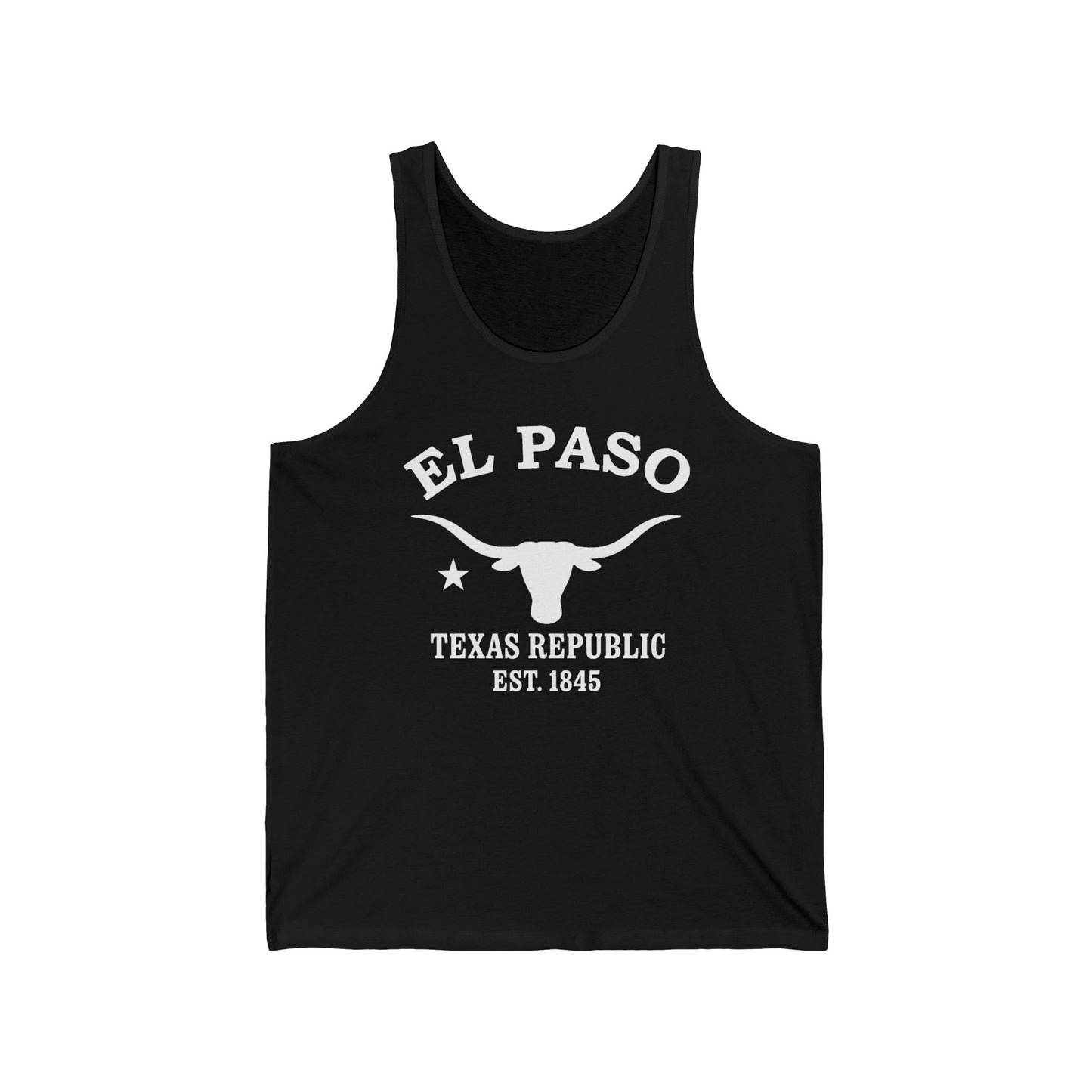
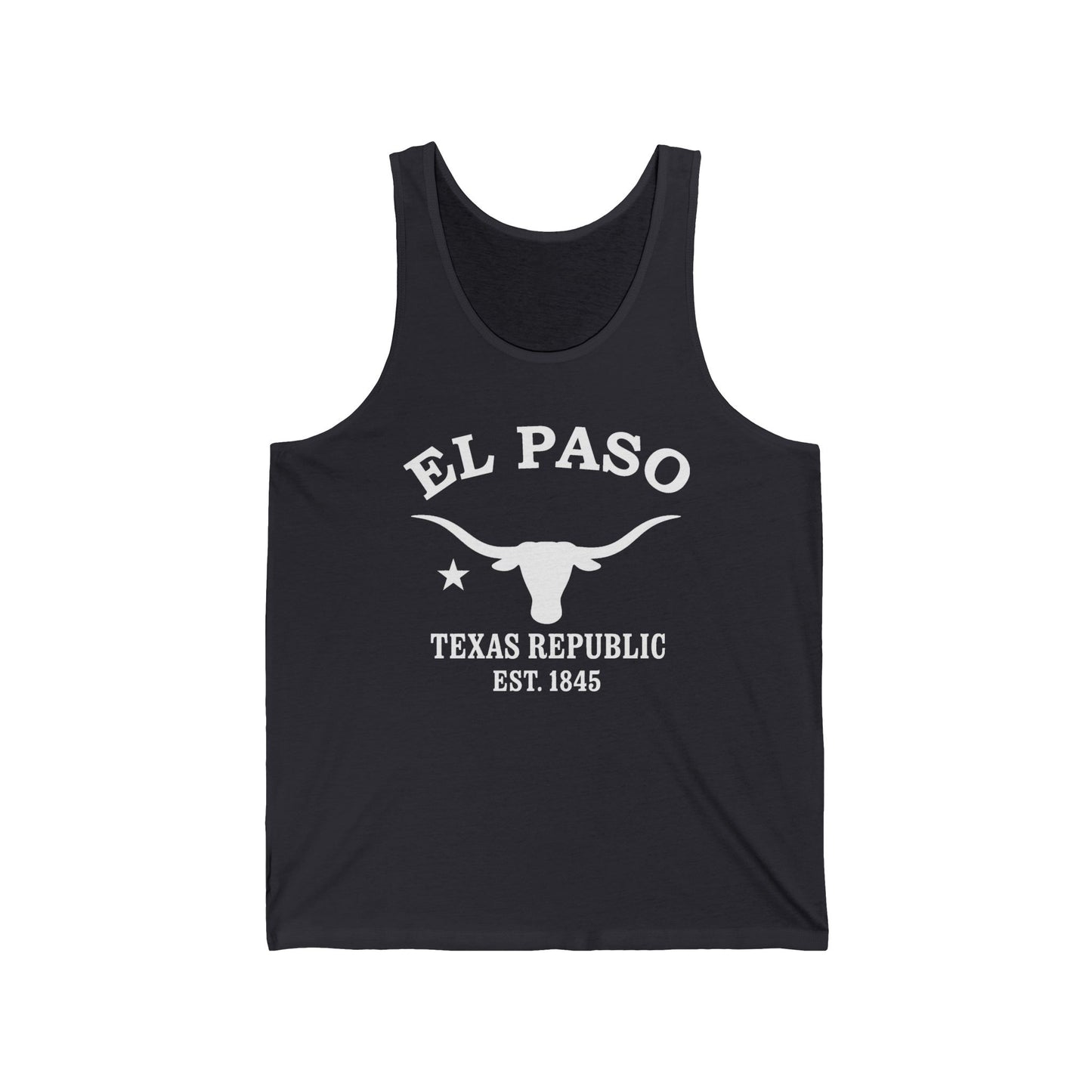
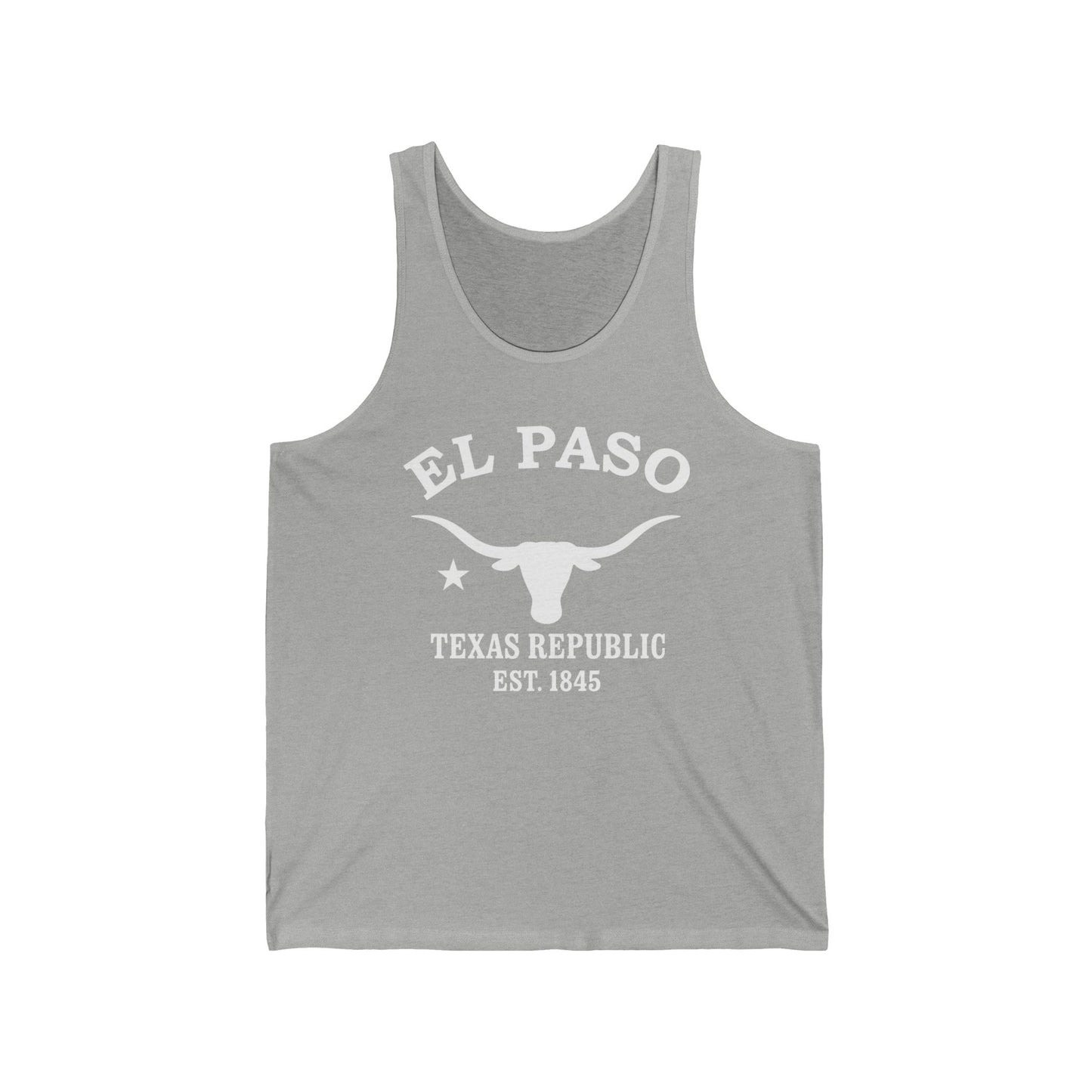
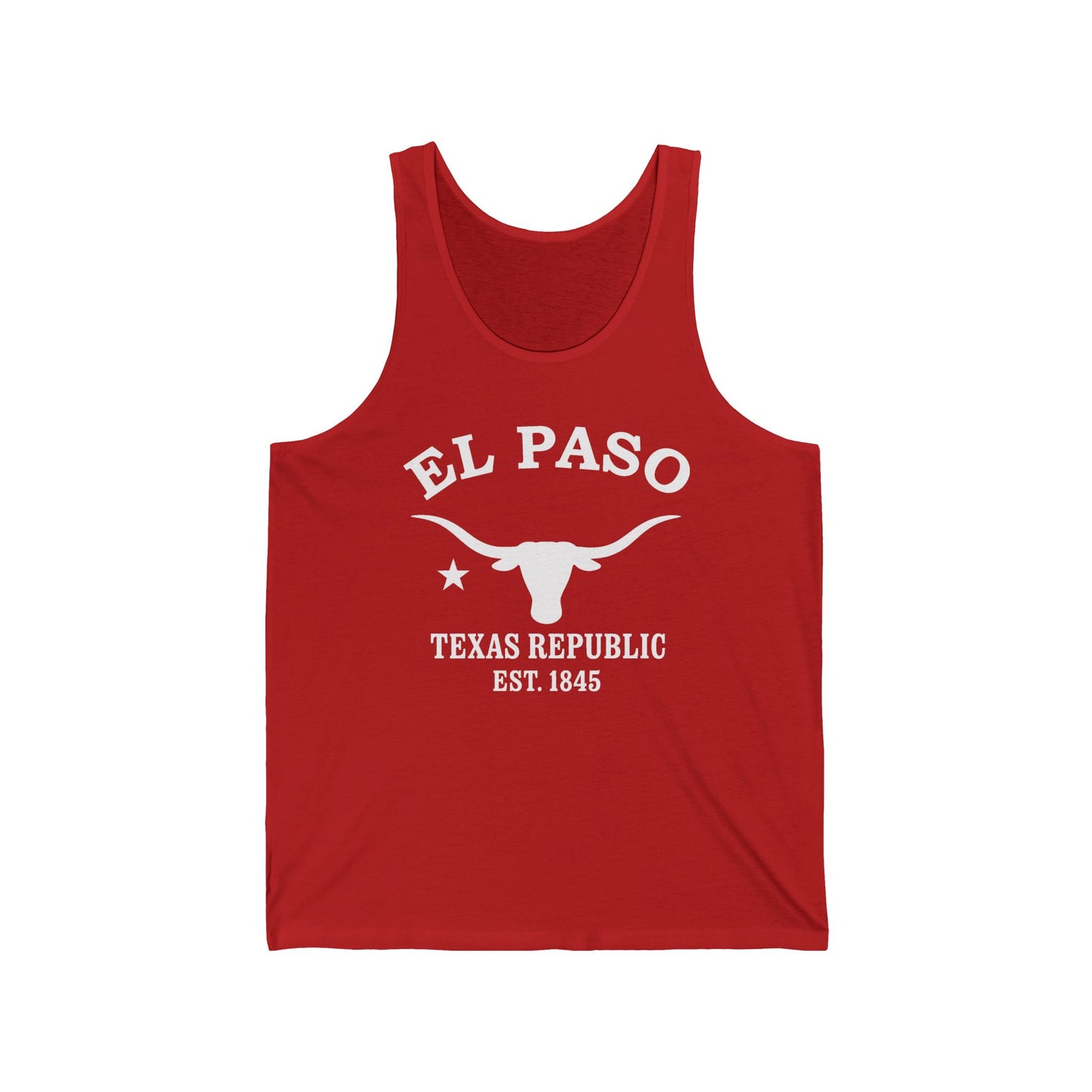
Our El Paso logo carries the Texas longhorn and Lone Star, the same emblem every Merlin Classics Texas place wears, set over "Texas Republic, Est. 1845." The longhorn and star are the Lone Star State's shorthand — toughness, independence, the open range — printed black-and-white with the worn look of an old cattle brand or a rodeo poster. What makes this one El Paso is the place behind it: the Pass of the North, the Franklin Mountains, the desert sun. On a tee or a cap it reads less like a souvenir and more like a piece of West Texas — Est. 1845, worn plain.
The Pass keeps its stories close. They'll tell you the name is literal — this really is the pass, the one gap where the river leaves the mountains. They'll point up at the star on the Franklins and out at the Mission Trail, where Ysleta has held services since the 1680s. They'll tell you El Paso runs on Mountain time while the rest of Texas runs on Central, because the Pass has always kept its own clock. And they'll tell you about the sun — that this is the Sun City, where the sky is clear almost every day of the year.
Why People Visit El Paso Texas
People come to El Paso for the desert light and the layered history — the Pass of the North, the oldest mission in Texas, the star on the mountain — and for the mountains, the Mission Trail, and the bicultural energy of a Sun City that shares one valley with its neighbor across the river. It is sunny, spacious, and deep: four centuries of the Southwest at the Pass.
