


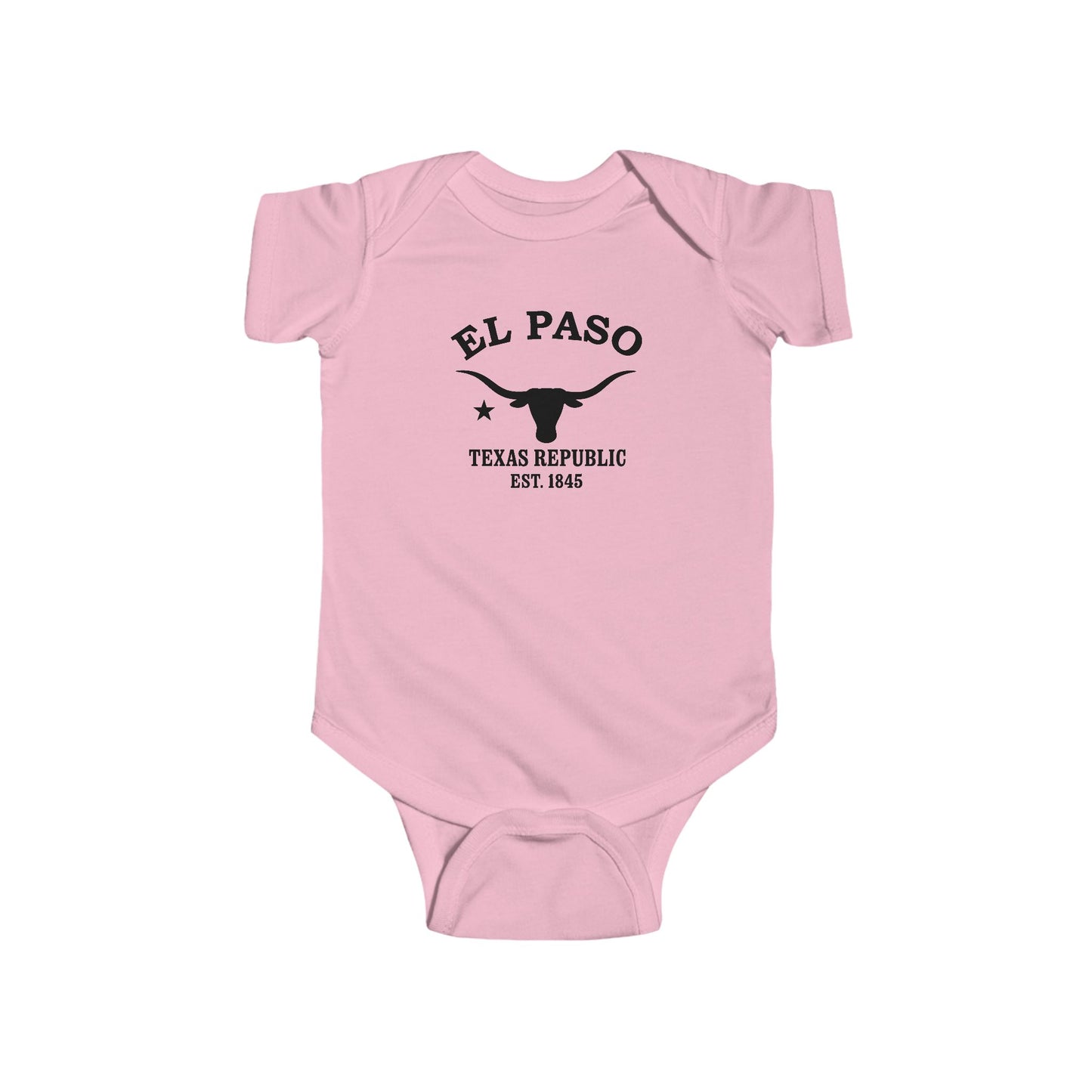
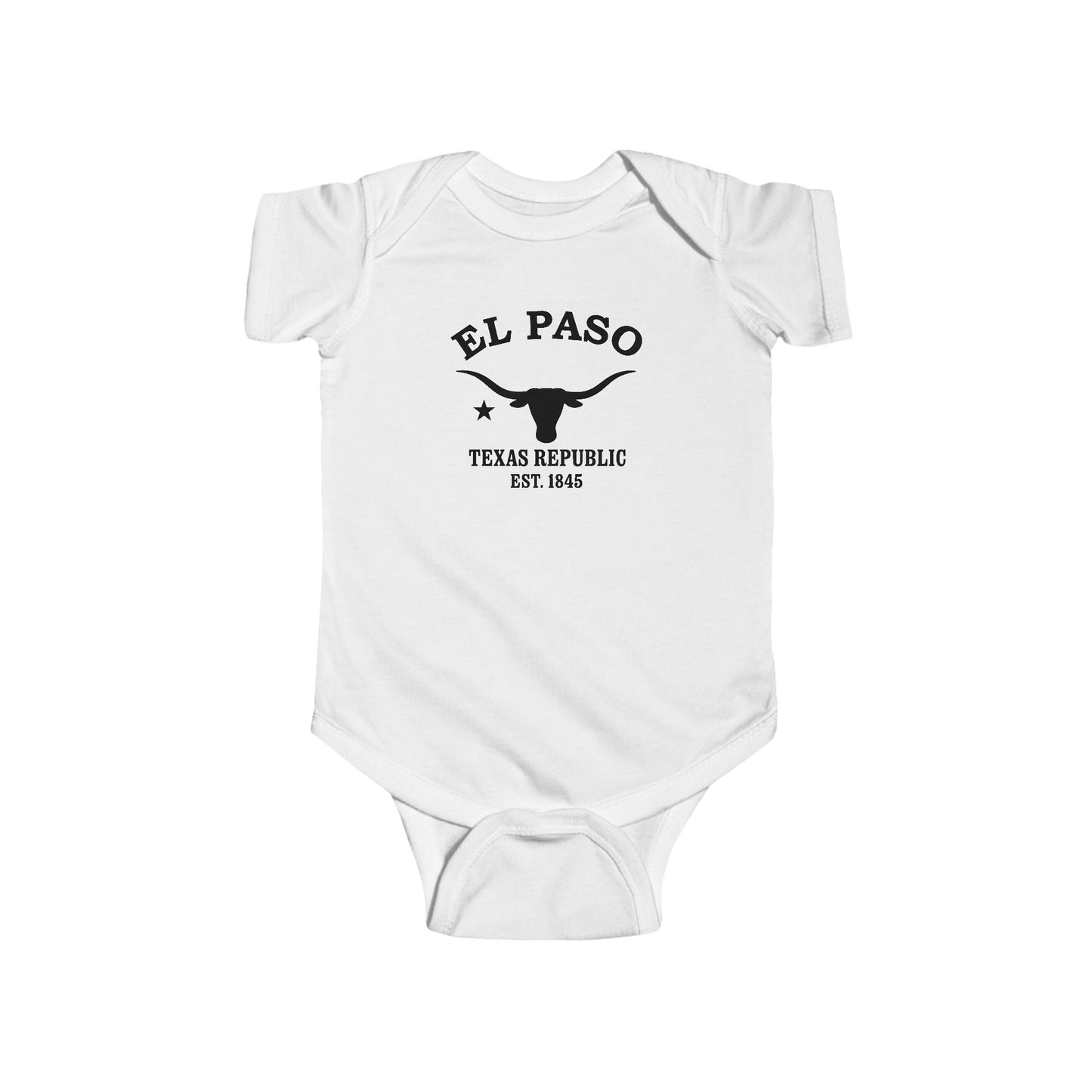
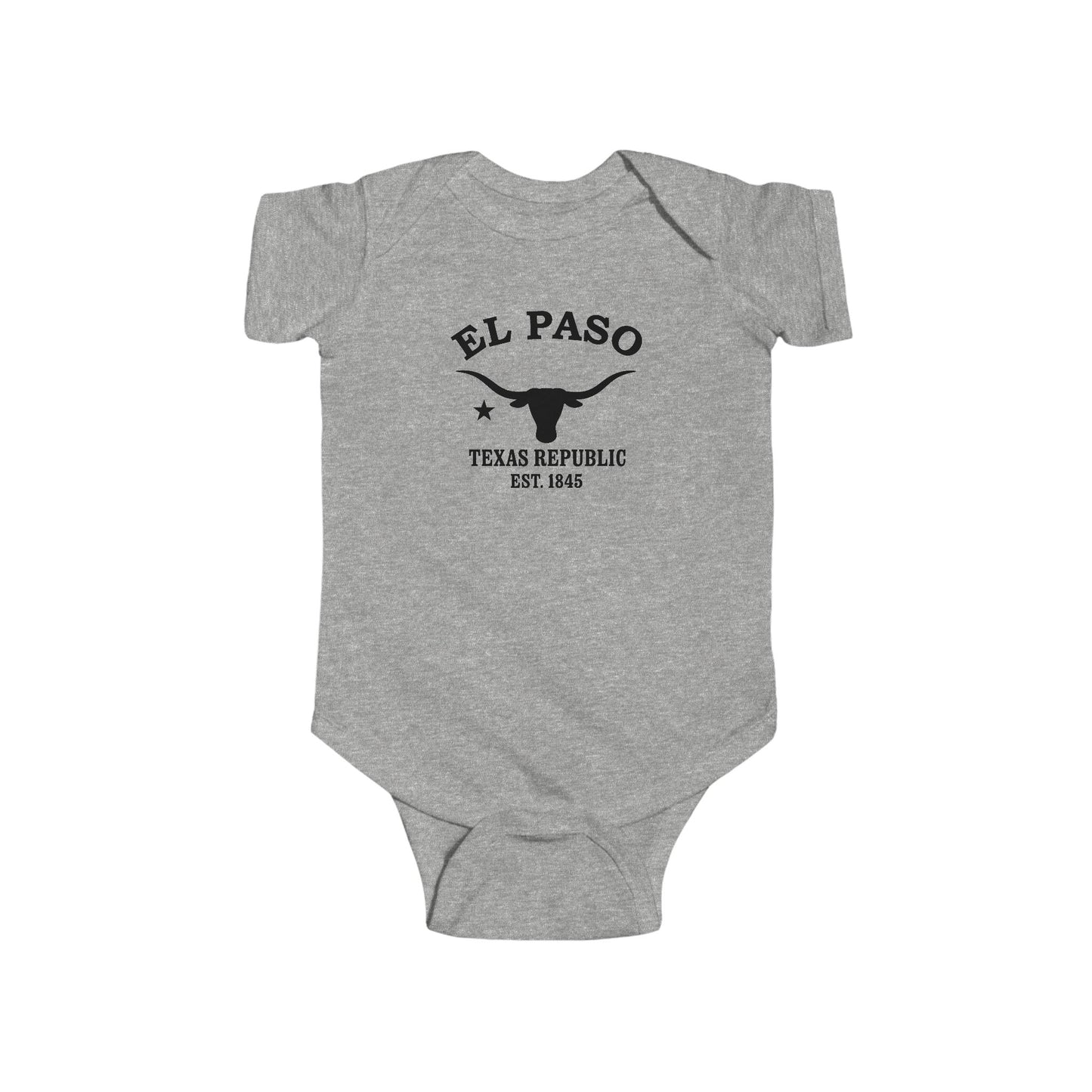
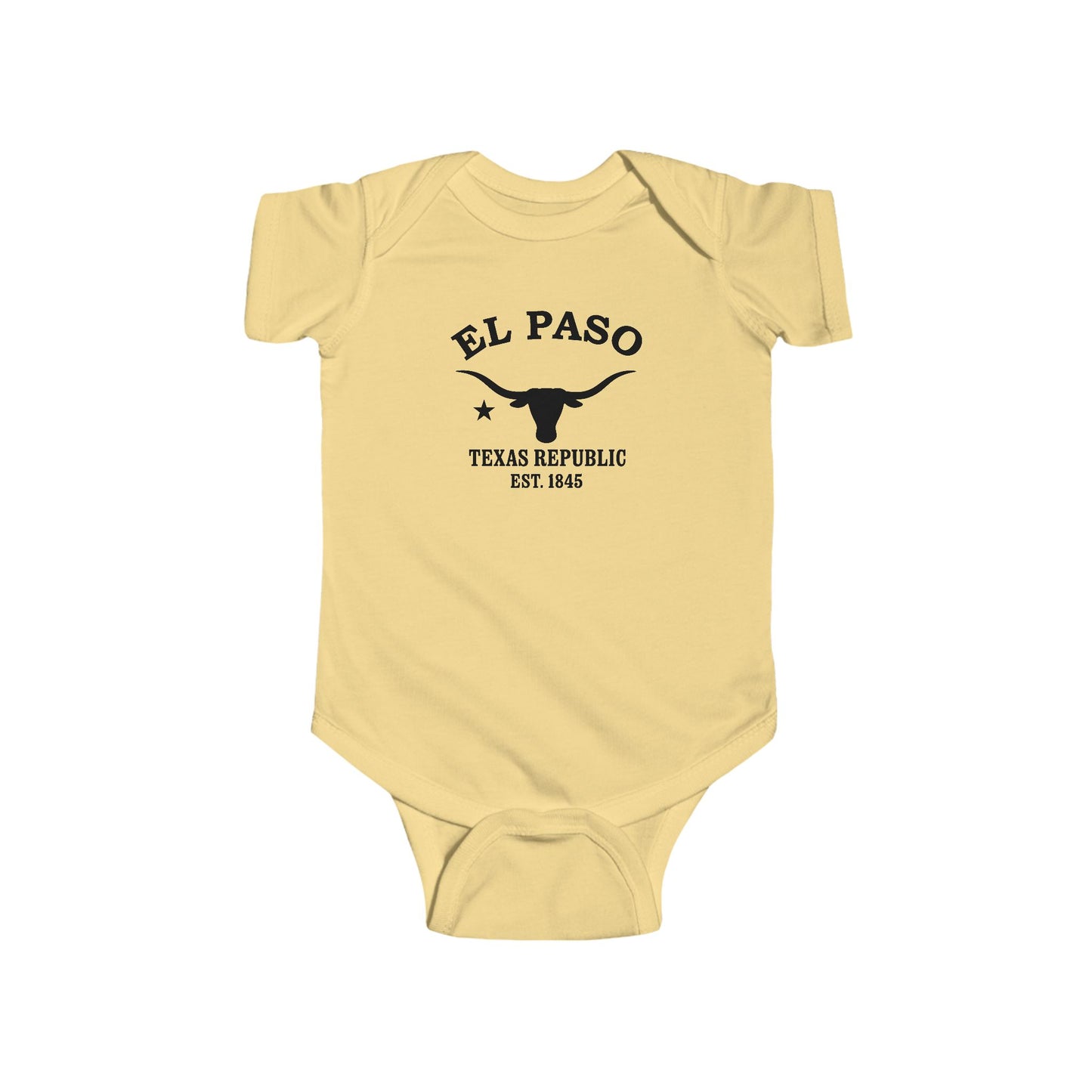
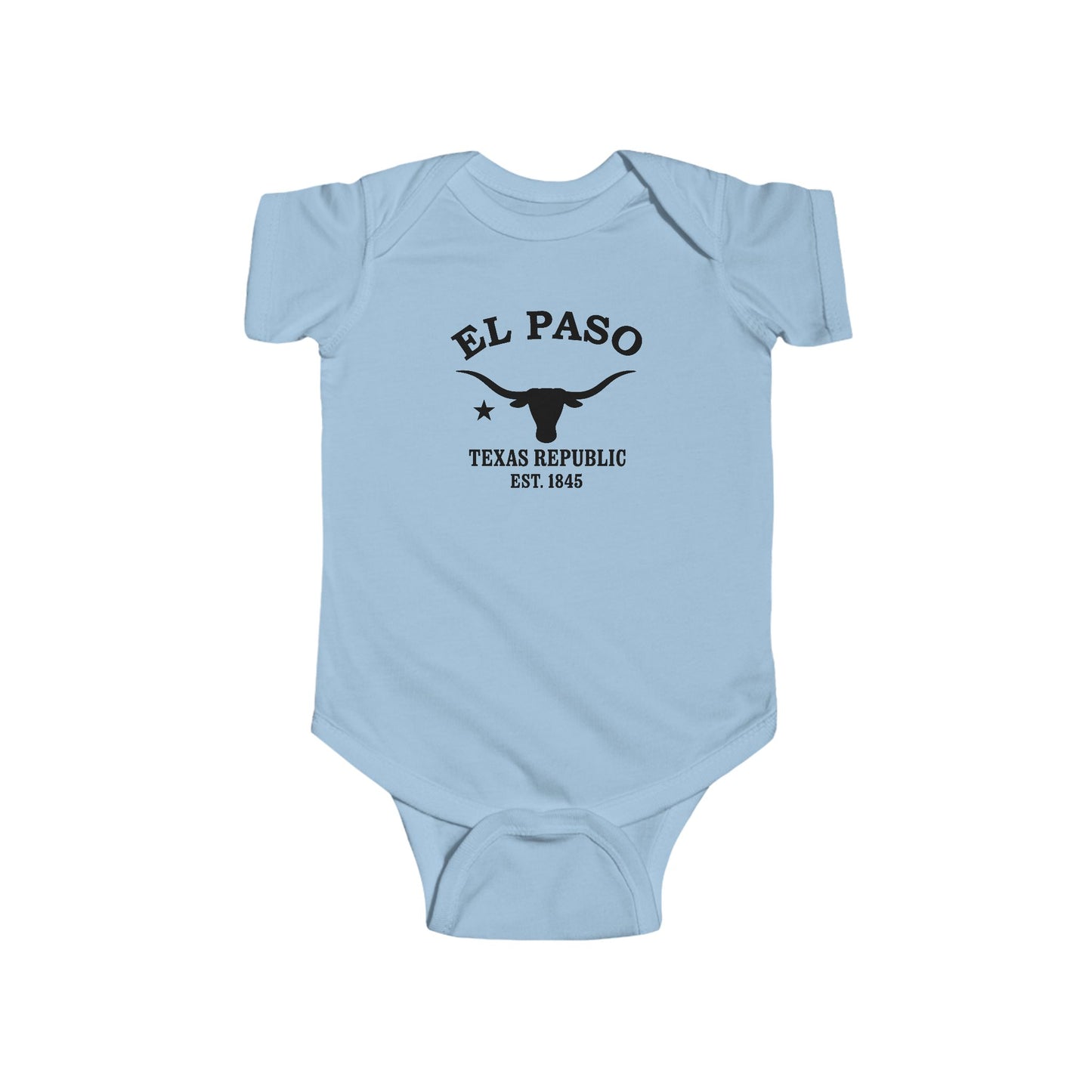
Our El Paso logo carries the Texas longhorn and Lone Star, the same emblem every Merlin Classics Texas place wears, set over "Texas Republic, Est. 1845." The longhorn and star are the Lone Star State's shorthand — toughness, independence, the open range — printed black-and-white with the worn look of an old cattle brand or a rodeo poster. What makes this one El Paso is the place behind it: the Pass of the North, the Franklin Mountains, the desert sun. On a tee or a cap it reads less like a souvenir and more like a piece of West Texas — Est. 1845, worn plain.
The north bank settlement that became modern El Paso took shape after 1827, and in 1848 the Treaty of Guadalupe Hidalgo placed it in United States territory, with Fort Bliss established the same year. When the railroad arrived in 1881, El Paso boomed into a wide-open crossroads of the Old West. Through all of it the city kept the identity the Spanish had named: the Pass — a place defined by the crossing itself, by two languages and two countries sharing one desert valley, and by the mountains that frame it.
Why People Visit El Paso Texas
- Hike Franklin Mountains State Park, one of the largest urban parks in the country, with desert trails and overlooks above the city.
- Drive the Scenic Drive Overlook for the classic view of the valley, the mountains, and the lights of two countries at night.
- Follow the El Paso Mission Trail to Ysleta, the oldest mission in Texas, plus Socorro and the San Elizario chapel.
- Rest at San Jacinto Plaza, the historic downtown square with its sculpted alligators.
- Explore Hueco Tanks State Park for desert rock formations and world-class bouldering.
- Visit the El Paso Museum of Art downtown for regional collections and rotating exhibitions.
