


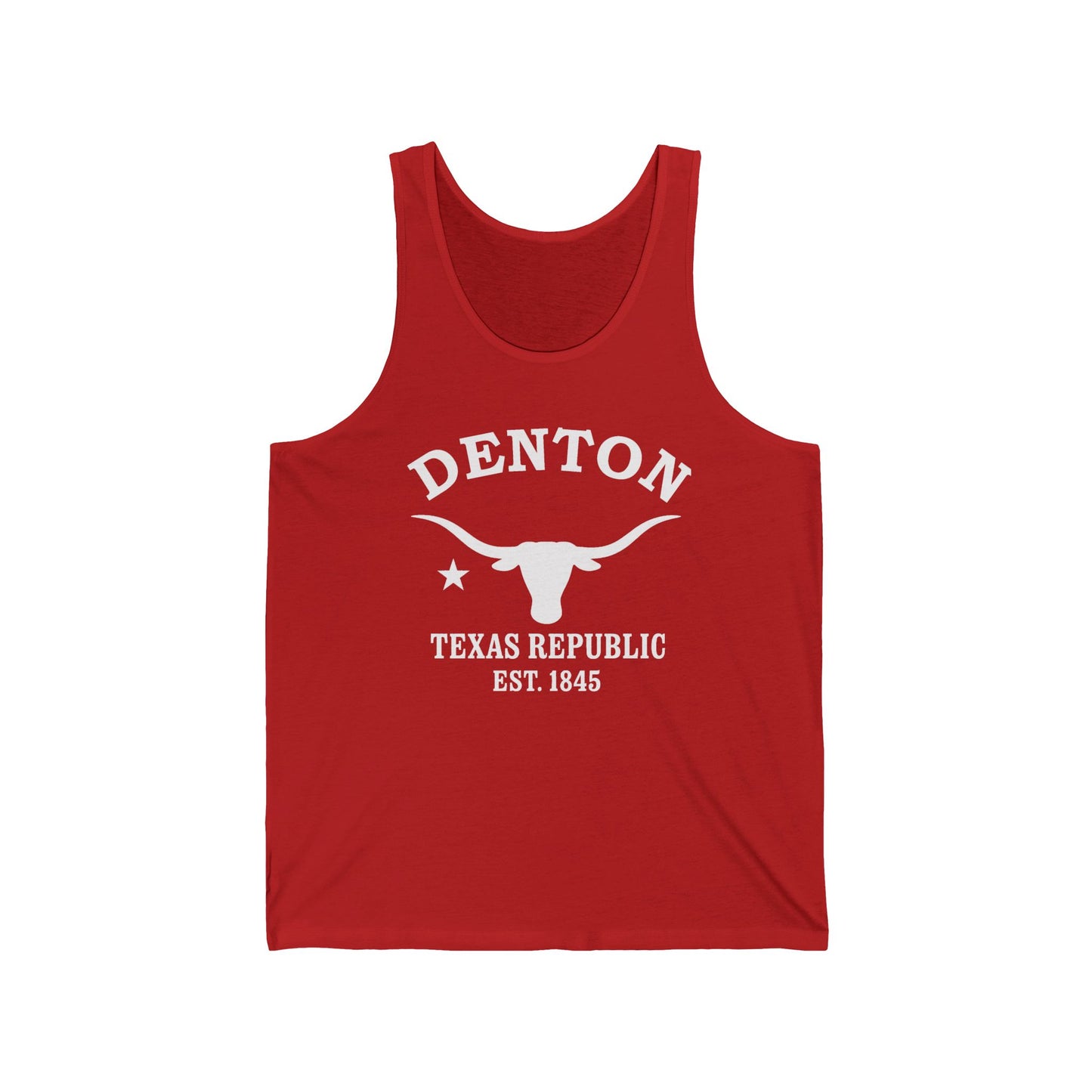

Our Denton logo carries the Texas longhorn and Lone Star over “Texas Republic · Est. 1845,” the year Texas joined the Union — the shared emblem of every Merlin Classics Texas place. Printed in a distressed black-and-white that reads like an old brand iron or a rodeo poster, the longhorn is Texas in shorthand: ranch country, independence, the Lone Star. What makes this one Denton is the town behind it — the courthouse square, the two universities, and the music that turned a North Texas county seat into “Little Austin.”
Beyond the music, Denton keeps the feel of a college town that never quite turned into a suburb. The square is lined with record stores and used-book shops, vintage-clothing racks and coffeehouses, and the 1949 Campus Theatre still lights its marquee on the corner. Two universities empty the place out every summer and fill it back up every fall, so the whole town tilts toward the rhythm of semesters and festivals. It is a North Texas county seat that reads, on a good night, more like a small Austin than a Dallas suburb.
Why People Visit Denton
Denton offers the energy of a music town and the ease of a small Texas city — a beautiful courthouse square, a deep live-music calendar, two universities, and a creative streak that earned it the nickname “Little Austin.” It's walkable, friendly, and unmistakably North Texas.
