


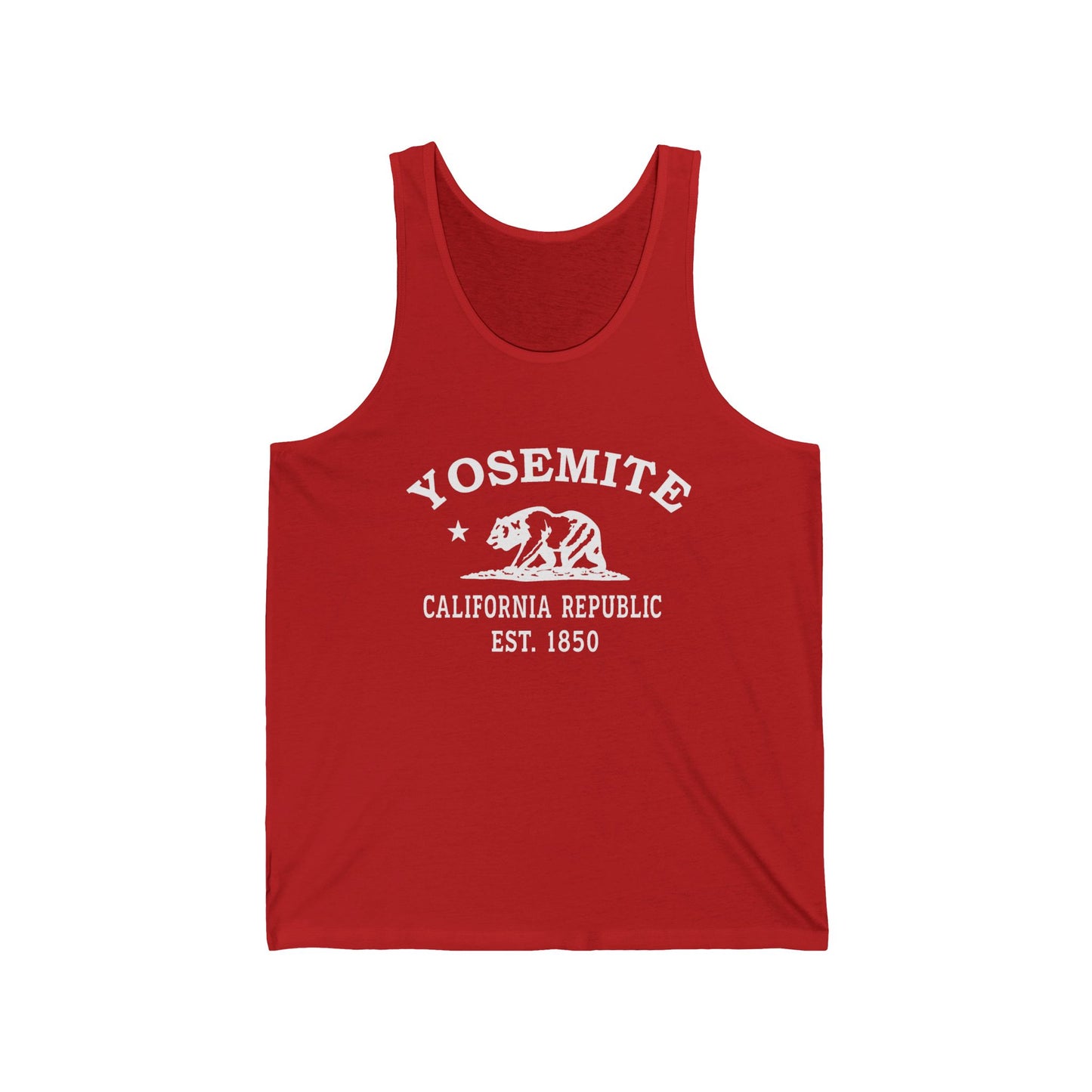
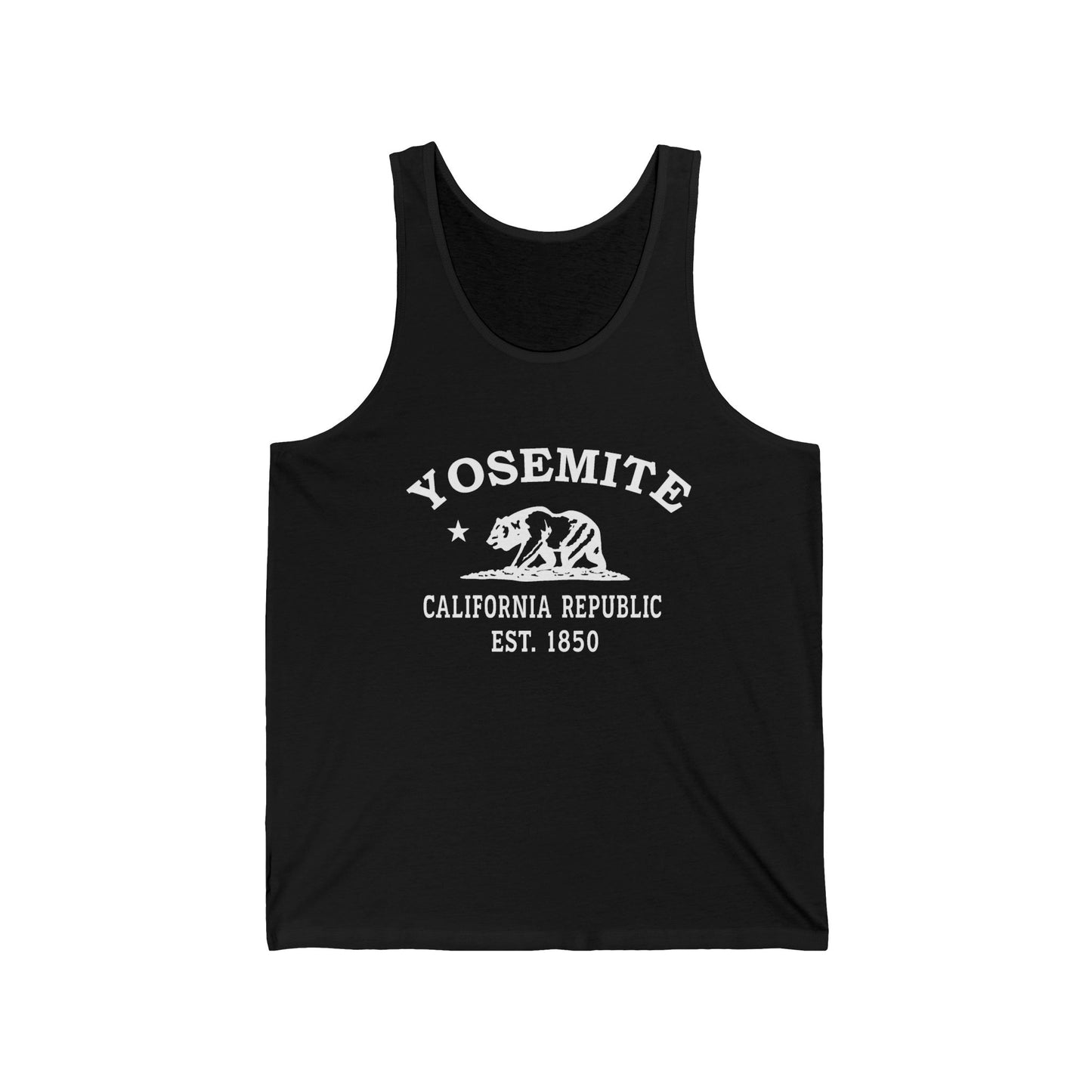
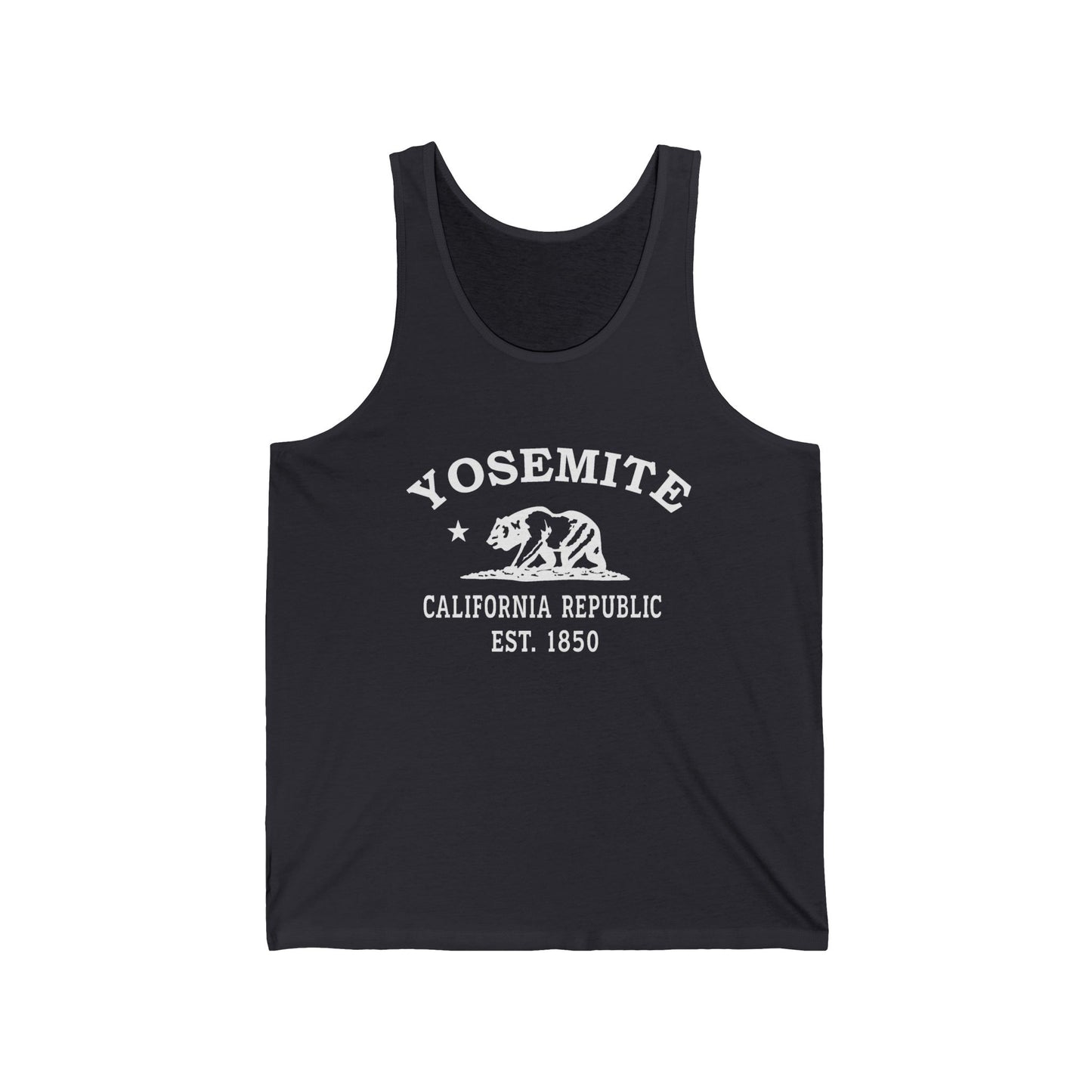
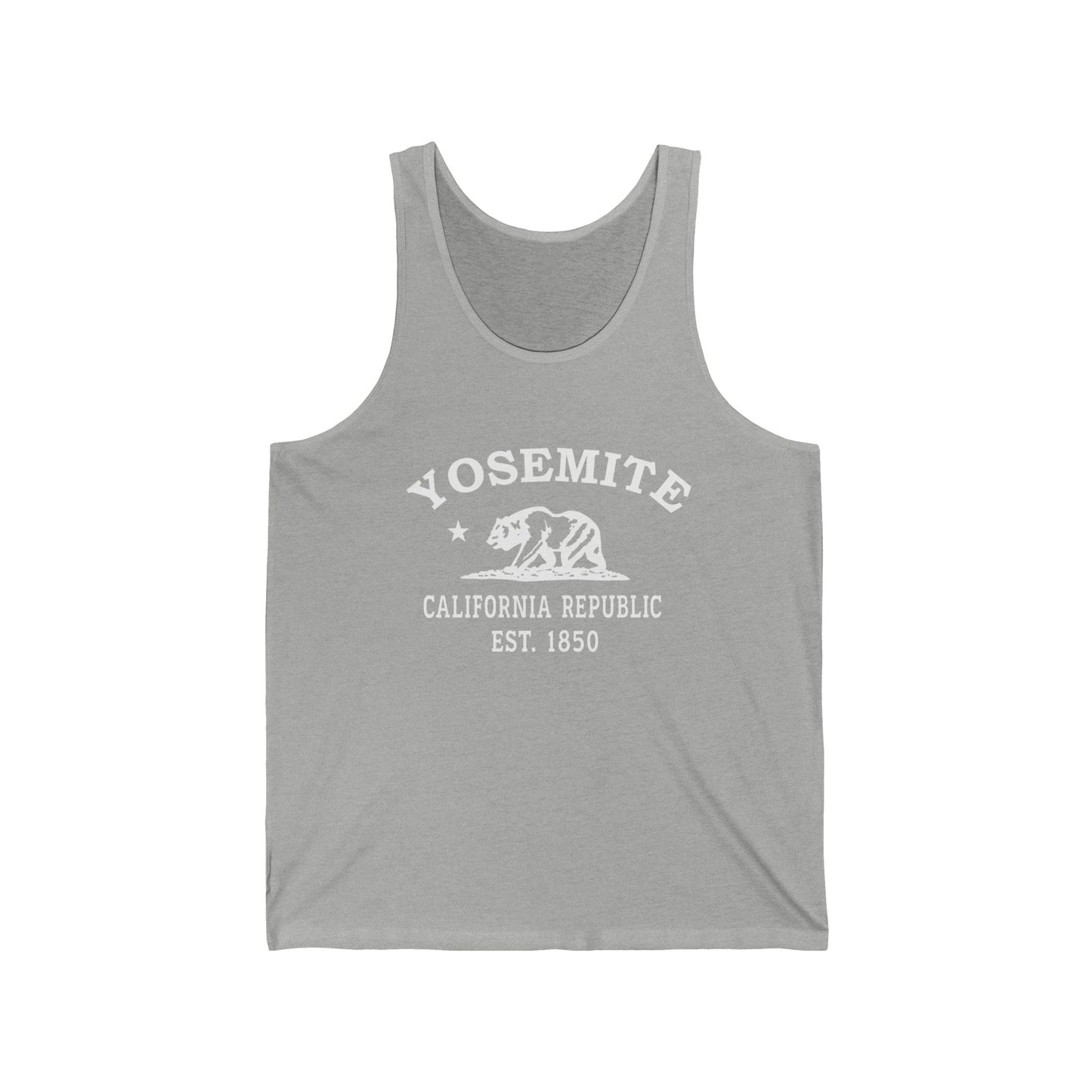
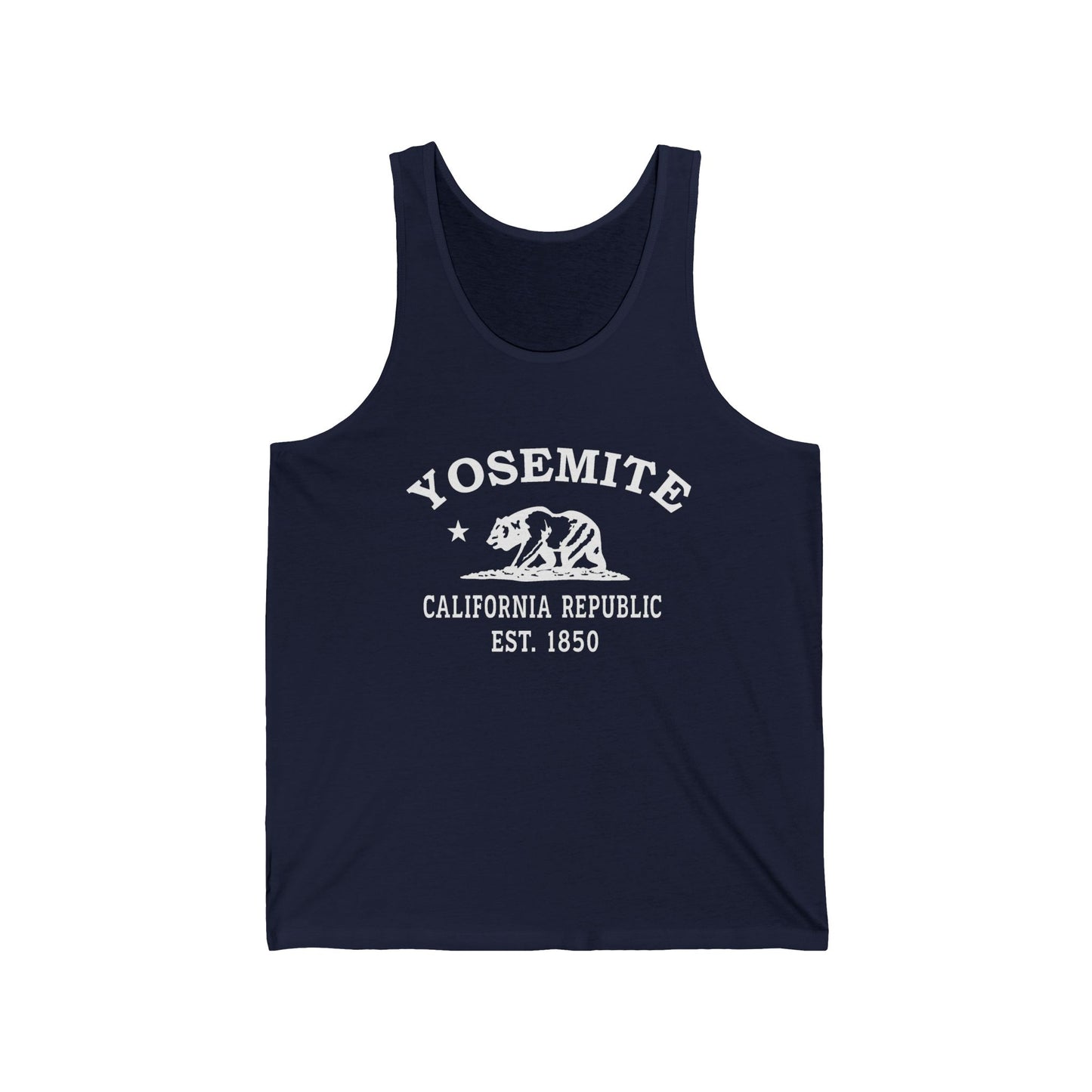
Our Yosemite logo carries California's grizzly and lone star above “California Republic · Est. 1850,” the year of statehood — the shared retro emblem of every Merlin Classics California place. Printed in a worn black-and-white that recalls an old WPA park poster and a crate-label stamp, the bear is California in shorthand: wild, durable, and at home in big country. The bear is the through-line that links Yosemite to every other California place we make. What makes this one Yosemite is everything around it — the granite of Half Dome and El Capitan, the sequoias, the waterfalls, and the valley that taught America to save its wild places.
The park became a wellspring of American art and conservation. Its waterfalls and granite walls drew generations of painters and photographers who fixed Yosemite in the national imagination, and the preservation argument that began here helped build the modern conservation movement. Today Yosemite spreads across roughly 748,000 acres of the Sierra Nevada, a UNESCO World Heritage Site since 1984, and draws three to four million visitors a year to a valley that, in its essentials, looks much as it did when Muir first walked in.
Why People Visit Yosemite
Yosemite offers wilderness on a scale few places can match — a glacier-cut valley of granite cliffs and waterfalls, giant sequoias older than the country, and the high Sierra beyond, all carrying the founding story of the national-park idea. Visitors come for Half Dome, El Capitan, and the falls, and stay for the sequoias, the meadows, and the long Sierra light. From a valley stroll to the high country, it rewards a day or a week. It is timeless, humbling, and unmistakably California.
