


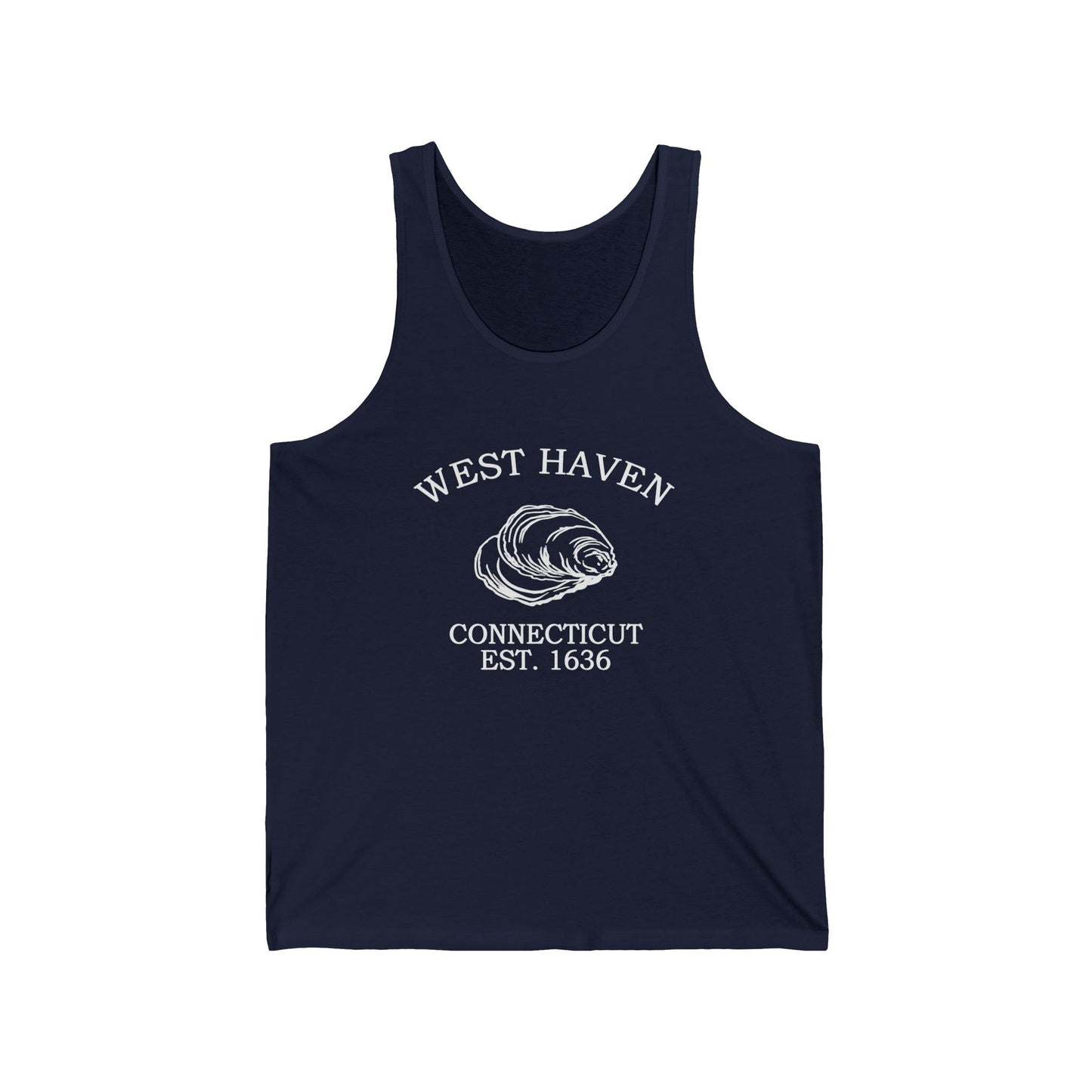
Today West Haven is a working shoreline city of about fifty-five thousand, proud of its beaches, its boardwalk, and the memory of ‘the Rock.’ Its story runs from Quinnipiac oyster beds to colonial farms to the brightest summers New England ever lit, and out to the long quiet beach that remains. Our West Haven designs gather that into wearable form. Wear the history. This is the playground of New England — and the longest shoreline in the state.
Like every wooden seaside park, Savin Rock lived close to its end. Fires, the great 1938 hurricane, and finally the bulldozers of urban renewal took the rides down piece by piece, and the last of the park closed in 1966. What replaced it is, in its quiet way, just as West Haven: the rides gave way to Savin Rock Park and a long shorefront boardwalk, the heart of the longest publicly accessible shoreline in Connecticut — some three and a half miles of beach running west to Bradley Point and the Sandy Point bird sanctuary. The coasters are memory; the walk by the water is still here, and a revived Savin Rock Festival keeps the old name alive each summer.
Why People Visit West Haven
West Haven appeals with simple shoreline beauty and strong local pride. Visitors pair long beach and boardwalk walks with small museums, the historic Green, and the nostalgia of Savin Rock. It is relaxed, local, and close to the water, with year-round appeal in its parks, paths, and public spaces. The vintage-summer feeling of the old amusement park is evergreen, and history and everyday shoreline life sit side by side in a welcoming way.
