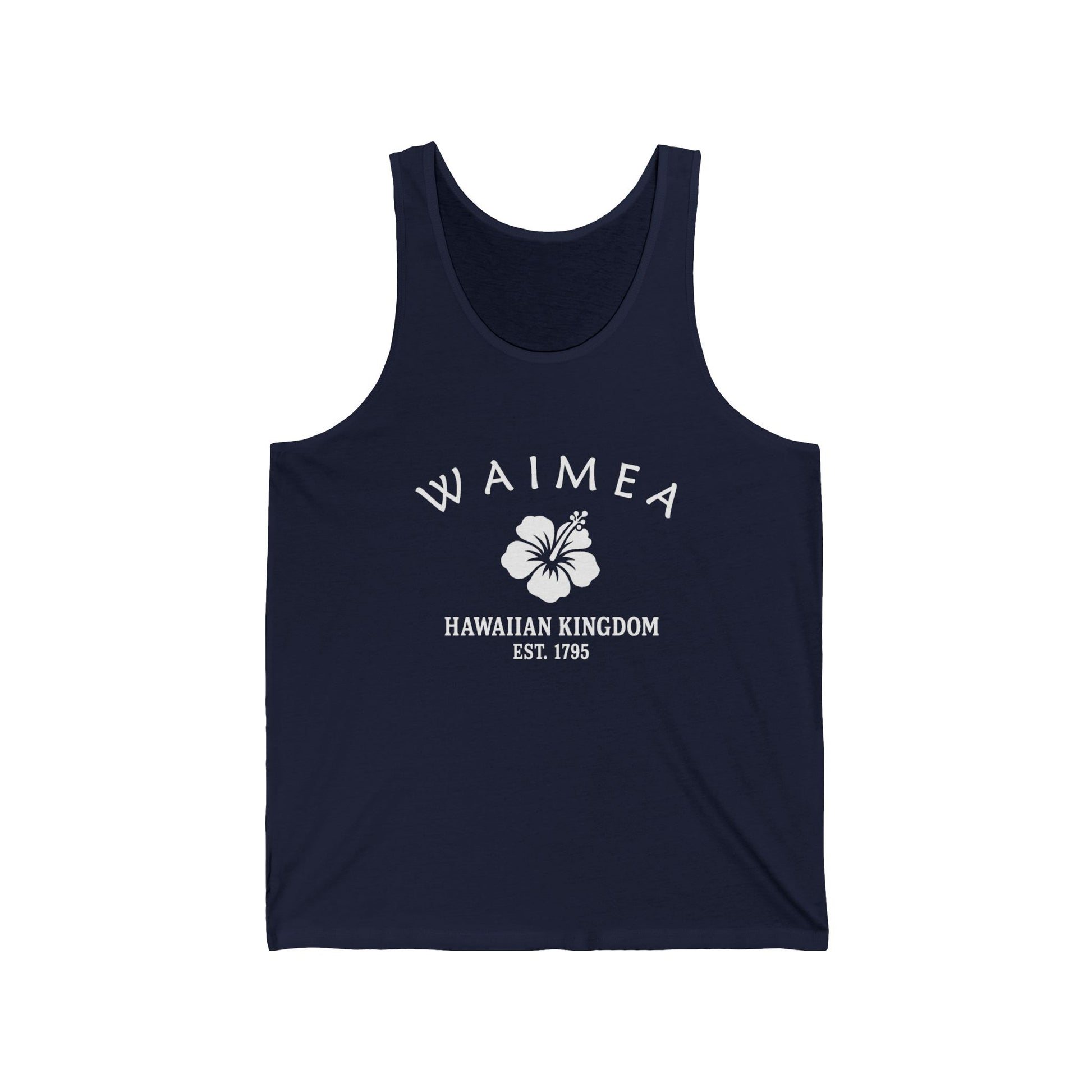
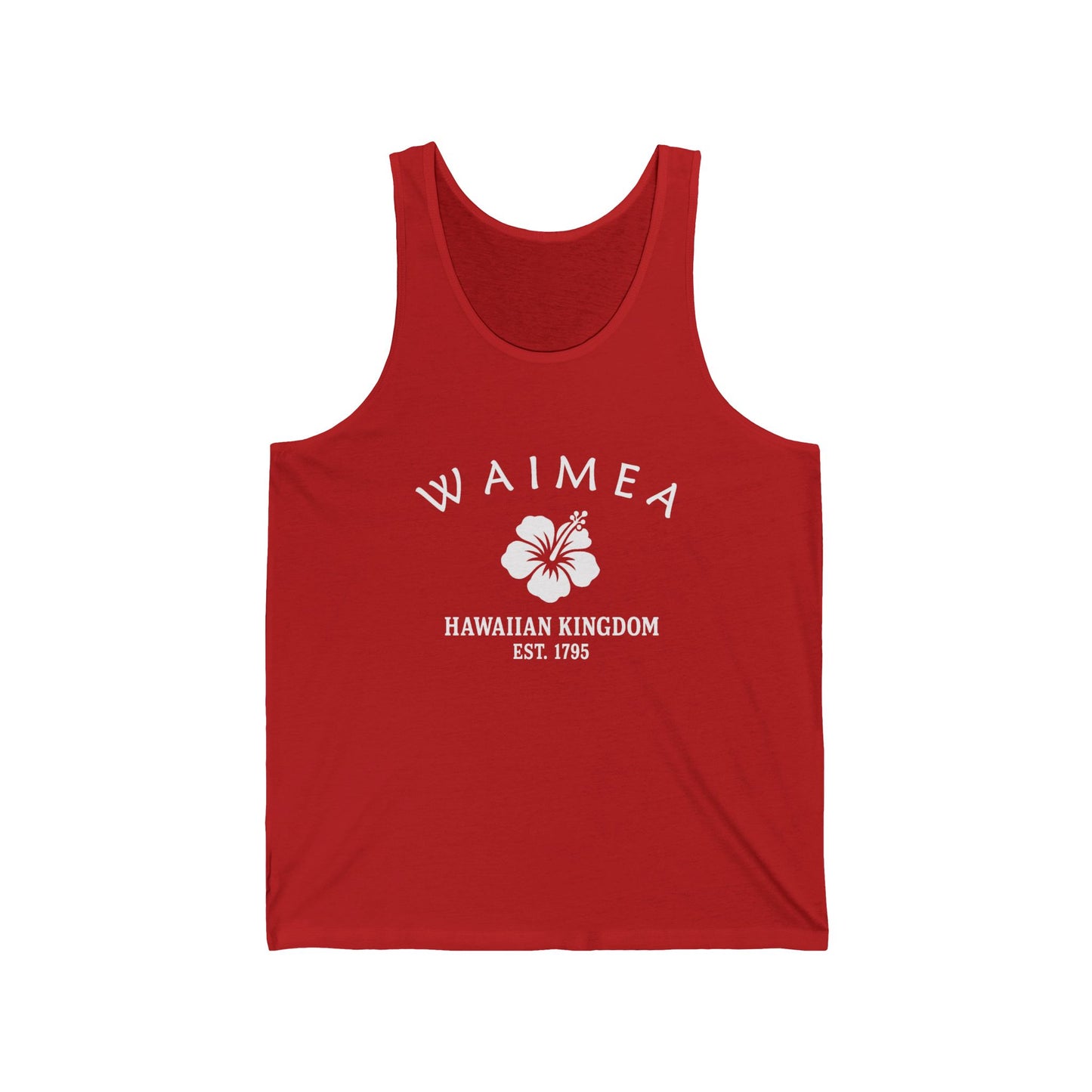
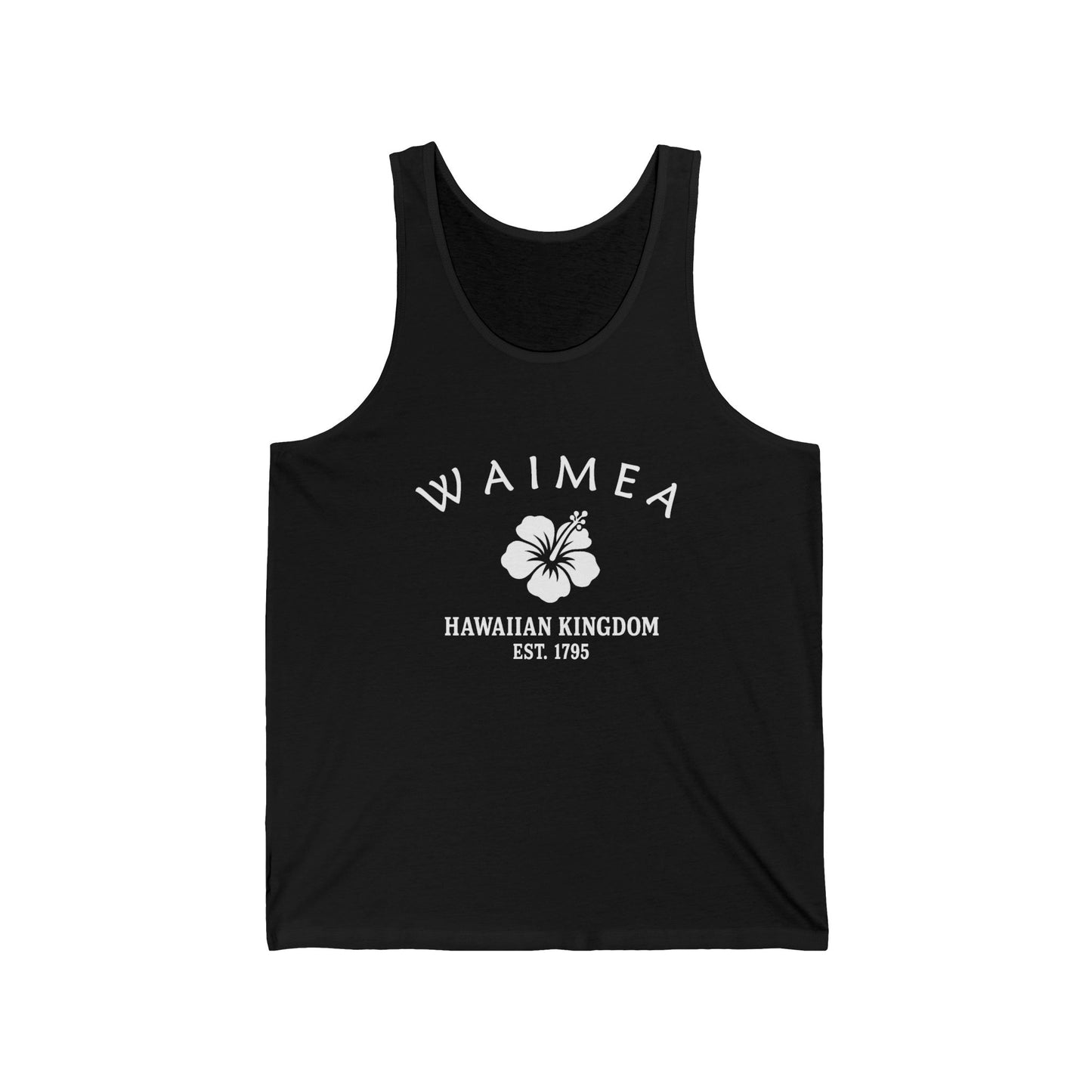
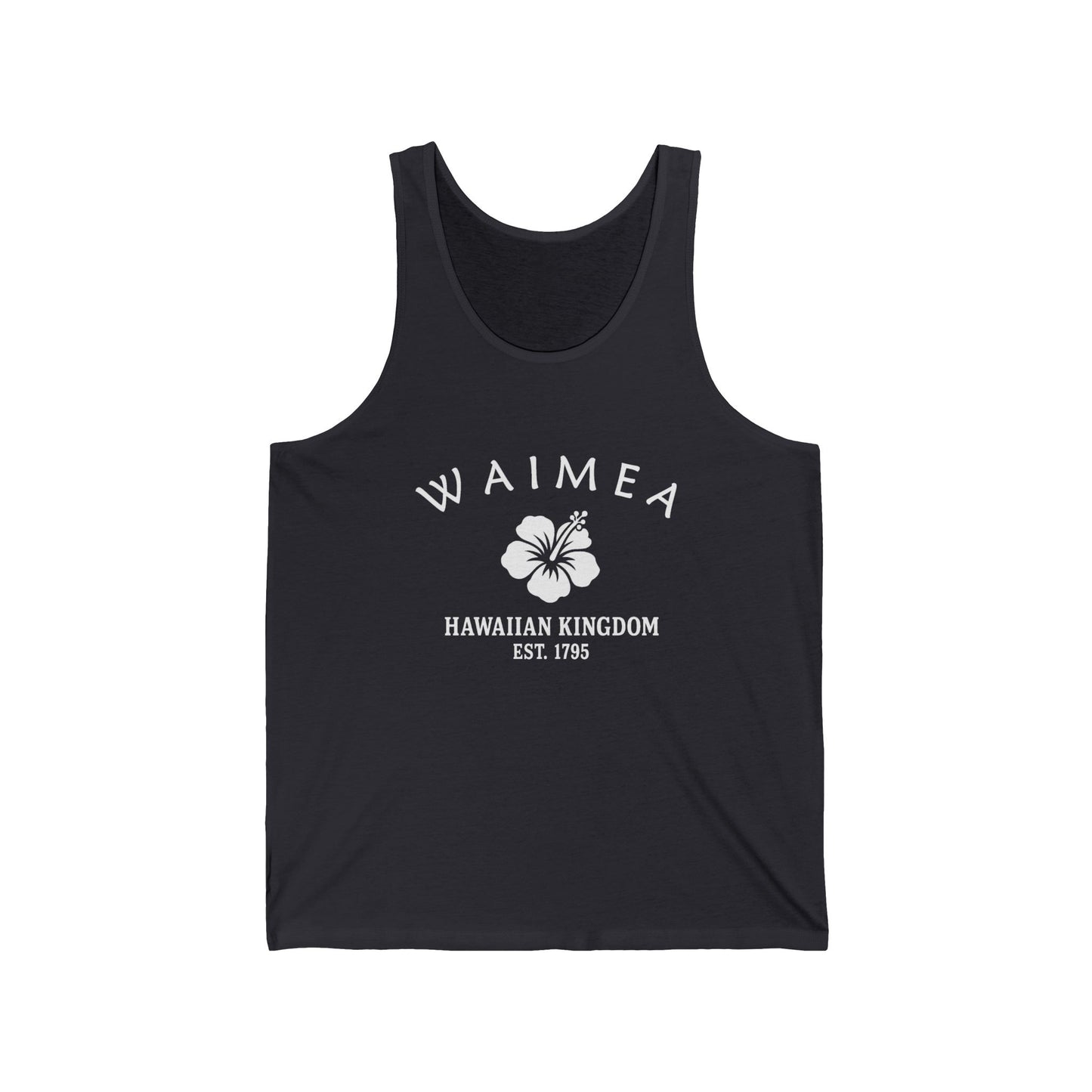
Our Waimea logo carries the Hawaiian hibiscus over “Hawaiian Kingdom · Est. 1795,” the year Kamehameha I unified the islands — the shared emblem of every Merlin Classics Hawaiʻi place. Printed in a clean retro black-and-white that reads like an old travel decal, the hibiscus stands for the islands as a whole; what makes this one Waimea is the country behind it — the paniolo on the high pastures, Parker Ranch under Mauna Kea, and a Hawaiian town that has been green, cool, and proud of its cowboys for nearly two centuries.
For all the ranch's reach, Waimea stays a small upcountry town. At over twenty-six hundred feet the air is cool and often misty, and the green hills feel closer to the high country of New Zealand or the Rockies than to any tropical shore. The town fills its calendar with the things of ranch country: a Fourth of July rodeo that goes back generations, weekly farmers' markets on the school grounds, and a February cherry-blossom festival that honors the Japanese families who became part of the community. Waimea is also the crossroads of North Hawaiʻi, the gateway town on the road between the Kona and Hilo coasts.
Why People Visit Waimea
Waimea offers the Hawaiʻi that isn't a beach — cool, green, and high, with a deep ranching culture and Native Hawaiian roots. Visitors come for the paniolo heritage, the upland air, the farmers' markets, and the rare feeling of a Hawaiian cowboy town under the slopes of a sacred mountain.
