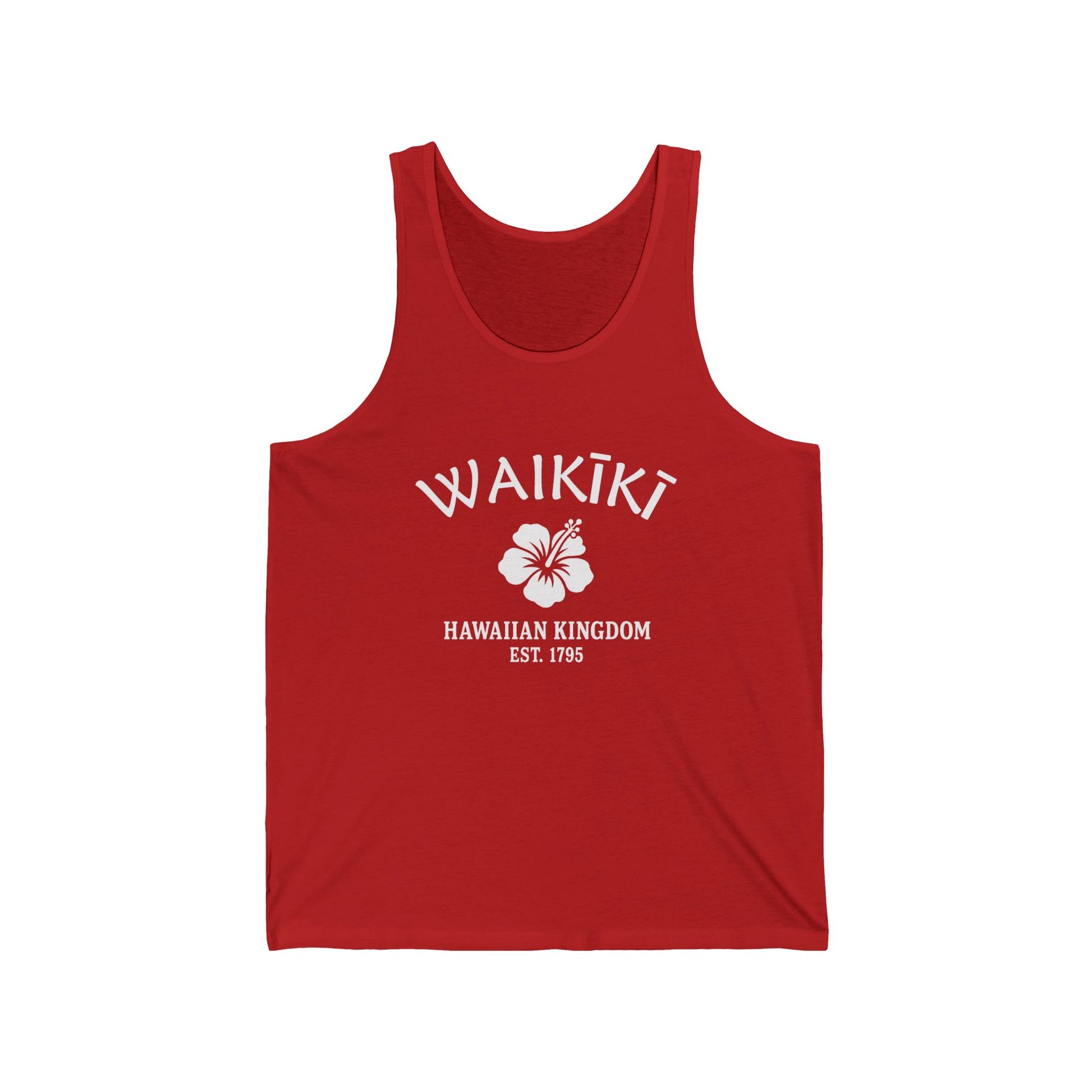
From the mid-1400s, Hawaiians turned that wetland into one of the most productive landscapes in the islands. They built loʻi kalo — irrigated taro terraces — and loko iʻa, walled fishponds, laced together by ʻauwai (irrigation channels), raising taro, fish, and seaweed in steady abundance. Waikīkī was a breadbasket and a center of power: high chiefs kept residences and heiau here, drawn by the food, the fresh water, and the surf. At Kālia, on the western shore, a family of fishers and watermen worked the ponds — and among their descendants would be a boy named Duke Kahanamoku.
Today Waikīkī is where the world learns to surf. The royal sport the aliʻi rode here became a global one through Duke Kahanamoku, the Kālia boy turned Olympic champion, whose bronze statue now stands on the sand with arms spread wide in welcome. Outrigger canoes still launch through the breakers, hula and music drift from the beachfront, and beneath the towers the old name endures — Waikīkī, the spouting waters, a royal shore that taught the world to ride the waves. Our designs carry that older, deeper name with pride.
Why People Visit Waikīkī
Waikīkī offers a whole world in two miles of sand: the birthplace of modern surfing, royal history beneath the hotels, Diamond Head at the end of the beach, and the easy warmth of Hawaiian hospitality. It is the most famous beach in the Pacific — and for the surfers, paddlers, and families who live and gather here, simply home.
