Skip to product information
1 of 5

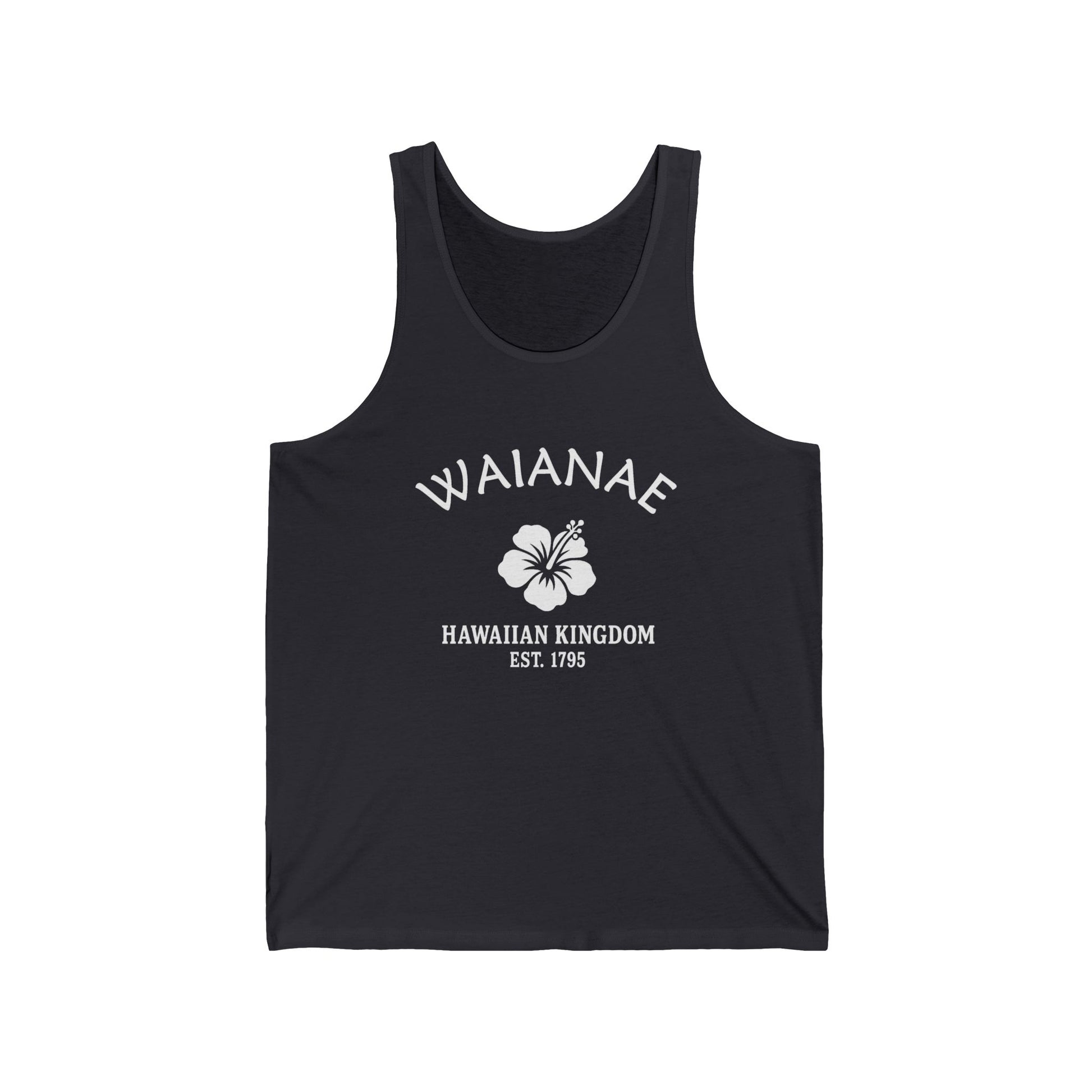
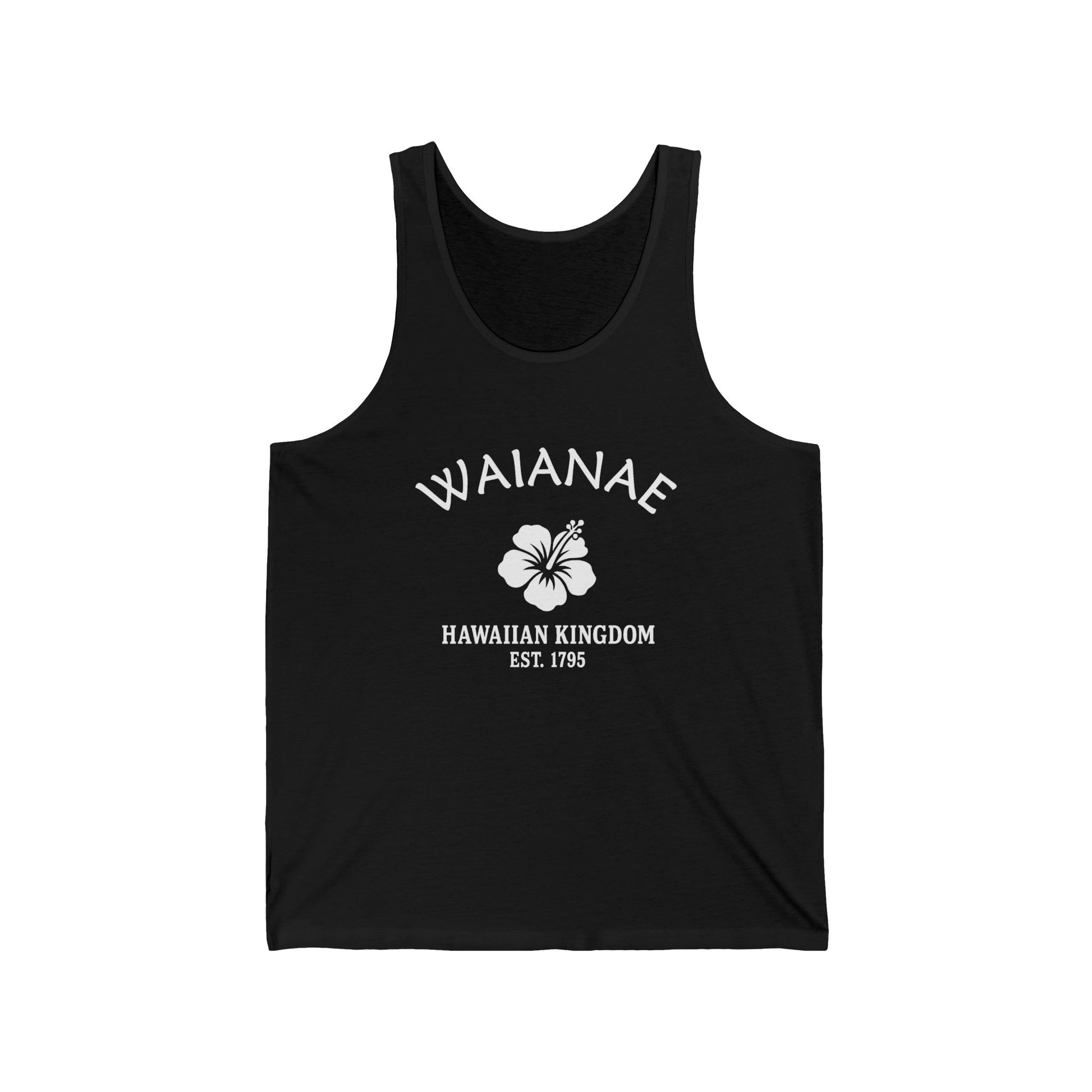
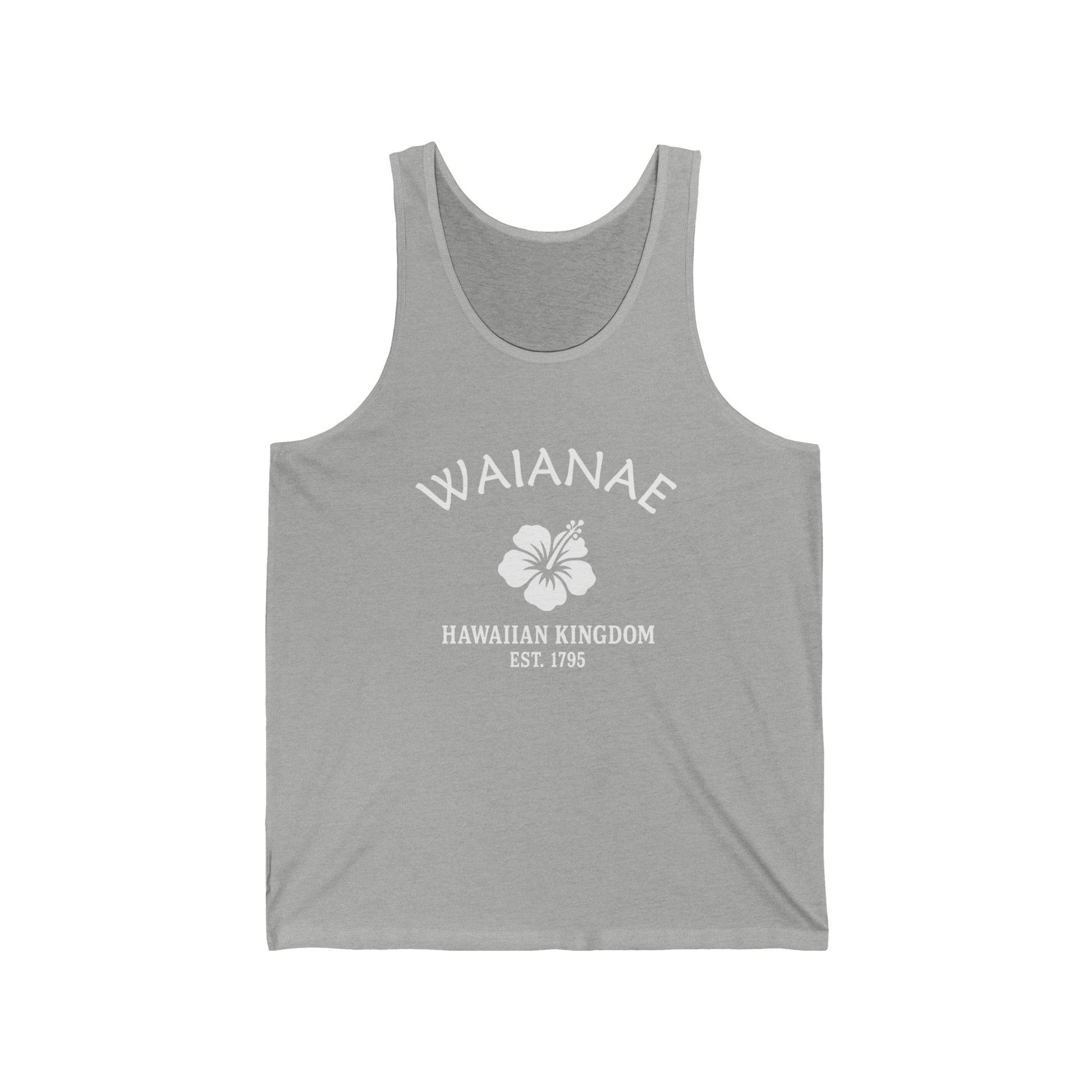
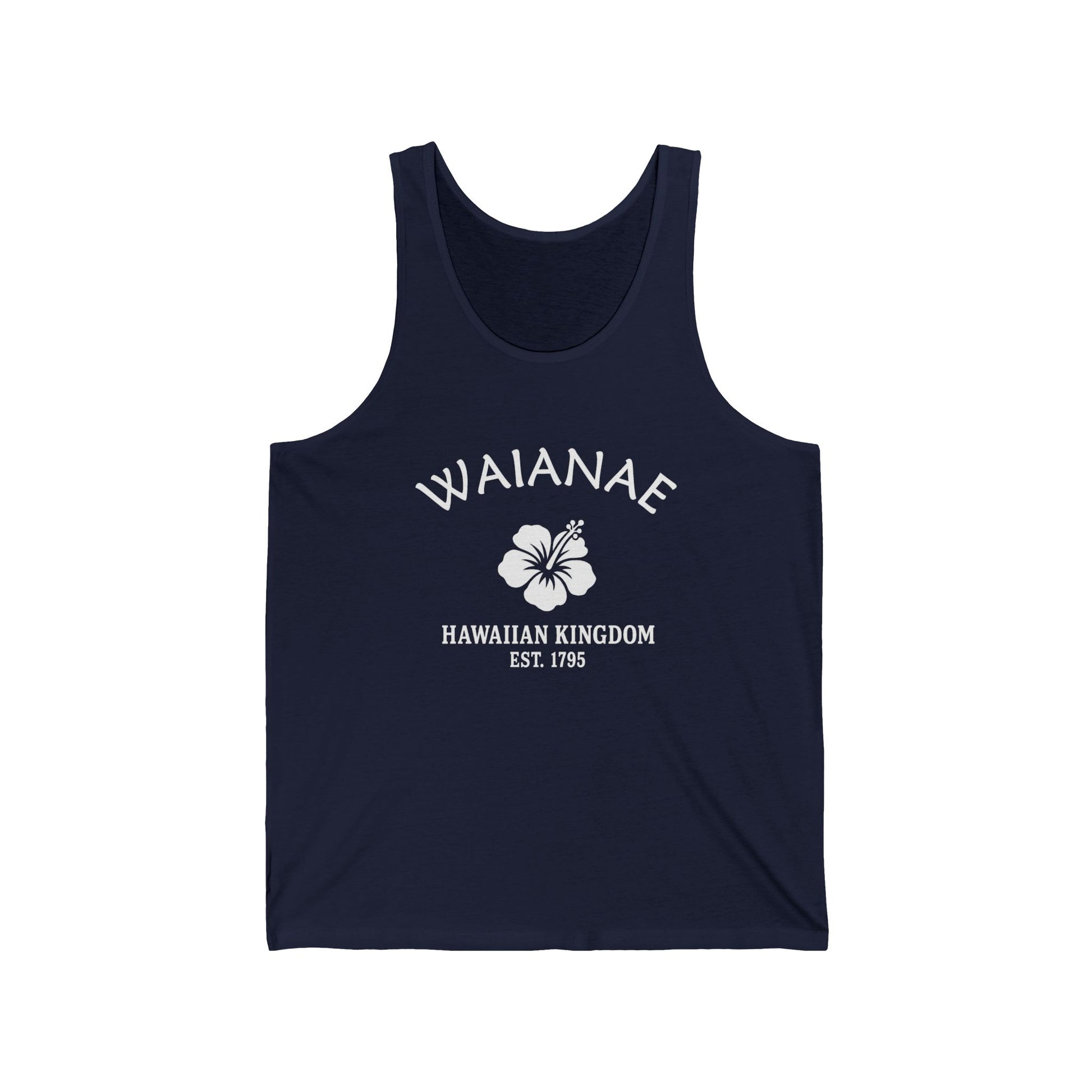
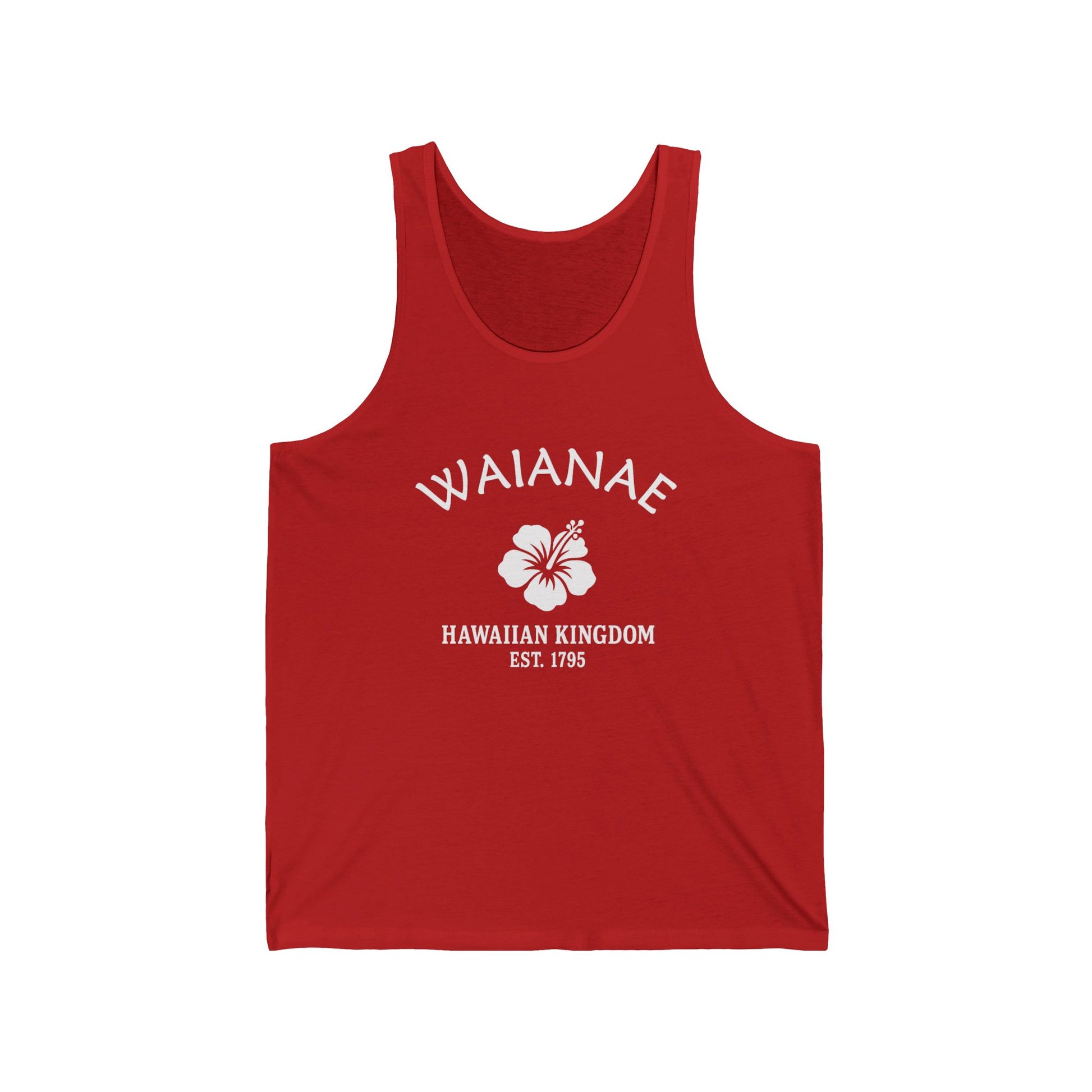
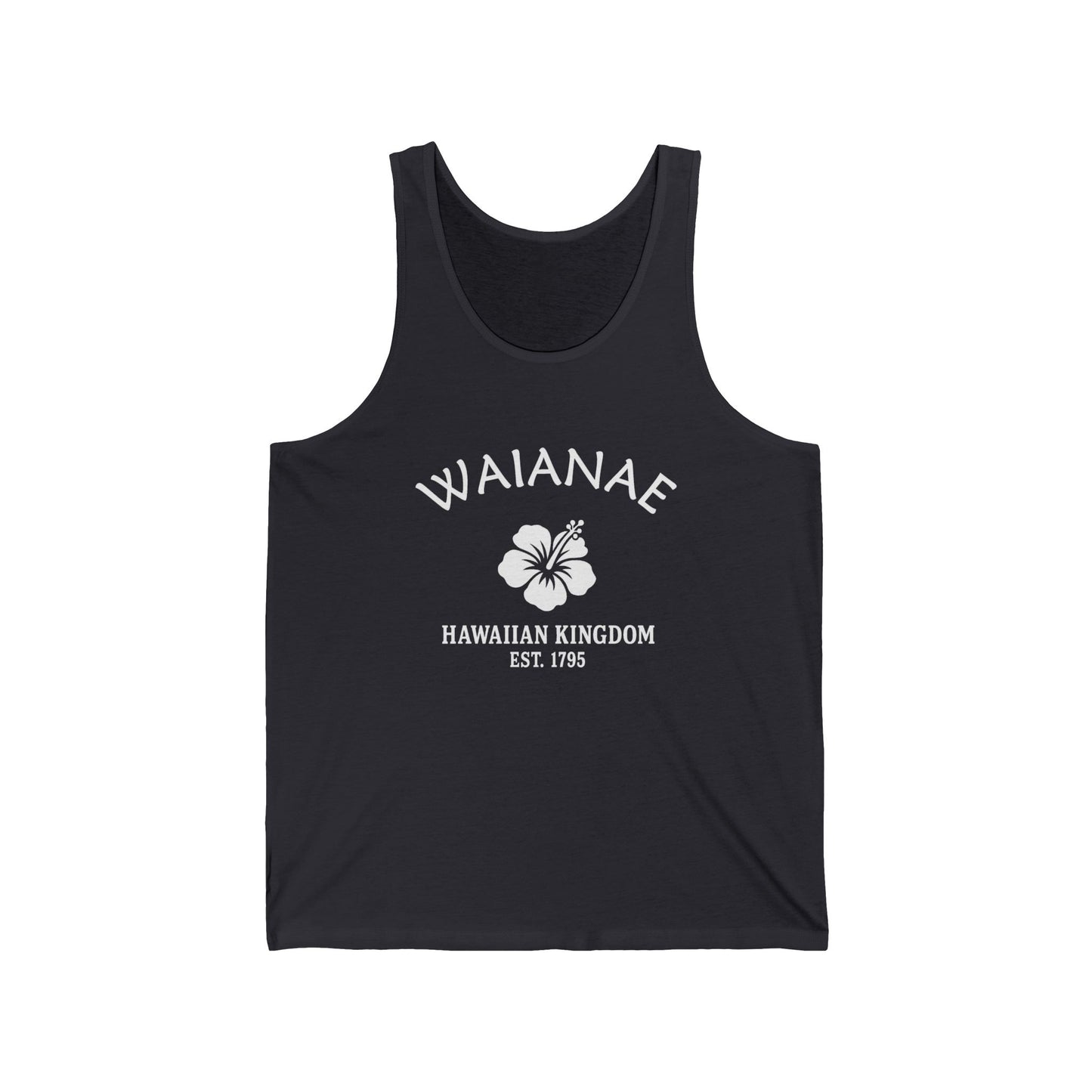
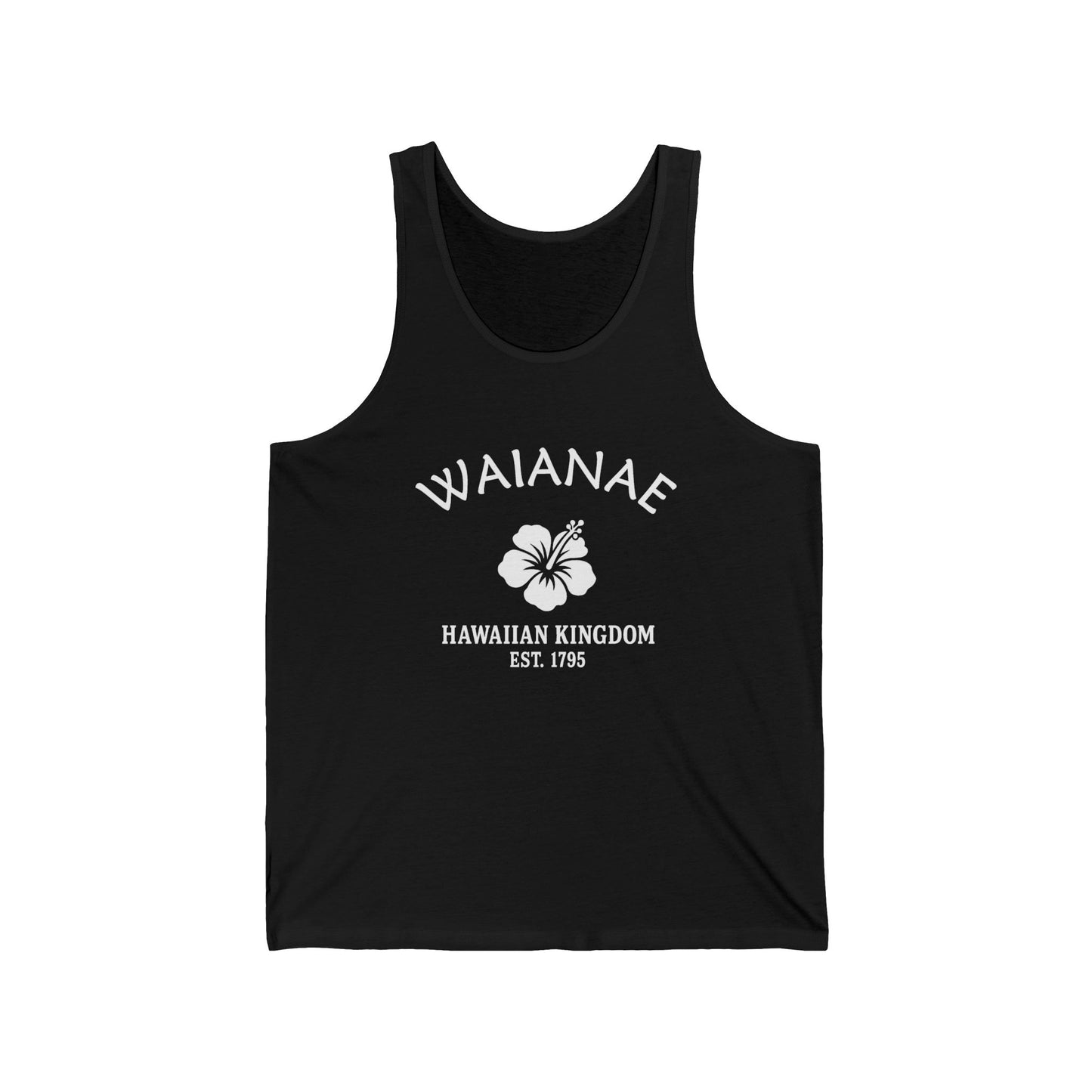
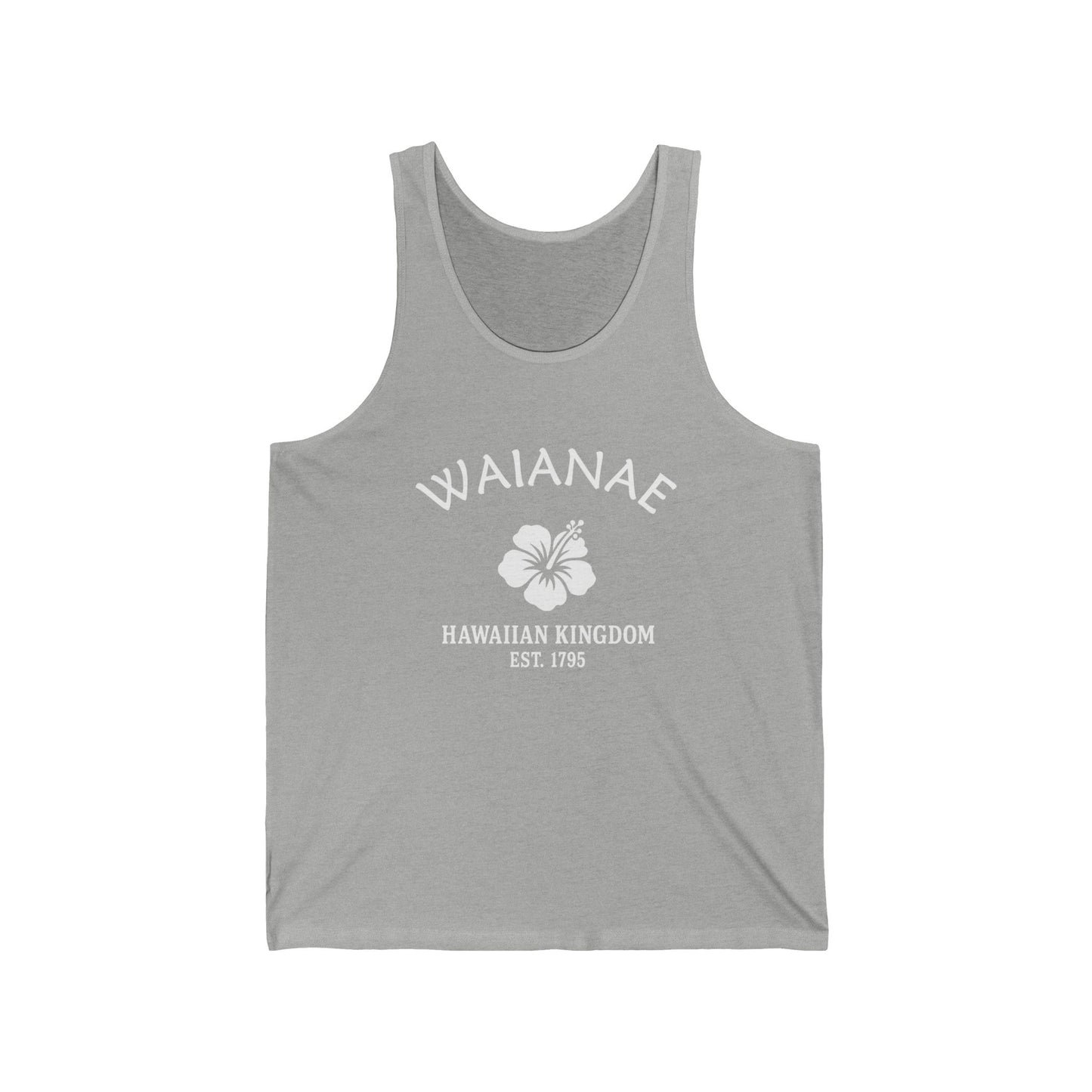
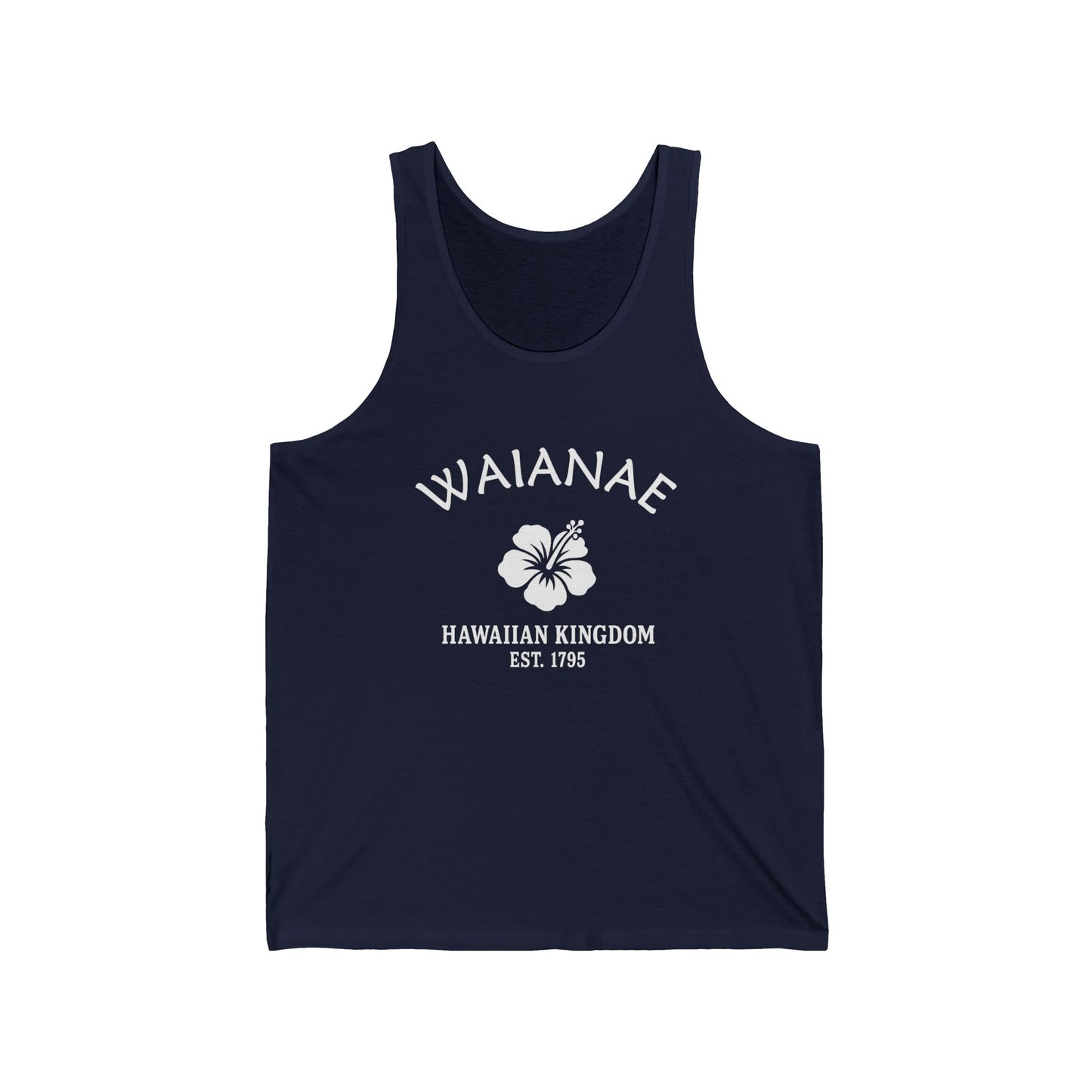
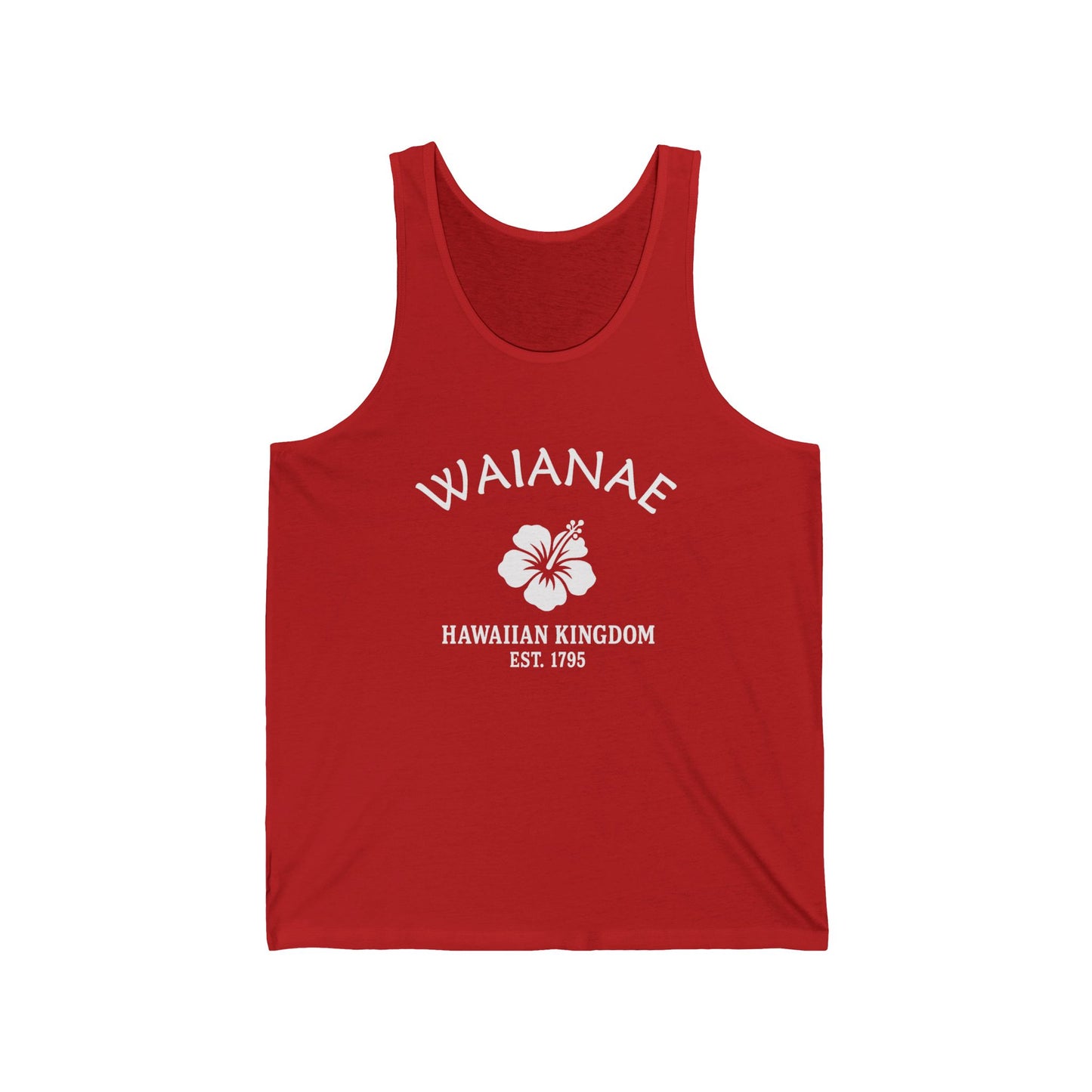
Waianae Hawaii Vintage Retro Unisex Cotton Jersey Tank Top - White Logo

Waianae Hawaii Vintage Retro Unisex Cotton Jersey Tank Top - White Logo

Regular price $28.00 USD
Regular price Sale price $28.00 USD
Sale
Shipping calculated at checkout.
Size
Color
Quantity
Unisex jersey tank made from lightweight Airlume combed and ring-spun cotton with a retail fit. Side-seam construction and self-fabric binding help it hold shape, with a tear-away label, and it runs true to size for adults. Solid colors are 100% cotton; select heather/prism shades may include cotton–poly or cotton–poly–rayon blends.

View full details

The Mākaha era began in the 1930s when Honolulu surfers first ventured west to ride the leeward-coast waves, and accelerated in 1952 when John Lind's Waikīkī Surf Club and the Waiʻanae Lions Club organized the Mākaha International Surfing Championships. The first running of the contest at Mākaha Beach in 1953-1954 was the world's first international surfing competition; the event grew through the 1950s and 1960s into the unofficial world championships, drew thousands of spectators out to the Westside every November and December, ran on ABC's Wide World of Sports in 1962 as the first televised surf contest ever, and continued at Mākaha until 1971 — when global surf attention shifted to the North Shore breaks at Pipeline and Sunset Beach. Greg Noll caught what surfers of the era called the biggest wave ever ridden, at Mākaha, in 1969. The Mākaha-born lifeguard Richard "Buffalo" Keaulana — born 1934, with a royal genealogy that ran through Kamehameha I on his father's side and Kekaulike on his mother's side, and the 1960 Mākaha International champion — founded Buffalo's Big Board Surfing Classic at Mākaha Beach in 1977, featuring canoe-surfing, tandem surfing, bullyboarding, bodysurfing, and longboards, and the Classic still runs every February. Behind the surf, in Mākaha Valley, Kāneʻāki Heiau is one of the most thoroughly restored ancient heiau in Hawaiʻi — a wahi pana that the Bishop Museum restored across the 1970s and opened to respectful public visits Tuesday through Sunday in 1990. The heiau is sacred ground; visitors observe quietly.

The Western era arrived in stages. The 1820 arrival of the first Christian missionaries on Oʻahu reached the Westside through Stephen Waimalu, who was installed as the first Hawaiian minister of Waiʻanae in 1850. The Treaty of Reciprocity in 1876 opened duty-free sugar exports to the United States, and a sugar-plantation economy followed. In 1888, Benjamin F. Dillingham obtained a franchise to extend his Oahu Railway and Land Company line along the Waiʻanae coast, ultimately running rail from Honolulu through Pearl Harbor and along the Westside past Kaʻena Point to Waialua and Kahuku. The Hawaiian Kingdom was overthrown in 1893, the islands were annexed by the United States in 1898, and Hawaiʻi entered the Union as the 50th state on August 21, 1959.

Why People Visit Waiʻanae Hawaiʻi

Waiʻanae offers the original home of big-wave surfing at Mākaha Beach, the world's first international surfing competition (1953-1954) and the long-running Buffalo's Big Board Surfing Classic, the protected swimming waters of Pōkaʻī Bay with its Pōkaʻī coconut-grove legend and Kūʻīlioloa Heiau, the 15th-century Kāneʻāki Heiau in Mākaha Valley, the 4,025-foot summit of Mount Kaʻala as the highest peak on Oʻahu, the westernmost tip of Oʻahu at Kaʻena Point, and the long Native Hawaiian heritage of the Waiʻanae moku that has carried this coast for centuries. It is the leeward Westside of Oʻahu — a residential community whose culture is alive, and where the world first watched surfers ride big waves on television. On the Westside since time before contact.

Waiʻanae Hawaiʻi Merlin Classics retro vintage logo featuring Hawaiian hibiscus motif with 1795 Kamehameha unification date

Wear Local. Feed Local. Stay Classic.

Product FAQs

How does your sizing work?

Because items are made to order, we can’t accept returns for sizing or color choices. We do accept returns for defects, misprints, or shipping damage. Please review the detailed photos and descriptions before purchasing. Women’s fitted tees run small; if you prefer a looser fit, consider sizing up.

How do I send gifts?

All items ship without prices and include a simple packing slip for easy gifting. Enter the recipient’s shipping address and your billing address at checkout. Use your contact info to receive tracking updates. Orders typically arrive within 6–11 business days—please allow extra time for time-sensitive gifts.

How do I care for my item?

For apparel: wash cold, inside-out, with like colors; avoid bleach and high heat; tumble dry low or hang dry. For embroidery, iron inside-out to protect the stitching. See specific care instructions in product descriptions and also follow general best practices in caring for your items for long term enjoyment.

How are items made and when will they arrive?

We make each item on demand using premium blanks, embroidery, and soft-hand prints. Production usually takes 2–5 business days (excluding weekends and holidays). You’ll receive tracking once shipped. We currently ship to U.S. addresses via USPS, UPS, or FedEx. Most orders arrive within 6–11 business days.

What’s the return/exchange policy?

We accept returns for defects, misprints, or damage on arrival. Report issues within 14 days with photos and your order number, and we’ll replace or refund. Size or color changes aren’t supported after purchase, so please consult size charts before ordering if you are at all unsure.

Who are we?

Merlin Classics is a volunteer-run, AI-assisted apparel project celebrating timeless local style. Every item is made to order, and profits (revenue minus external product/marketing cost) support hunger-relief programs in the communities our collections spotlight. Classic looks, real local impact—every purchase helps.