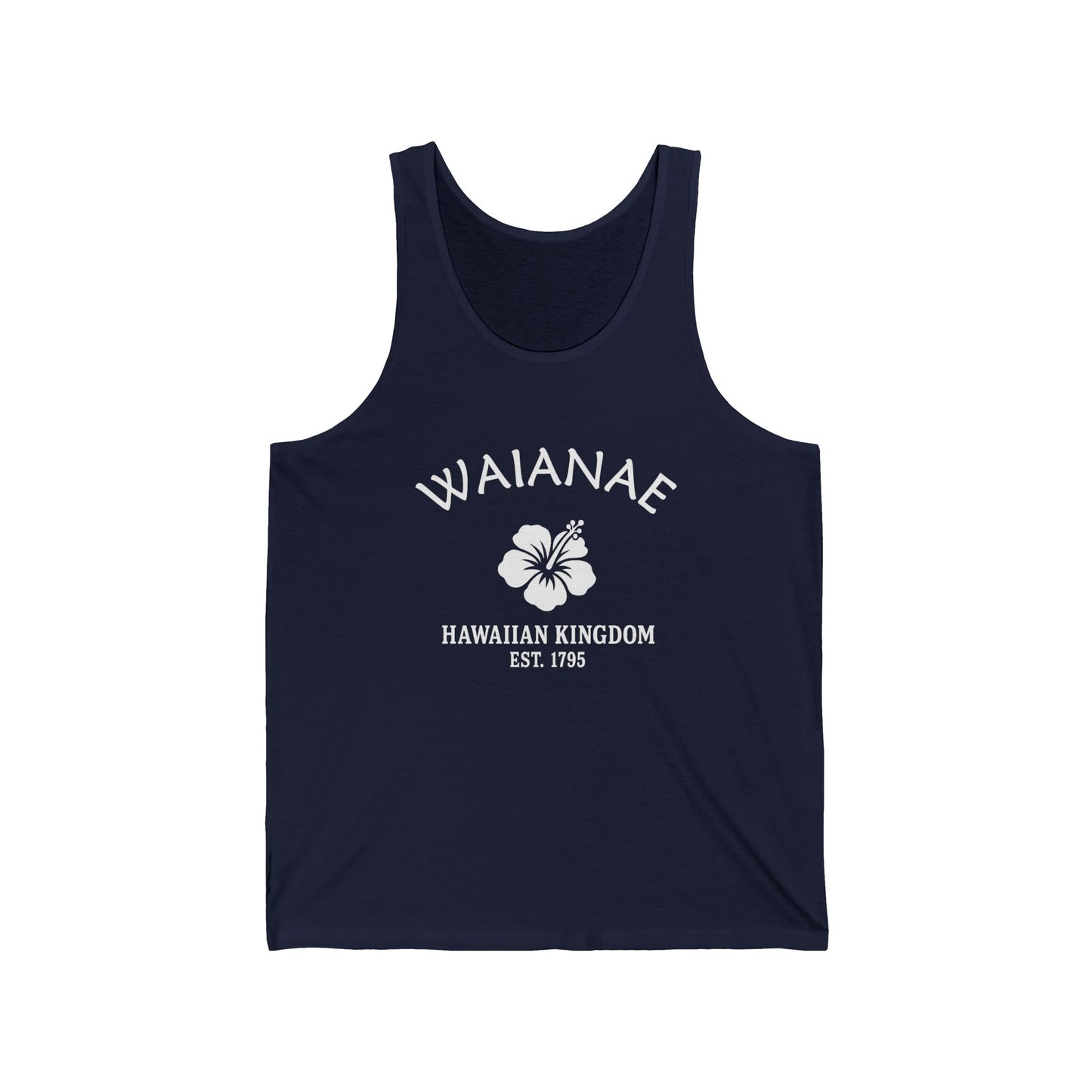
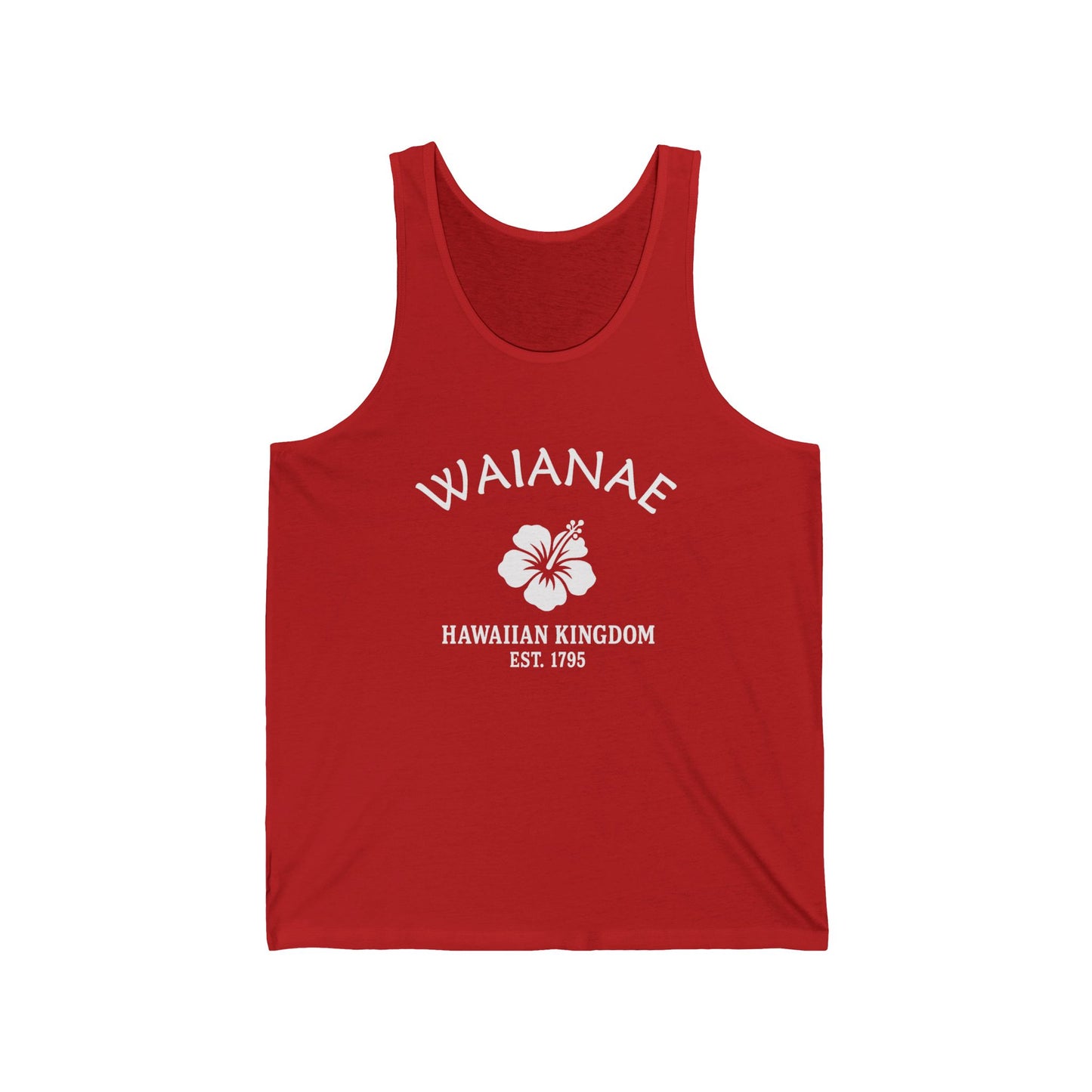
Today Waiʻanae is, above everything, a residential Native Hawaiian community on the leeward coast of Oʻahu: the long Waiʻanae moku running from Kahe to Kaʻena Point along Farrington Highway, the Waiʻanae Mountain Range rising to Mount Kaʻala behind it, Mākaha Beach and the big-wave surf credentials that started the world's first international surfing competition, the protected swimming waters of Pōkaʻī Bay, the working ahi-tuna port at the Waiʻanae Small Boat Harbor, and the long ahupuaʻa heritage that has carried these shores for centuries. Our Waiʻanae designs are made for that coast — the leeward Westside, the Royal Center of the moku, and the beach that taught the world what big-wave surfing looked like.
So the Westside gathers it all — the mullet waters of the old fishponds, the heiau under Kaʻala, the first big waves the world ever came to ride, and a community whose roots run deeper than contact. Our Waiʻanae designs gather that pride into wearable form. On the Westside since time before contact.
Why People Visit Waiʻanae Hawaiʻi
Waiʻanae offers the original home of big-wave surfing at Mākaha Beach, the world's first international surfing competition (1953-1954) and the long-running Buffalo's Big Board Surfing Classic, the protected swimming waters of Pōkaʻī Bay with its Pōkaʻī coconut-grove legend and Kūʻīlioloa Heiau, the 15th-century Kāneʻāki Heiau in Mākaha Valley, the 4,025-foot summit of Mount Kaʻala as the highest peak on Oʻahu, the westernmost tip of Oʻahu at Kaʻena Point, and the long Native Hawaiian heritage of the Waiʻanae moku that has carried this coast for centuries. It is the leeward Westside of Oʻahu — a residential community whose culture is alive, and where the world first watched surfers ride big waves on television. On the Westside since time before contact.
