


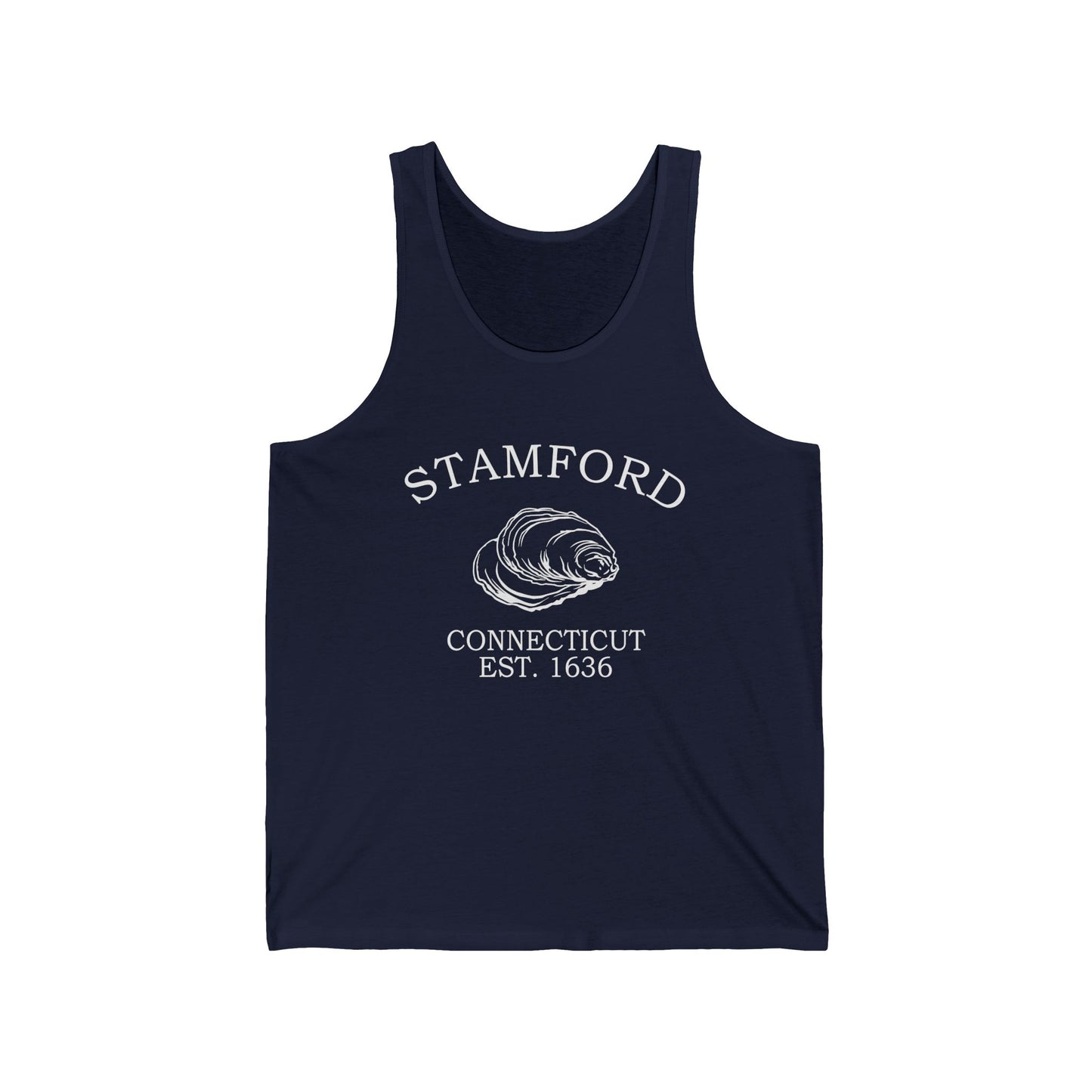
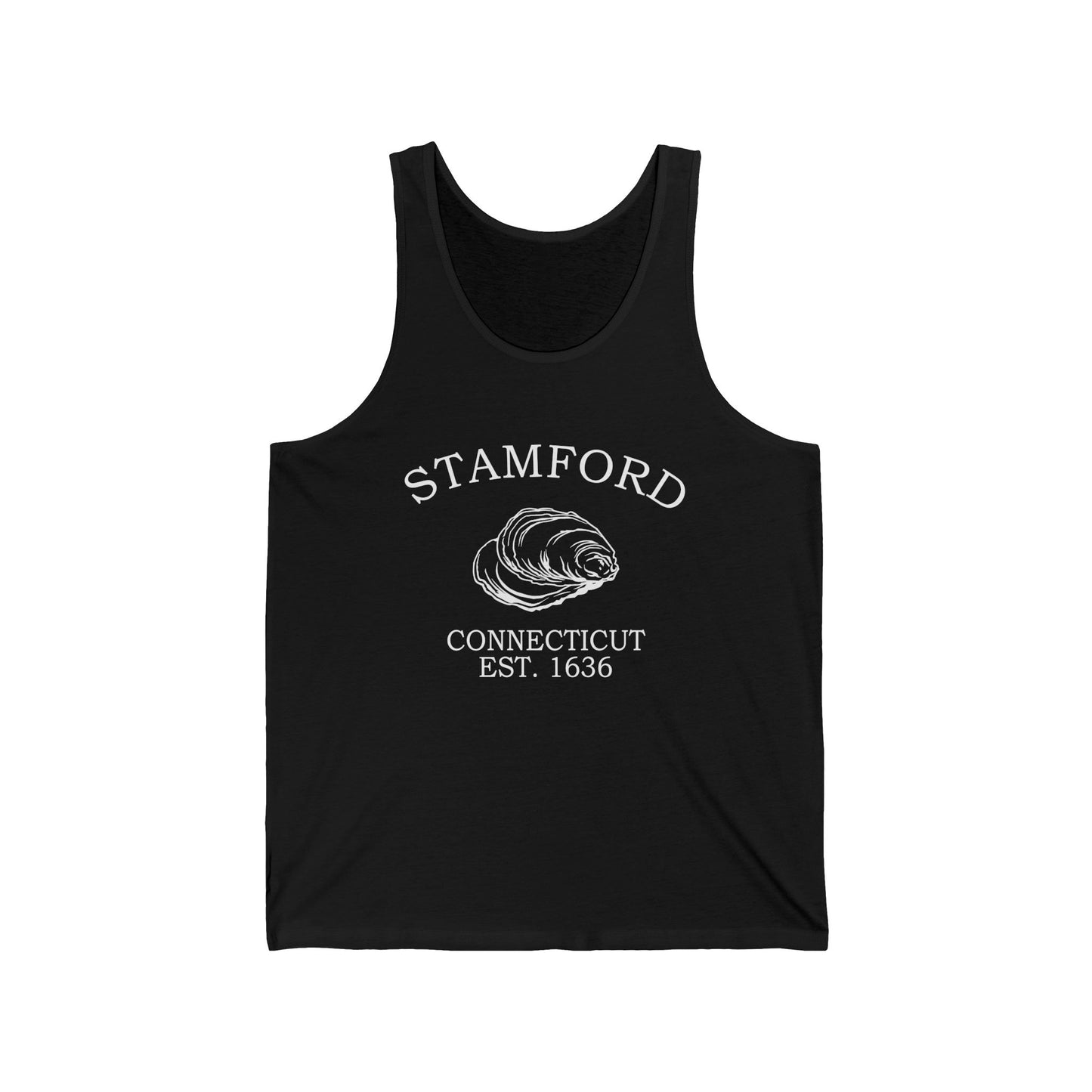
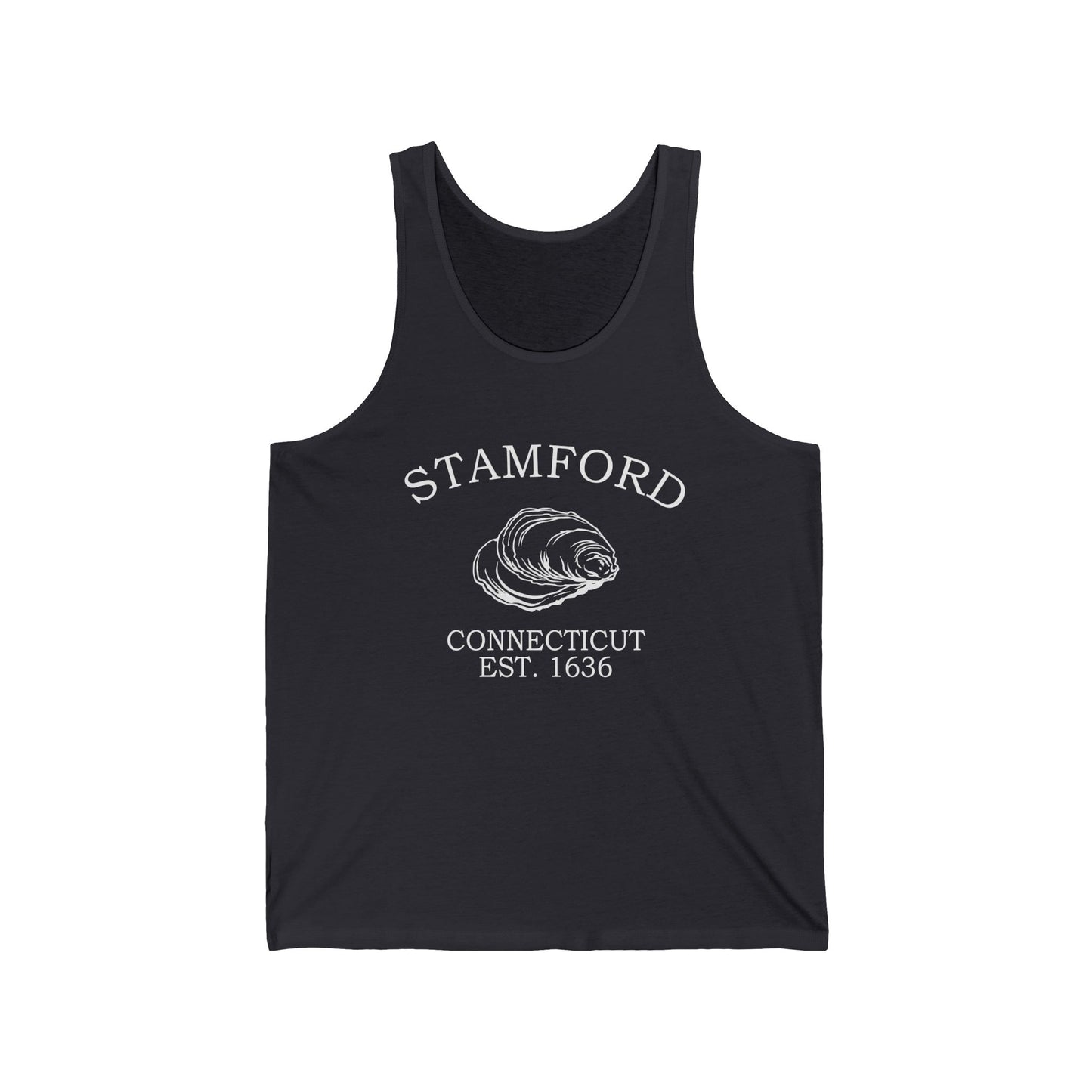
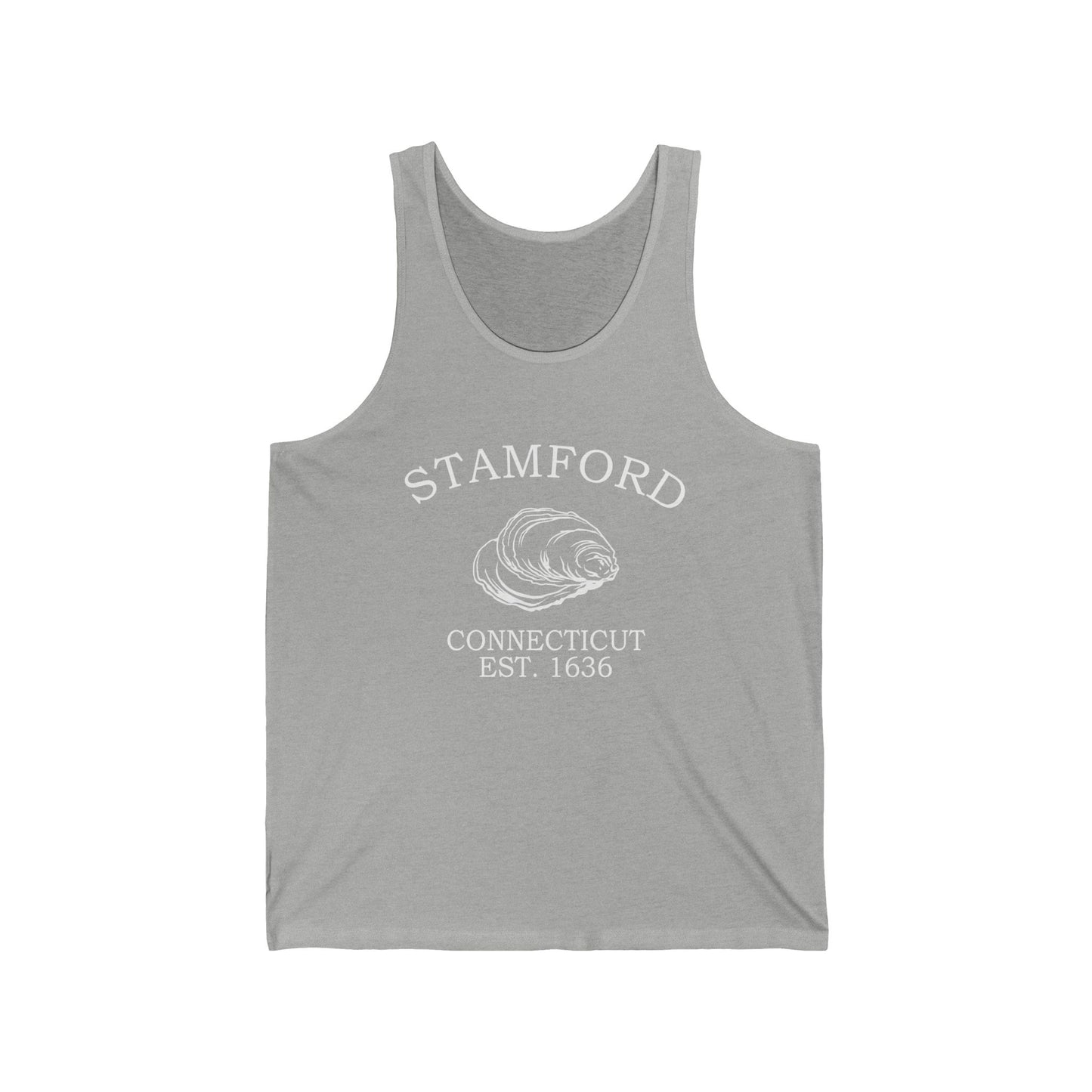
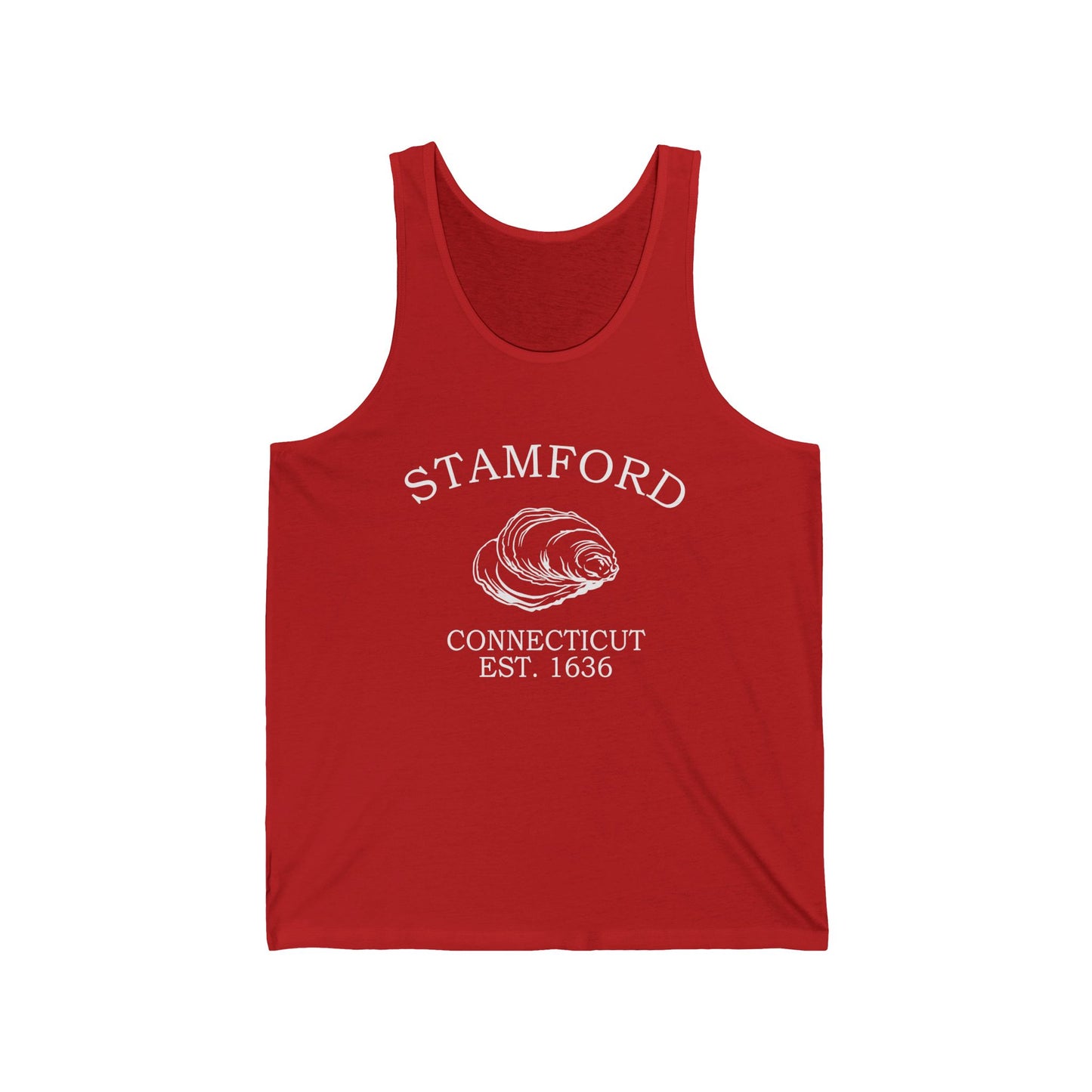
Today Stamford is a city of glass towers and harbor light — Connecticut's second city, a Gold Coast hub on Long Island Sound that still runs on the water and the rail line to New York. Its story runs from Rippowam and the 1641 founding through the locks and the railroad to the fish-shaped church on the skyline. Our Stamford, Connecticut designs gather that identity into wearable form — the oyster, the harbor, the colonial port. Stamford, CT — Rippowam on the Sound, a harbor town since 1641.
Before it was Stamford, this harbor at the mouth of the river was Rippowam, home of the Siwanoy. In 1640 the land was deeded to the New Haven Colony's Capt. Nathaniel Turner by the Siwanoy leaders Ponus and Wascussee, and in 1641 about two dozen Puritan families from Wethersfield came down to settle it, led by the Rev. Richard Denton. They renamed it Stamford in 1642, after a town in Lincolnshire, England. The Rippowam name endures — for the river that still runs through downtown, and for the people who were here first.
Why People Visit Stamford, CT
Stamford balances harbor and city — sailboats on the Sound, a downtown skyline, and four centuries of history from Rippowam to the rail line. It is a Gold Coast harbor town an hour from Manhattan, with the water, the parks, and that one-of-a-kind church on the hill.
