


The 1920s land boom built much of the city you still see today, including the grand Mediterranean-style Vinoy resort that opened on the bayfront in 1925. Baseball came with the sunshine — major-league clubs have held spring training in St. Petersburg for more than a century, and the bayfront ballfields were a fixture of the season. Hurricanes and the Depression slowed the boom, and the city weathered both, but the climate kept bringing people back, and St. Petersburg settled into a long, easy life as a sunny Gulf-coast resort town.
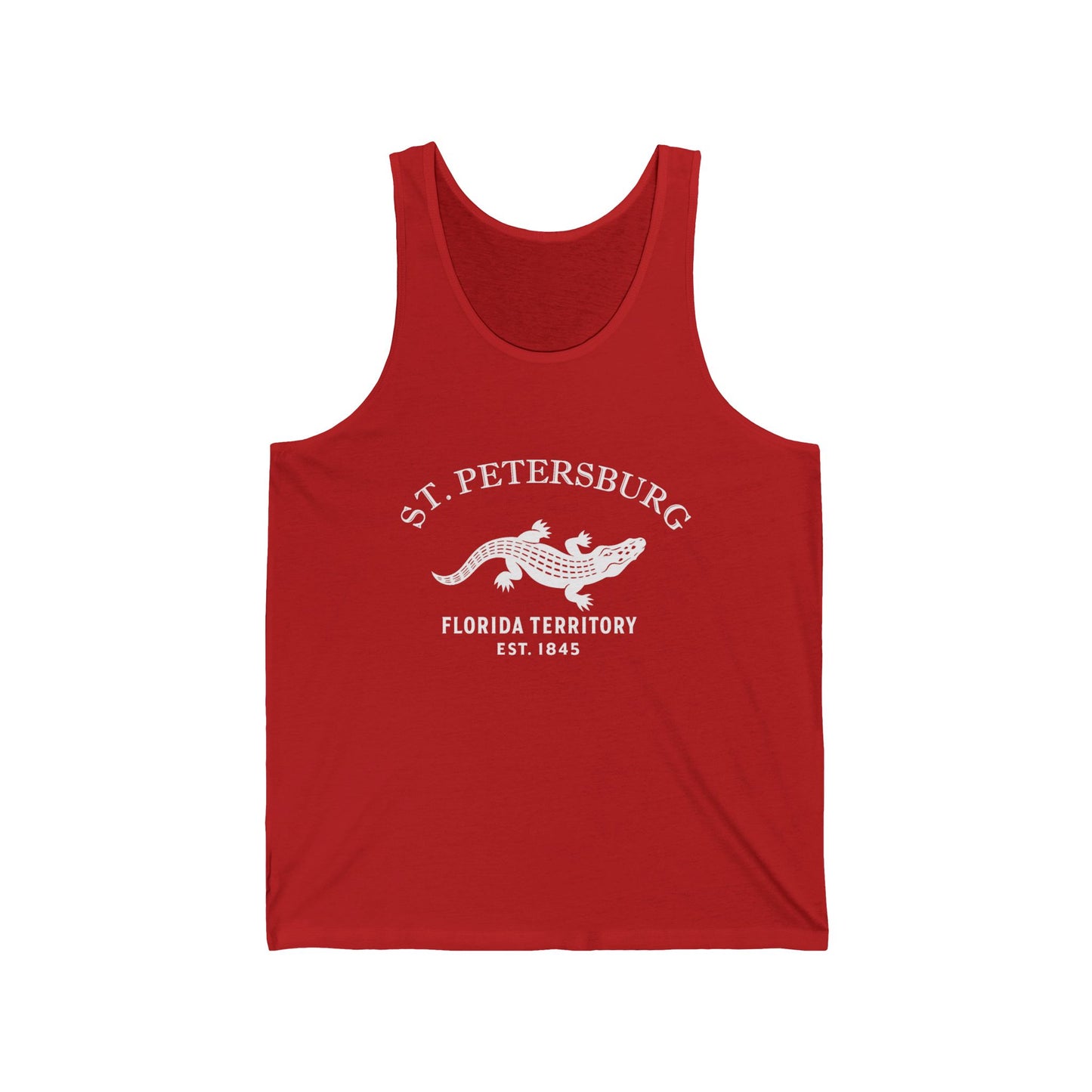
Today St. Petersburg is sun and saltwater, museums and murals, a pier out over the bay and a downtown that hums. Our St. Petersburg designs gather that identity — the alligator emblem, the Sunshine City, the waterfront and the arts — into wearable form. It is a Florida city that knows exactly what it is. St. Petersburg, Florida — the Sunshine City on the bay, where the first airline took flight and the murals never fade.
Why People Visit St Petersburg
St. Petersburg mixes sunshine, shoreline, and a genuine arts scene in a way few Florida cities can. Visitors come for the waterfront museums and murals, the pier and the bayfront parks, the nearby Gulf beaches, and the easy, bright pace of a city that has earned its Sunshine City name for more than a century. History sits comfortably beside everyday life here, from the spot where the first airline took flight to the gardens and galleries downtown, and the water is never more than a few blocks away.
