


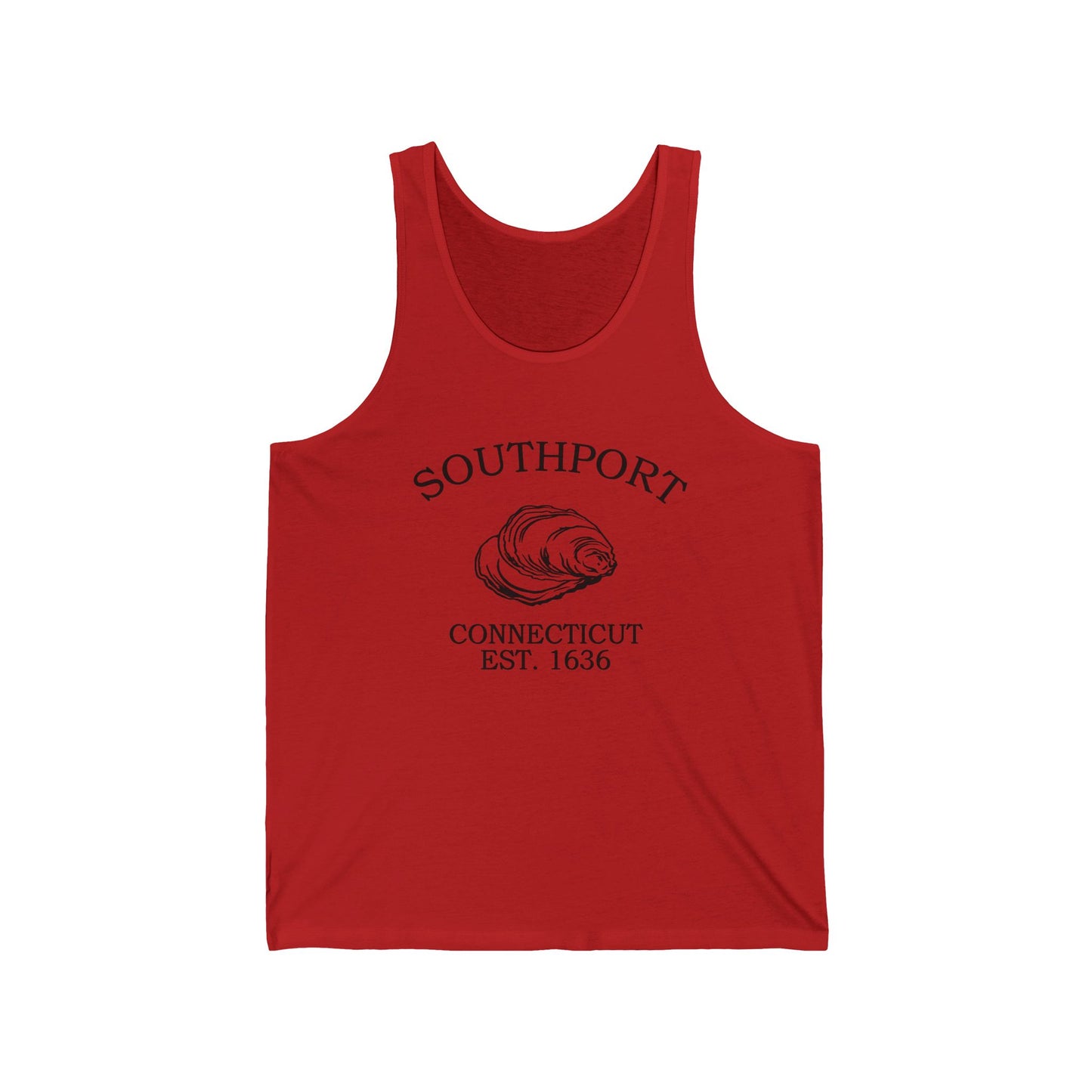
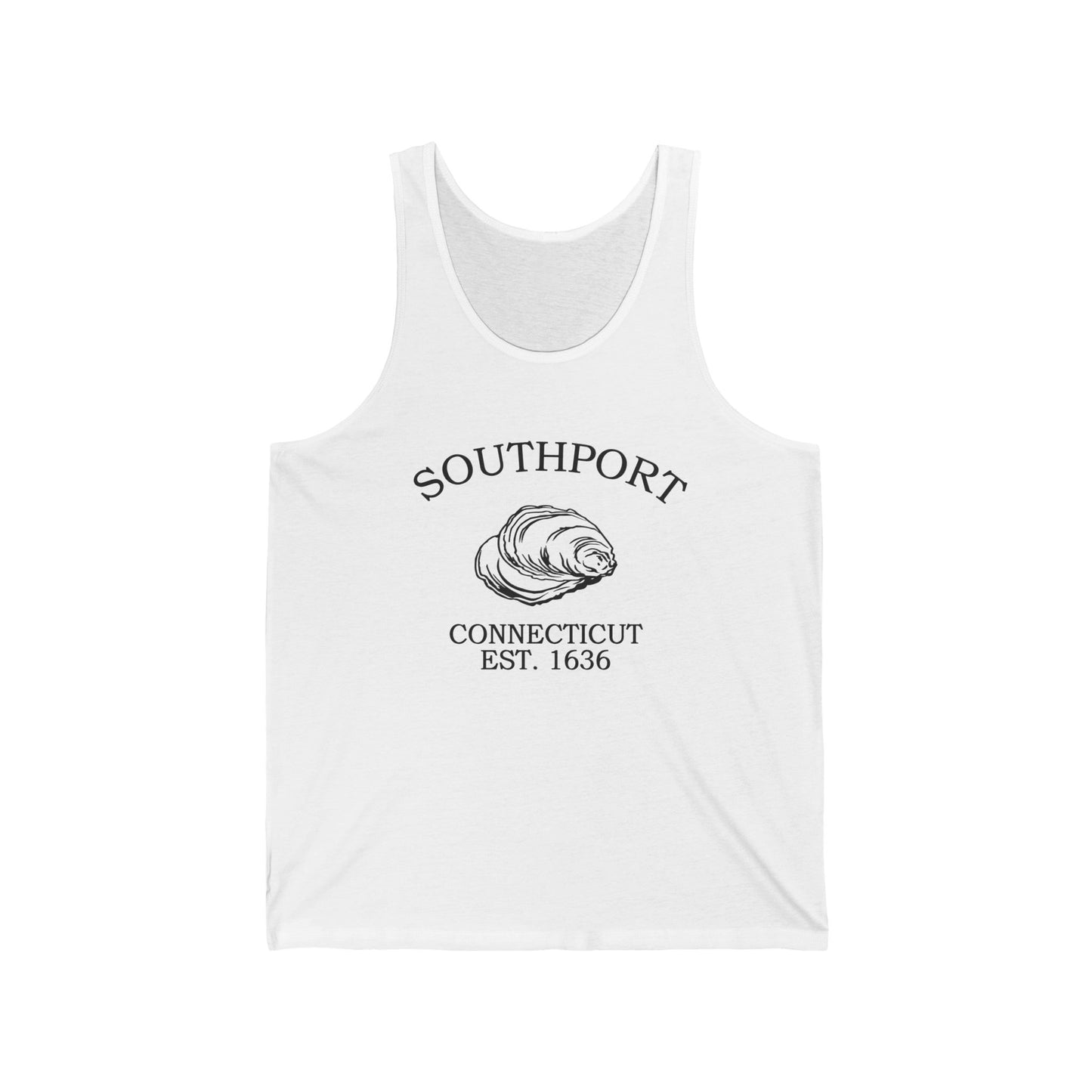
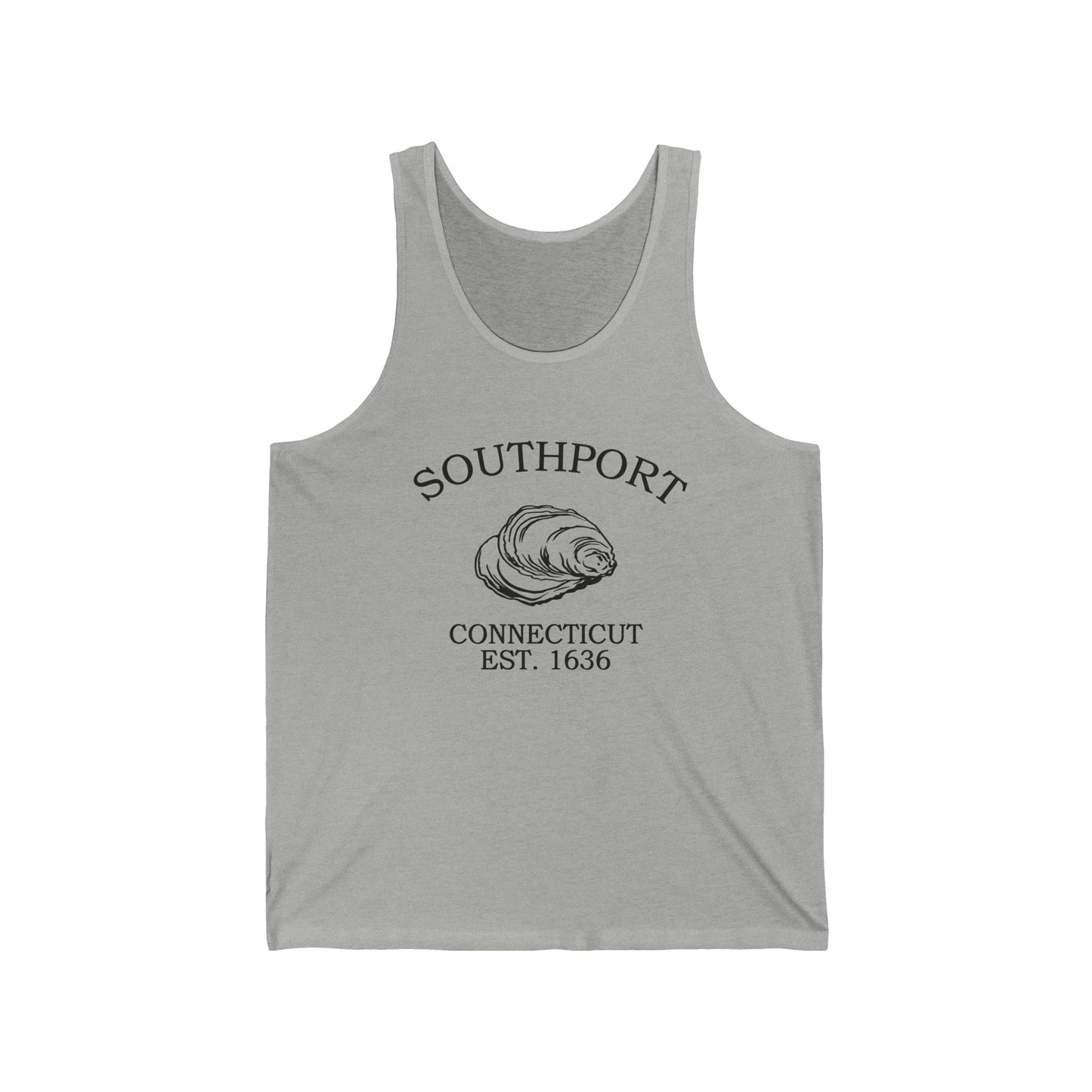
Long before it had an English name, the shore here was Sasqua — an Indigenous village of Quiripi-speaking people, part of the Paugussett and Pequot world of the Connecticut coast. In 1639 it became the western edge of the new town of Fairfield, known simply as "Mill River" for the grist mill turning on its banks by 1662. A wharf went in by 1769, and the little river mouth on Long Island Sound began its long life as a working harbor.
Our Southport logo carries an oyster over "Connecticut · Est. 1636" — the shared shoreline emblem of every Merlin Classics Connecticut town, marking the founding of the Connecticut Colony. Printed black-and-white with the worn look of an old oyster-crate label or shoreline signage, the oyster reads as the Connecticut shore in shorthand: the Sound, the harbors, the shellfish beds. It suits Southport especially well — this was a working harbor that shipped oysters right alongside its famous onions.
Why People Visit Southport Connecticut
- Walk the Southport Historic District along Harbor Road and Pequot Avenue, lined with post-1779 Greek Revival and Federal captain's houses.
- Visit the Pequot Library (1894), a stone Richardsonian-Romanesque landmark with reading rooms and cultural programming.
- Look out over Southport Harbor at the mouth of the Mill River, with sailboats and the Pequot Yacht Club.
- Relax at Southport Beach, a small cove looking toward the harbor mouth on Long Island Sound.
- Find the Meeker House (about 1766), the lone survivor of the 1779 burning.
