For thousands of years before the Spanish, the Awaswas-speaking Ohlone fished, gathered acorns, and stewarded this coast — and their descendants, among them the Amah Mutsun Tribal Band, remain part of the region today. The mission and the Branciforte pueblo brought European agriculture and ranching to the San Lorenzo lowlands; secularization arrived in 1834. The American era began with statehood in 1850, and by the 1850s and 1860s Santa Cruz was a lumber town, milling the redwoods of the Santa Cruz Mountains and burning lime at the Cowell works, shipping both north to build — and after the 1906 earthquake, rebuild — San Francisco. Henry Cowell, who gave his name to the state park up the river, ran the lumber and the lime that ran the town.
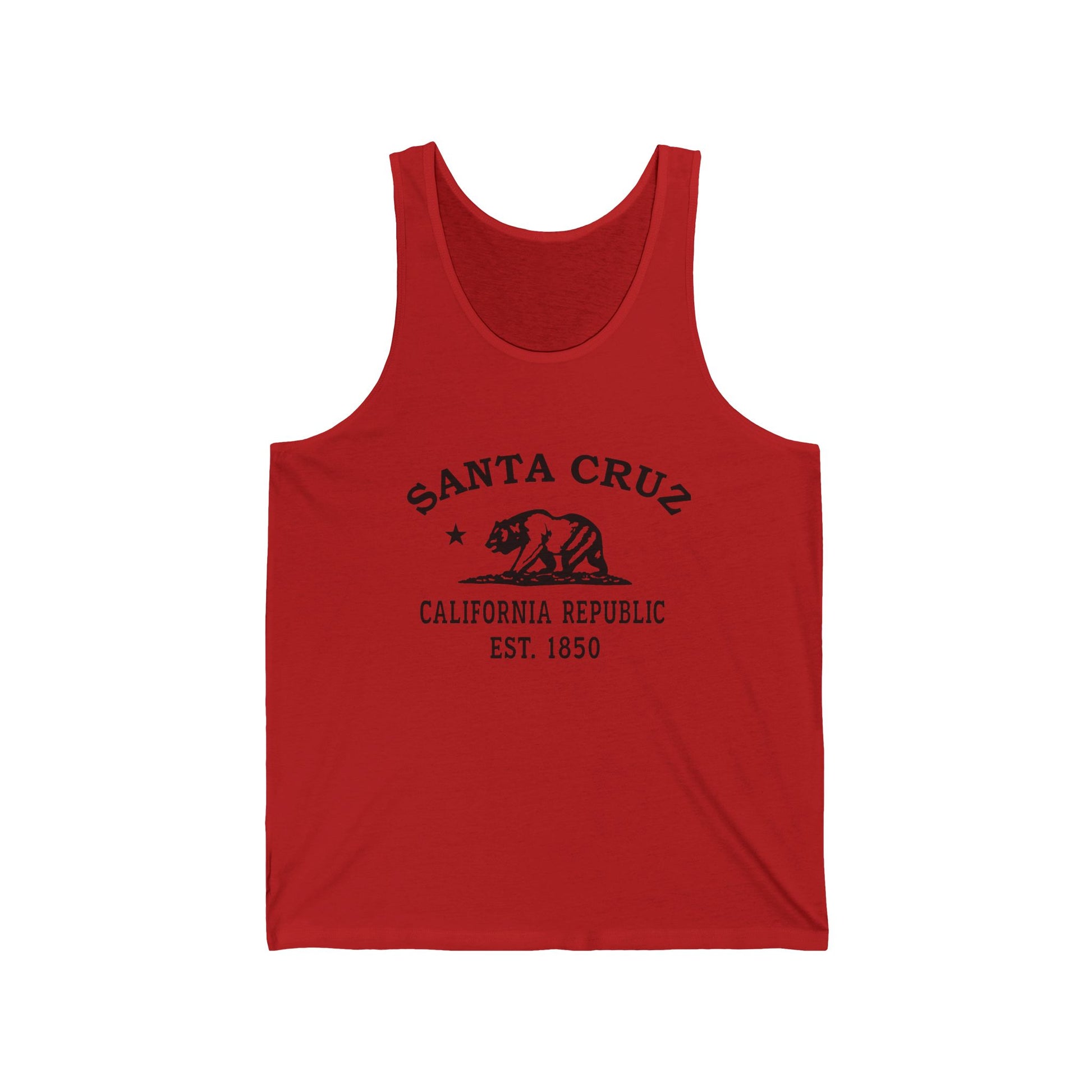
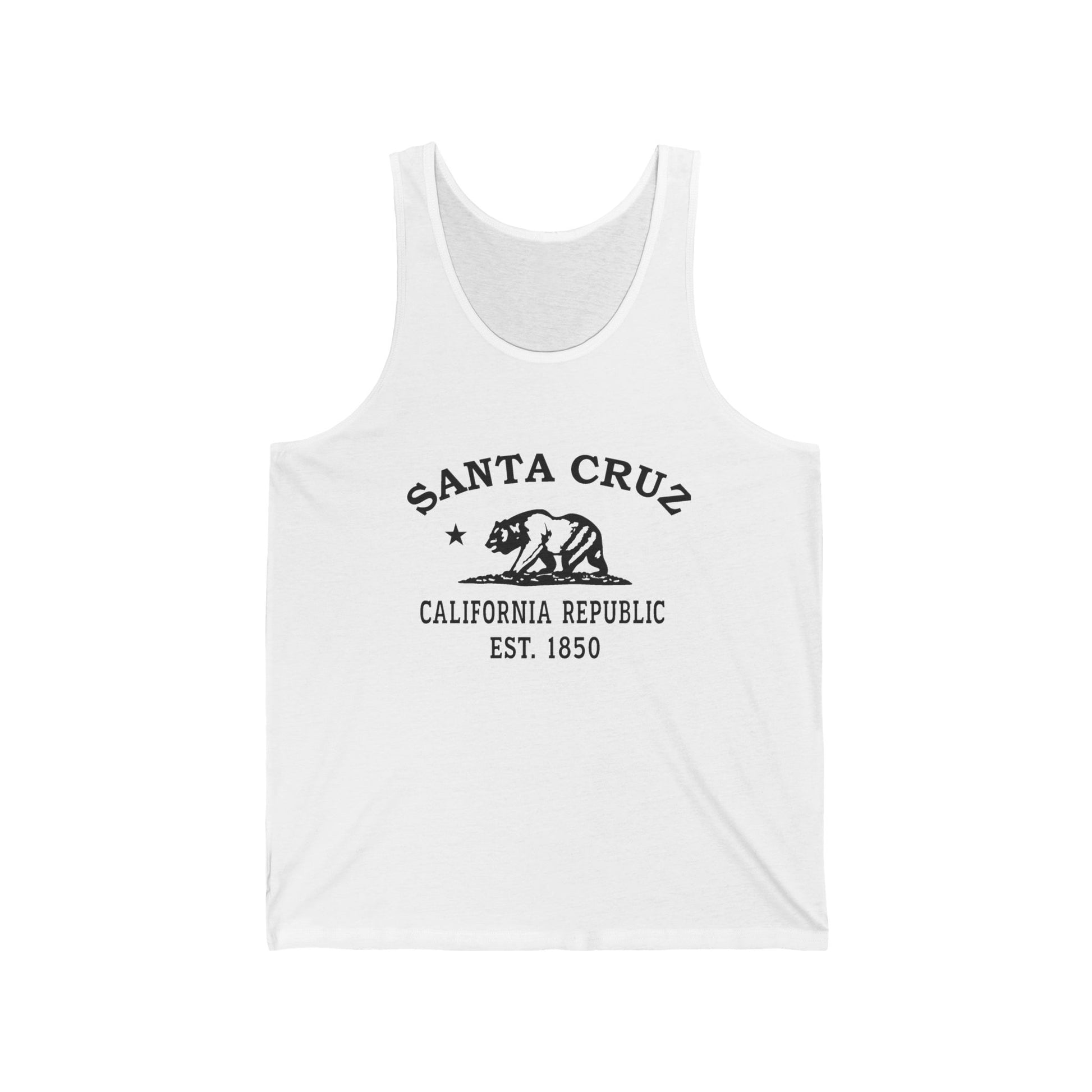
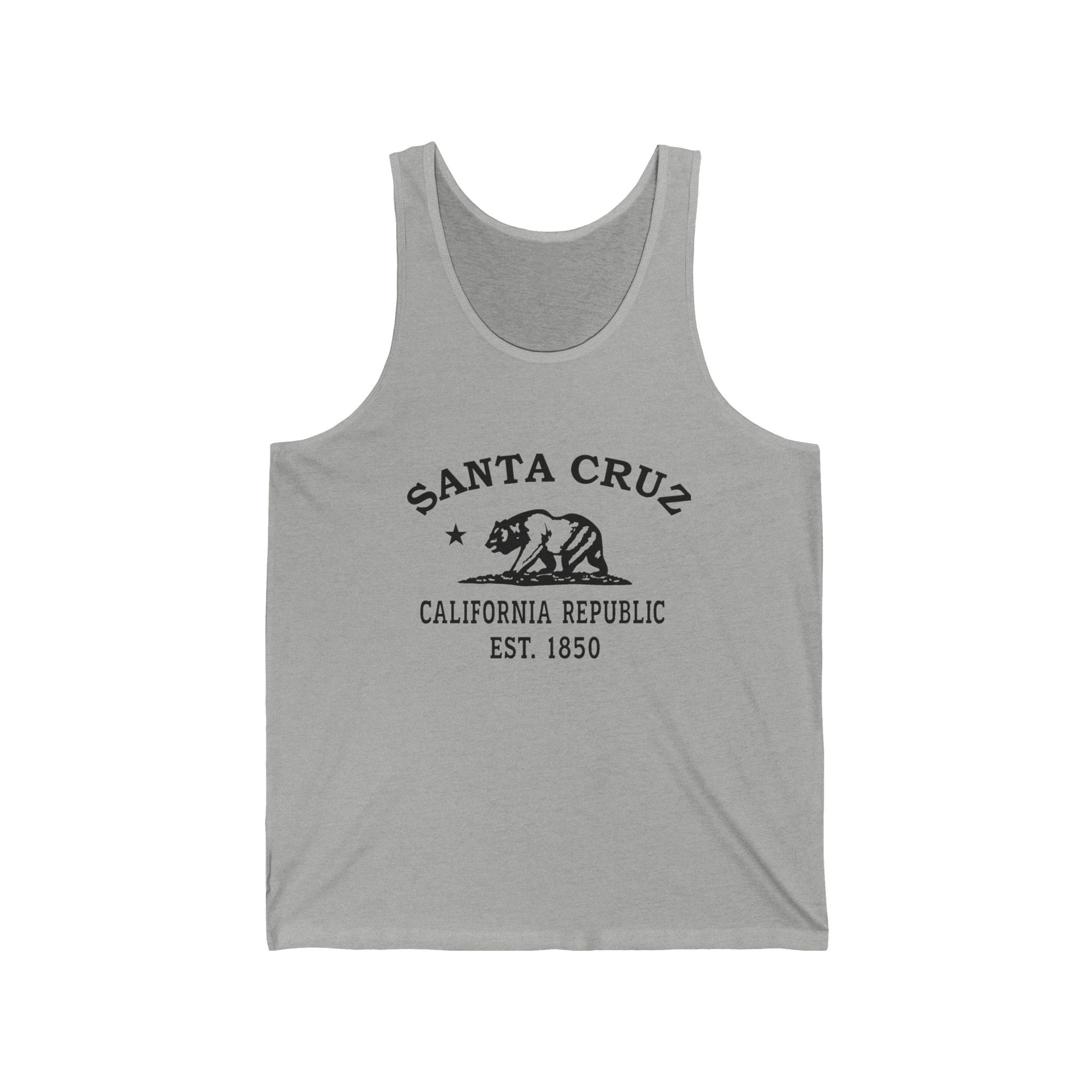
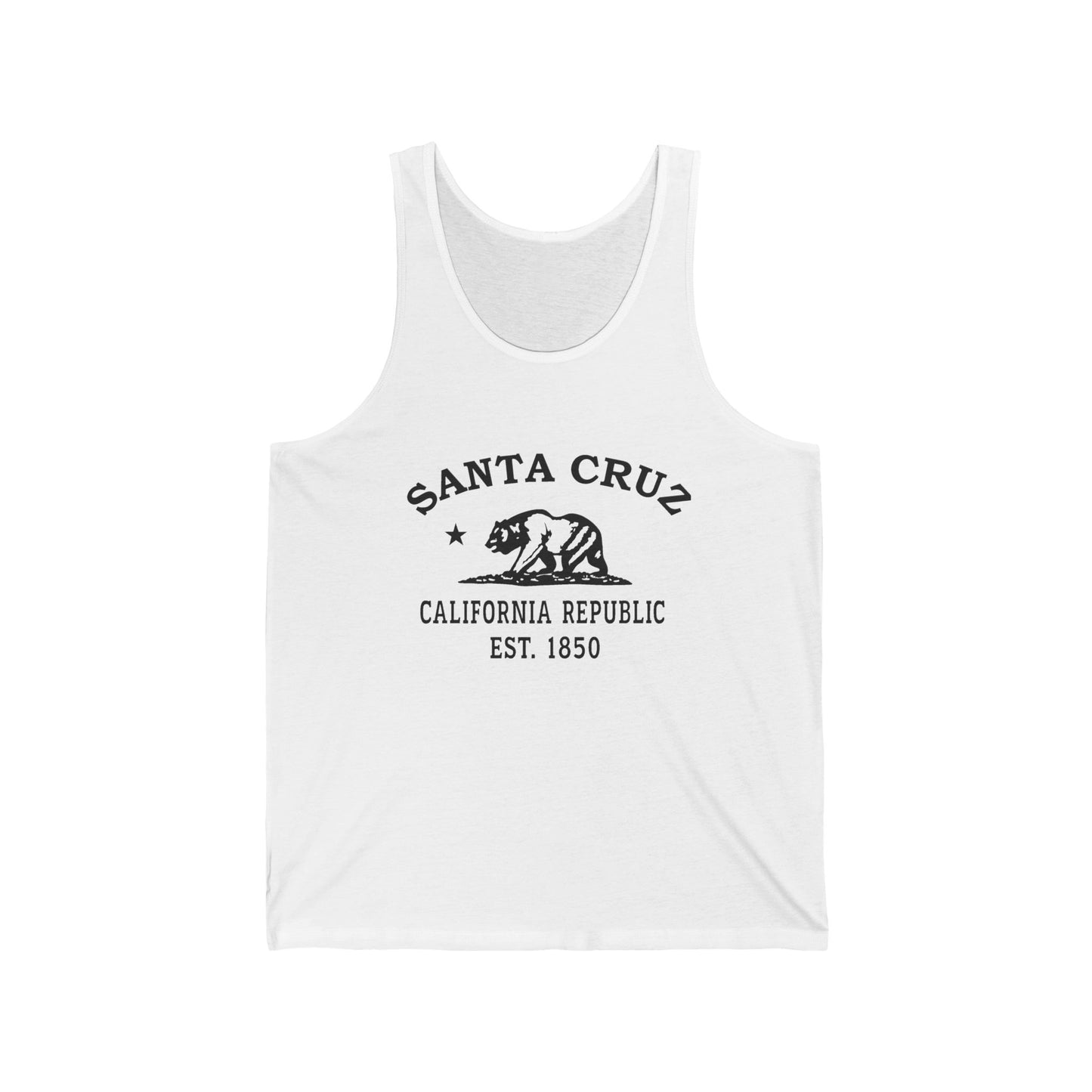
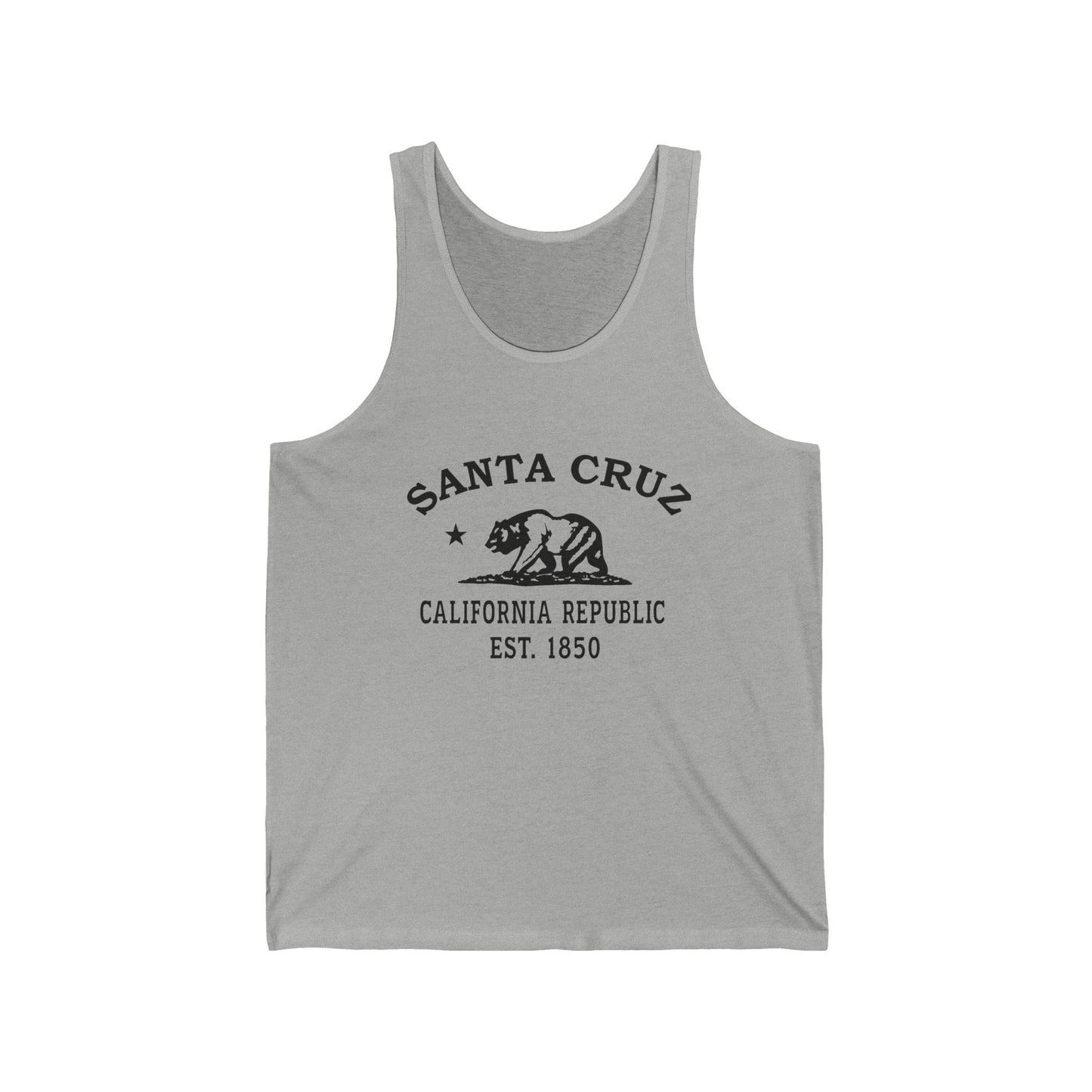
Our Santa Cruz retro logo carries the California Bear and the star of the 1846 Bear Flag tradition, with "1850" stamped beneath for the year of statehood. The black-and-white styling is retro, in the vocabulary of crate labels, mid-century beach signage, and the old wooden-coaster placards that once told boardwalk visitors how tall they had to be to ride. The bear and star, paired with the date, do the work of placing the design in the founding generation of the state — and the city that has been running its boardwalk longer than any other California town has been running anything along the Pacific.
Why People Visit Santa Cruz California
- Walk the Santa Cruz Beach Boardwalk — California's oldest surviving amusement park, on the bay since 1907, with the 1911 Looff Carousel and the 1924 Giant Dipper wooden roller coaster, both National Historic Landmarks since February 24, 1987. The entire property is California Historical Landmark No. 983.
- Visit Santa Cruz Mission State Historic Park on School Street — the Neary-Rodriguez Adobe is the only surviving original Mission Santa Cruz building, and the best-preserved Native-housing structure in the entire California mission chain. The half-size replica chapel sits on Mission Hill across from Holy Cross Church (1889).
- Walk West Cliff Drive — the paved three-and-a-half-mile coastal path from the Boardwalk past Lighthouse Point to Natural Bridges State Beach, past the bronze surfer statue, with the surf breaking below the whole way.
- Watch the surf at Steamer Lane off Lighthouse Point — Northern California's most storied surf break, near the marker remembering the three Hawaiian princes who first surfed here in 1885.
- Watch the surf at Pleasure Point at the eastern end of the city — a long right-point break running off the cliff at 32nd through 41st Avenues, with The Hook at its far end.
- Walk Natural Bridges State Beach — sea arches, tide pools, and the eucalyptus monarch-butterfly grove that fills up every October through February.
- Walk Pacific Avenue through the Pacific Garden Mall — the downtown pedestrian district rebuilt after the October 17, 1989 Loma Prieta earthquake, with murals, shops, and buskers along the corridor.
- Hike Henry Cowell Redwoods State Park up Highway 9 — old-growth coast redwoods, the Fremont Tree, the Garden of Eden swimming hole on the San Lorenzo, and the Roaring Camp narrow-gauge steam railroad next door.
- Hike Big Basin Redwoods State Park — California's first state park, set aside in 1902, with Berry Creek Falls and trails through the canyons.
- Walk the Forest of Nisene Marks State Park near Aptos — the epicenter location of the 1989 Loma Prieta earthquake, in the redwoods.
- Walk the Santa Cruz Wharf — the long public pier into Monterey Bay, with the sea lions barking from the pilings underneath and whales feeding offshore in season.
- Visit the Mystery Spot on Branciforte Drive — the 1939 gravitational-anomaly tourist attraction in the redwoods east of downtown — or the UC Santa Cruz campus in the redwoods above the city, opened in 1965, with trails and views of Monterey Bay.
- Drive Highway 1 south through Capitola, Aptos, and on to Watsonville and Monterey, or north past Four Mile Beach and Wilder Ranch toward Pescadero and Half Moon Bay.
