


What’s with the Streetcar Conductor? In 1944, a sixteen-year-old from the Fillmore decided she wanted the job everyone told her she could not have. Maya Angelou — then Marguerite Johnson, come of age in wartime San Francisco — kept returning to the streetcar company office until they relented, and became the first Black woman streetcar conductor in San Francisco, working the cars in her tailored uniform while still in high school. The city stayed in her story as she became one of America’s defining memoirists and poets, a voice of the century honored with the Presidential Medal of Freedom. In 2022 the nation put that story in every pocket: the United States Mint issued the Maya Angelou quarter — the very first coin of the American Women Quarters Program — its reverse showing her with arms uplifted, a bird in flight and a rising sun behind her.
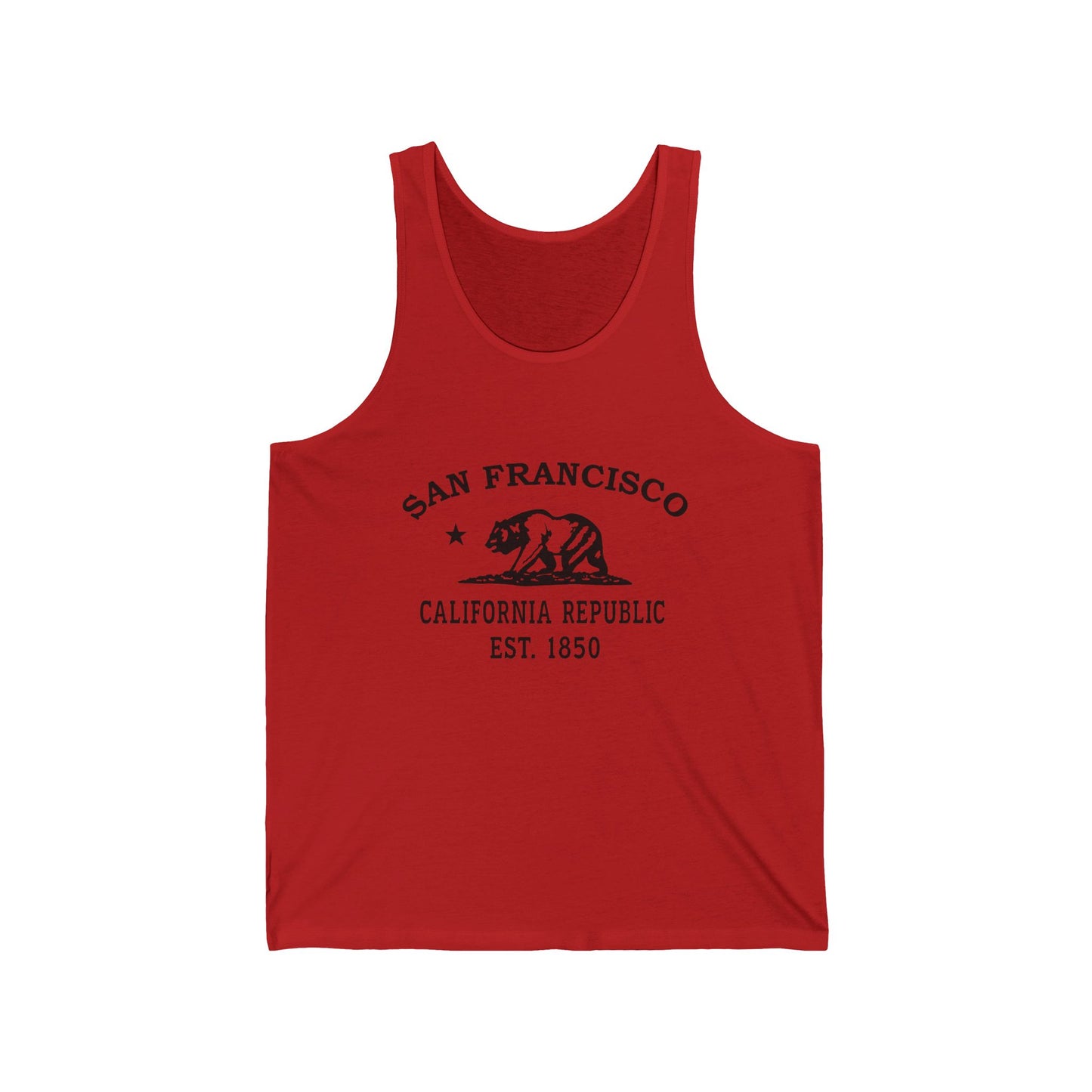
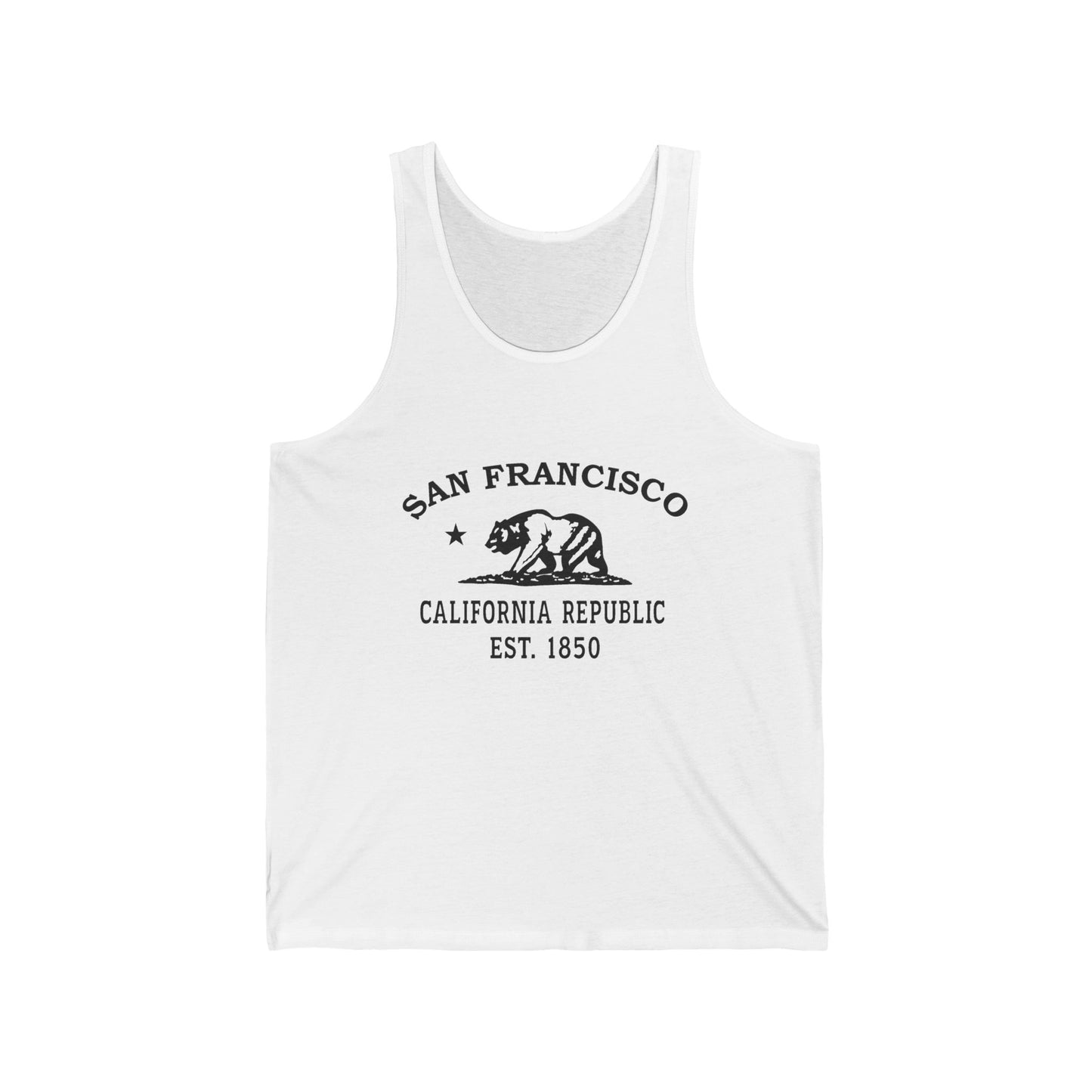
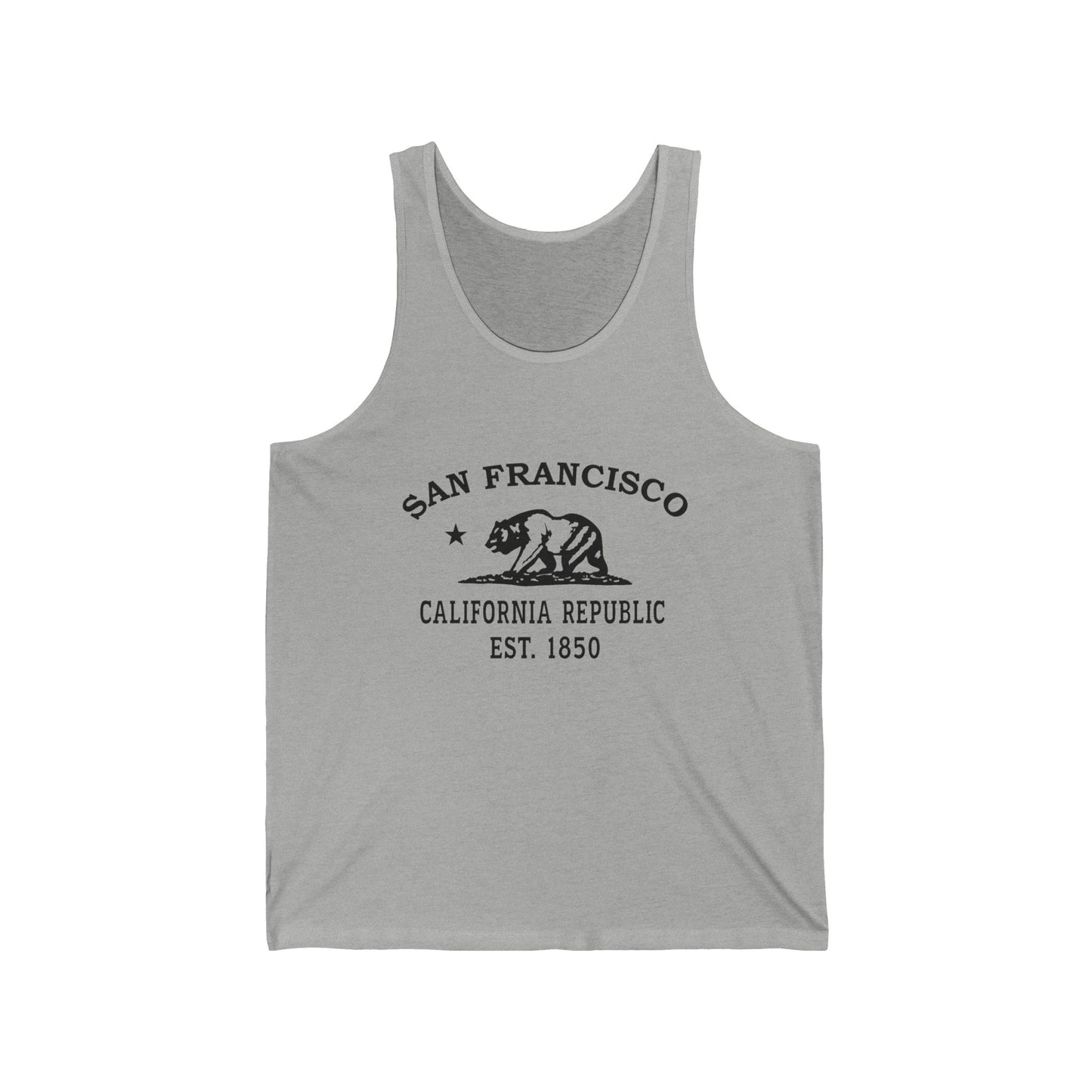
Our San Francisco retro logo carries the California Bear and star of the Bear Flag tradition, with "1850" stamped beneath — the year of California statehood and San Francisco’s incorporation. The black-and-white styling is retro, in the visual vocabulary of WPA posters, crate labels, and the wayfinding of the rebuilt city. The bear and star, paired with the date, place the design in the founding generation of the state — and the city that came back from 1906, built the Bridge, and ran the cable cars every day in between.
Why People Visit San Francisco California
- Walk or bike the Golden Gate Bridge, then see it from Fort Point below, Baker Beach, or the Marin headlands — International Orange against the fog.
- Ride a cable car over Nob Hill and Russian Hill — the 1873 system is the only moving National Historic Landmark in the country.
- Take the ferry to Alcatraz Island for the penitentiary years and the view back at the city.
- See the Painted Ladies from Alamo Square at golden hour, the Queen Anne row of the 1890s against the downtown skyline.
- Enter Chinatown through the Dragon Gate for dim sum and lantern-strung alleys — the oldest Chinatown in North America.
- Wander North Beach for espresso, the City Lights bookstore of the Beats, and the climb to Coit Tower on Telegraph Hill — listening for the wild parrots overhead.
- Visit the Mission District for Mission Dolores — the 1791 adobe that is the city’s oldest building — the murals, and a Mission-style burrito.
- Graze the Ferry Building marketplace, then watch the sea lions haul out along the Fisherman’s Wharf piers.
- Walk Lands End past the Sutro Baths ruins to Ocean Beach, or catch the whole grid from Twin Peaks.
- Drive — or better, walk — the crooked block of Lombard Street down Russian Hill.