Tlingit people had fished and hunted the Mitkof Island coast for more than two thousand years before any of this — fish traps, petroglyphs at Sandy Beach, seasonal camps along the Stikine River — and Mitkof Island still carries that depth underneath the newer Scandinavian story. Buschmann's town grew quickly on top of it: by 1900 the post office, by 1912 the Sons of Norway Hall raised by sixty charter members of Fedrelandet Lodge #23 on pilings over Hammer Slough on Sing Lee Alley — the first Sons of Norway lodge in Alaska, a long gambrel-roofed wood-frame building painted white and red with rosemaling on every shutter. Buschmann himself didn't live to see most of it; he died in 1903, and his sons August and Christian carried the cannery work forward into the Northwestern Fisheries era. The original 1897 cannery has operated continuously ever since under one owner or another — today it's Petersburg Fisheries, still packing the same kind of fish out of the same harbor.
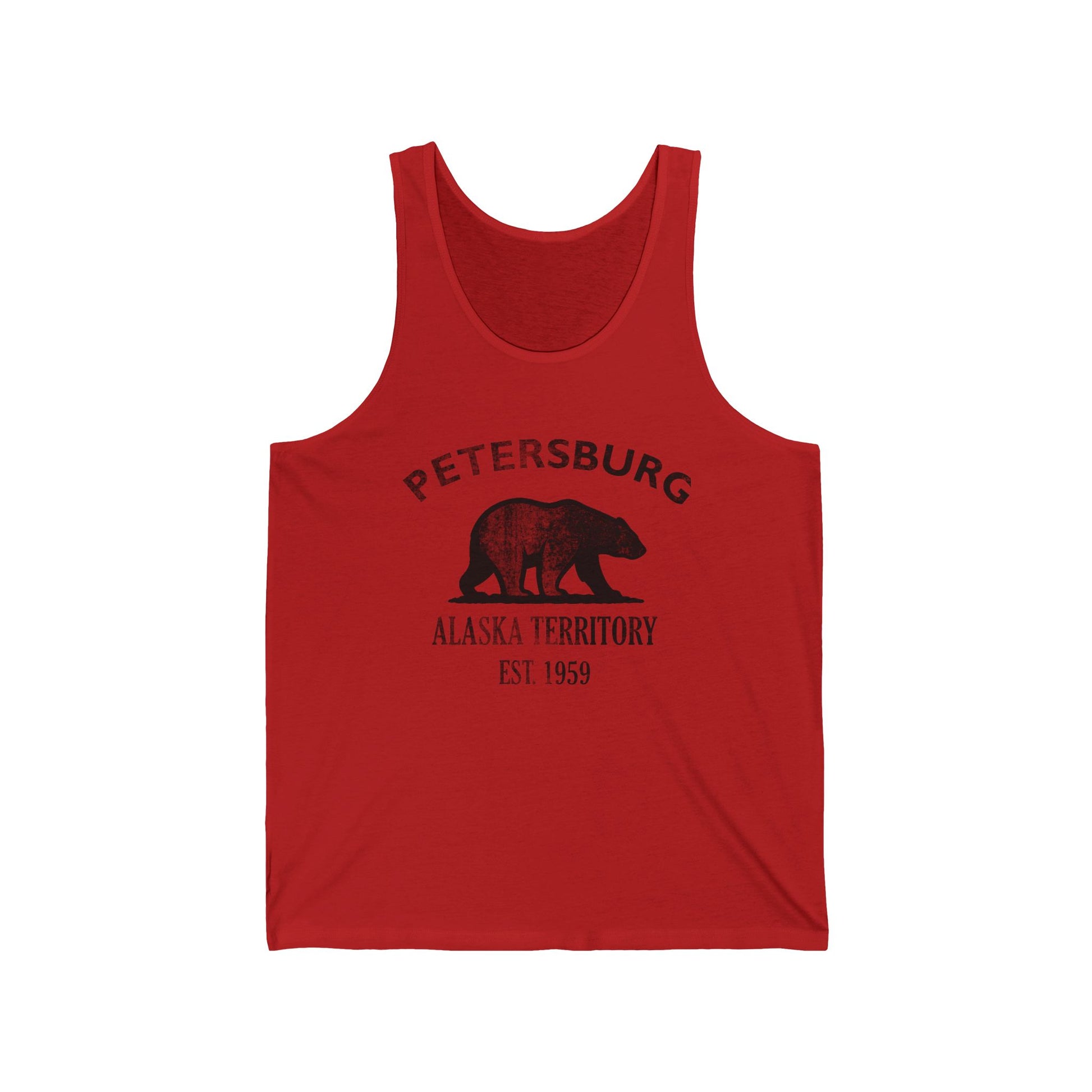
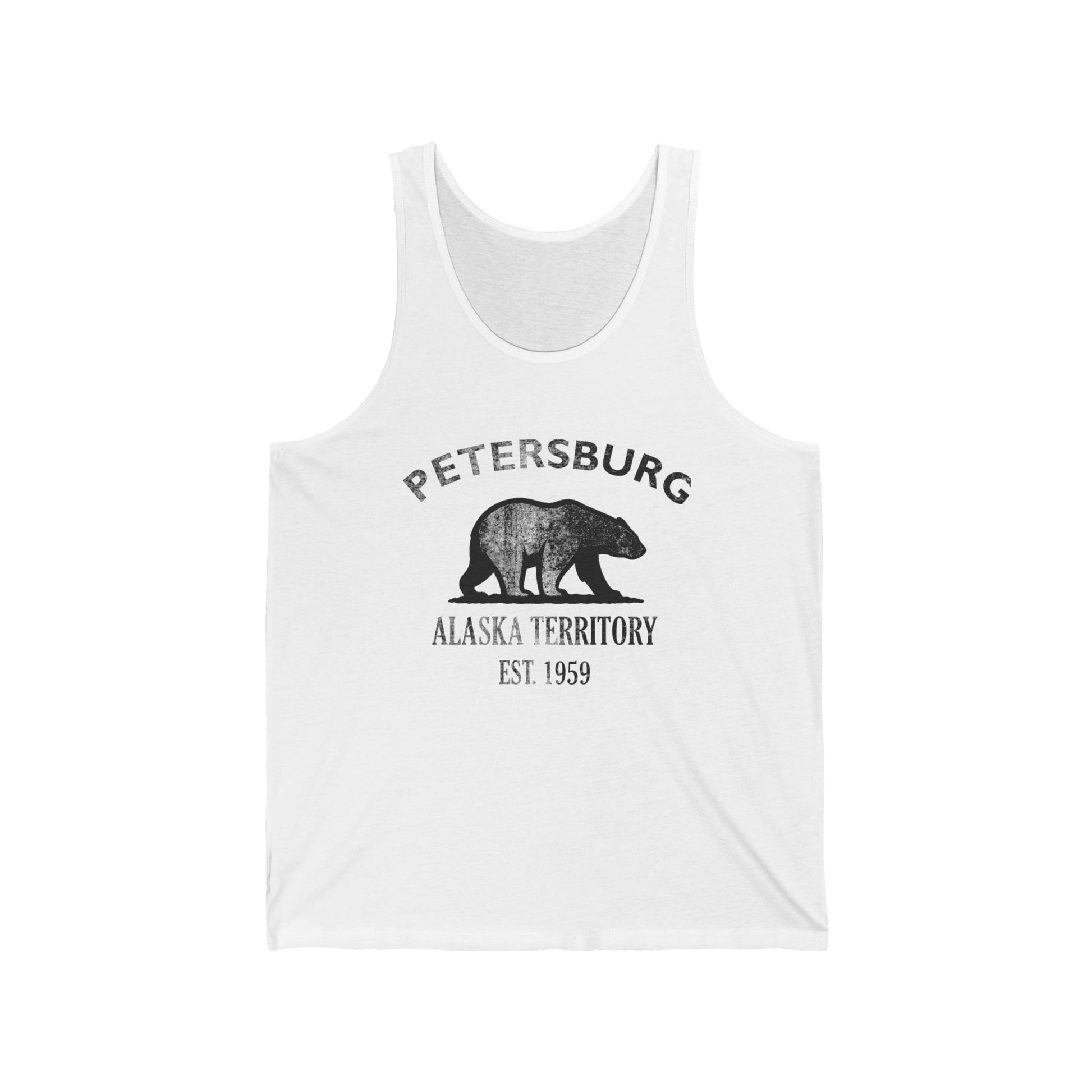
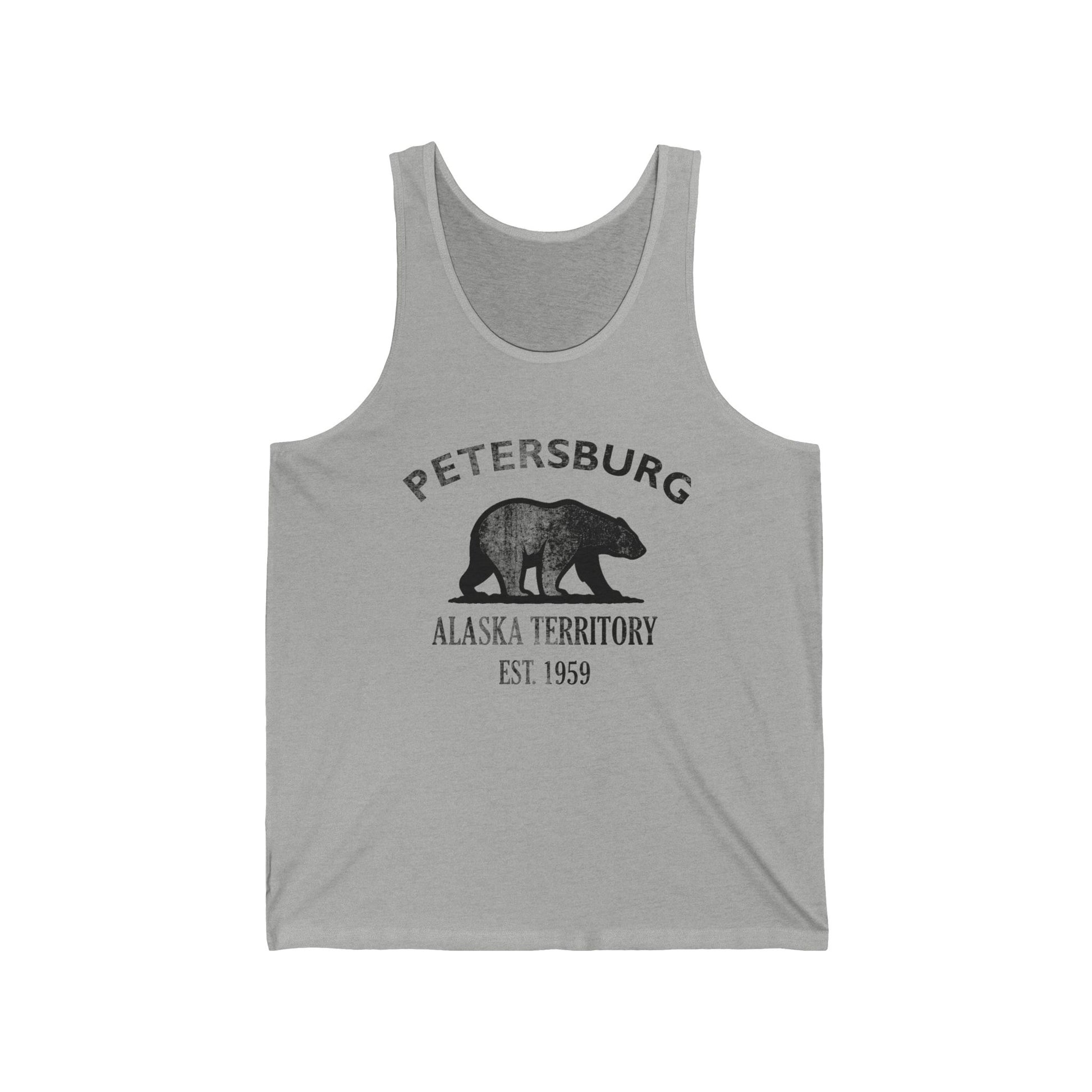
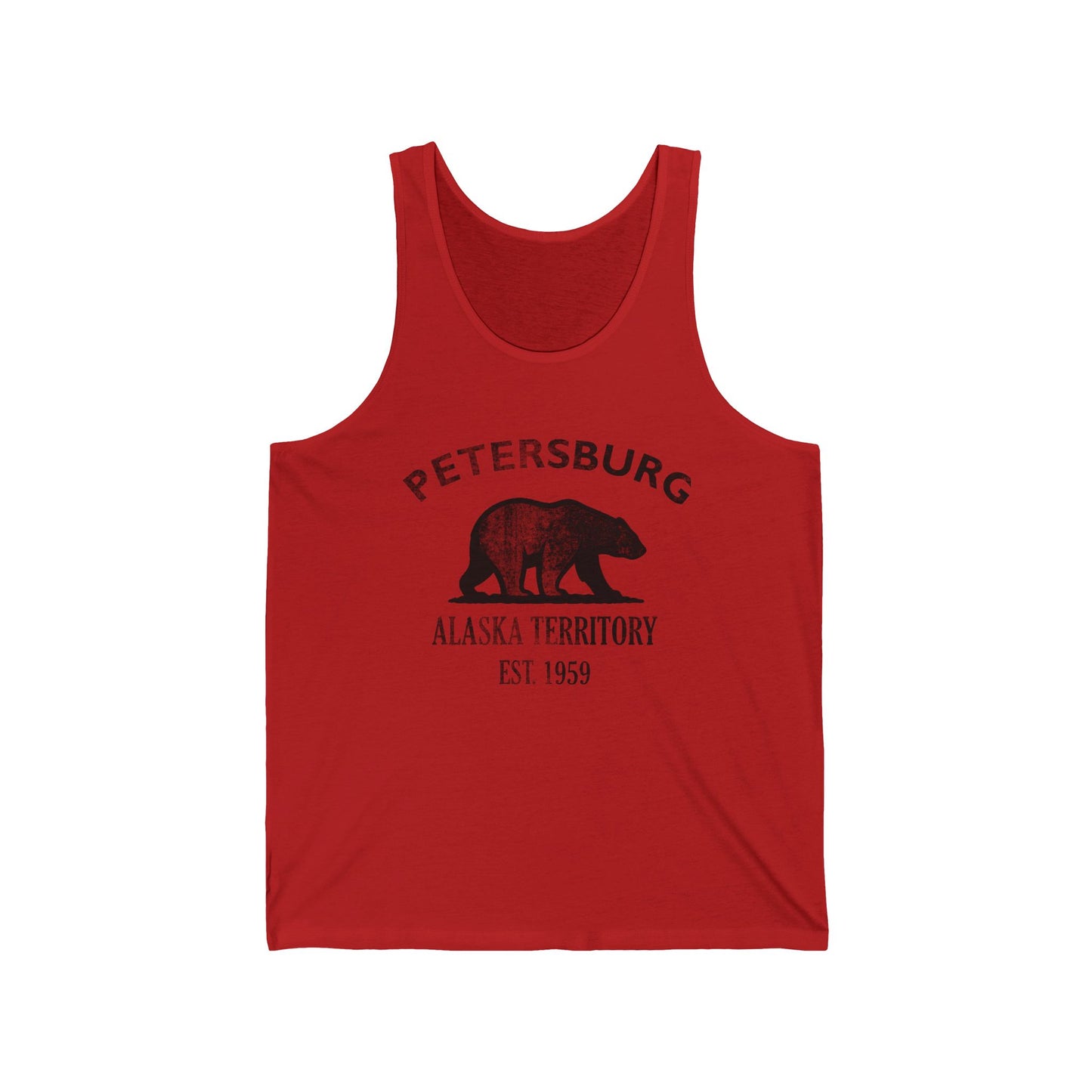
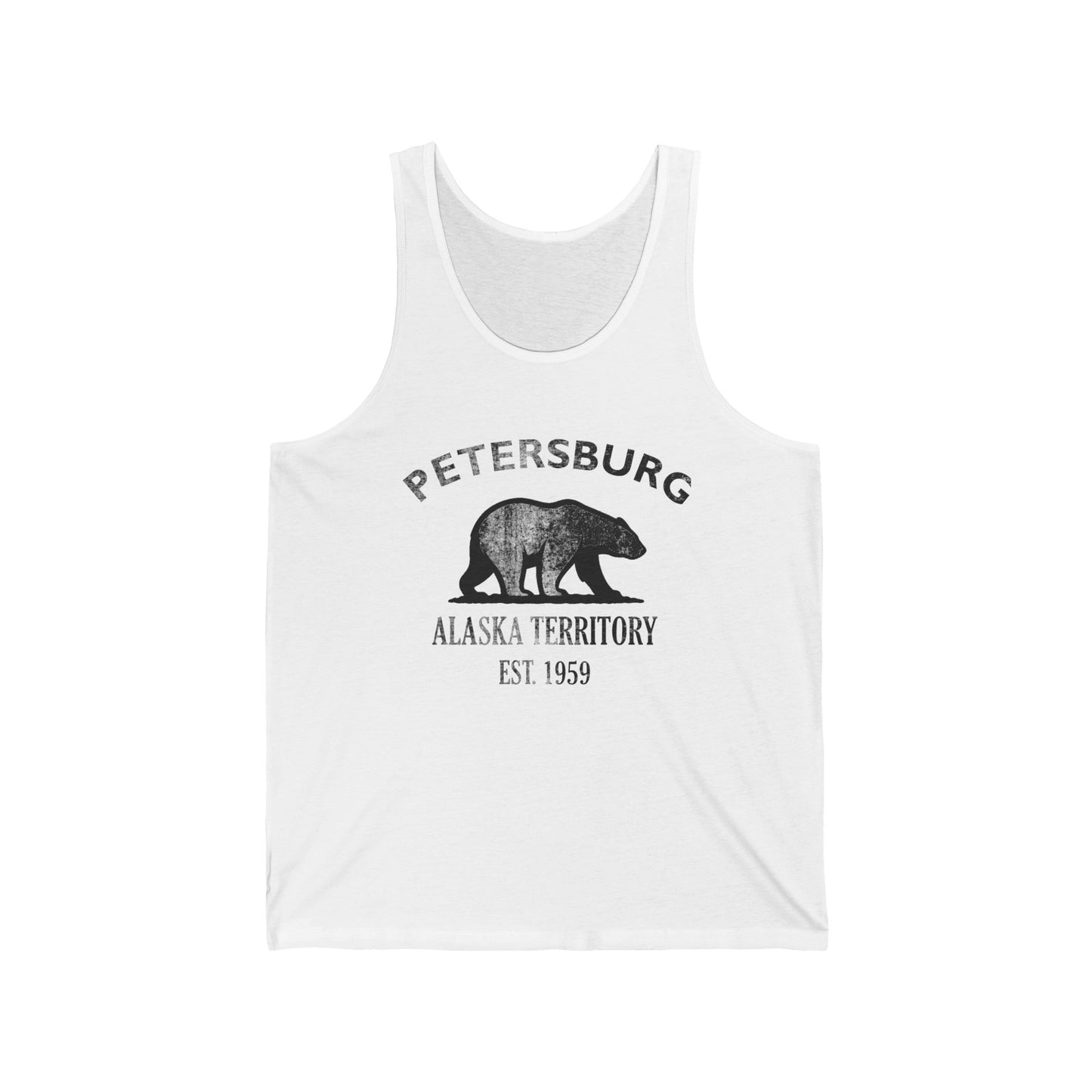
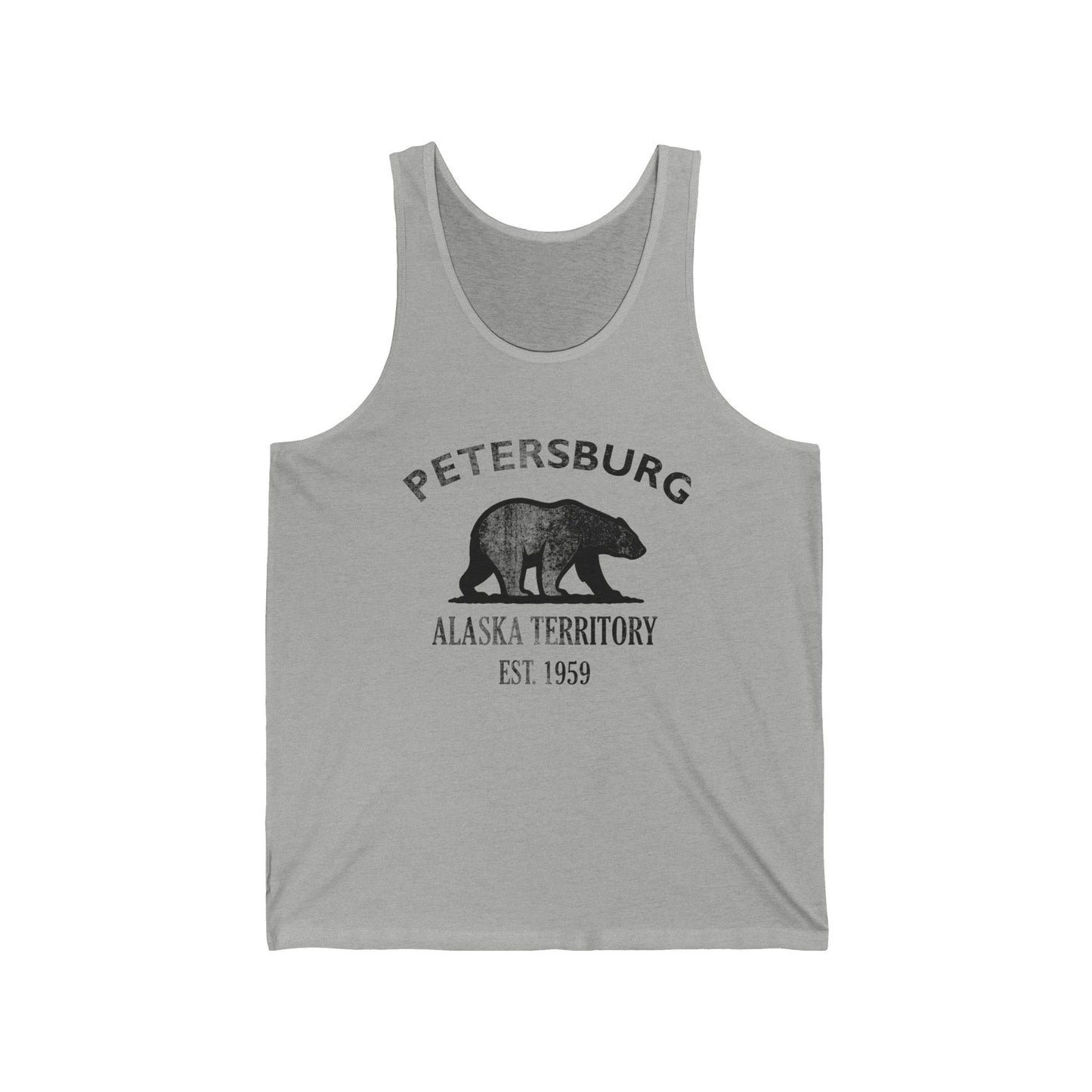
Our Petersburg retro logo features the Alaska bear — a frontier emblem of the territorial north, rendered distressed in black-and-white with a hand-printed, crate-stamp feel that suits a town that has always packed fish out of its own harbor. The bear stands square, walking the shore the way a working bear actually walks, and the "Alaska Territory" framing and "Est. 1959" date together honor the long frontier era and the statehood that finally followed it. On a tee, a cap, or a wall print, the bear reads as what Petersburg actually is: a working Alaska fishing town that built its own hall, raised its own children on the waterfront, and never gave the Norwegian language up.
Why People Visit Petersburg Alaska
- Walk Sing Lee Alley and the Sons of Norway Hall — the 1912 white-and-red gambrel-roofed wood-frame building on pilings over Hammer Slough, the first Sons of Norway lodge in Alaska, still in continuous community use, listed on the National Register of Historic Places in 1979.
- Visit Bojer Wikan Fishermen's Memorial Park at the south end of Sing Lee Alley — the nine-foot bronze fisherman sculpture, the Valhalla Viking ship replica, and the roll of Petersburg fishermen lost at sea.
- Take a day boat tour to LeConte Bay and the LeConte Glacier — the southernmost tidewater glacier in North America, calving icebergs the size of small buildings into a long fjord roughly 25 miles southeast of town.
- Visit the Clausen Memorial Museum just off the harbor for the Tlingit fish-trap and petroglyph collections, the cannery-era industrial history, the world-record king salmon, and the original Cape Decision Lighthouse Fresnel lens.
- Walk the North Boat Harbor and South Harbor — the largest home-based halibut fleet in Alaska, plus working salmon and crab boats, and one of the best harbor walks in Southeast Alaska.
- Hike Three Lakes Trail on Mitkof Island in the Tongass National Forest — three small lakes linked by boardwalk through the muskeg, blueberry-thick in late summer, a classic Southeast Alaska temperate-rainforest walk.
- Walk the Sandy Beach Recreation Area south of town to see Tlingit petroglyphs and the remains of stone fish traps visible at low tide — Mitkof Island's pre-1897 layer.
- Cross to Kupreanof on a skiff or kayak — the smaller island community right across the Narrows, no roads connecting to it, a five-minute crossing from the Petersburg harbor.
- Come back for the Little Norway Festival in mid-May for the Valhalla parade, the rosemaling on every shutter, lutefisk and lefse on the menu, and the Leikarring folk-dancers in costume.
- Petersburg is also a natural stop on the Inside Passage between Juneau, Sitka, Ketchikan, and Wrangell — each town its own character, each a separate ferry day.
