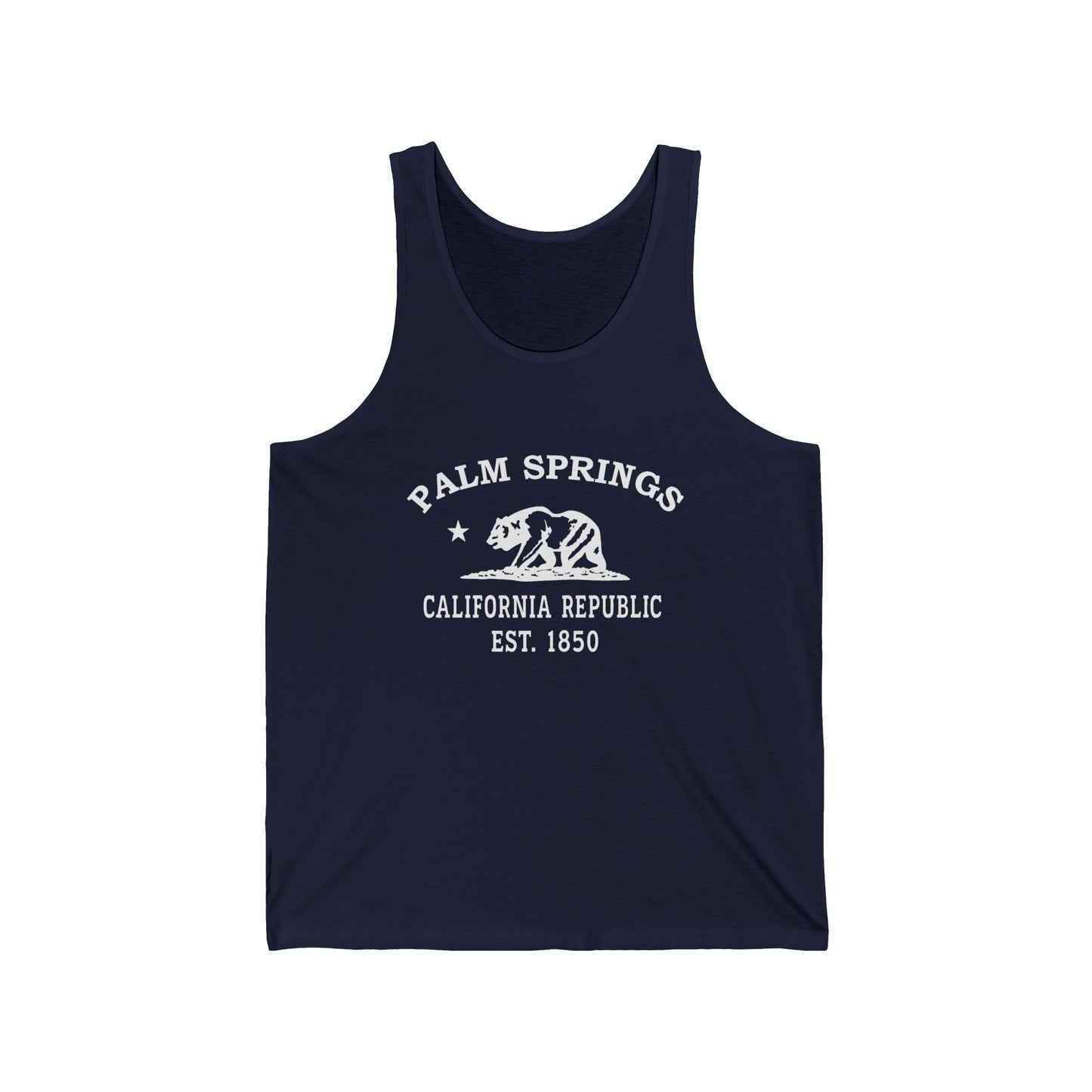
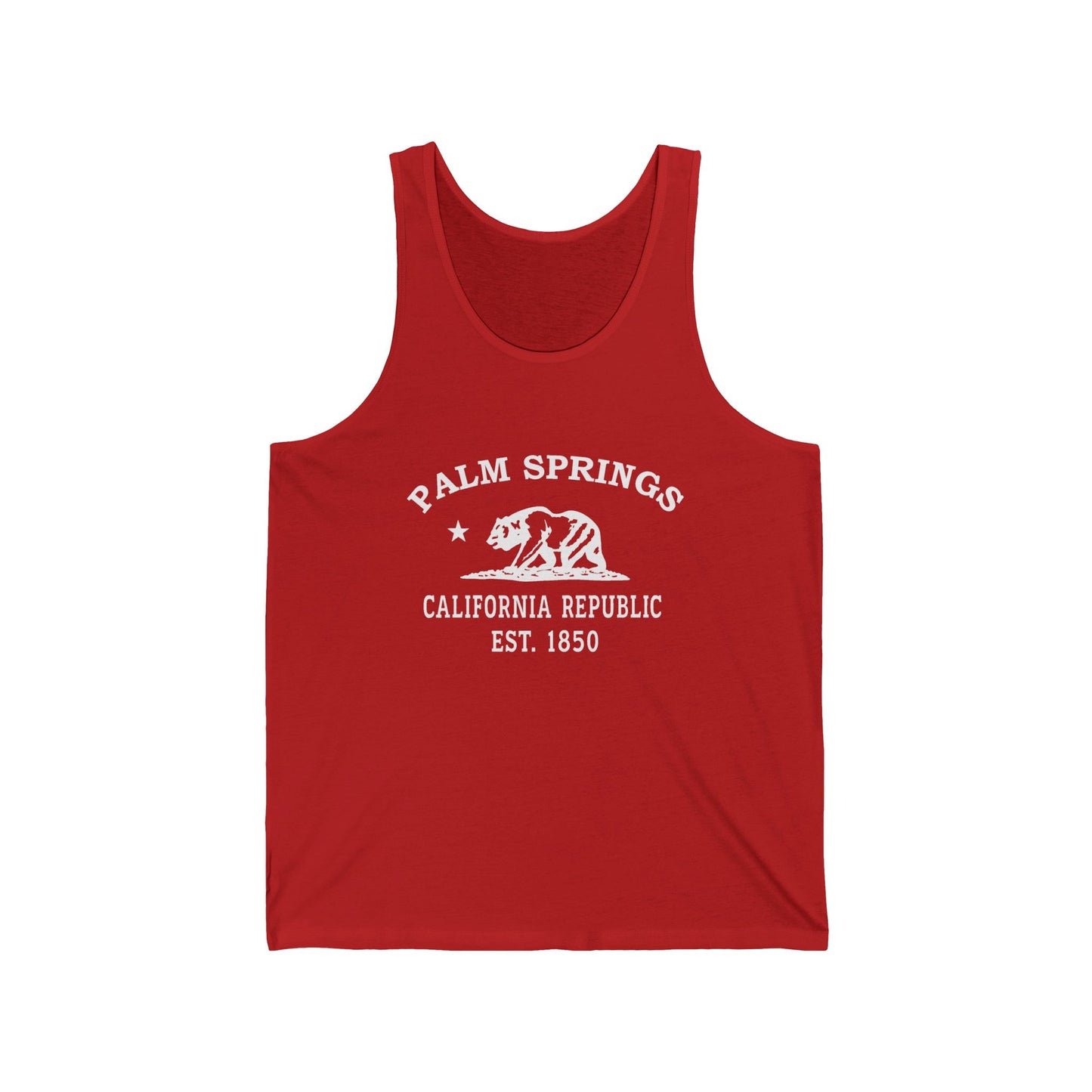
The desert's mid-century modern capital — a Coachella Valley oasis where Hollywood built a town of butterfly roofs and the world's largest rotating tram climbs two miles into the mountains. Palm Springs sits in a bowl of sun at the foot of Mount San Jacinto, on the floor of the Coachella Valley. The Agua Caliente Cahuilla built their lives around its hot mineral springs and palm-canyon oases for thousands of years; by the 1950s it had become a sun-drenched modernist playground of clean lines and kidney-shaped pools. Three hundred and fifty days of sun, a mountain that leaps straight off the desert floor, and a whole town of desert-modern design — this page tells the story.
Today Palm Springs is a thriving desert resort city, proud of its mid-century modern heritage, its tramway and palm-canyon oases, and the Coachella Valley sun that draws a design-loving world back every winter. Its story runs from the Cahuilla hot springs through McCallum's 1884 adobe, the 1938 incorporation, the postwar Desert Modernism boom, and the 1963 tram into the mountains. Our Palm Springs designs gather that identity into wearable form — the desert, the design, the oasis. Palm Springs, California — mid-century modern at the foot of the mountain.
Why People Visit Palm Springs California
People come to Palm Springs for the sun, the mid-century modern design, and the rare pairing of desert and mountain — palm oases on the valley floor, snow-dusted pines a tram ride above. It is bright, stylish, and walkable: the desert's design capital at the foot of Mount San Jacinto.
