The hot mineral springs the Cahuilla called "Se-Khi," and the fan-palm oases of the canyons that still carry their name, made this stretch of desert livable for thousands of years; the Agua Caliente Band of Cahuilla Indians are its original inhabitants and stewards. In 1884 John Guthrie McCallum became the first permanent non-Native settler, building the adobe that is still the city's oldest standing structure and digging irrigation ditches to green the valley floor. A health-resort era followed — the Desert Inn opened in 1909 — and on the strength of its dry air and warm springs the desert stop grew into a winter resort. Palm Springs incorporated as a city in 1938.
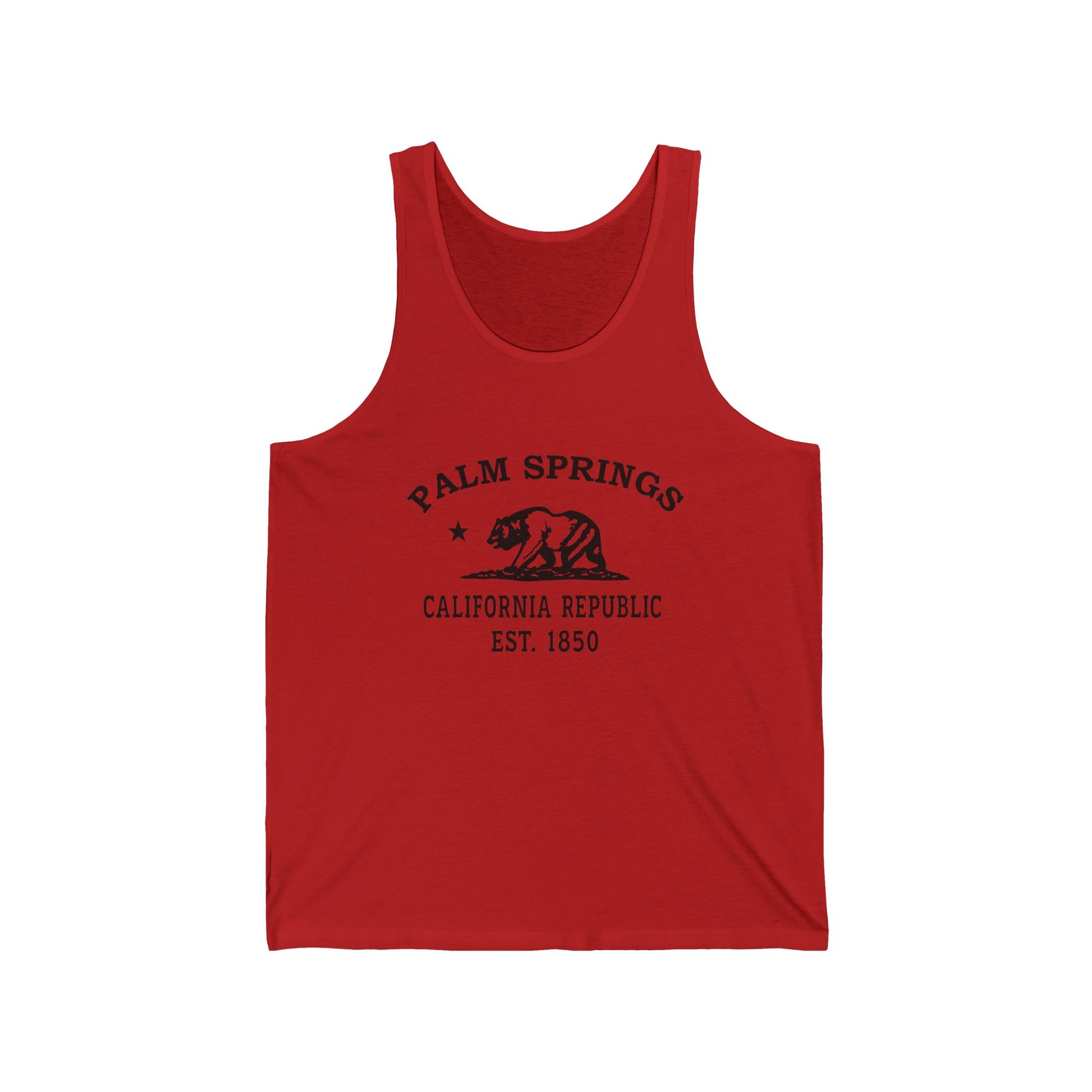
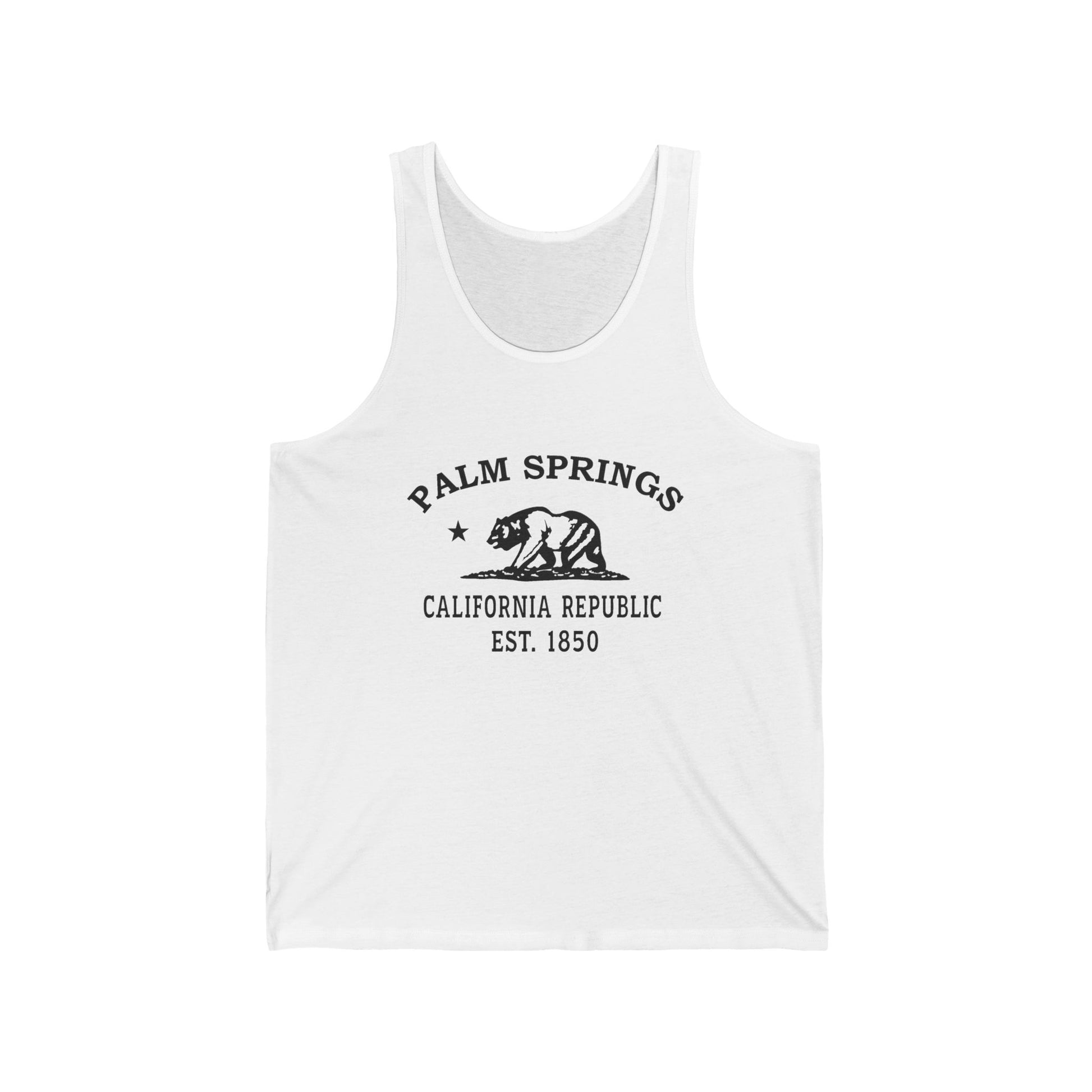
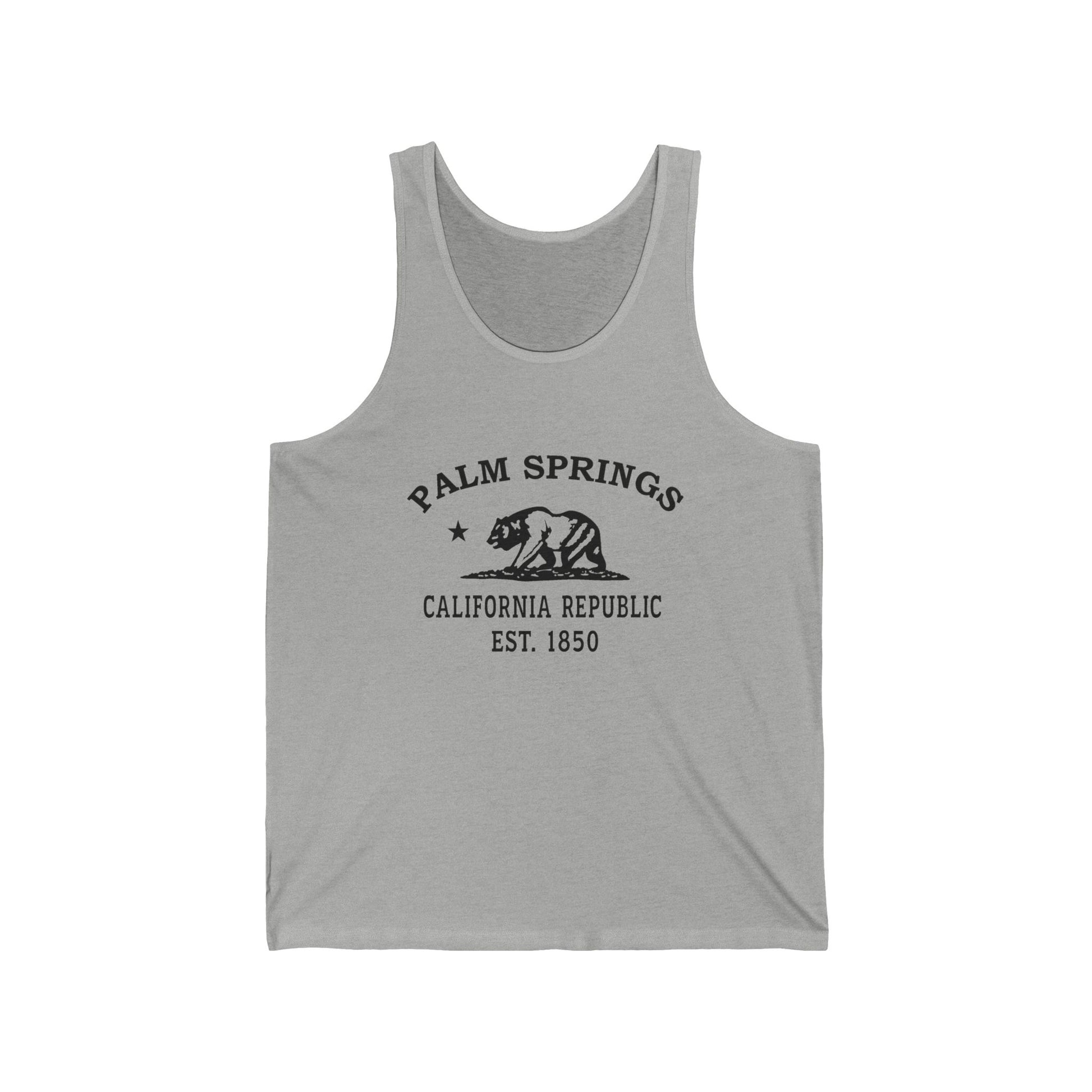
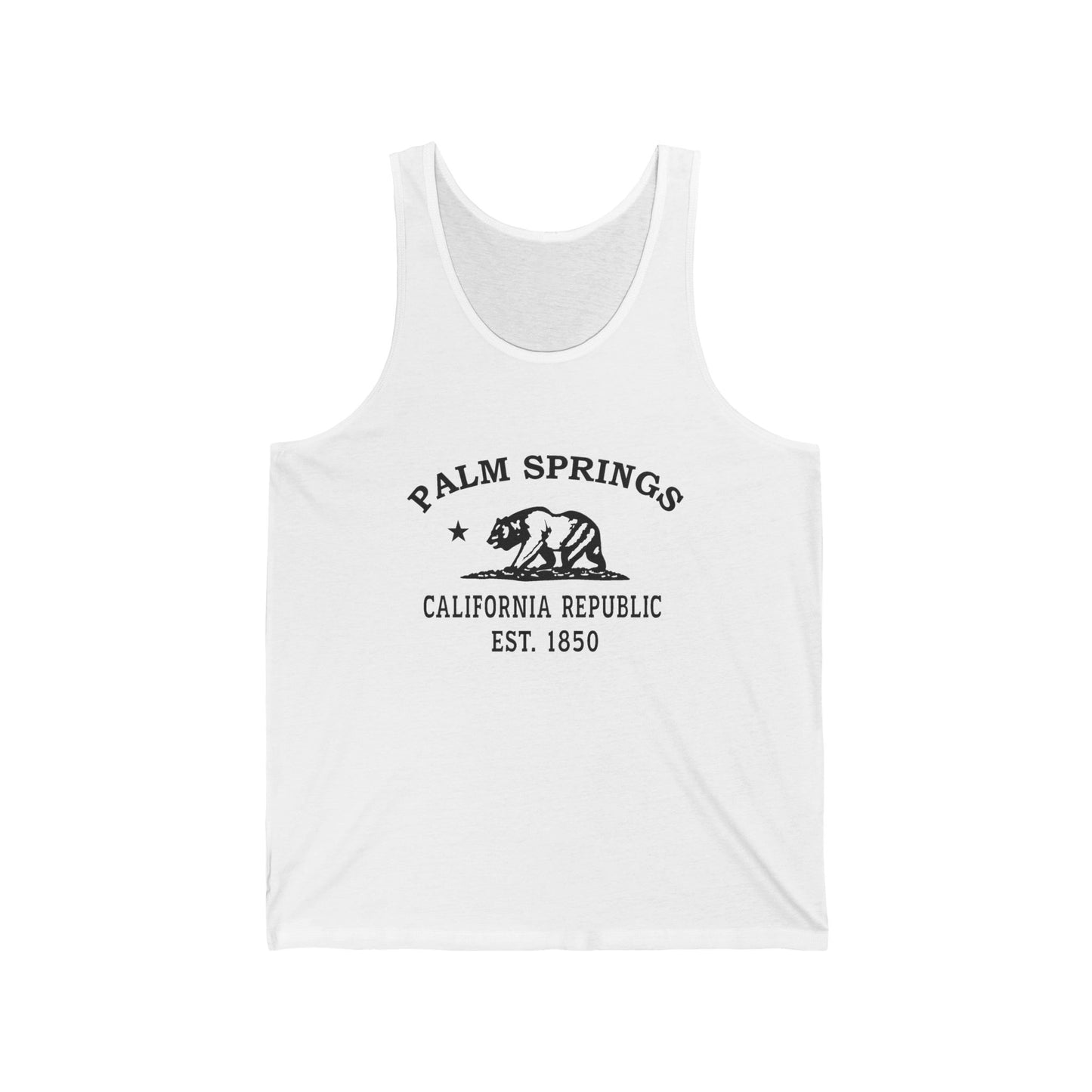
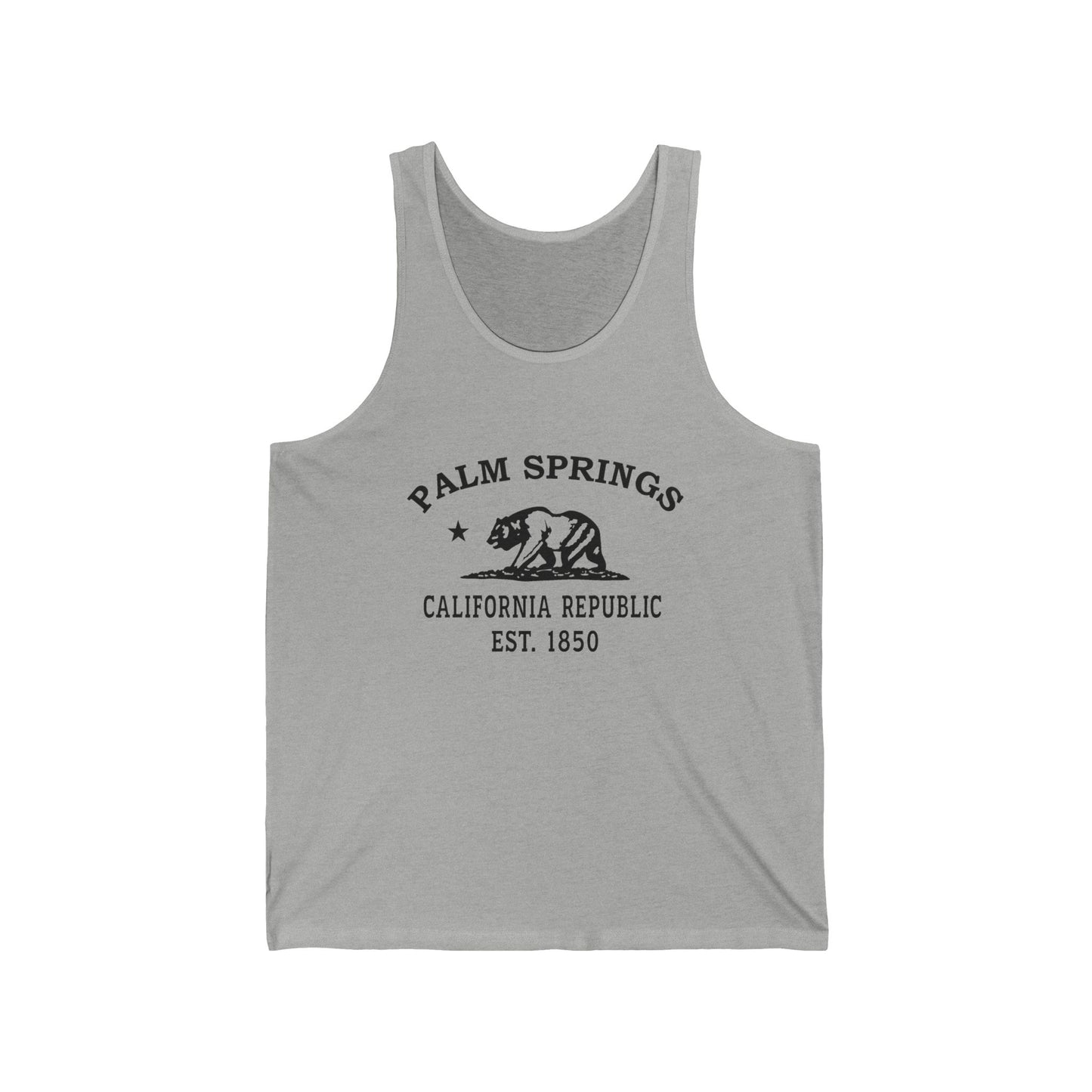
Our Palm Springs logo carries the California grizzly and star over "California Republic, Est. 1850," the same emblem every Merlin Classics California place wears. The bear and star are California's shorthand — wildness, independence, the open West — printed black-and-white with the worn look of an old state-park sign or a vintage athletic print. What makes this one Palm Springs is the place behind it: the mid-century modern, the rotating tram, the desert oasis. On a tee or a cap it reads less like a souvenir and more like a piece of the California desert — Est. 1850, worn plain.
Why People Visit Palm Springs California
- Ride the Palm Springs Aerial Tramway up Chino Canyon to the cooler pine forests of Mount San Jacinto State Park.
- Hike the Indian Canyons, the Cahuilla fan-palm oases with stream-fed trails.
- Tour the mid-century modern neighborhoods — and time a visit for Modernism Week in February.
- Stroll Palm Canyon Drive downtown for galleries, design shops, and classic facades.
- Wander Moorten Botanical Garden and the Palm Springs Art Museum.
- Detour west to the roadside Cabazon Dinosaurs (in Cabazon, about 20 minutes away) or out to Joshua Tree National Park.
