


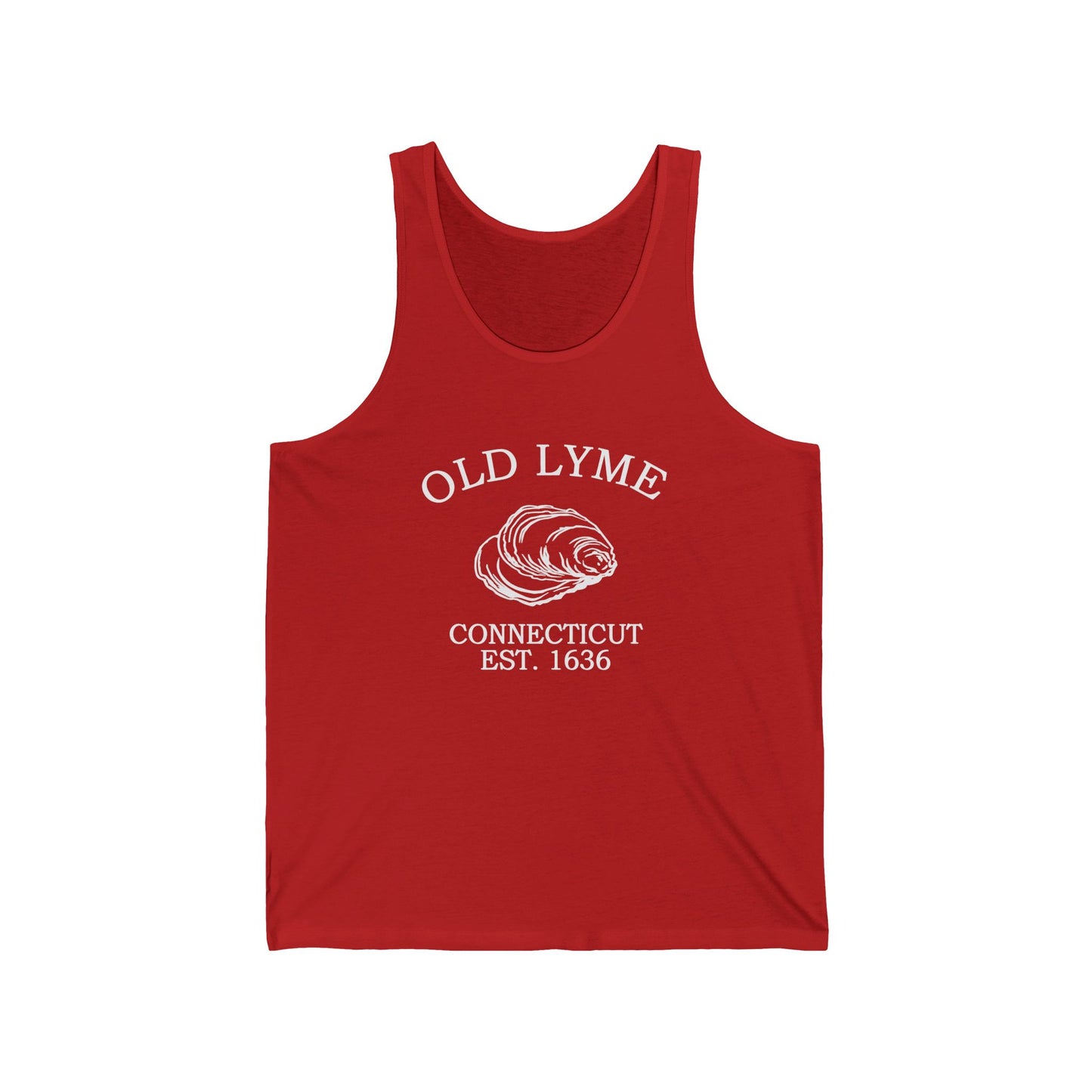


Old Lyme wears its history lightly: a town green the Impressionists painted, a museum where the art is on the walls because the walls are the art, and river light that has been drawing painters for more than a century. Our Old Lyme designs gather that identity — the clam shell, the 1636 emblem, the colony's light — into wearable form. Painting the light since 1899.
The marsh hoards. The marshes here look soft and empty until you slow down, then you notice they are packed with small life and hidden structure: channels, grasses, and bird paths stitched into the green. Marsh Hoards is the local nickname for all those tucked-away riches, the way the wetlands hold more than they show from the road. A quick cue is the pluff-mud pull: if your boot sinks and releases with a slow pop, you are standing on a living sponge that stores water and keeps the shoreline stable. That is ecology, not treasure. At sunset the marsh turns copper, and the hoard becomes light itself — the same light the colony's painters came for.
Why People Visit Old Lyme Connecticut
Old Lyme balances arts heritage with beaches and greens. Visitors find quiet museums, sculpture paths, and easy seaside stops. It is graceful, creative, and restful. Travelers find year round appeal in parks, paths, and public spaces. The setting combines natural beauty with accessible neighborhoods and landmarks. History and everyday culture sit side by side in a welcoming way.
