


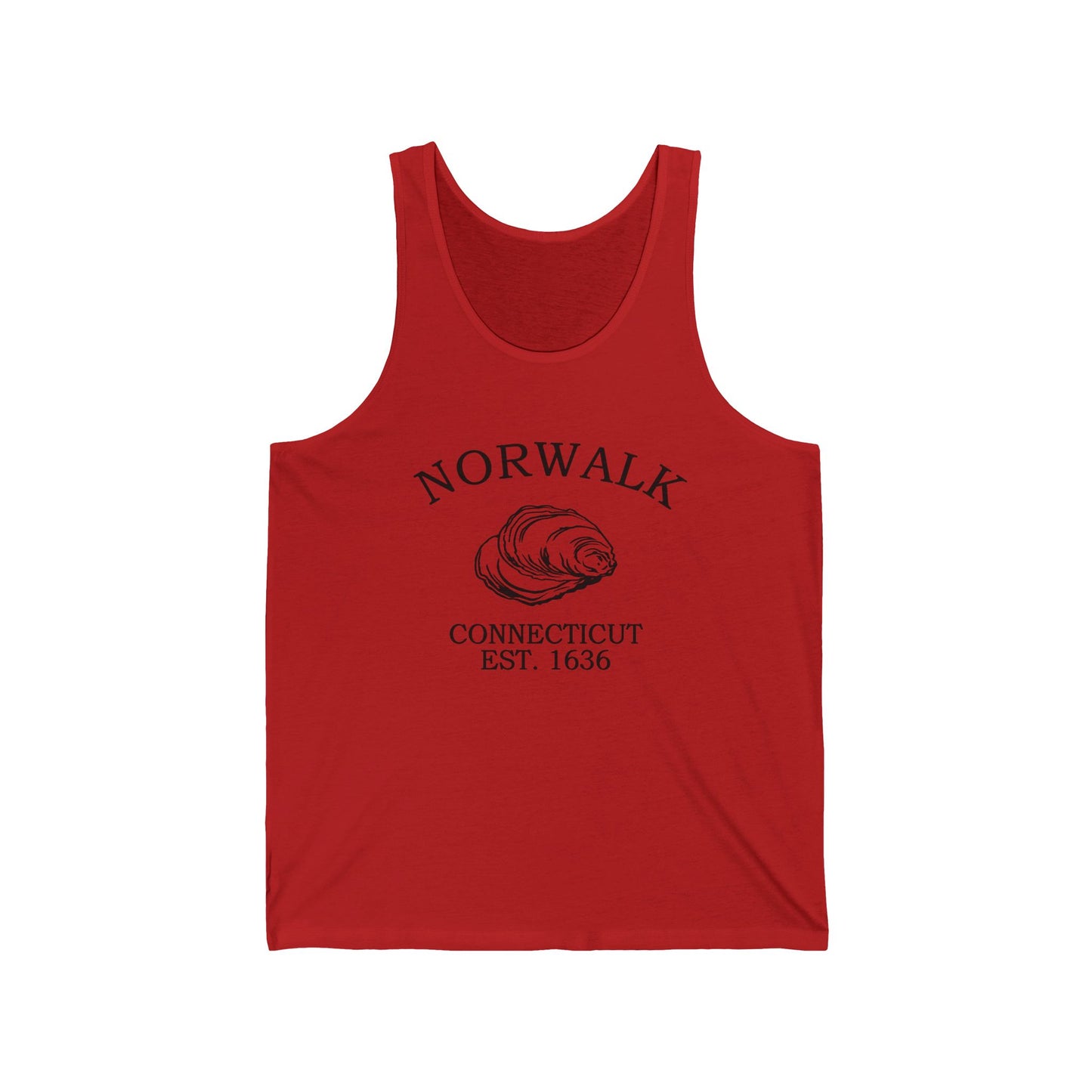

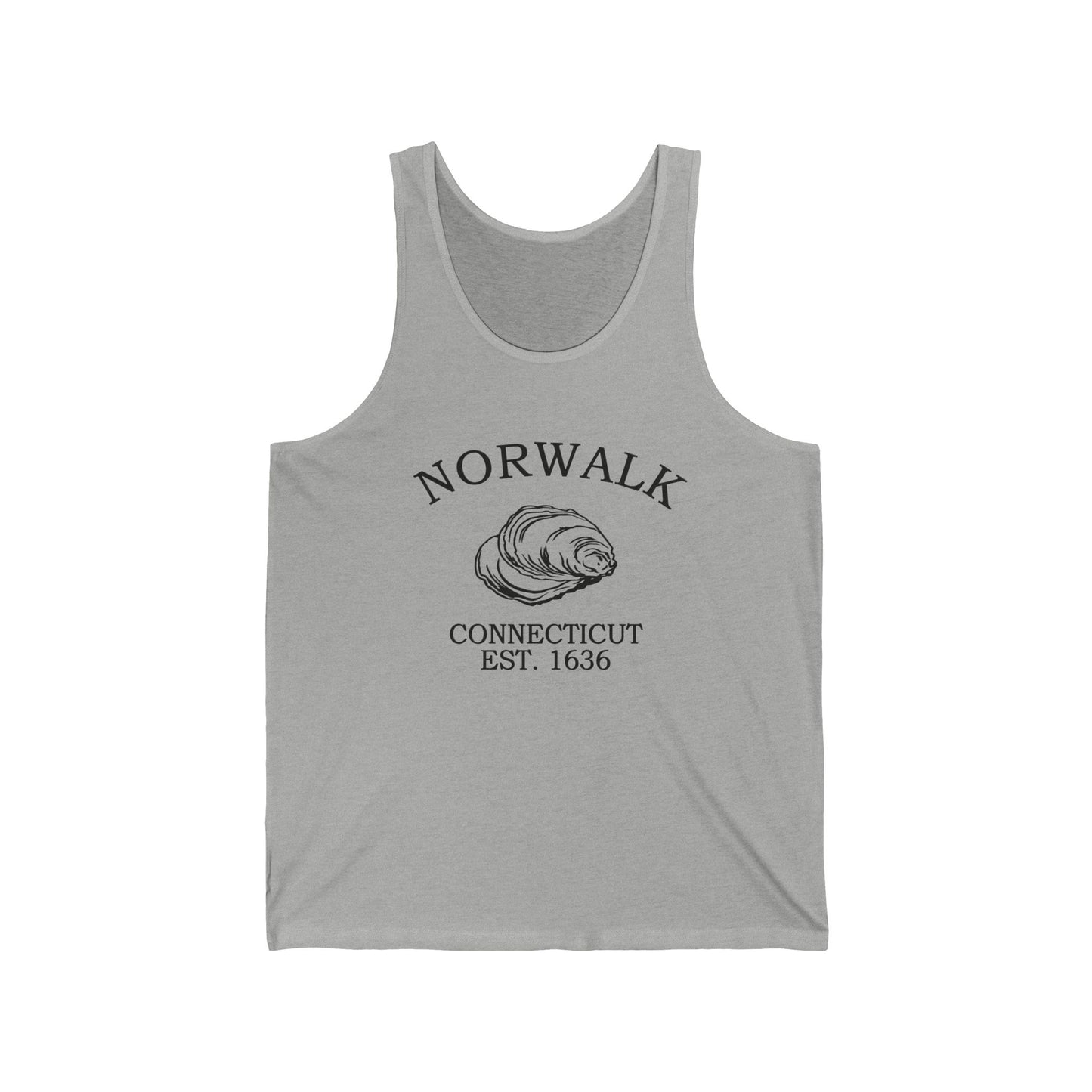
So Norwalk gathers a 1640 purchase and an honest name, a burned and rebuilt green, the first American derby, a pre-Vanderbilt mansion, three lighthouses, a string of islands, and the oyster beds that fed New York — and our Norwalk designs gather that into wearable form. Whether Norwalk is your hometown, your harbor, your SoNo years, or the town you still come back to, wear the history. On the half shell from the beginning — on Norwalk Harbor since 1640.
The colonial town lived on farming, shipbuilding, coastal trade — and always the oyster beds. On July 11, 1779, four days after burning Fairfield, British forces under General William Tryon landed at Calf Pasture and burned Norwalk — houses, mills, churches, and barns were destroyed in a single day of fighting that swept up Grumman’s Hill, and the town rebuilt itself through the Federal era around its green, which still anchors the historic district today.
Why People Visit Norwalk Connecticut
- Tour the Maritime Aquarium at Norwalk, exhibits on Long Island Sound habitats, IMAX films, and harbor seal and shark tanks set inside the repurposed nineteenth-century Norwalk Iron Works buildings on the South Norwalk waterfront.
- Tour the Lockwood-Mathews Mansion Museum, the sixty-two-room 1864-1868 Second Empire country house built by banker LeGrand Lockwood, a National Historic Landmark with ornate inlaid woodwork, frescoed ceilings, and rotating exhibits including the periodic exhibit on the history of the American hat.
- Ride the seasonal ferry to Sheffield Island Lighthouse, the 1868 stone lighthouse at the mouth of Norwalk Harbor, with island trails and views back across the Norwalk Islands toward the Sound.
- Walk Washington Street and the SoNo historic district, brick nineteenth-century commercial blocks now lined with galleries, restaurants, and public art.
- Relax in Oyster Shell Park, riverfront lawns and walking paths along the Norwalk River with views toward the SoNo skyline.
- Walk Calf Pasture Beach, the city's public Sound-front beach with boardwalks, picnic groves, and clear views to the Norwalk Islands.
- Walk Cranbury Park, the inland 227-acre municipal park with hiking trails, gardens, and a historic 1922 estate house.
- Visit Mill Hill Historic Park, the original 1740s burial ground and historic district preserved by the Norwalk Historical Society.
- Attend the Norwalk Oyster Festival, the city's signature annual event held every September at Veterans Memorial Park since 1978 — oyster shucking competitions, tall ships, music, and harbor pageantry.
- Explore the Norwalk Islands by kayak from the public launches, the small low-lying island chain of Sheffield, Chimon, Cockenoe, and others stretching east across Norwalk Harbor.
