Skip to product information
1 of 3

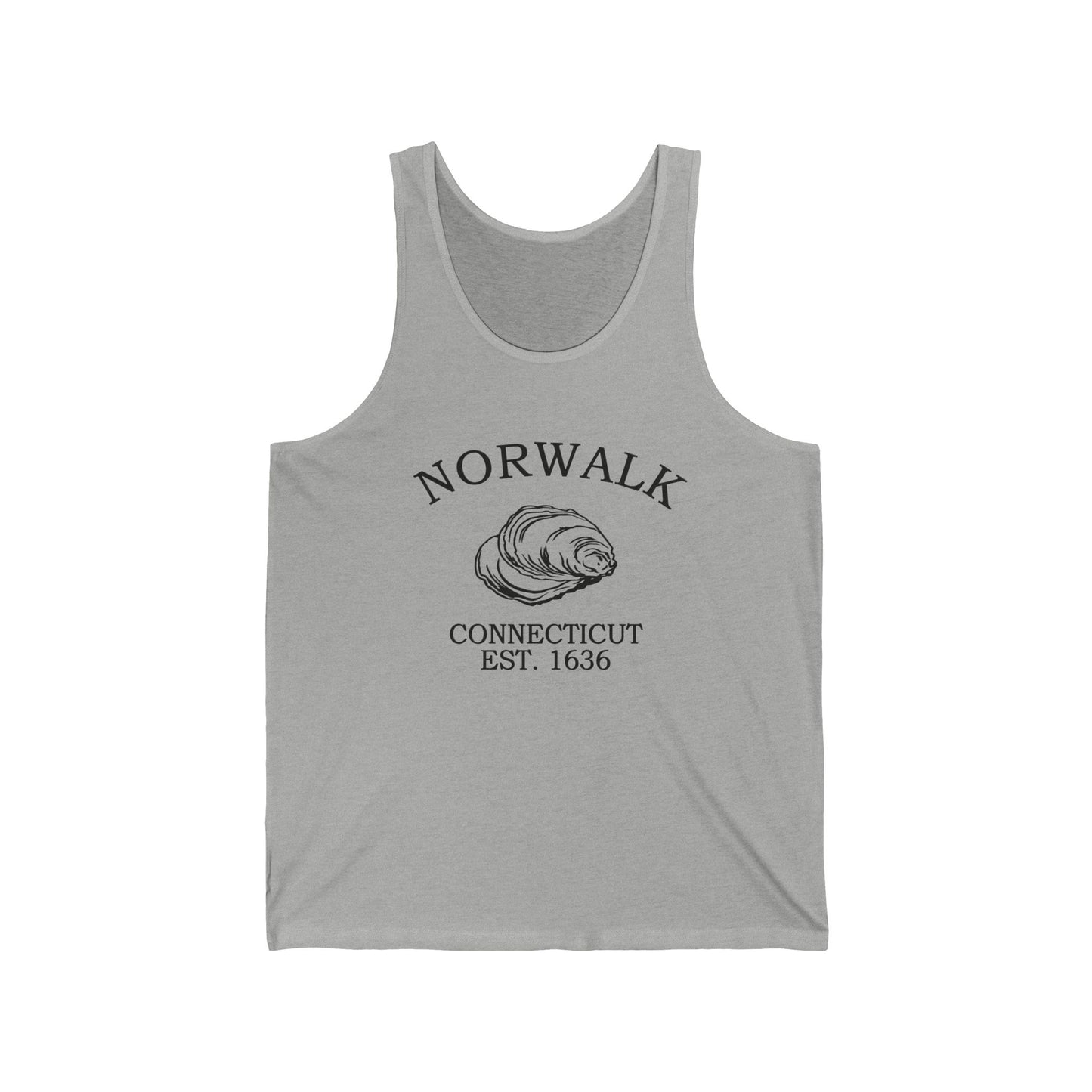
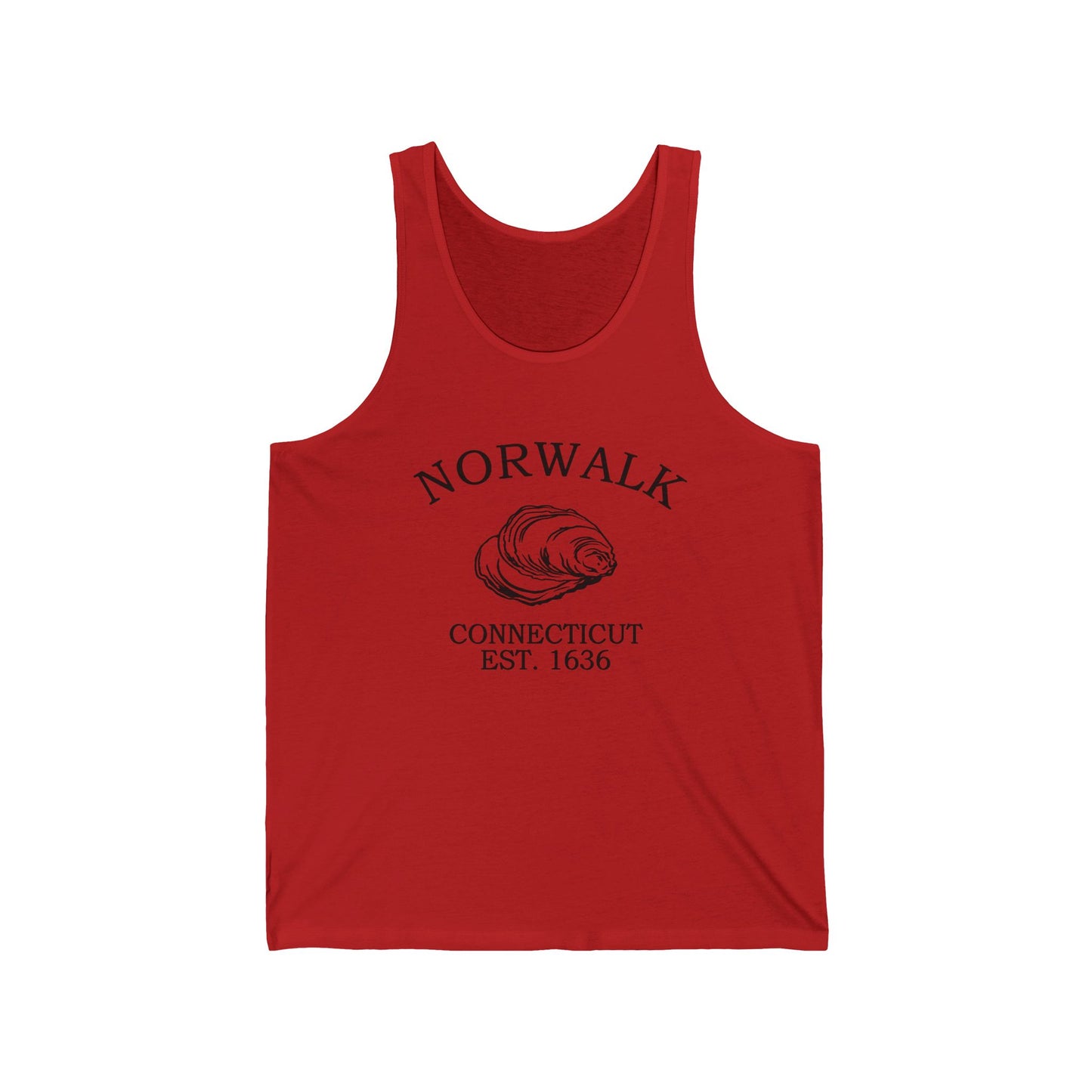
Norwalk Connecticut Vintage Retro Unisex Cotton Jersey Tank Top - Black Logo

Norwalk Connecticut Vintage Retro Unisex Cotton Jersey Tank Top - Black Logo

Regular price $28.00 USD
Regular price Sale price $28.00 USD
Sale
Shipping calculated at checkout.
Size
Color
Quantity
Unisex jersey tank made from lightweight Airlume combed and ring-spun cotton with a retail fit. Side-seam construction and self-fabric binding help it hold shape, with a tear-away label, and it runs true to size for adults. Solid colors are 100% cotton; select heather/prism shades may include cotton–poly or cotton–poly–rayon blends.

View full details

Norwalk made hats. From a small shop at the corner of North Main and Union Streets in South Norwalk in 1860, the firm of Crofut and Knapp produced the first American derby — the stiff, round-crowned, brim-curled hat that for the next sixty years sat on the head of every American who could afford one. The partnership of Andrew J. Crofut and James H. Knapp had begun two years earlier in 1858, and from that first shop Norwalk's hat industry climbed through the second half of the nineteenth century until, by 1885, twelve hat factories worked the South Norwalk waterfront and employed more than two thousand hatters — over a third of the entire South Norwalk workforce. In 1923 Crofut and Knapp finished a vast new plant on Van Zant Street with a thousand employees on the floor and capacity for fifteen million hats a year. In 1932 the company merged with the Knox Hat Company of Brooklyn to form the Hat Corporation of America, headquartered in Norwalk, where its derbies, fedoras, top hats, and the famous Dobbs line were made until the plant finally closed in 1970. For more than a century Norwalk was one of the two great American hatmaking cities — and for stiff hats, the one that made the original. The town itself was older: Roger Ludlow purchased the land from Chief Mahackemo of the Norwalke people of the Algonquian world in 1640, and the General Court of the Connecticut Colony incorporated Norwalk as a town on September 11, 1651. The Norwalke had fished the harbor and worked the shellfish beds along the Sound for generations before the purchase. On July 11, 1779 the British general William Tryon landed and burned much of the town to the ground; the rebuilt city was the same one that, two generations later, would invent the derby. The other working credential of Norwalk Harbor was the oyster. From the 1860s through the turn of the twentieth century, Norwalk's beds in the shallow flats of Long Island Sound were leased like land and worked like farms, and Norwalk oysters supplied a substantial share of the New York City trade — every restaurant on the Bowery and every saloon on Pearl Street served Sound oysters, and a great many of them came from Norwalk. Up on the hill above the harbor, the banker LeGrand Lockwood built his sixty-two-room sandstone country house between 1864 and 1868, one of the earliest Second Empire mansions in America and today a National Historic Landmark. Down at the harbor mouth, Sheffield Island Lighthouse was lit in 1868. The Maritime Aquarium opened on the South Norwalk waterfront in 1988 in a row of nineteenth-century iron-works buildings, and the old SoNo industrial blocks were reborn as a historic district through the 1980s and 1990s. The harbor still sets the line of the city. The derby, the oyster bed, the mansion on the hill — Norwalk on Norwalk Harbor since 1640.

Norwalk's lore includes Revolutionary War destruction, oyster festivals celebrating heritage, and a hat industry that for a century clothed the heads of America. Families recall clambakes, parades, and fairs in the 1950s. Residents remembered oyster harvests shaping identity and suburban growth anchoring optimism. Lore reflects resilience, continuity, and cultural pride. Norwalk's stories highlight its dual identity: colonial maritime hub and suburban community. Fact and legend alike illustrate endurance and heritage, ensuring traditions remained central. Norwalk's tales demonstrate adaptability, pride, and resilience, reflecting Connecticut's shoreline heritage. Its lore blends memory and myth, making Norwalk a cultural anchor of Connecticut's layered history.

Why People Visit Norwalk Connecticut

  • Tour the Maritime Aquarium at Norwalk, exhibits on Long Island Sound habitats, IMAX films, and harbor seal and shark tanks set inside the repurposed nineteenth-century Norwalk Iron Works buildings on the South Norwalk waterfront.
  • Tour the Lockwood-Mathews Mansion Museum, the sixty-two-room 1864-1868 Second Empire country house built by banker LeGrand Lockwood, a National Historic Landmark with ornate inlaid woodwork, frescoed ceilings, and rotating exhibits including the periodic exhibit on the history of the American hat.
  • Ride the seasonal ferry to Sheffield Island Lighthouse, the 1868 stone lighthouse at the mouth of Norwalk Harbor, with island trails and views back across the Norwalk Islands toward the Sound.
  • Walk Washington Street and the SoNo historic district, brick nineteenth-century commercial blocks now lined with galleries, restaurants, and public art.
  • Relax in Oyster Shell Park, riverfront lawns and walking paths along the Norwalk River with views toward the SoNo skyline.
  • Walk Calf Pasture Beach, the city's public Sound-front beach with boardwalks, picnic groves, and clear views to the Norwalk Islands.
  • Walk Cranbury Park, the inland 227-acre municipal park with hiking trails, gardens, and a historic 1922 estate house.
  • Visit Mill Hill Historic Park, the original 1740s burial ground and historic district preserved by the Norwalk Historical Society.
  • Attend the Norwalk Oyster Festival, the city's signature annual event held every September at Veterans Memorial Park since 1978 — oyster shucking competitions, tall ships, music, and harbor pageantry.
  • Explore the Norwalk Islands by kayak from the public launches, the small low-lying island chain of Sheffield, Chimon, Cockenoe, and others stretching east across Norwalk Harbor.

Norwalk Connecticut Merlin Classics retro vintage logo featuring oyster shell motif and 1640 founding date

Wear Local. Feed Local. Stay Classic.

Product FAQs

How does your sizing work?

Because items are made to order, we can’t accept returns for sizing or color choices. We do accept returns for defects, misprints, or shipping damage. Please review the detailed photos and descriptions before purchasing. Women’s fitted tees run small; if you prefer a looser fit, consider sizing up.

How do I send gifts?

All items ship without prices and include a simple packing slip for easy gifting. Enter the recipient’s shipping address and your billing address at checkout. Use your contact info to receive tracking updates. Orders typically arrive within 6–11 business days—please allow extra time for time-sensitive gifts.

How do I care for my item?

For apparel: wash cold, inside-out, with like colors; avoid bleach and high heat; tumble dry low or hang dry. For embroidery, iron inside-out to protect the stitching. See specific care instructions in product descriptions and also follow general best practices in caring for your items for long term enjoyment.

How are items made and when will they arrive?

We make each item on demand using premium blanks, embroidery, and soft-hand prints. Production usually takes 2–5 business days (excluding weekends and holidays). You’ll receive tracking once shipped. We currently ship to U.S. addresses via USPS, UPS, or FedEx. Most orders arrive within 6–11 business days.

What’s the return/exchange policy?

We accept returns for defects, misprints, or damage on arrival. Report issues within 14 days with photos and your order number, and we’ll replace or refund. Size or color changes aren’t supported after purchase, so please consult size charts before ordering if you are at all unsure.

Who are we?

Merlin Classics is a volunteer-run, AI-assisted apparel project celebrating timeless local style. Every item is made to order, and profits (revenue minus external product/marketing cost) support hunger-relief programs in the communities our collections spotlight. Classic looks, real local impact—every purchase helps.