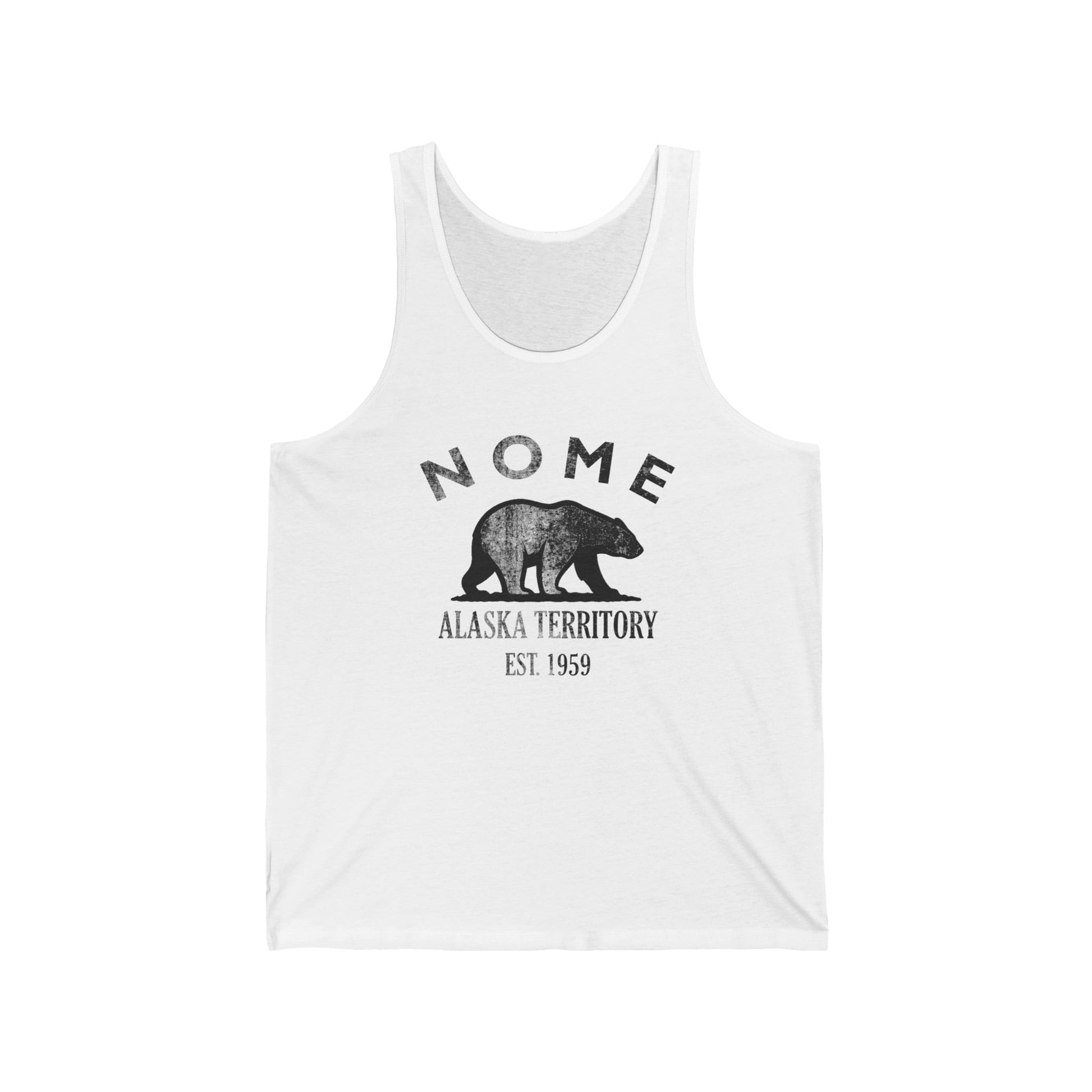
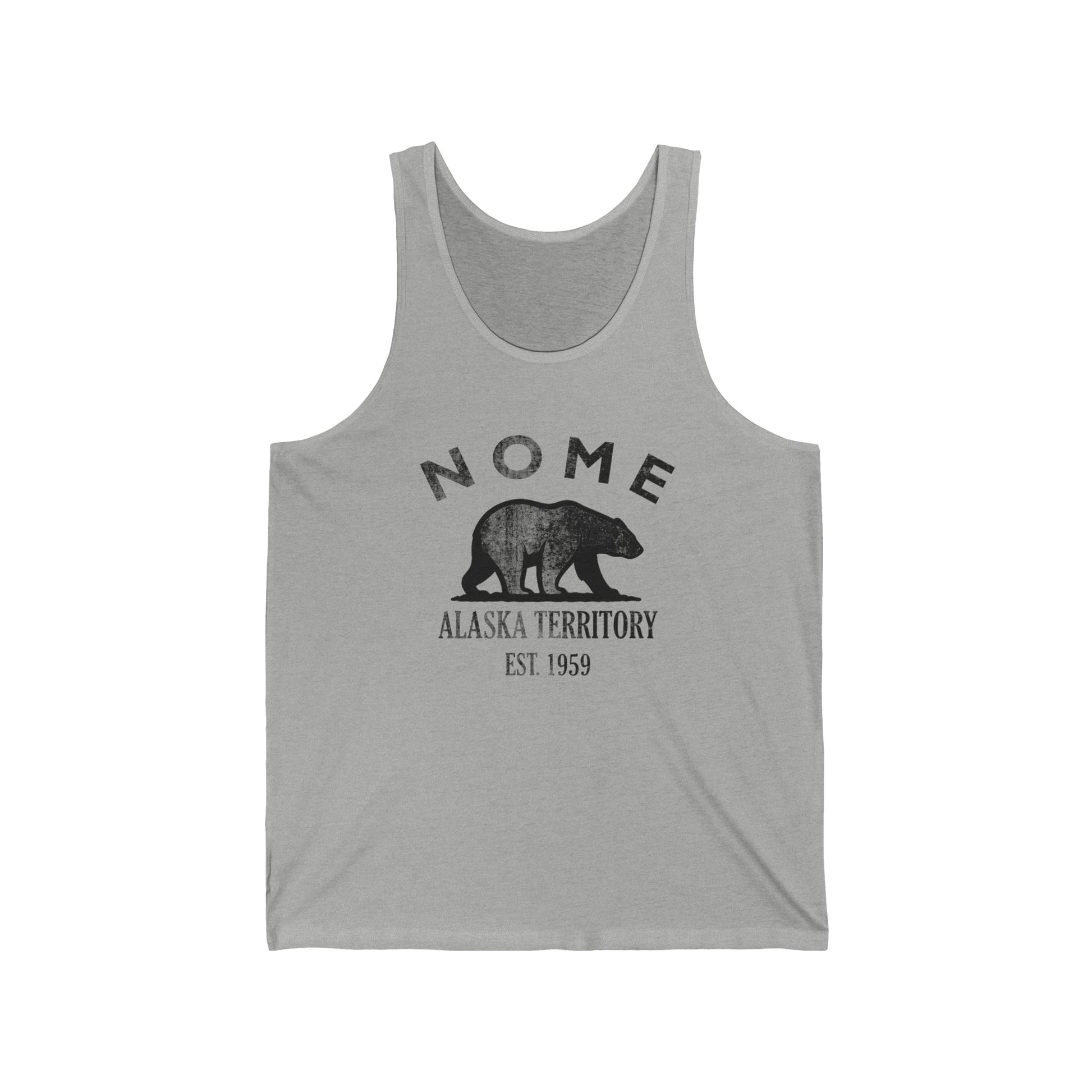
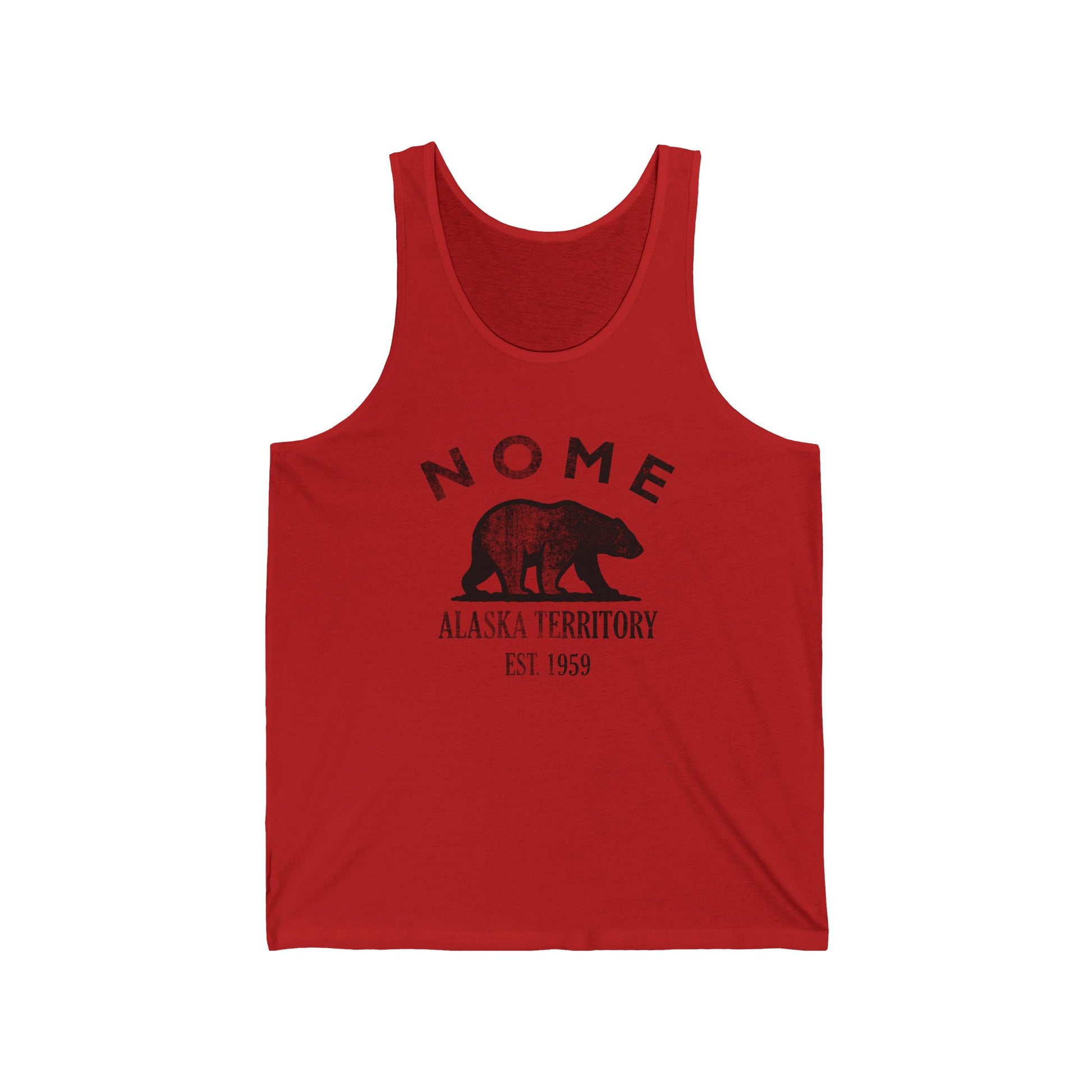
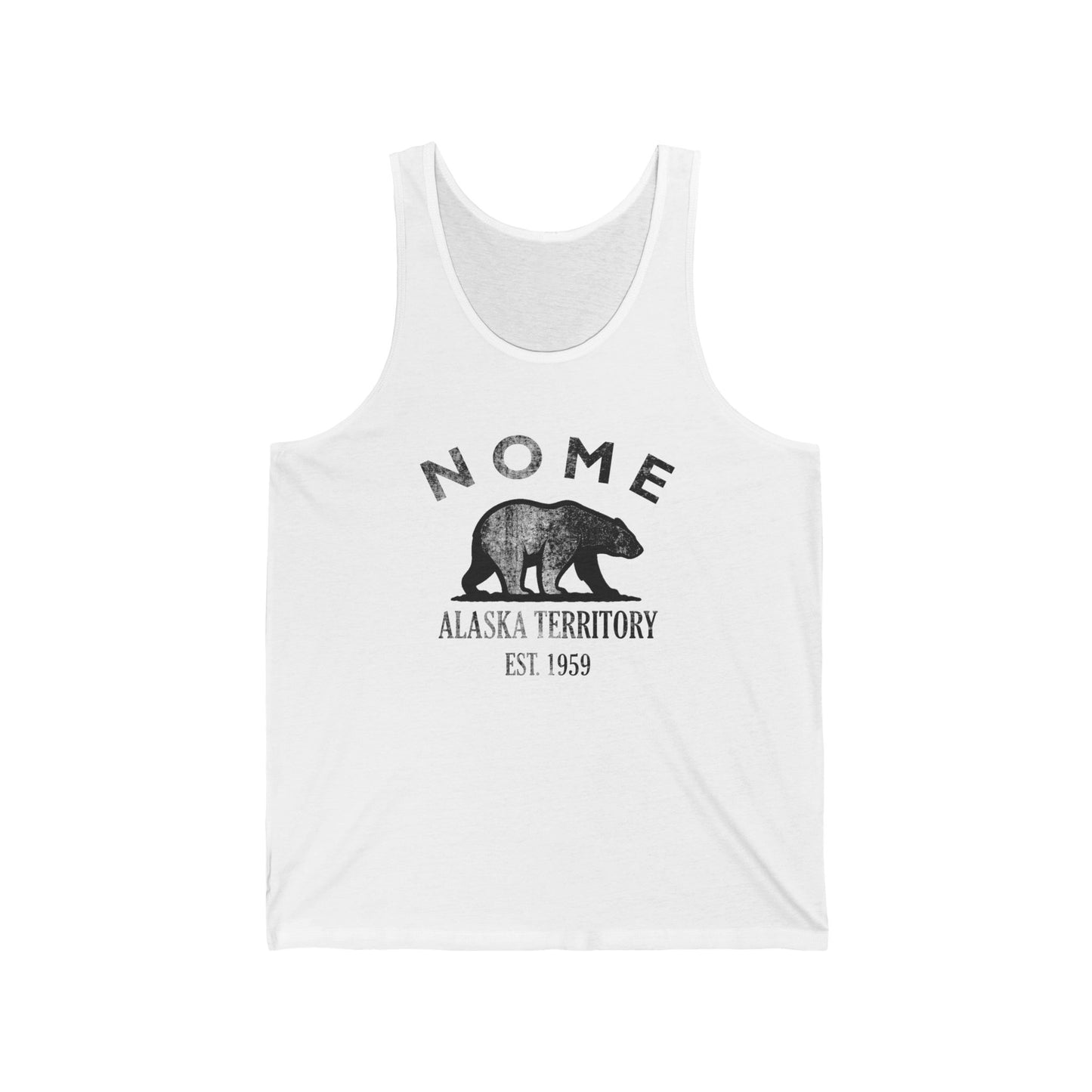
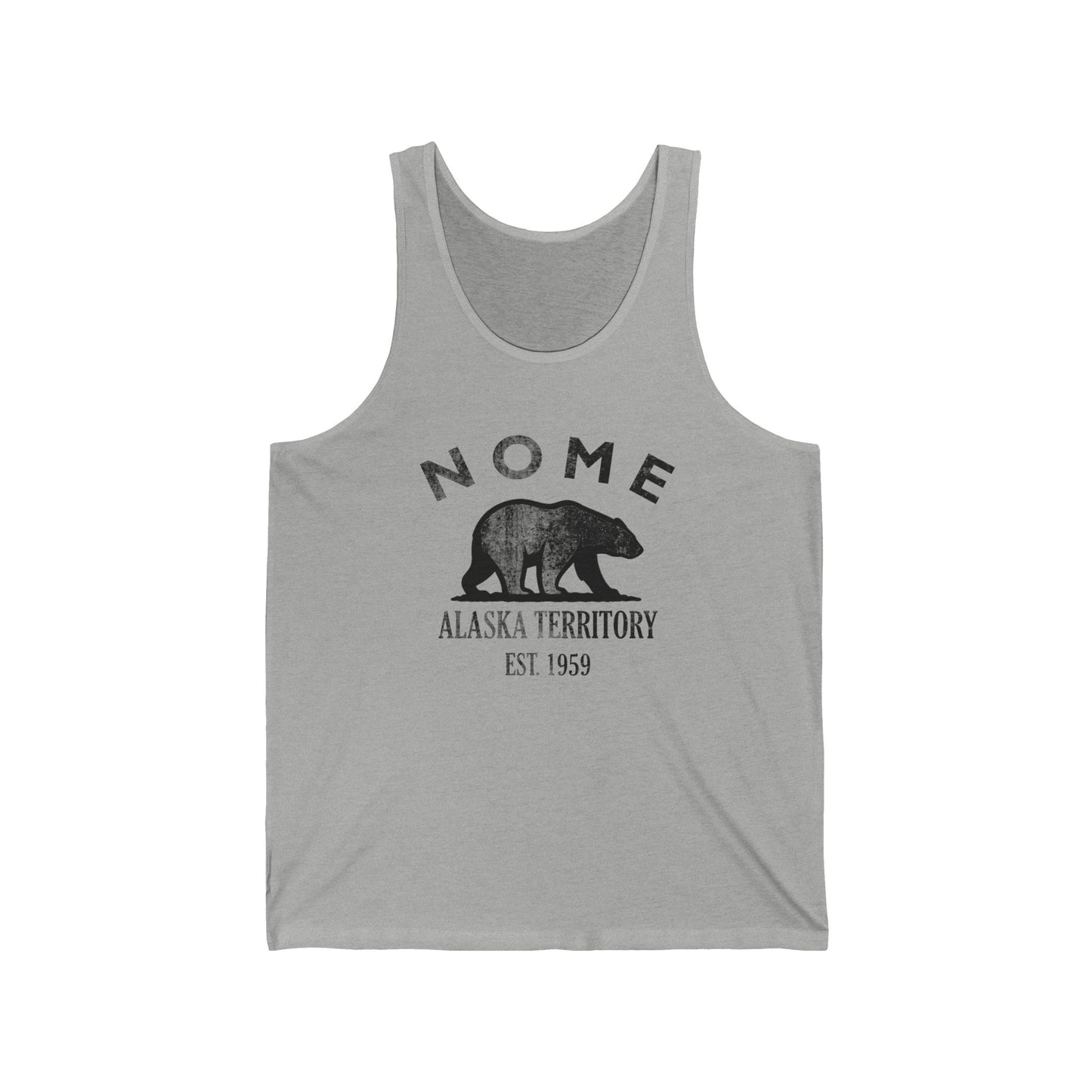
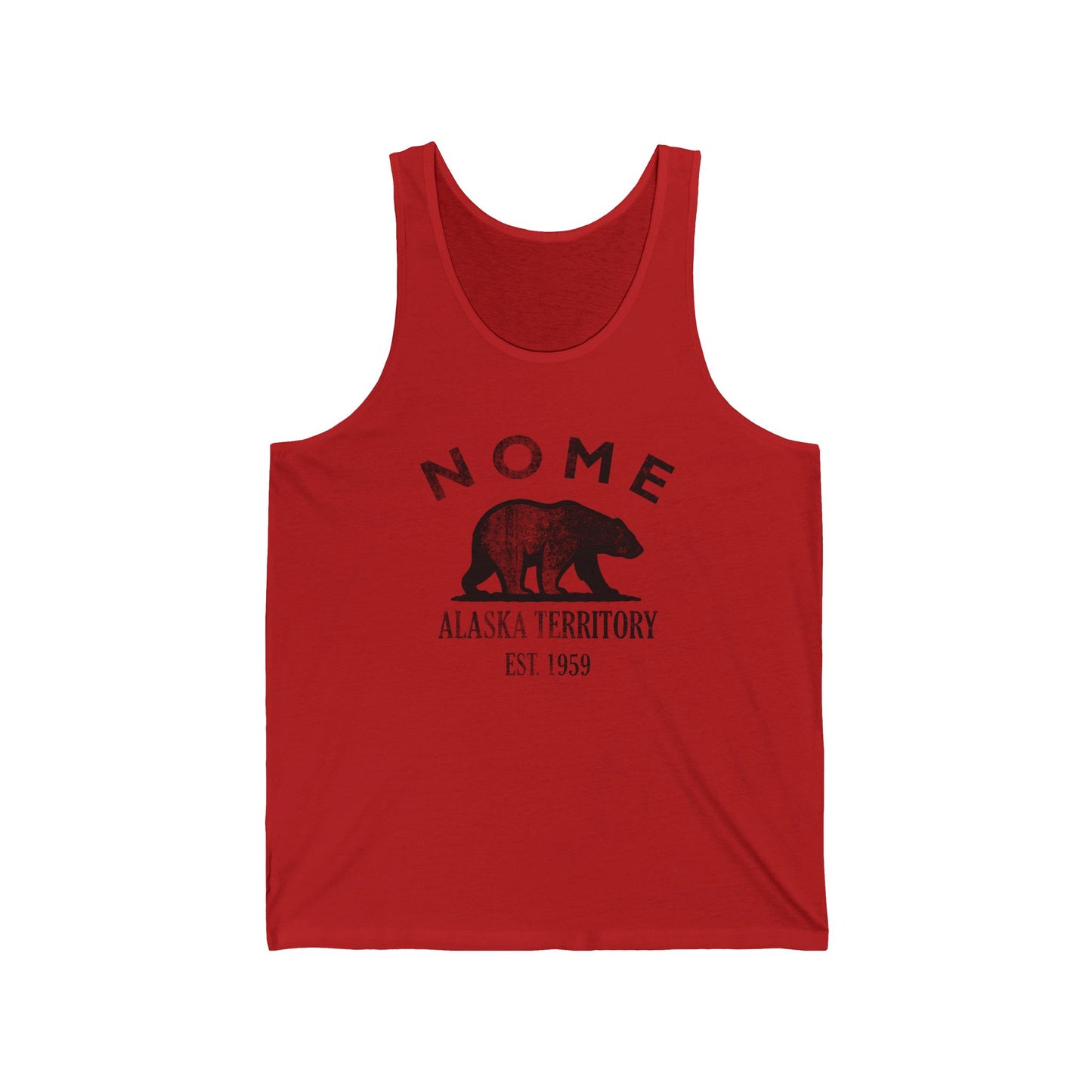
Our Nome logo carries Alaska’s distressed bear over “1959,” the year of statehood — the shared retro emblem of every Merlin Classics Alaska town. Printed in worn black-and-white that recalls a crate stamp or an outfitter’s mark, the bear is the state in shorthand: rugged, patient, at home in hard country. What makes this one Nome is everything around it — the beach that paid in gold, the dog teams, the Bering Sea at the door, and Siberia over the horizon.
What’s with the Three Lucky Swedes? The Three Lucky Swedes struck gold on Anvil Creek on September 22, 1898 — the strike that set off the last great American gold rush. The prospectors — Jafet Lindeberg, Erik Lindblom, and John Brynteson — were working a few miles above the Bering Sea beach on the Seward Peninsula. Two were Swedish; Lindeberg was Norwegian; the nickname stuck anyway, and the “Three Lucky Swedes” entered Alaska legend. The tent city that sprang up on the shore below — briefly called Anvil City — became Nome. Within two years the luckiest beach in the north held one of the largest cities on the Pacific coast above Seattle, out at the edge of the continent, facing Siberia.
Why People Visit Nome Alaska
- Walk Front Street, where the annual thousand-mile sled dog race from Anchorage has finished under a burled wooden arch since 1973 — a brand-new arch went up for 2025, and race week in March is the town’s biggest event of the year.
- Visit the Carrie M. McLain Memorial Museum for collections from the 1898 Anvil Creek gold rush, the 1925 Serum Run, and the Iñupiat communities of the Seward Peninsula.
- Drive the three gravel highways — Nome-Council, Kougarok, and Nome-Teller — for wide tundra views, seabirds, summer wildflowers, and muskox sightings before the roads simply end.
- See the abandoned gold dredges standing on the tundra outside town, massive relics of the 1920s–30s deep-dredging era.
- Visit Anvil Creek, the September 1898 discovery site a few miles north of town.
- Look up at the four White Alice antennas on Anvil Mountain, the Cold War communications site in service until 1979, accidentally photogenic against the Arctic sky.
- Stop at St. Joseph’s Church, completed in 1901 — one of the few structures to survive the town’s early disasters.
- Try recreational beach gold panning in summer — the same sands that started it all still give up color, and visitor panning is permitted on the public beach.
- Watch for the aurora borealis on clear nights from September through March — Nome’s long winter darkness makes it one of Alaska’s best northern-lights towns.
