


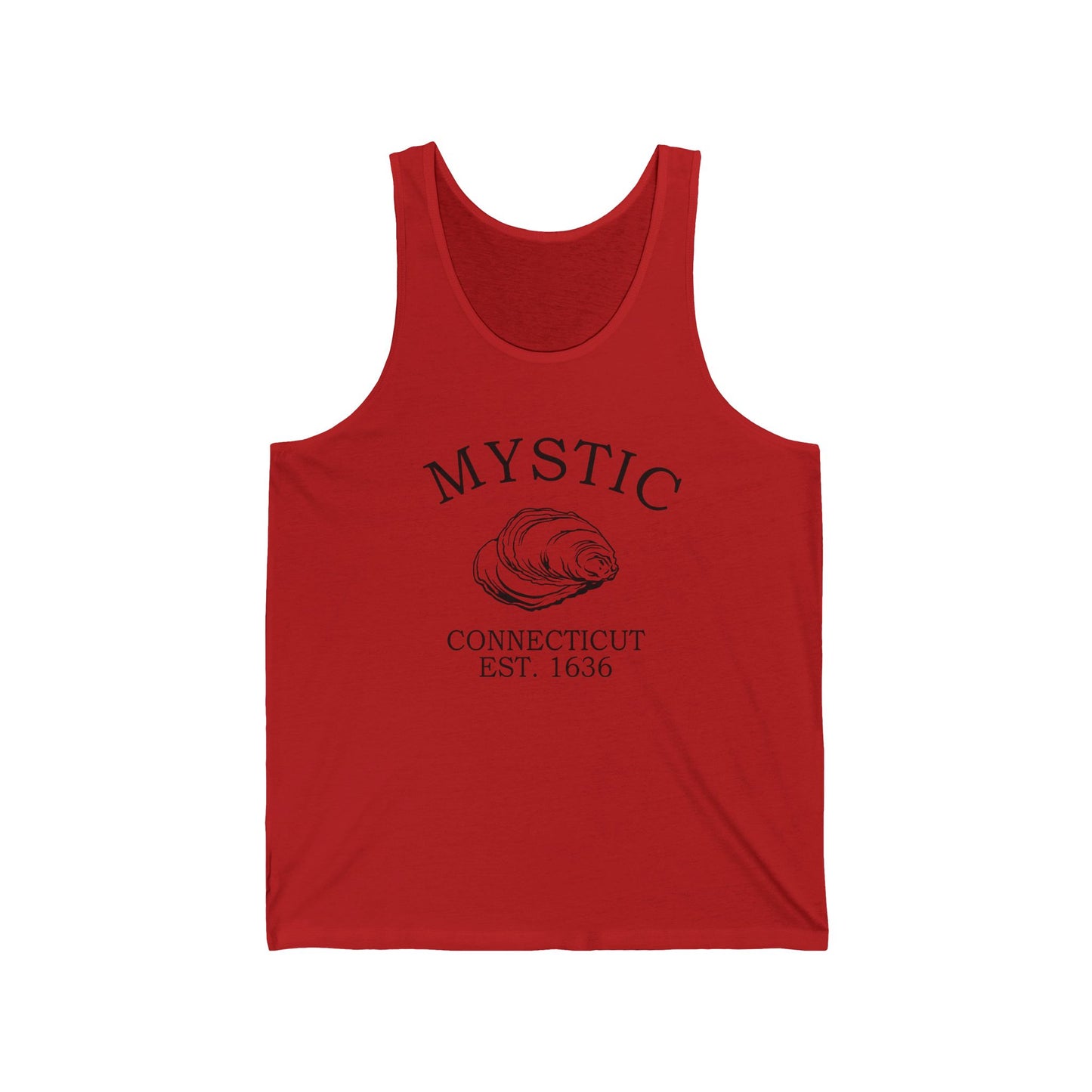
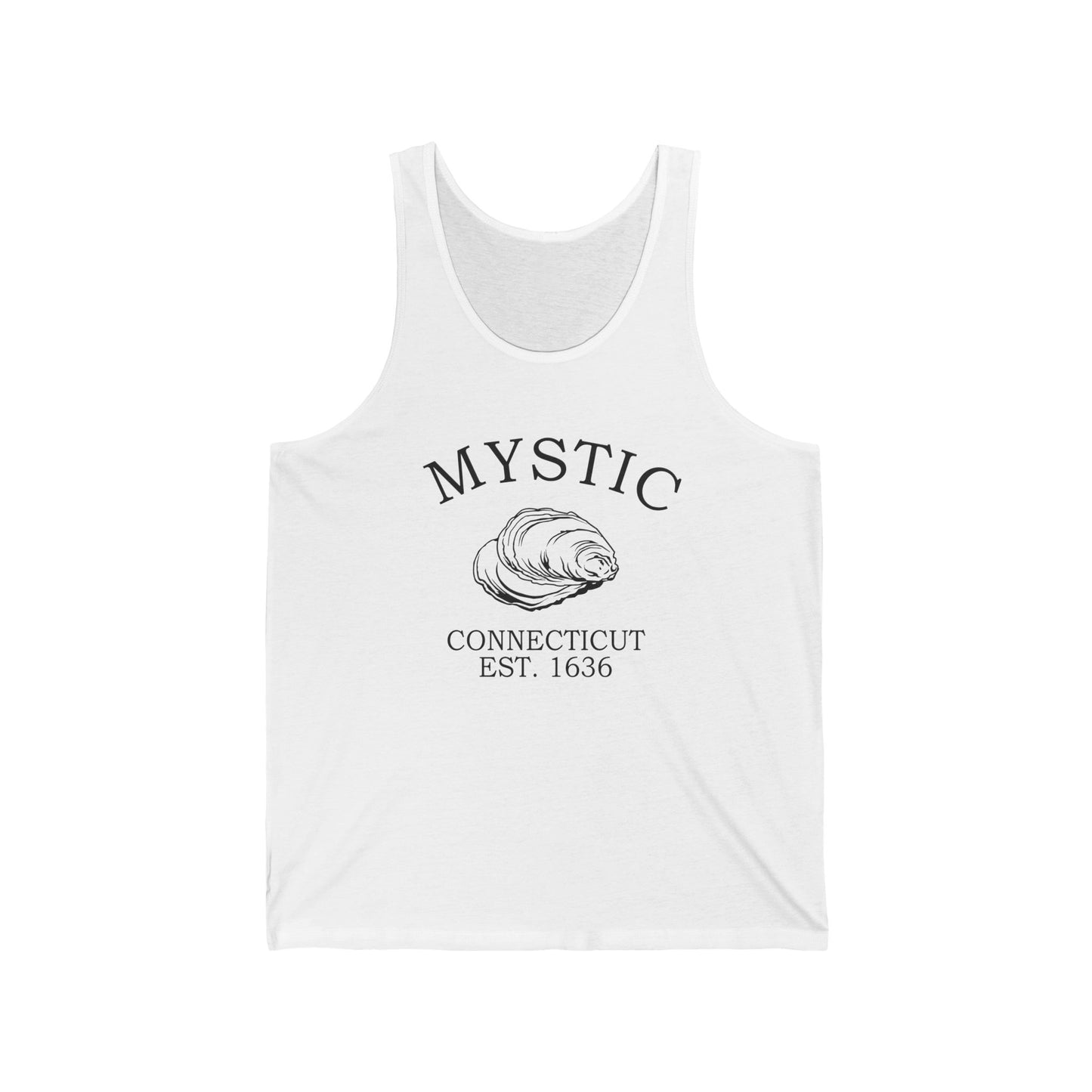
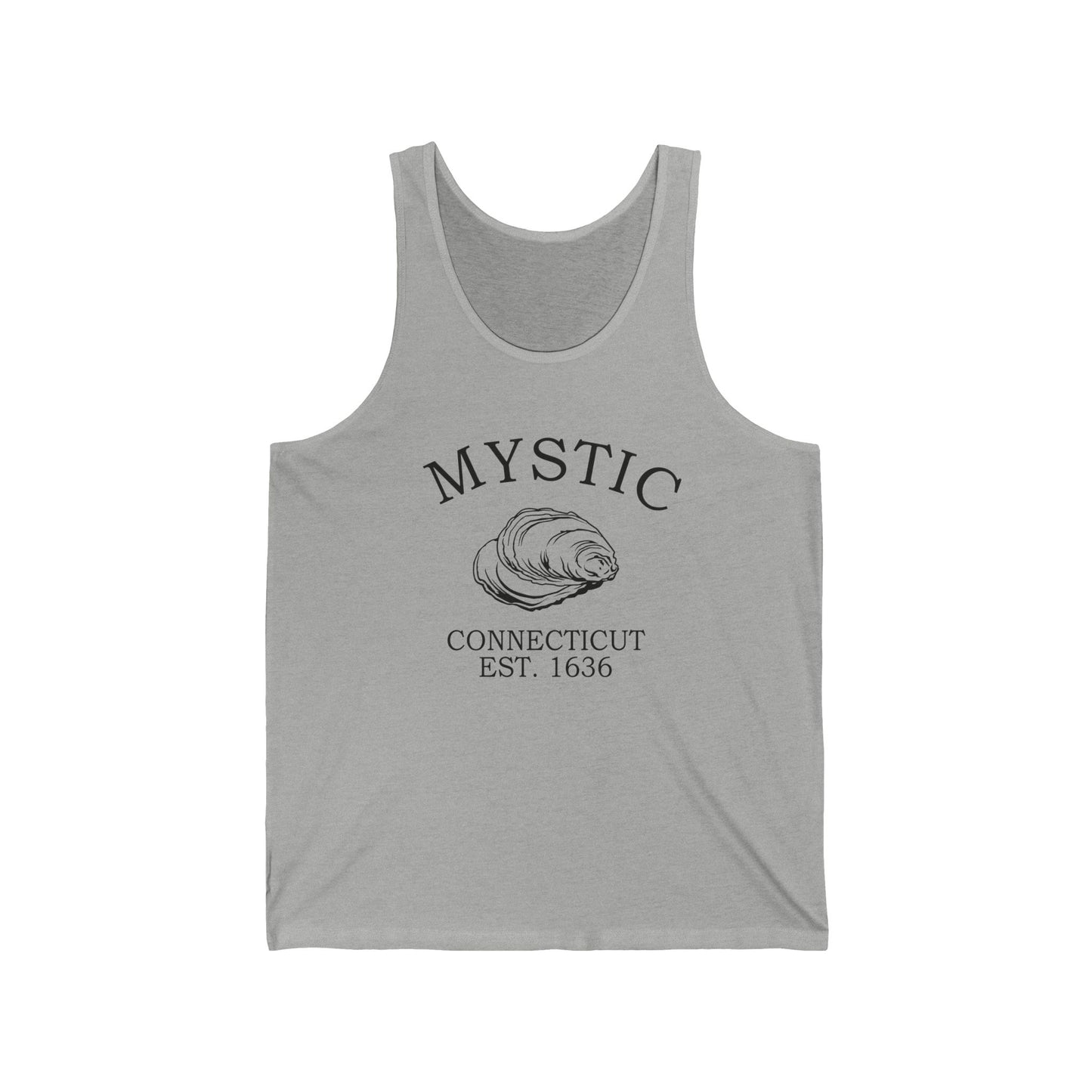
Our Mystic logo carries Connecticut's oyster shell over "Connecticut · Est. 1636," tying the village to the colonial founding of Connecticut — the shared emblem of every Merlin Classics Connecticut place. Printed black-and-white with the worn look of an old oyster-crate label, the shell reads as the shoreline in shorthand: tidal, maritime, salt-aired. What makes this one Mystic is the story behind it — the five yards, the six hundred ships, and the last wooden whaler in the world.
One small river, 600 ships. The Mystic River runs five miles. You can walk its length in an afternoon. Most people who visit Mystic today see the boats, the drawbridge, the seafood places, the seaport museum — and assume the maritime history is something preserved, decorative, behind glass. It isn't. The river itself is the history. Between 1784 and 1919, more than 600 vessels were launched along its banks: the full inventory of American sail and early steam — clipper ships, schooners, sloops, fishing smacks, merchant brigs, deep-water barks, coastal barges, yachts, side-wheel steamers, screw transports. Twenty-one classic clipper ships in the 1850s alone, eleven of them from a single yard, George Greenman & Company, on the riverbank where the seaport museum complex now stands. The David Crockett, launched in Mystic in 1853, would round Cape Horn 27 times — more than any other sailing ship in history. The Andrew Jackson, built by Irons & Grinnell in Mystic, set the New York-to-San Francisco record at 89 days, 4 hours, breaking the Flying Cloud's mark by nine hours. Maritime historian Carl Cutler spent decades cataloging American shipping records. He wrote that Mystic produced "more noted captains, a greater tonnage of fine ships, and a larger number of important sailing records than any place of its size in the world." He pointed out that the coves between Stonington and New London held twice as many shipyards as Boston Bay, despite Boston's much larger population. Five Mystic yards. One five-mile river. A pace and quality of shipbuilding that nowhere of comparable size ever matched.
Why People Visit Mystic Connecticut
- Tour the Mystic Seaport Museum, with its historic vessels, working shipyard, and recreated 19th-century seaport village.
- Visit the Mystic Aquarium, with marine life, touch experiences, and research displays.
- See the Charles W. Morgan, the last wooden whaling ship in the world, moored on the Mystic River since 1941.
- Watch the Mystic River drawbridge, a 1922 bascule bridge that still lifts for boats along Main Street.
- Walk Main Street, the riverfront shopping village, and the surrounding historic neighborhoods.
- Relax at Mystic River Park, a riverside boardwalk with passing boats.
- Stop at the Daniel Packer Inne in Old Mystic, a 1756 tavern still serving meals today.
