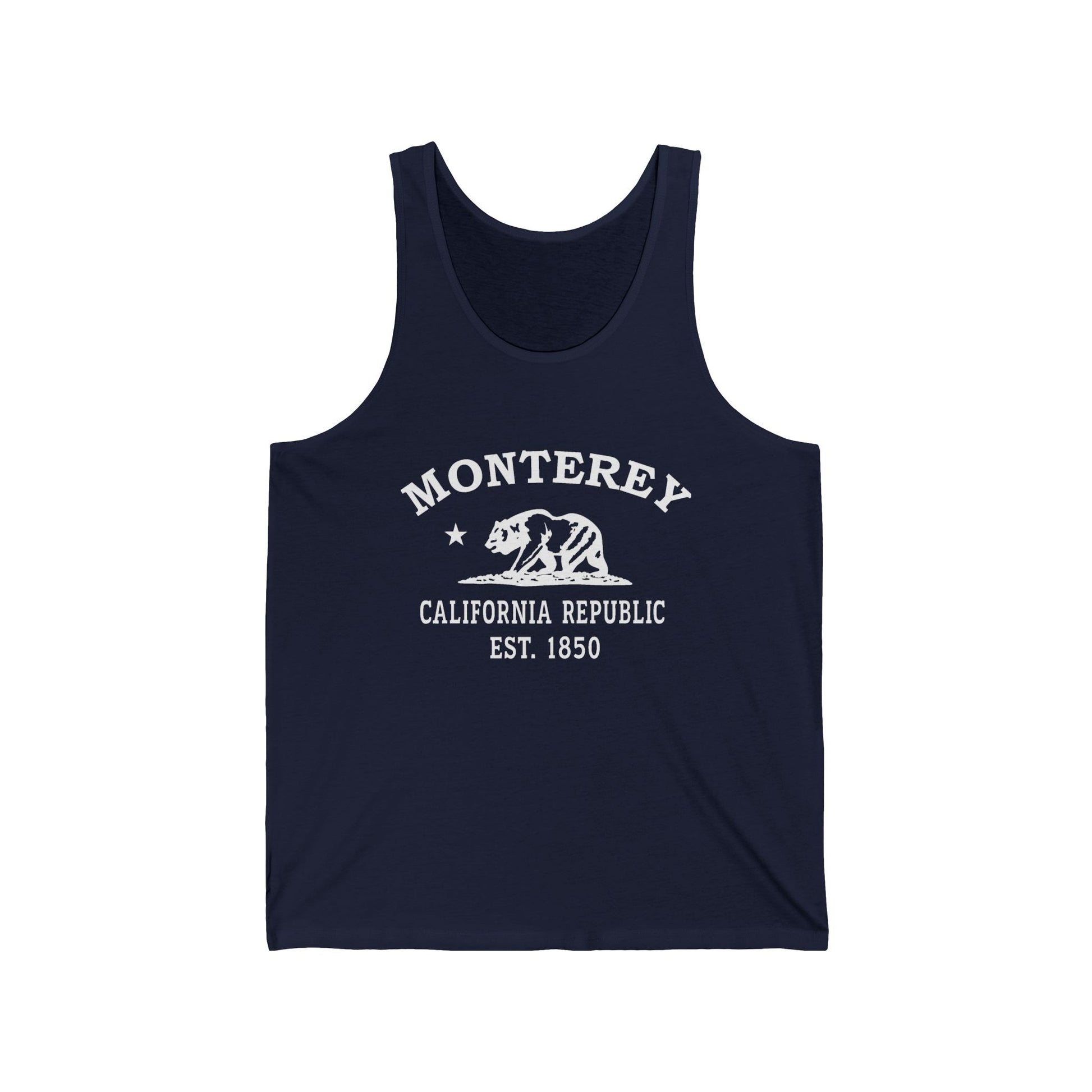
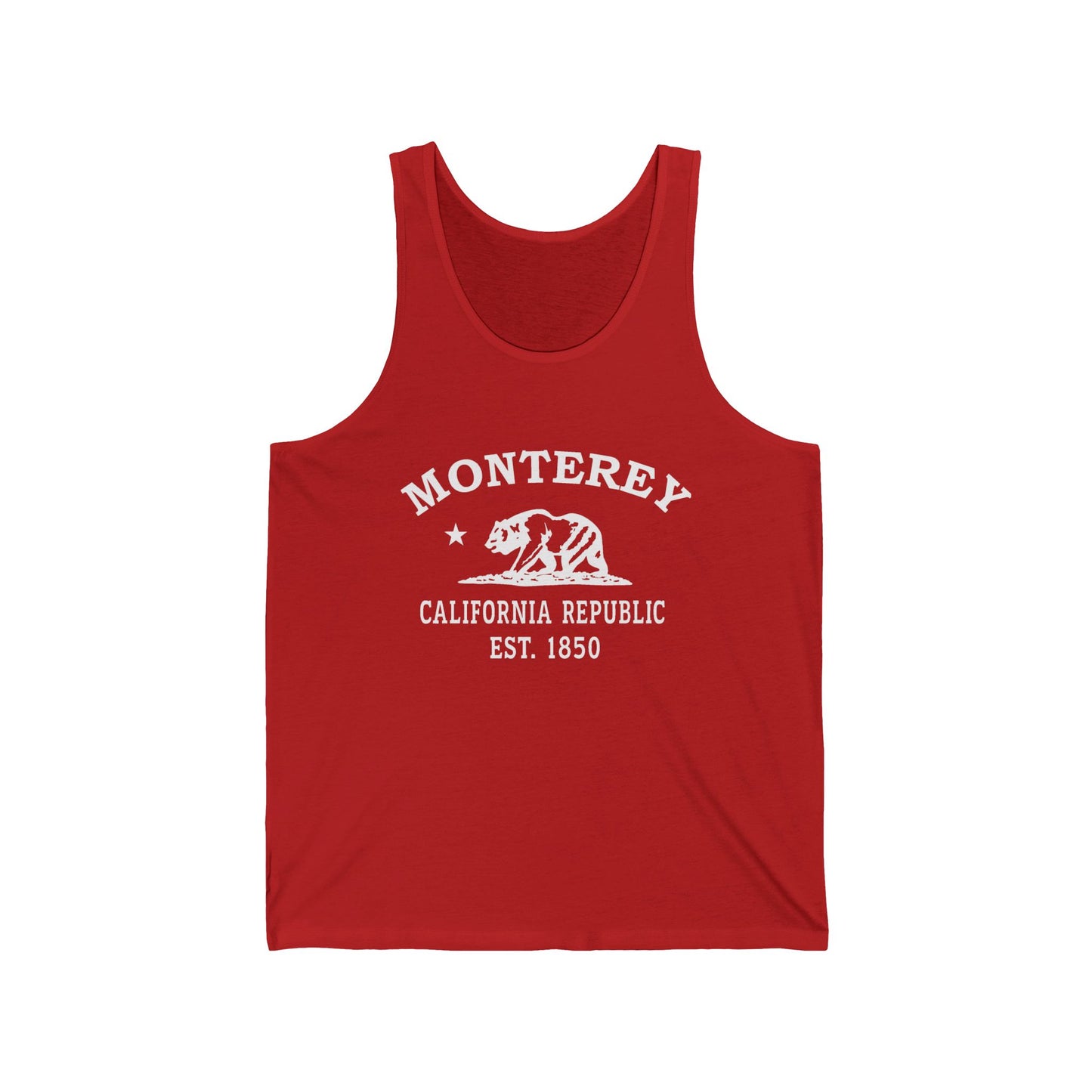
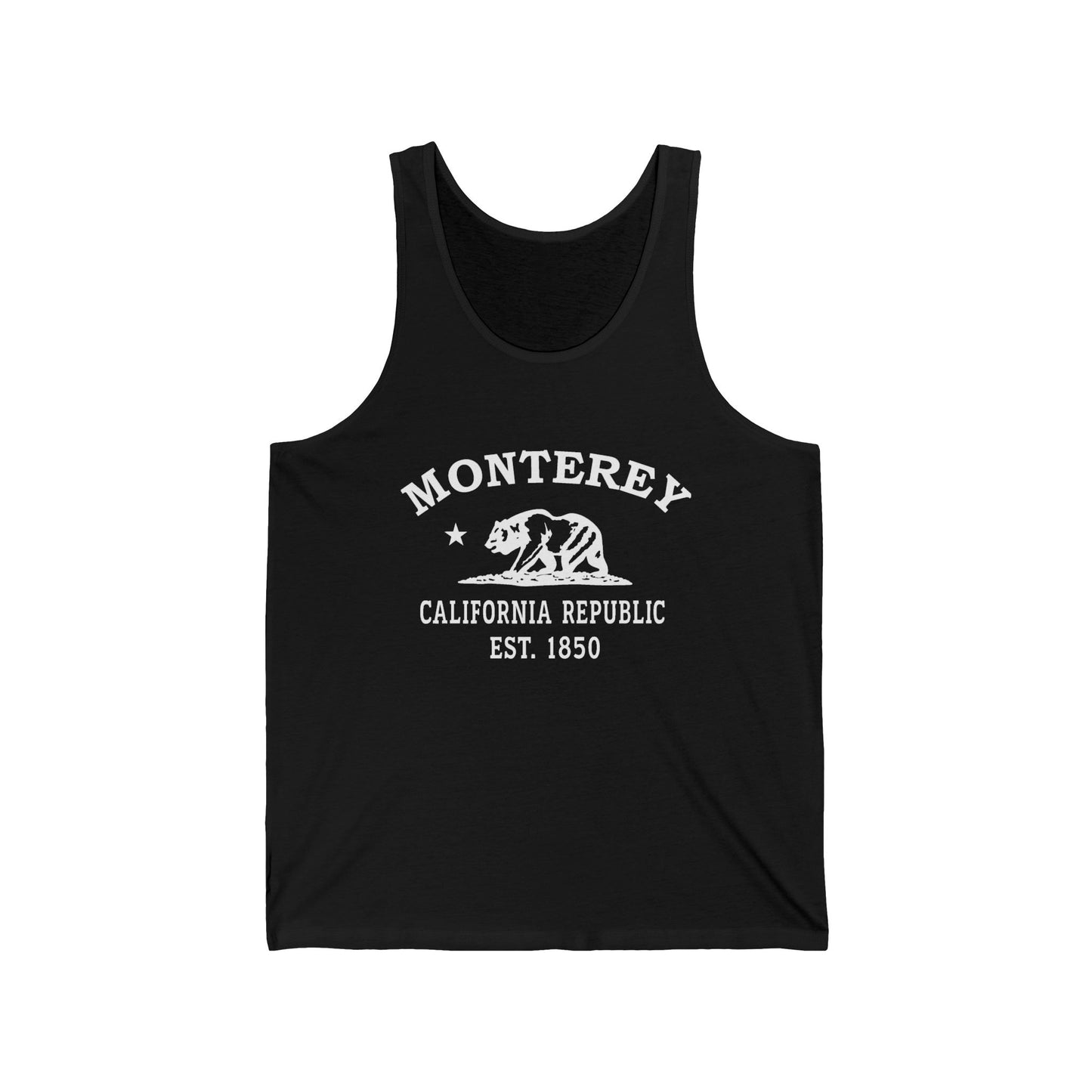
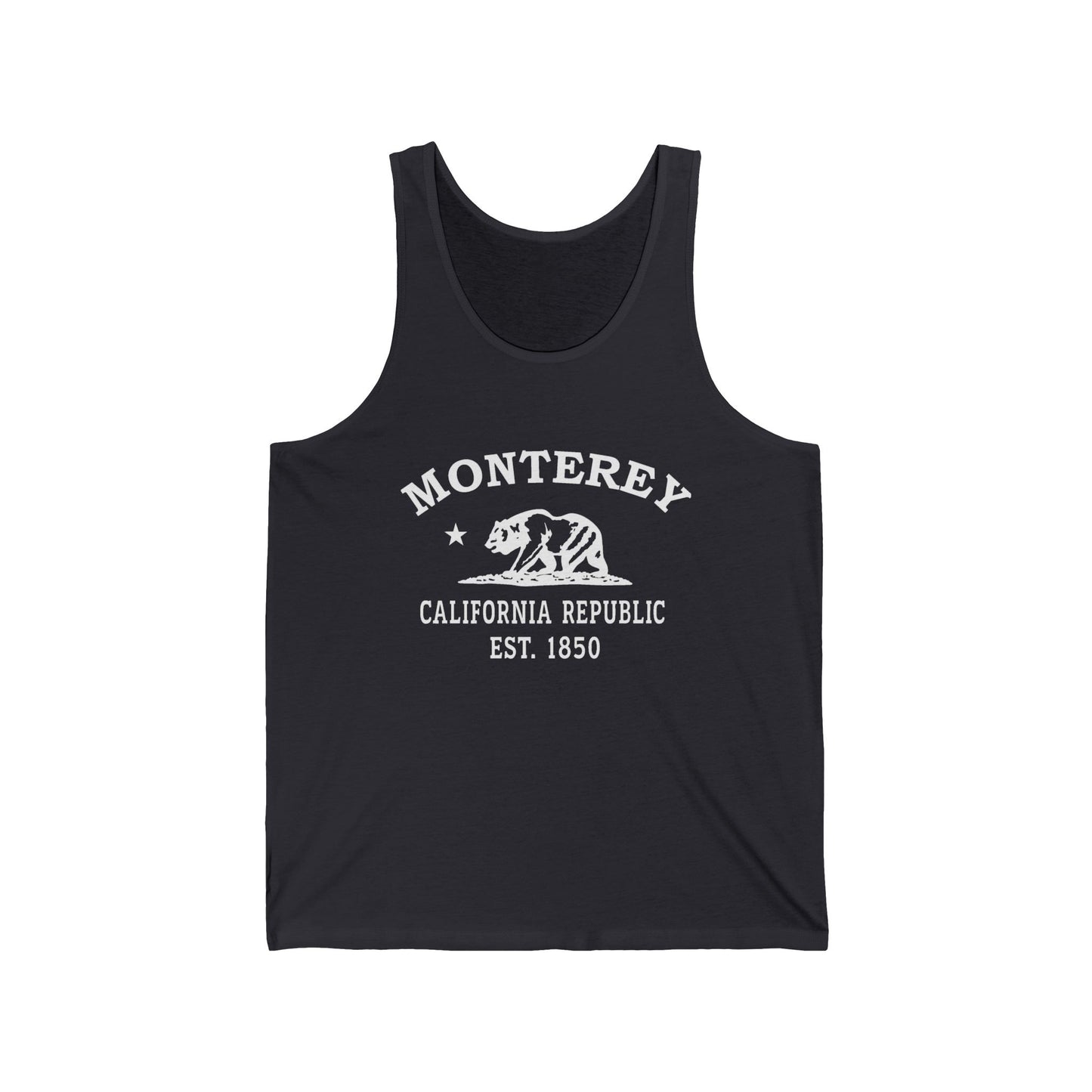
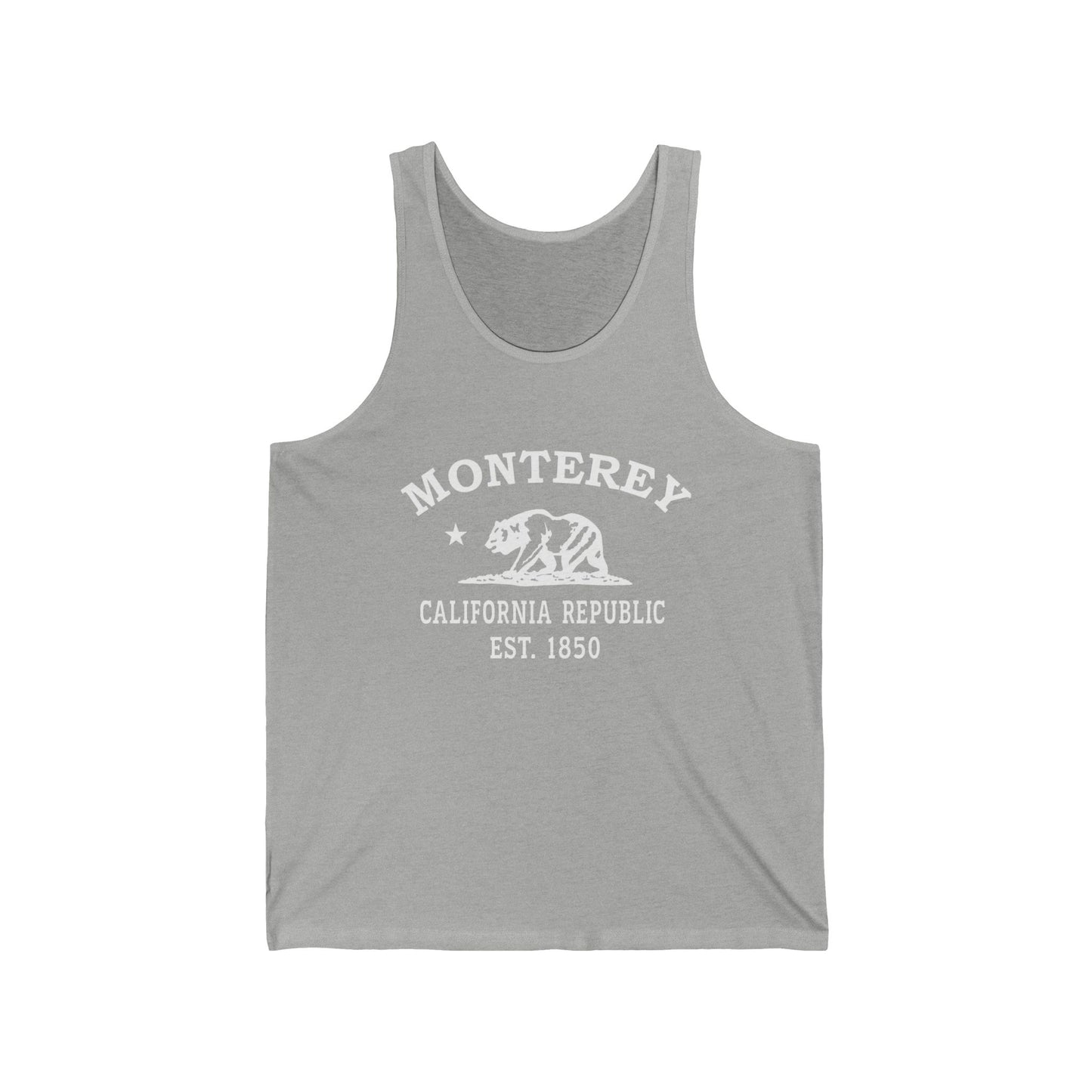
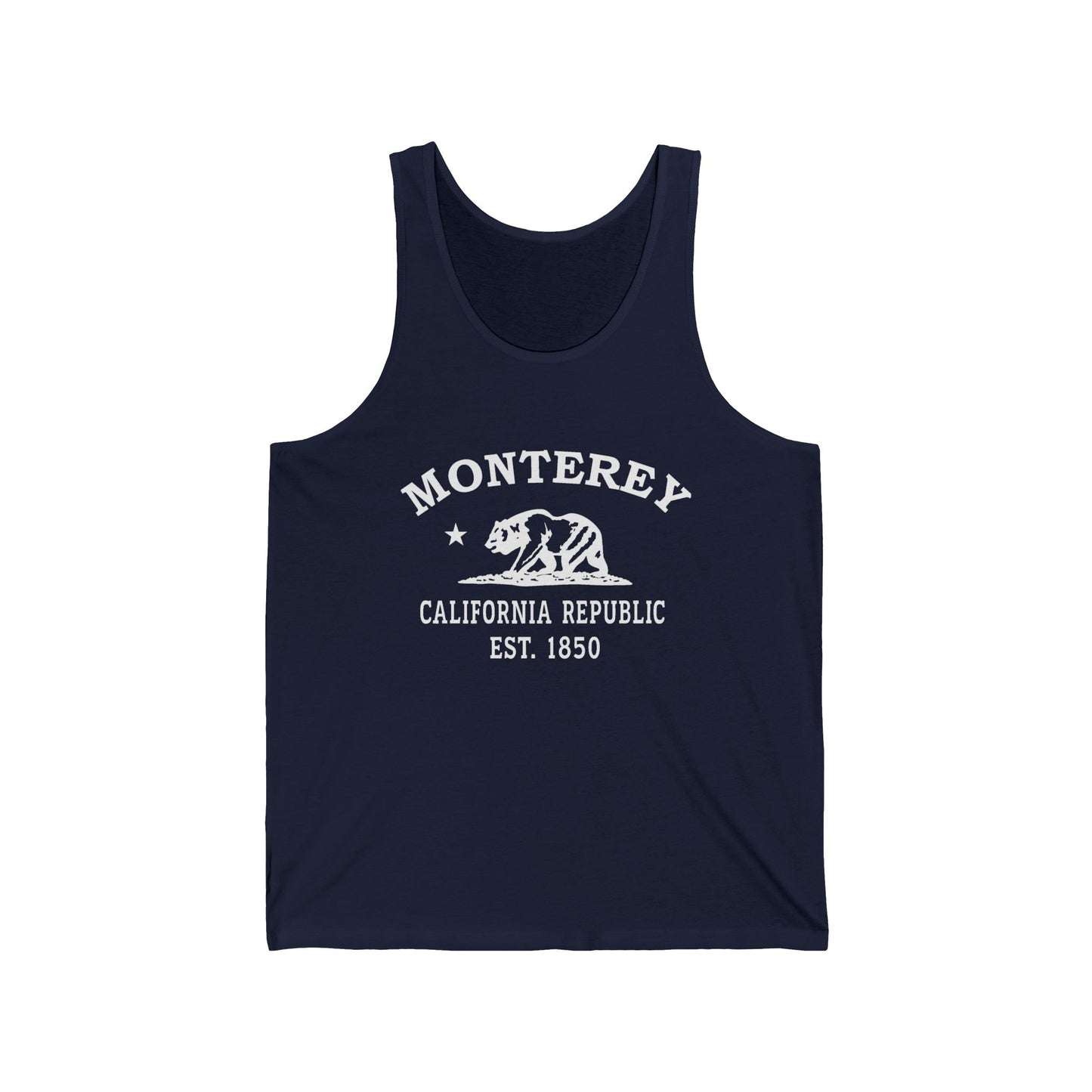
From the room where California wrote its constitution to the canneries that fed the bay, Monterey is the original California — adobe walls, cannery tin, and the deep blue water that ran through all of it. Our Monterey designs gather that layered history into wearable form. From California's first capital to the Sardine Capital of the World: wear a little of Monterey's original-California history.
And one export carries the city's name into every grocery store in America: Monterey Jack. The mild cheese descends from the queso del país made on the Mexican-era ranchos, and it took its name from David Jacks, the Scottish-born land baron who came to control much of the peninsula — he acquired the town's own pueblo lands at a courthouse auction Monterey never forgave — and began shipping the local cheese under his name in the 1880s. The city's registry of firsts lists California's first marketed cheese at Monterey in 1859, and Jacks Peak, the highest point on the peninsula, still carries the family name. The cheese outlived the grudge.
Why People Visit Monterey
Monterey rewards visitors who want the original California — the first capital, a town of 18th-century adobes, and a deep, wild bay. People come for the Path of History and Cannery Row, for Point Lobos and the marine sanctuary, and for an easy, scenic stretch of Central Coast where Spanish-colonial heritage and a famous waterfront sit side by side.
