


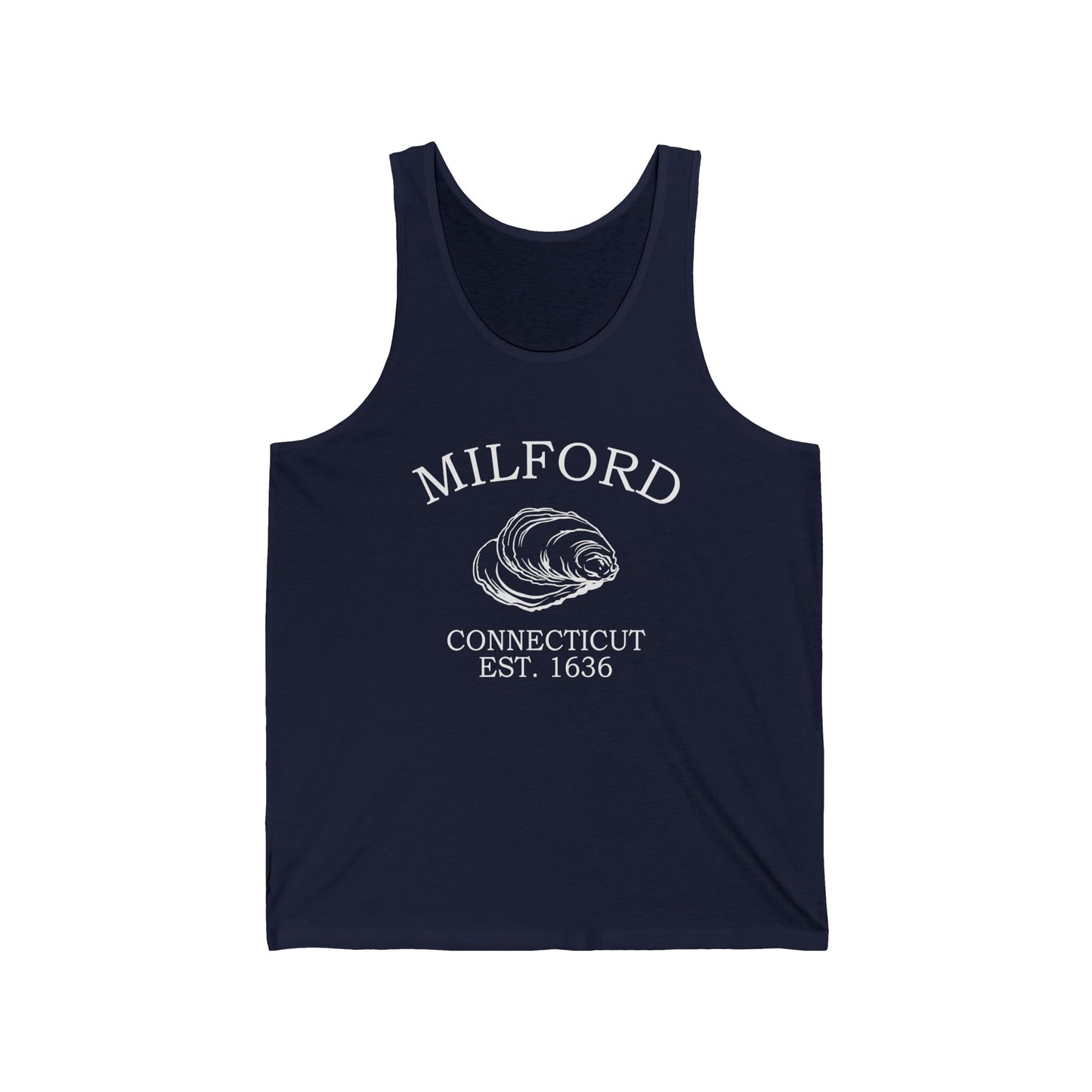
So Milford gathers a 1639 green, a treasure island, an oyster festival, and seventeen miles of shore onto Long Island Sound. Our Milford designs gather that into wearable form. Wear the history. On the Wepawaug since 1639 — Milford, CT.
By the late nineteenth century the same shore had become a getaway. With seventeen miles of coast — Walnut Beach and its boardwalk, Gulf Beach, Milford Point at the mouth of the Housatonic — Milford grew into a summer resort for New Haven and Bridgeport. Today that coast holds Silver Sands State Park, often rated the finest in Connecticut, and the Audubon coastal center at Milford Point, where more than three hundred species of birds have been counted along the marsh.
Why People Visit Milford
Milford balances a historic green, a legendary island, and miles of easy shoreline. Visitors enjoy simple seaside walks, boardwalks, and small cultural stops between the beaches and the harbor. It is peaceful, family-friendly, and close to nature, with year-round appeal in its parks, paths, and public spaces. History and everyday coastal life sit side by side here, from the long Green and the colonial downtown to the oyster boats and the boardwalk beyond.
