


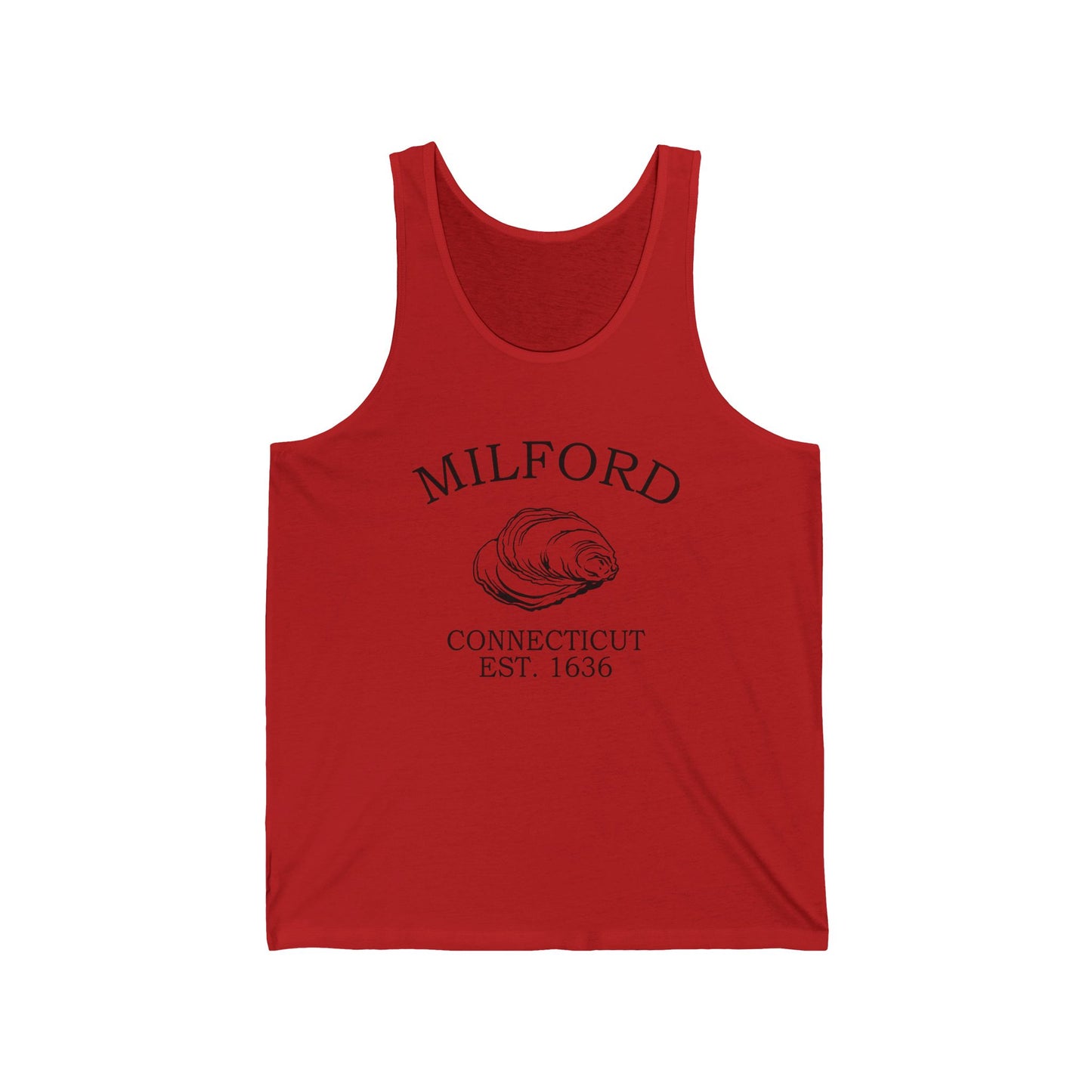
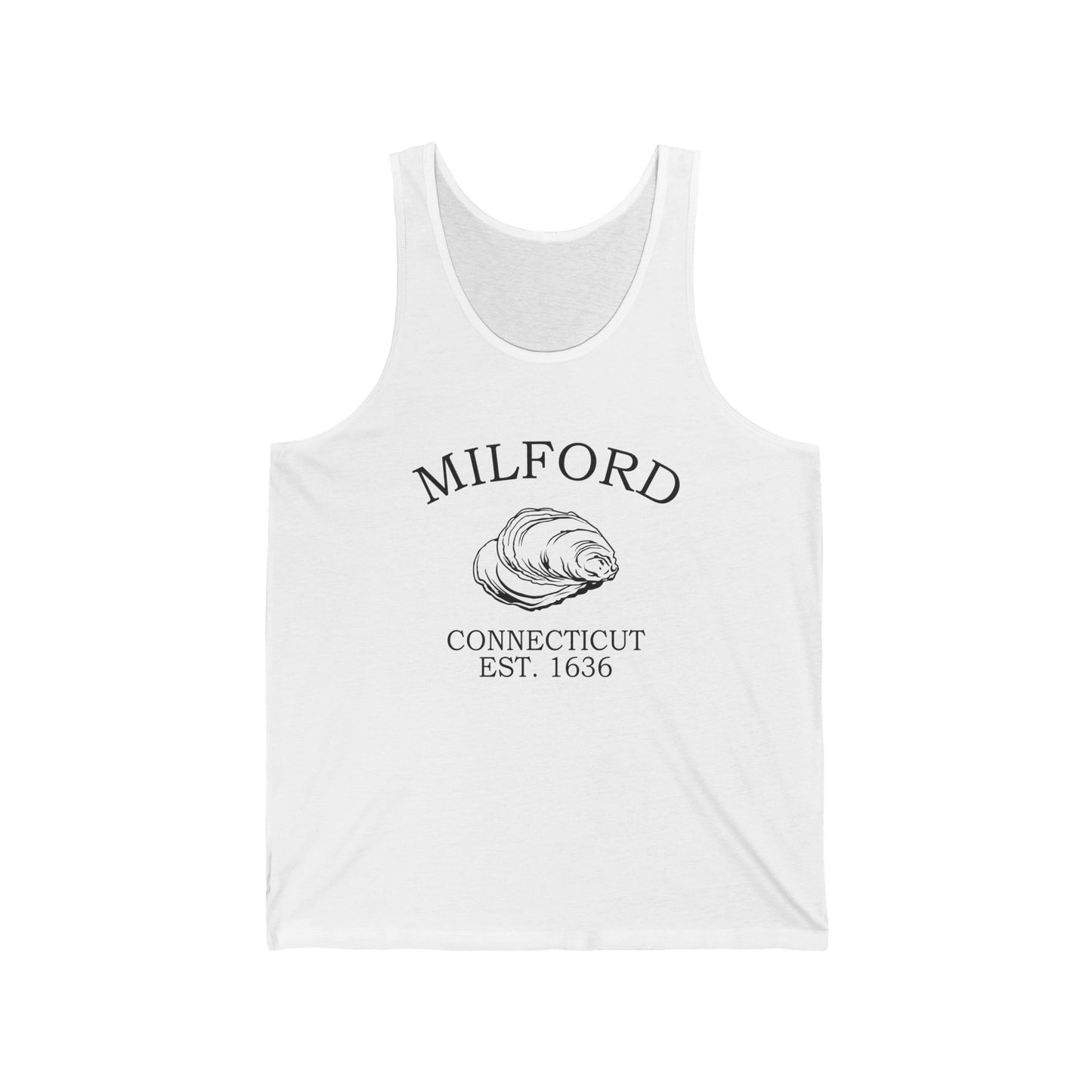
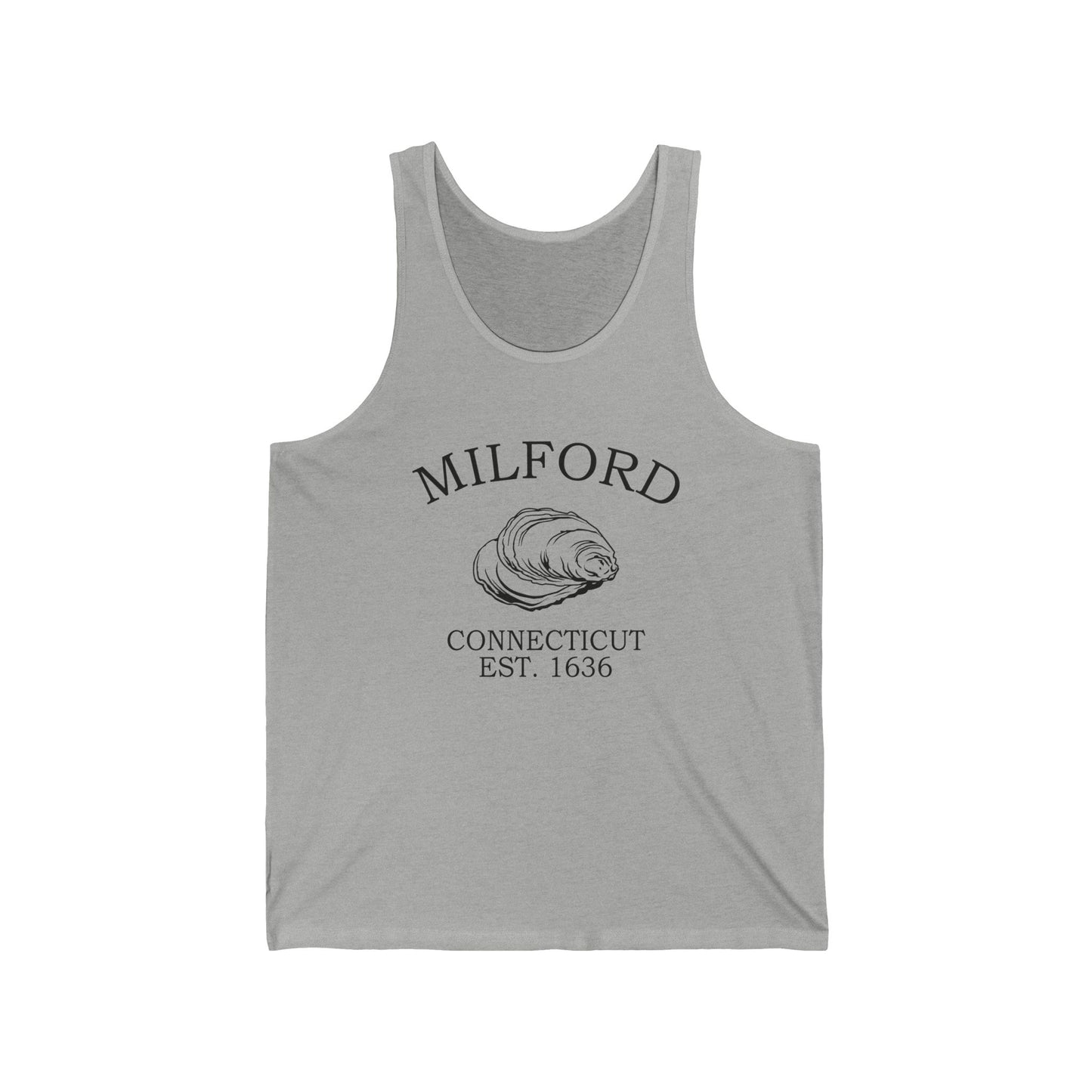
So Milford gathers a 1639 green, a treasure island, an oyster festival, and seventeen miles of shore onto Long Island Sound. Our Milford designs gather that into wearable form. Wear the history. On the Wepawaug since 1639 — Milford, CT.
Milford has always worked the Sound. Long Island Sound made it a town of oystermen and shipbuilders: oystering began here in the 1750s, oyster huts lined the shore, and beds were farmed in Gulf Pond. The trade was open enough that by 1878 sixteen of the town's forty-one oystering permits were held by women. The oyster on our logo is not decoration — it is Milford's own working heritage, pulled from these waters for nearly three centuries.
Why People Visit Milford
Milford balances a historic green, a legendary island, and miles of easy shoreline. Visitors enjoy simple seaside walks, boardwalks, and small cultural stops between the beaches and the harbor. It is peaceful, family-friendly, and close to nature, with year-round appeal in its parks, paths, and public spaces. History and everyday coastal life sit side by side here, from the long Green and the colonial downtown to the oyster boats and the boardwalk beyond.
