


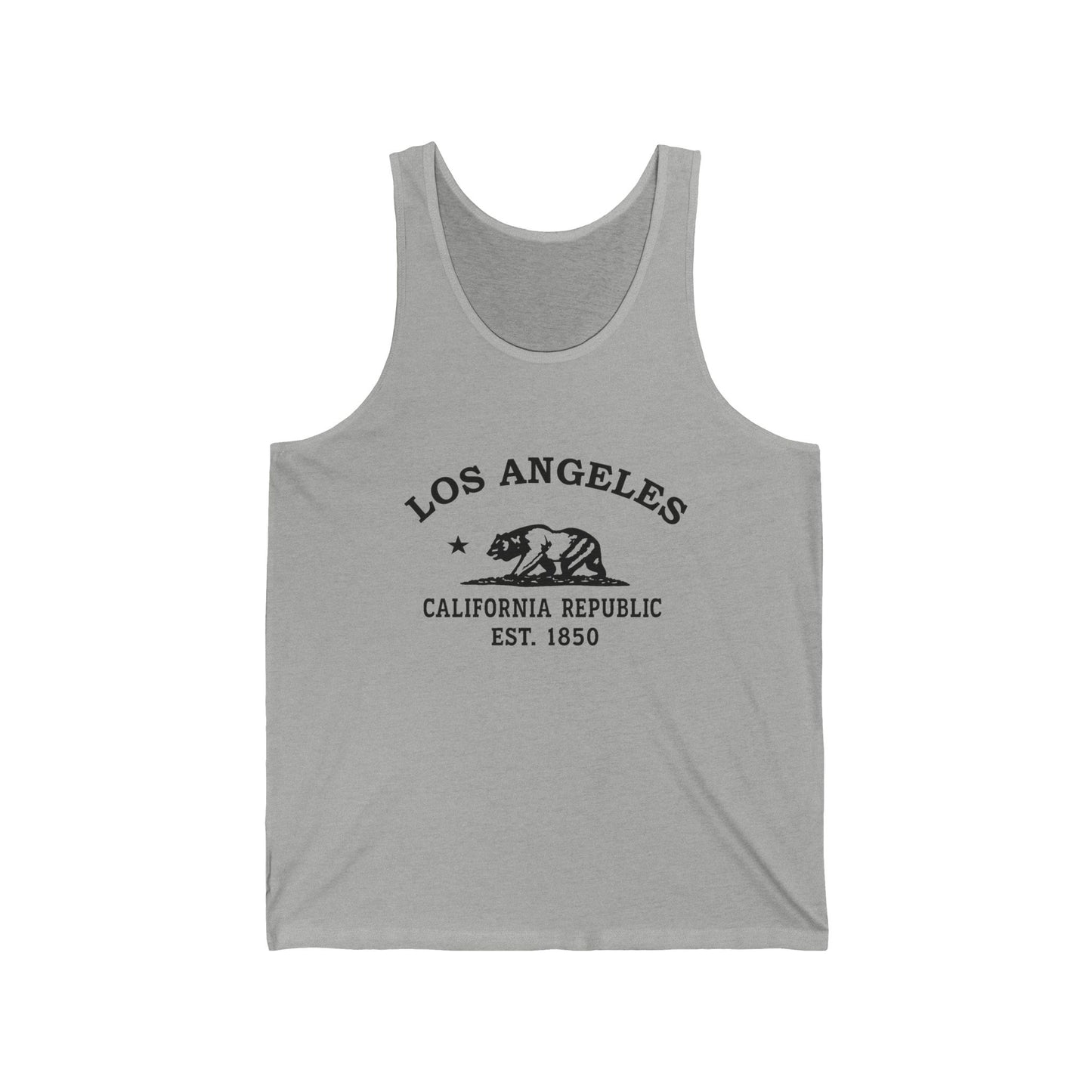
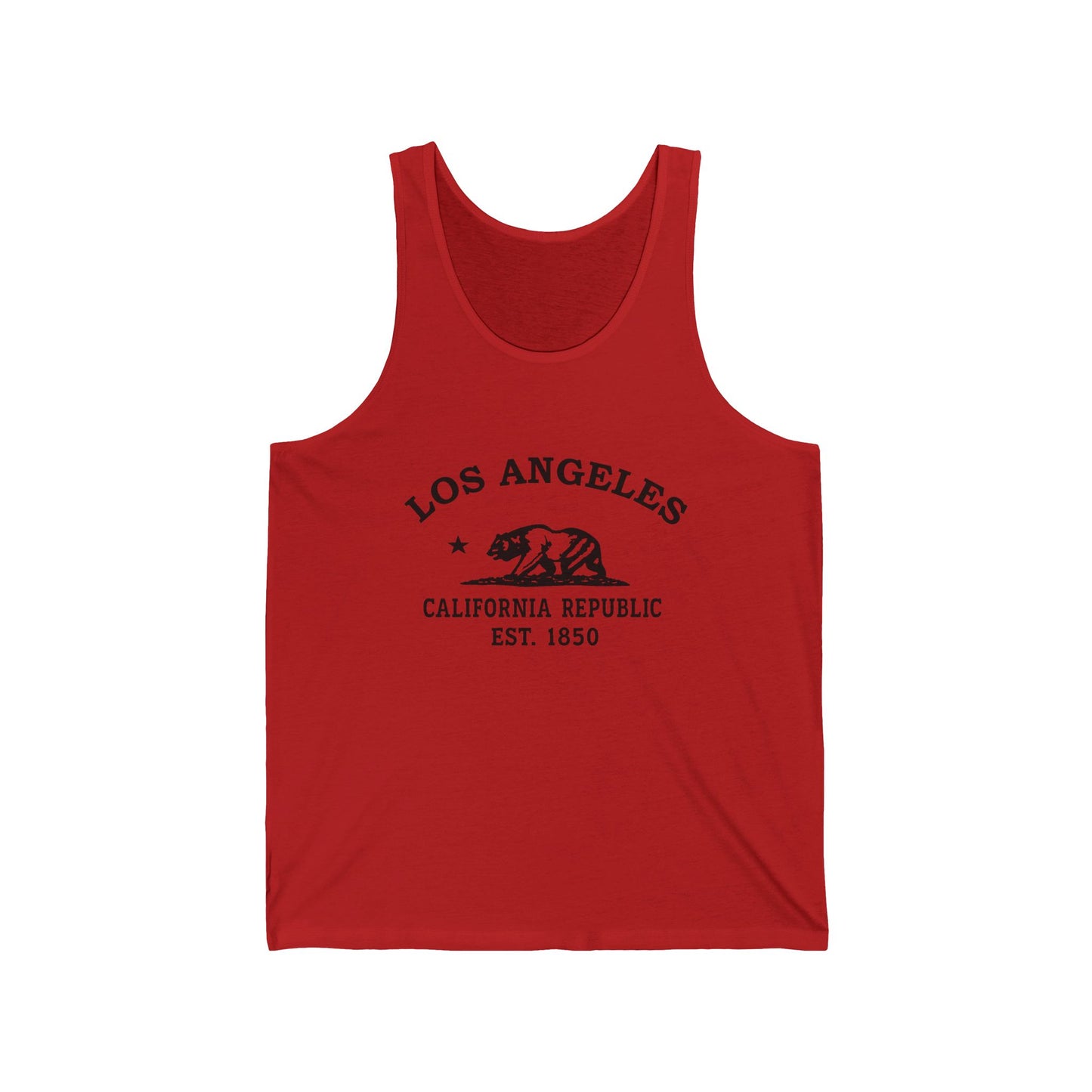
Our Los Angeles retro logo carries California's grizzly bear and lone star — the emblem of the old California Republic — set over “1850,” the year of statehood. Rendered black-and-white with the worn look of a vintage crate label or a roadside sign, it is rugged and authentic rather than glossy. The bear and star bridge the city's two stories: the adobe pueblo on the river and the state it helped build, a fitting mark for heritage worn rather than hung on a wall.
The pobladores did not arrive on empty land. The Tongva people had lived in the basin for centuries, and the village of Yaanga stood near the chosen site; the pueblo was laid out on ground that was already home. Under the Spanish governor Felipe de Neve, the eleven founding families built their town beside the Porciúncula — the Los Angeles River — raising crops to supply the nearby presidios and missions, and drawing water through an open ditch, the Zanja Madre, that served the town for a century. A flood washed the first riverside settlement away around 1815, and the town was rebuilt a little higher, at the Old Plaza that anchors El Pueblo to this day.
Why People Visit Los Angeles
Travelers come for the climate, the coast, and the culture, but the quietest surprise is the history: a two-hundred-and-forty-year-old pueblo tucked into the middle of a modern metropolis. History and everyday life sit side by side here in a way few American cities can match, and the founding block asks nothing but a walk.
