


The Washoe (Wasiw) gathered at the lake each summer for thousands of years, and Tahoe remains central to their culture today. The first U.S. survey party to record the lake was General John C. Fremont's expedition in 1844, and within two decades the Comstock silver boom in Nevada had stripped much of the basin's timber to shore up the Virginia City mines. It was in those years, the early 1860s, that a young Samuel Clemens — Mark Twain — camped on the shore and later wrote it into Roughing It, calling Lake Tahoe "the fairest picture the whole Earth affords." The grand-estate era followed: by 1929 Lora Knight had built Vikingsholm, a Scandinavian stone castle, at the head of Emerald Bay.
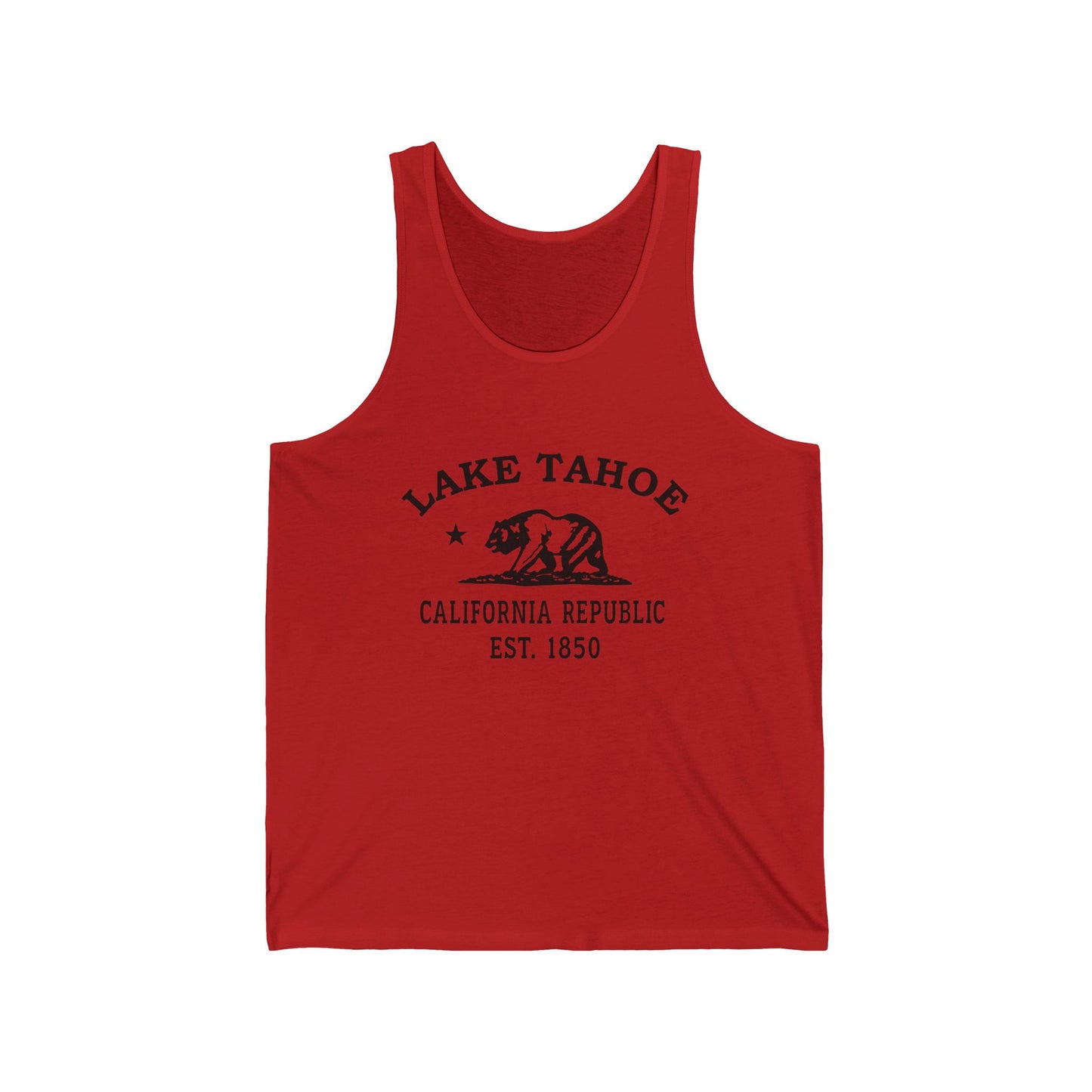
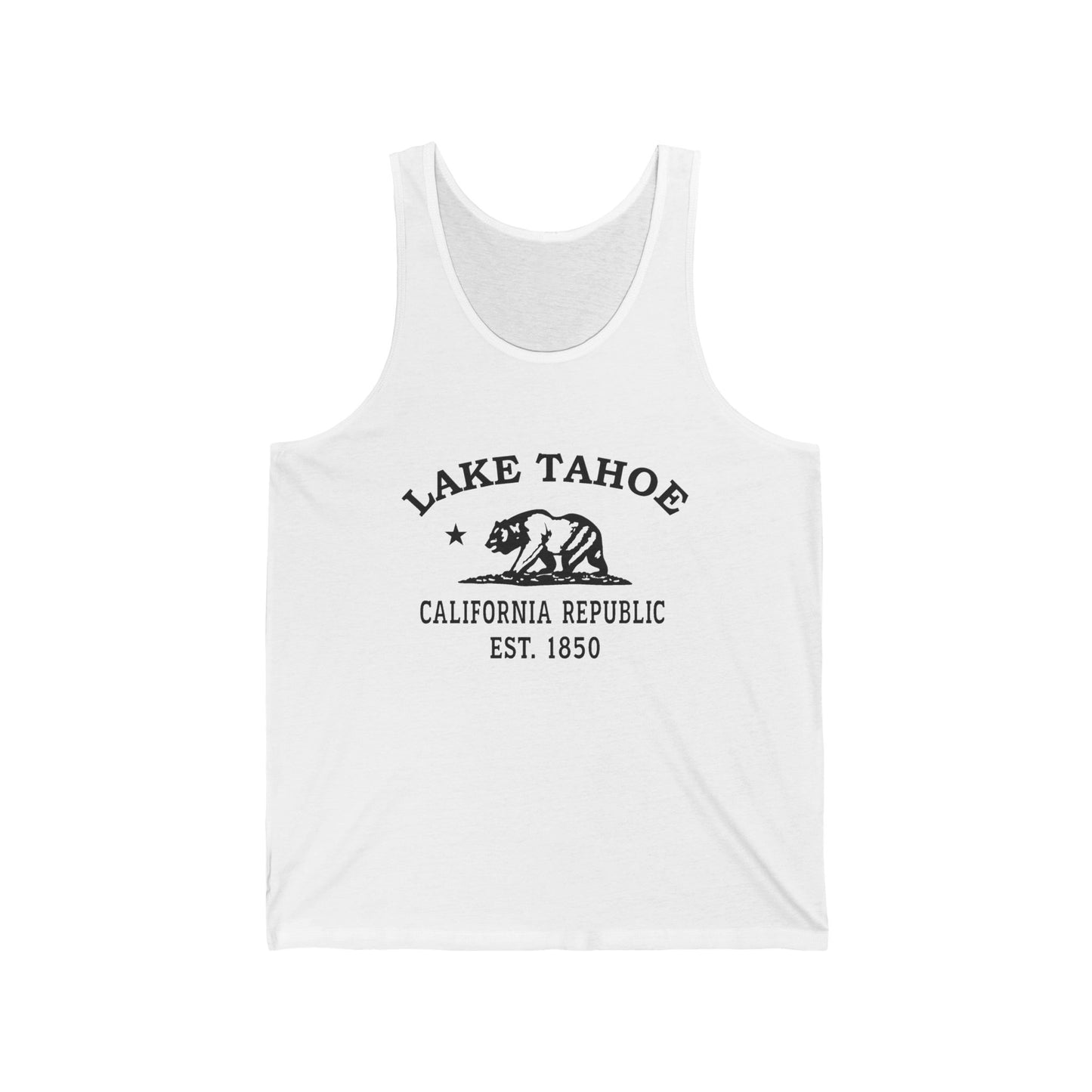
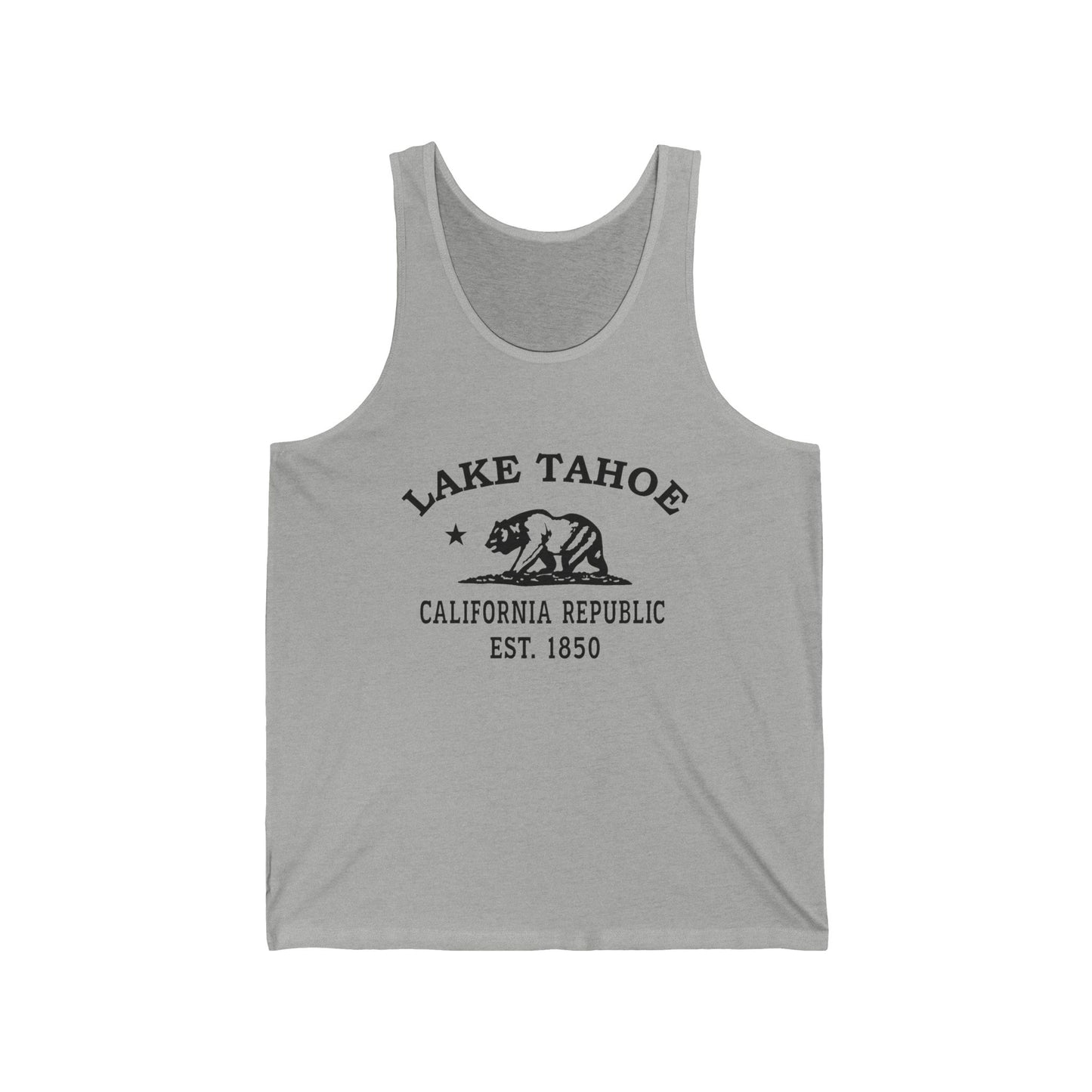
Our Lake Tahoe logo carries the same emblem every Merlin Classics California place wears — the grizzly bear and lone star of the state flag, above "California, Est. 1850," the year of statehood, rendered in hand-printed black and white with a worn, vintage feel. The bear is California's mark, the through-line that ties Tahoe to every other California place we make. What makes this one Tahoe is everything around it: the cobalt depth, the granite shore, the castle on Emerald Bay. On a tee or a cap it reads less like a souvenir and more like a small piece of the High Sierra — Est. 1850, worn plain.
Why People Visit Lake Tahoe California
Lake Tahoe draws people who love mountains and water in the same view. It is Big Blue — the highest, deepest, clearest alpine lake in the West — with a National Natural Landmark bay, a Scandinavian castle, a ten-thousand-year Washoe heritage, and ski slopes and beaches a few hours from the city. Visitors come for the rare combination: cobalt water you can see straight down into, granite peaks above it, and a shore that's beautiful in snow and sun alike.
