


Native Hawaiians lived on this West Maui shore for centuries, with Lahaina a place of taro loʻi, fishponds, and the royal island of Mokuʻula at Mokuhinia. In the early 1800s Lahaina became the capital of the Kingdom of Hawaiʻi — the seat of the islands' royal government in the decades after the 1795 unification — and one of the most important towns in the Pacific.
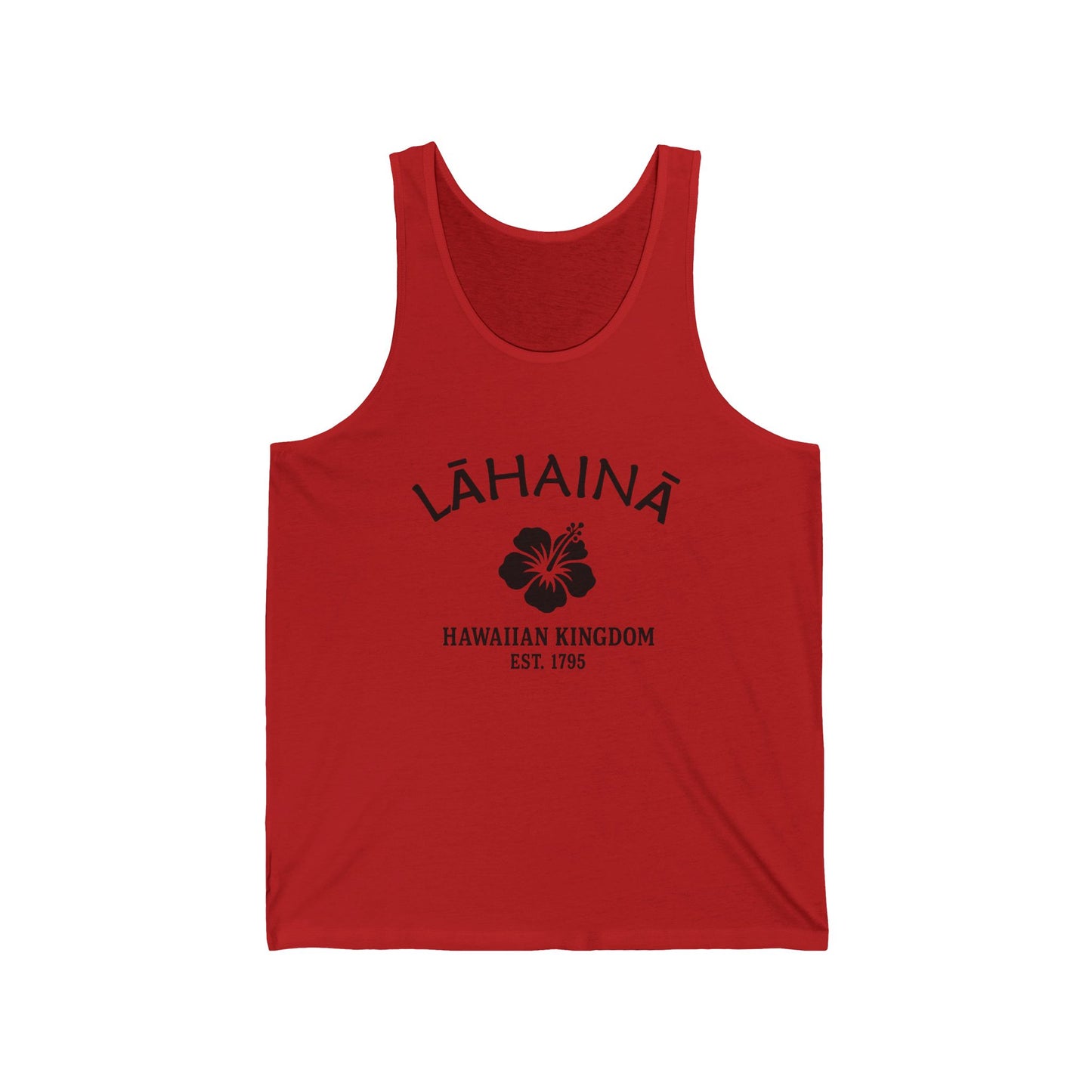
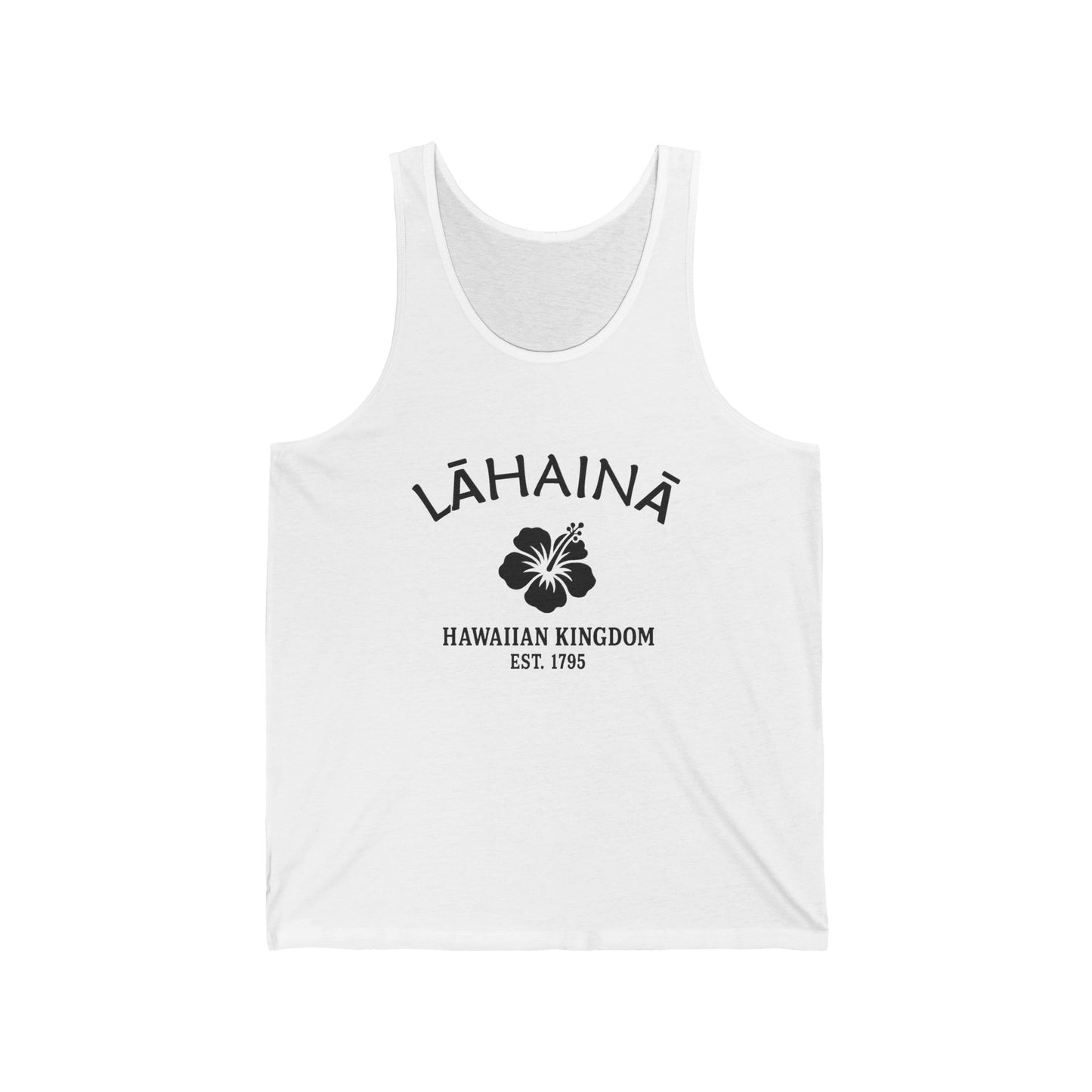
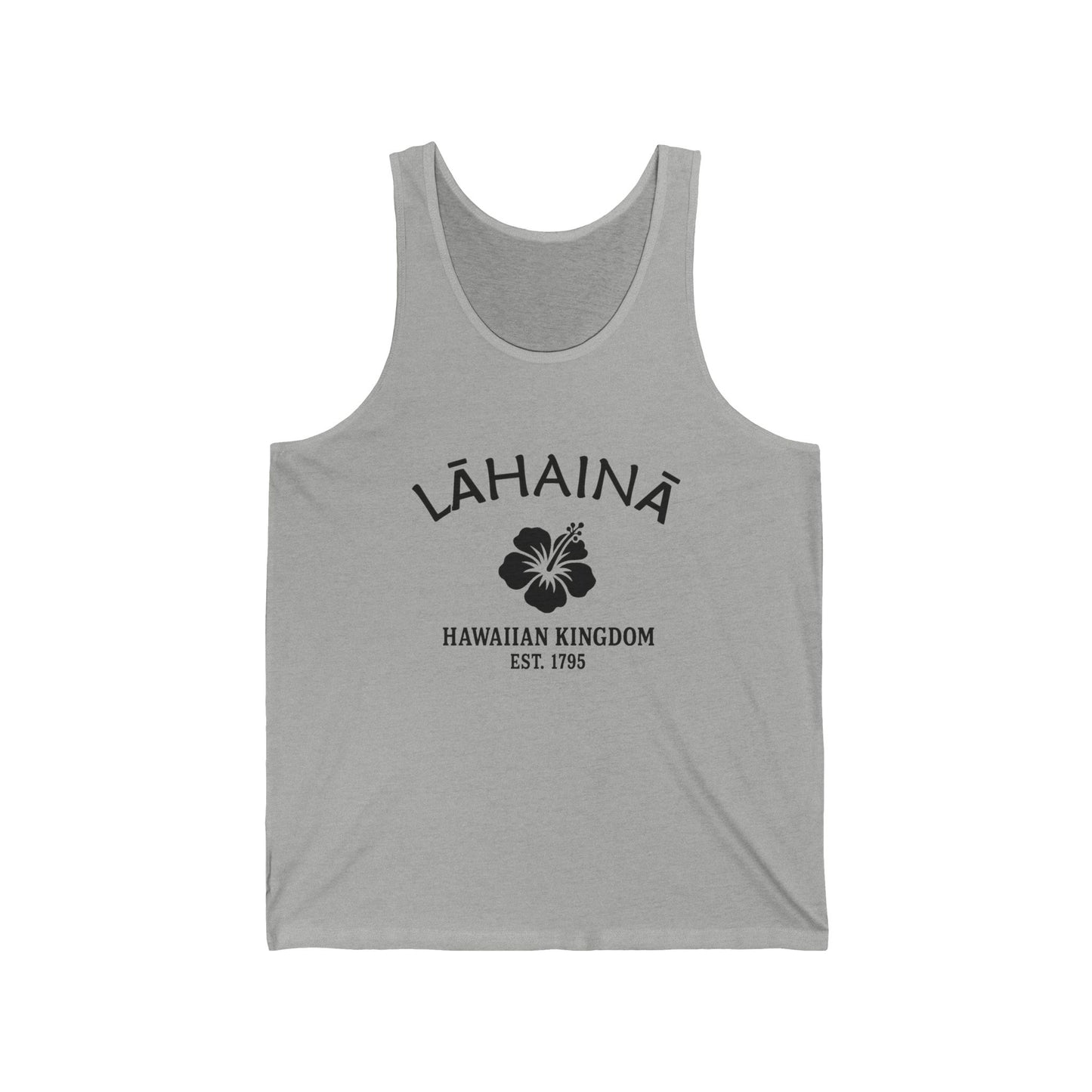
Our Lahaina logo carries Hawaiʻi's hibiscus over "1795," the year the islands were brought together as the Kingdom of Hawaiʻi. The hibiscus — the state flower — stands for the natural beauty and aloha of the islands, and the date marks the founding of the kingdom whose capital Lahaina became. Printed in a distressed black-and-white that reads like an old travel decal, it's island heritage in shorthand: Hawaiian, historic, and rooted in West Maui.
