


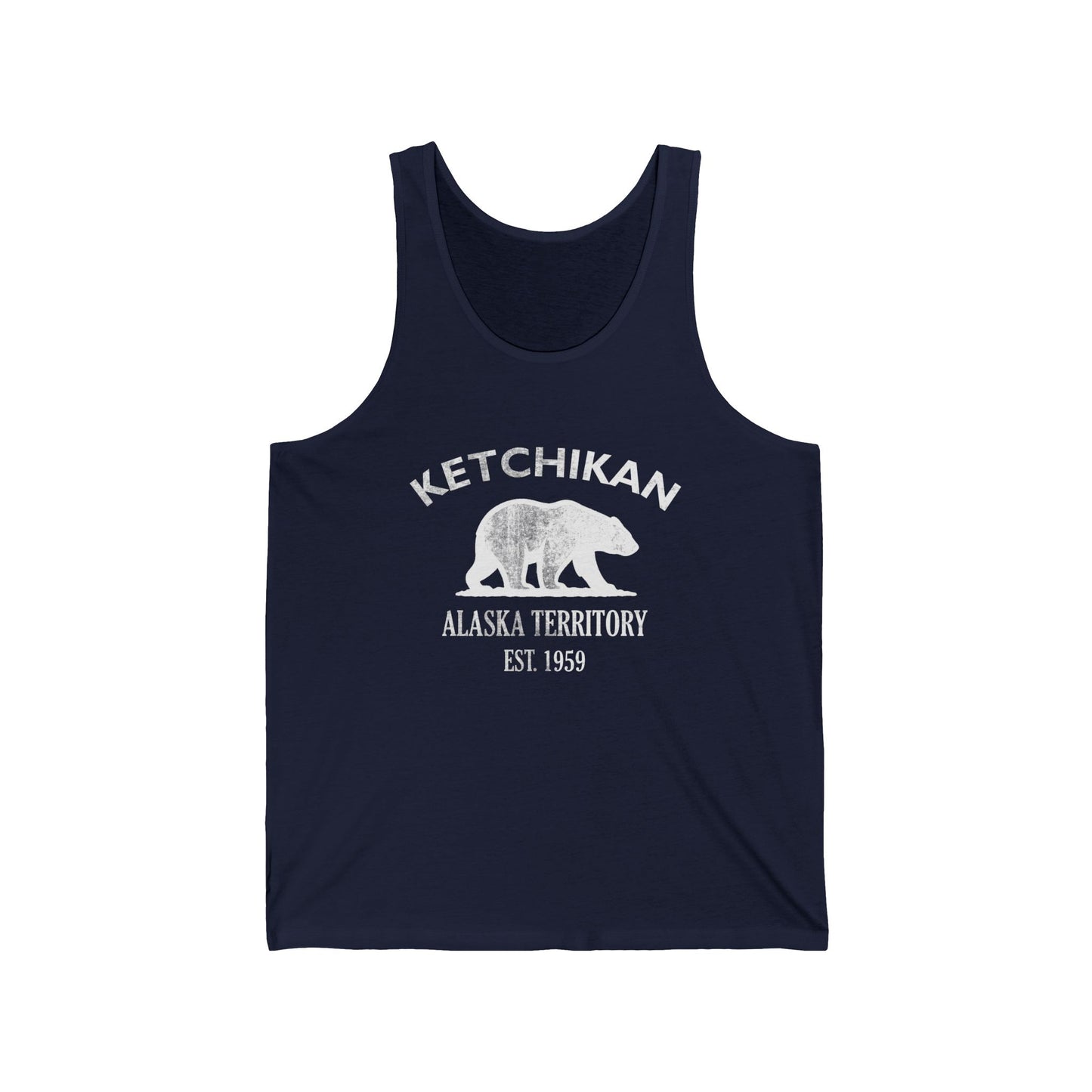
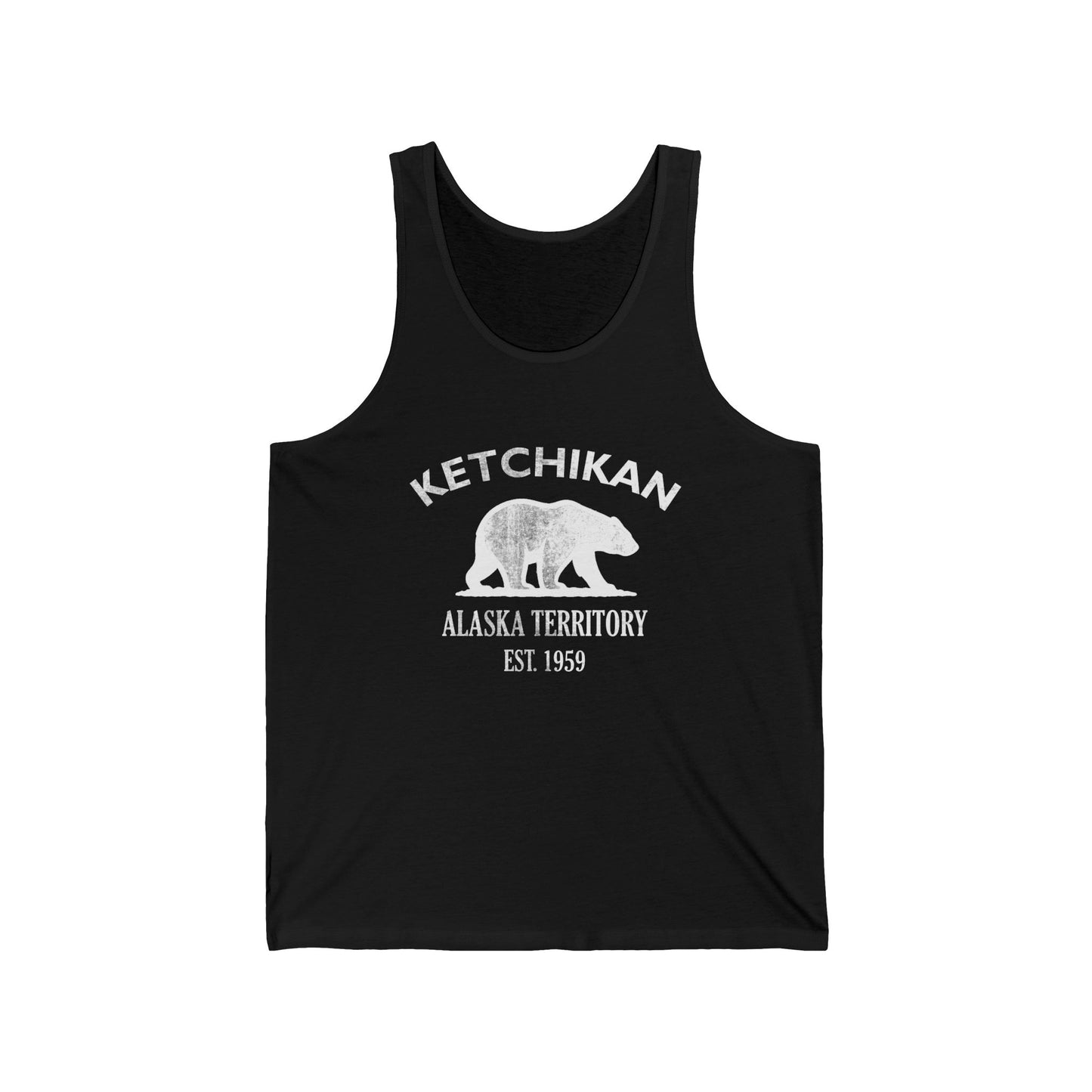
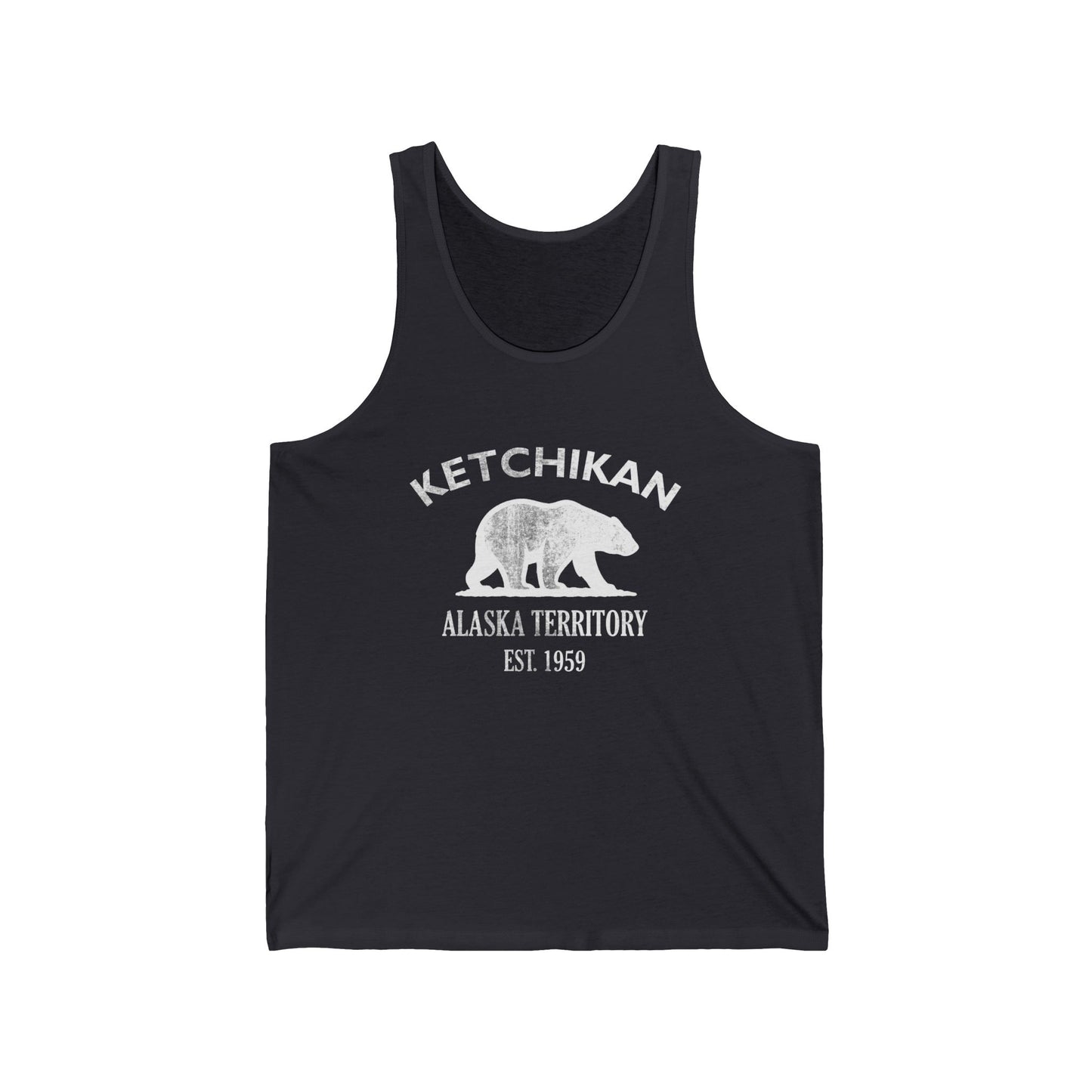
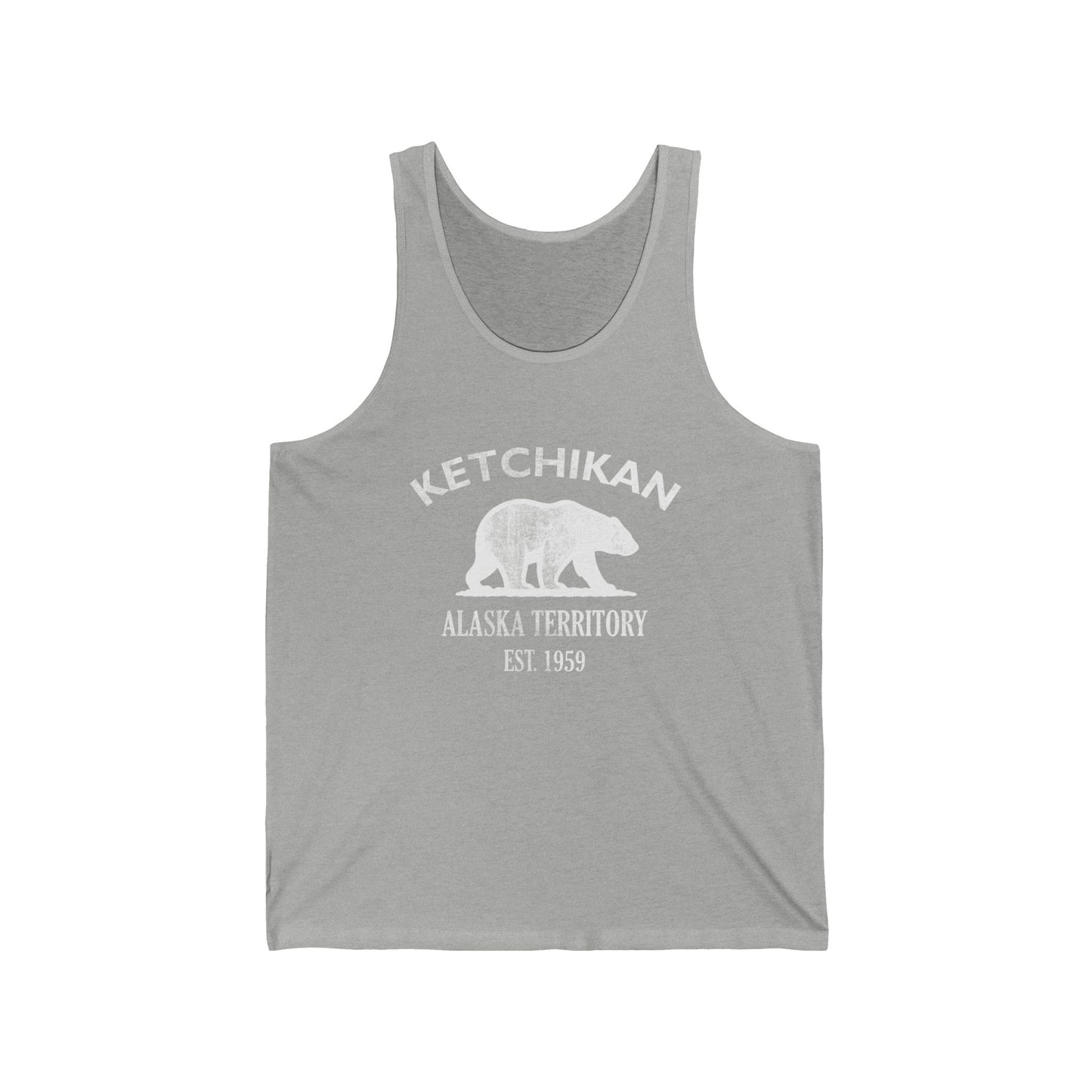
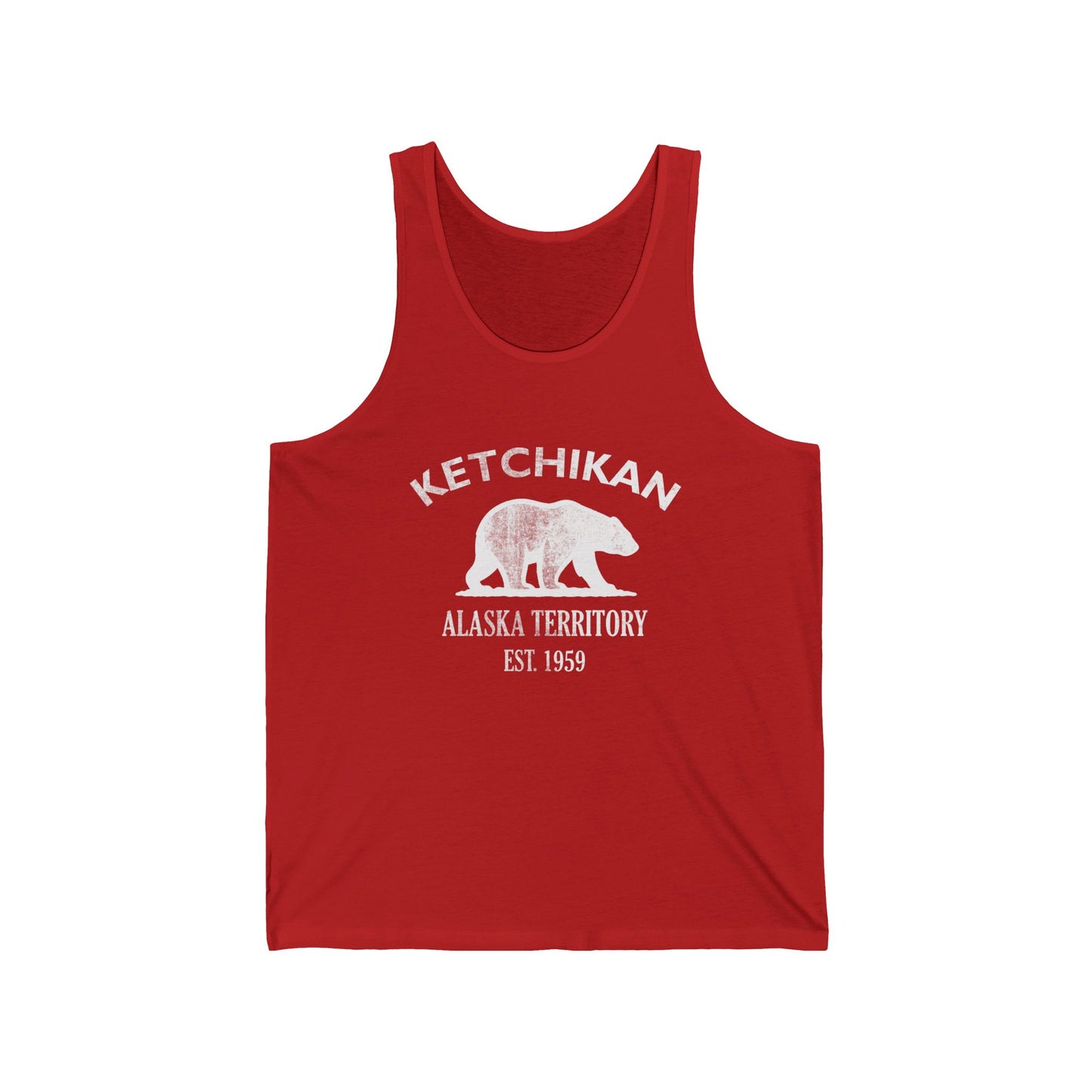
Our Ketchikan designs carry Alaska's distressed bear over the town name and Est. 1959, the statehood year — crate-label and outfitter-stamp styling for the town that canned the world's salmon and carved its tallest stories in cedar. Wear the First City — the boardwalks, the totems, the rain, and all five salmon of the thundering-wings creek.
And through every boom, the poles kept watch. Ketchikan holds the world's largest collection of standing totem poles, spread across four destinations — Saxman Totem Park south of town, Totem Bight State Park to the north, Potlatch Park beside it, and the Totem Heritage Center downtown, which since 1976 has preserved unrestored nineteenth-century poles retrieved from Tlingit and Haida village sites. The carving tradition never stopped: master carvers still raise new poles, and the Tlingit, Haida, and Tsimshian communities remain the living center of the town's art.
Why People Visit Ketchikan Alaska
Because it is the concentrated version of Southeast Alaska: a walkable historic waterfront where the totem poles are real, the salmon run through downtown, the rainforest starts at the last streetlight, and the fjords are a floatplane ride away. First port of call, and for many travelers the one they remember longest.
