Ketchikan is Alaska's First City. The earliest extant incorporated city in the state — chartered August 25, 1900 — and the southernmost major settlement in Alaska, the first port of call cruising north from the Lower 48. The Tongass and Cape Fox Tlingit (the Taant'a Kwáan, the "Sea Lion Tribe") kept a summer fish camp at the mouth of Ketchikan Creek for centuries before the canneries arrived; the town's name is the Tlingit Kitschk-hin, conventionally translated "thundering wings of an eagle." In 1885 the Oregon canning agent Mike Martin scouted the creek and built the first salmon cannery on the spot, and by the early 1930s the town had grown to thirteen canneries packing more than a million cases of salmon a year — the Salmon Capital of the World. A 1903 city ordinance banished the brothels of the wharf district to the east bank of the creek, and the boardwalk known as Creek Street rose on pilings above the spawning salmon, operating as the licensed red-light district from 1903 until 1954 and earning Ketchikan its enduring nickname, the Wickedest City in Alaska; Dolly's House at 24 Creek Street is now a museum, and the Creek Street Historic District was added to the National Register of Historic Places in 2014. Downtown Ketchikan as a whole is a National Historic Landmark District. The town clings to Revillagigedo Island — named by Captain George Vancouver in 1793 — at the southern end of the Inside Passage, half built on pilings over Tongass Narrows and half clinging to forested bluffs, thirty-one miles long and never more than ten blocks wide. Behind it rises the 16.7-million-acre Tongass National Forest, the largest national forest in the United States, headquartered in town; forty miles east lies Misty Fjords National Monument, the 2.29-million-acre wilderness John Muir compared to Yosemite Valley, proclaimed by President Jimmy Carter on December 1, 1978. Beneath the 3,001-foot summit of Deer Mountain, more than one hundred and fifty inches of rain a year earn the town its other name: the Rain Capital of Alaska. Today a million cruise visitors step off here every summer — first stop heading north, and the one most wish they'd given another day.
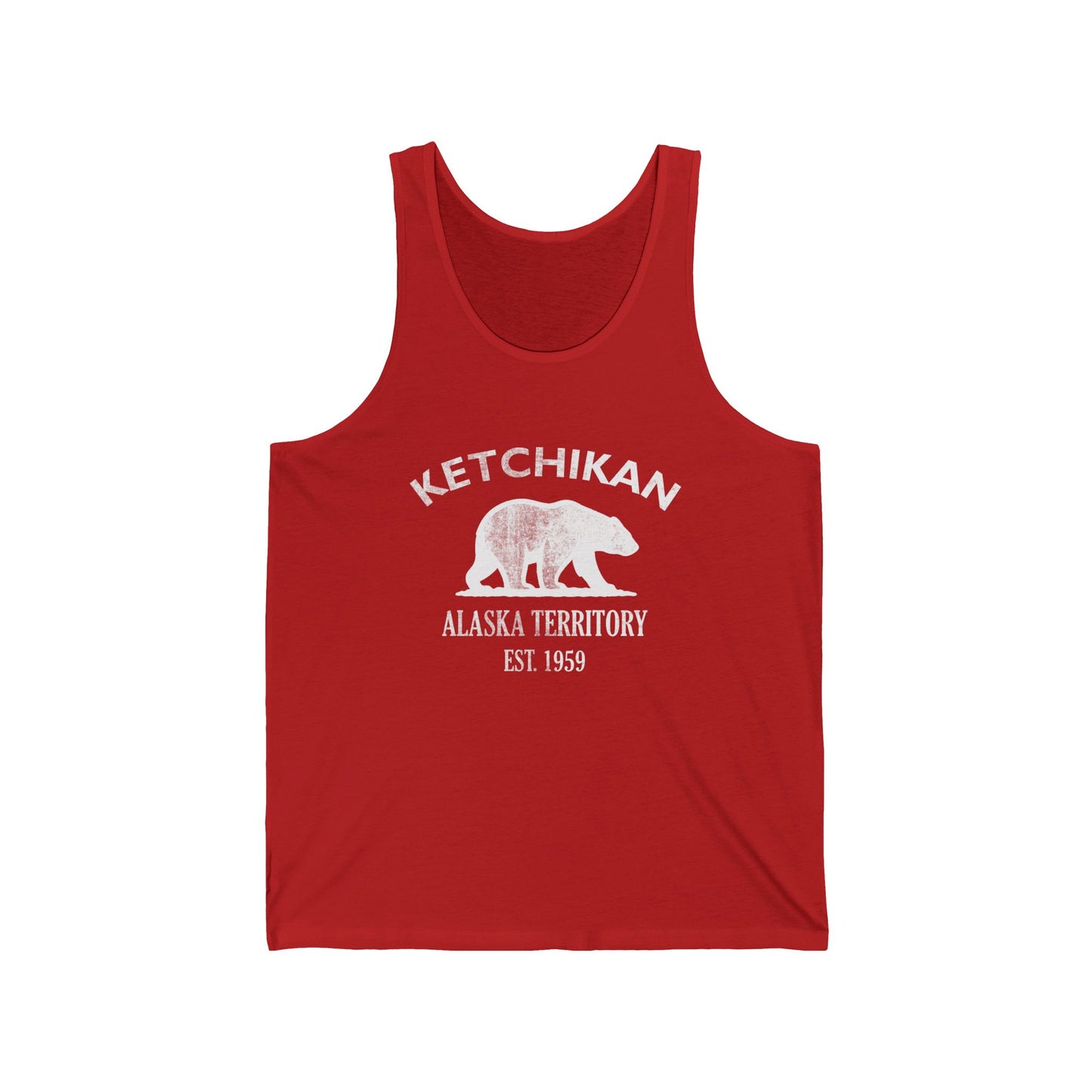
Today Ketchikan is celebrated as a fishing and tourism hub, proud of its Native traditions and frontier endurance. Its story reflects Indigenous heritage, frontier grit, and modern adaptation. Our Ketchikan designs embody this layered identity, pairing the bear motif with vintage styling. They invite you to explore the Ketchikan collection and carry forward a reminder of Alaska's resilience. Retro in tone, the logo reflects toughness and authenticity. Ketchikan's emblem honors both heritage and modern growth, making it a vintage symbol of Alaska's identity. Explore the collection and share in Ketchikan's story of resilience and pride.
Why People Visit Ketchikan Alaska
Ketchikan offers Alaska's First City and the earliest extant incorporated city status (August 25, 1900), the Salmon Capital of the World credential rooted in the Ketchikan Creek cannery era of the early twentieth century, the National Historic Landmark District downtown with its Creek Street boardwalk-on-pilings red-light history of 1903-1954, the world's largest collection of standing totem poles across four distinct totem destinations, the Tongass National Forest rainforest backdrop (the largest national forest in the United States, headquartered in town), Misty Fjords National Monument 40 miles east, the 3,001-foot Deer Mountain backdrop, the Tongass Tlingit cultural continuity along Ketchikan Creek, and the rain-soaked Inside Passage identity that makes the town look like nothing else in America. It is Alaska's First City — and the first port of call for more than a million cruise visitors a summer heading north from the Lower 48.