Ketchikan was established in 1885 as a salmon canning and trading hub, but the Tlingit people had lived there for centuries, fishing and carving cedar canoes. Its name derives from the Tlingit word Kitschk-hin, often translated as "thundering wings of an eagle." Its founding identity reflects both Indigenous heritage and frontier ambition, where fishing and lumber anchored survival. Ketchikan's roots highlight Alaska's duality: Native continuity and industrial expansion. Its story emphasizes resilience, cultural strength, and adaptability, making Ketchikan a proud emblem of Alaska's maritime endurance and Indigenous continuity.
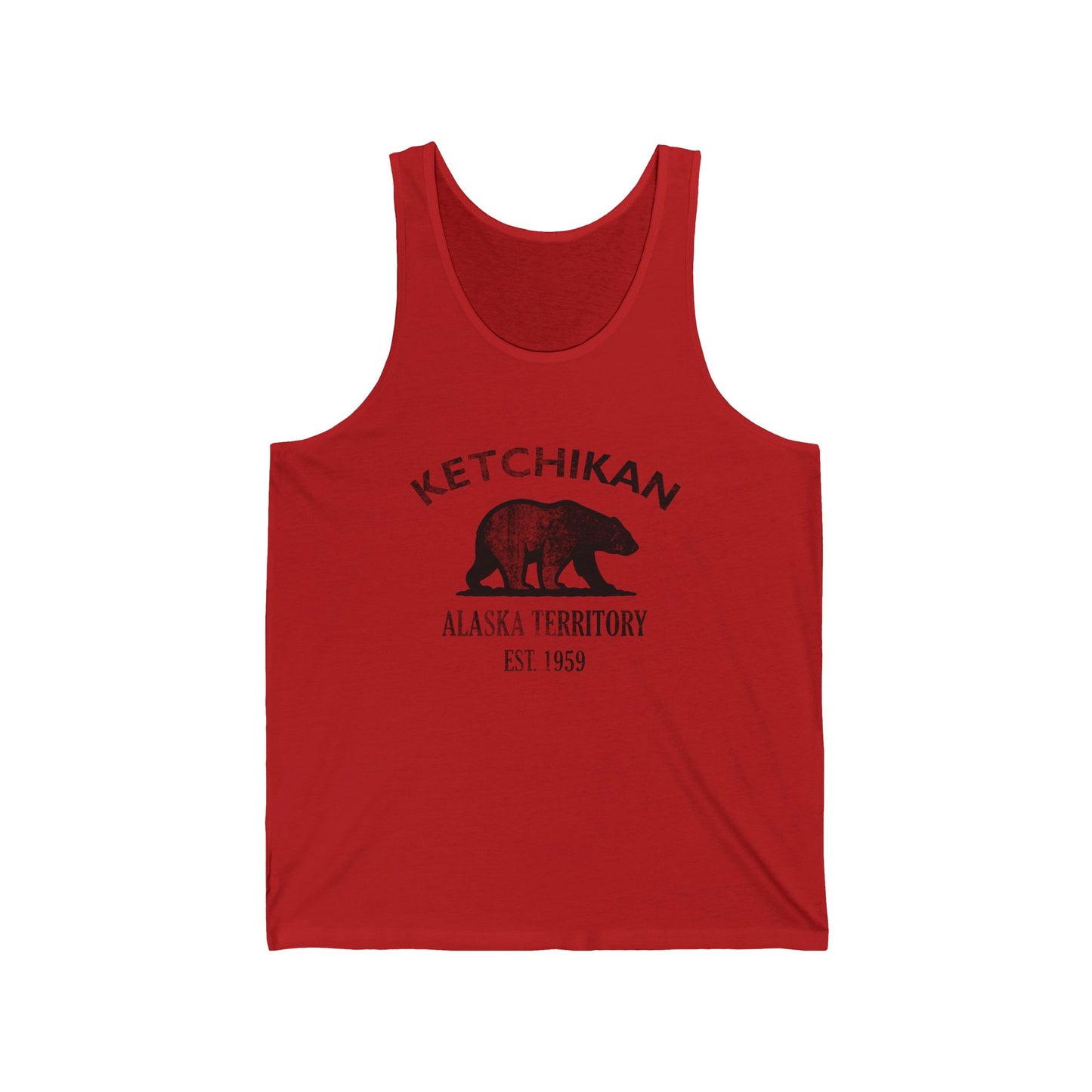
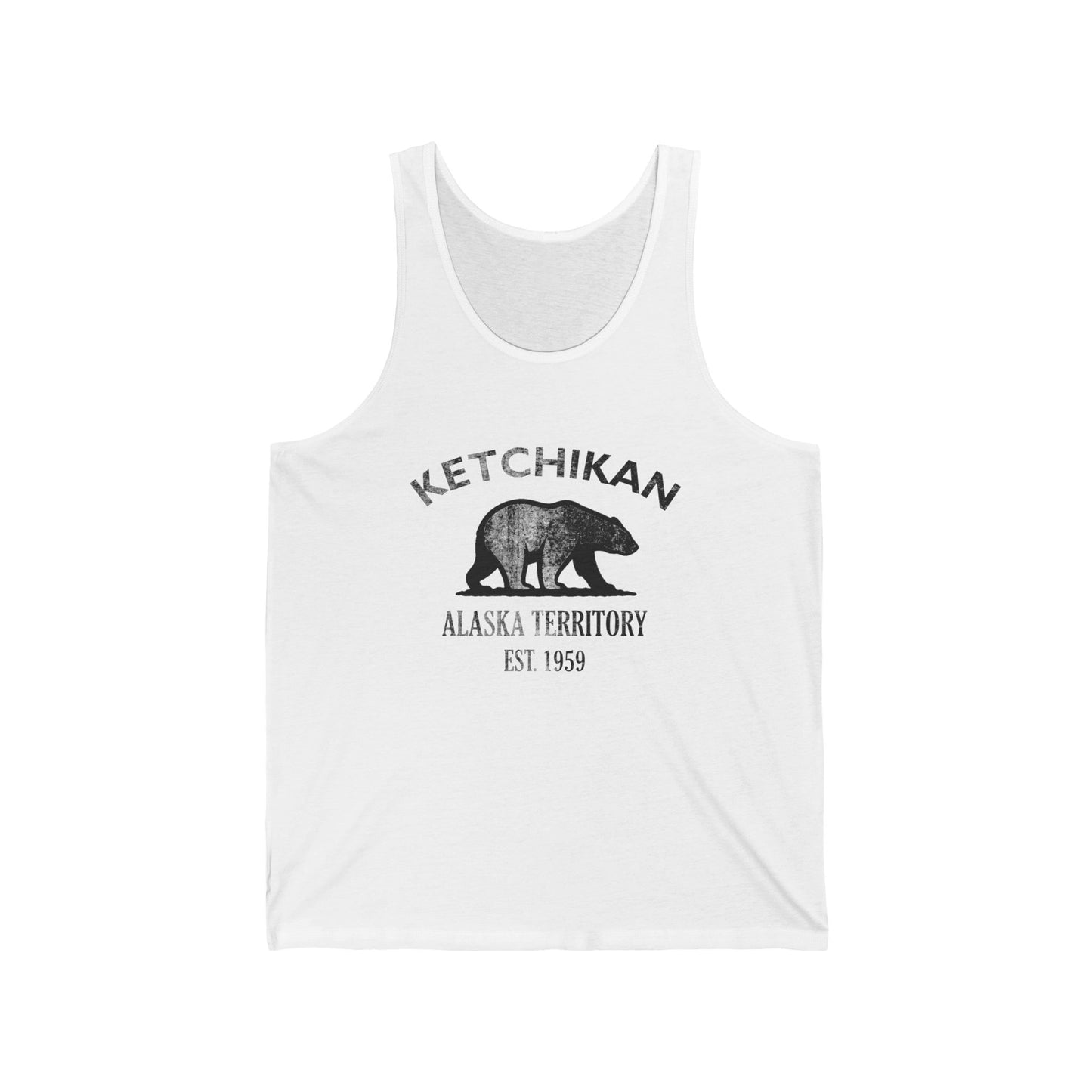
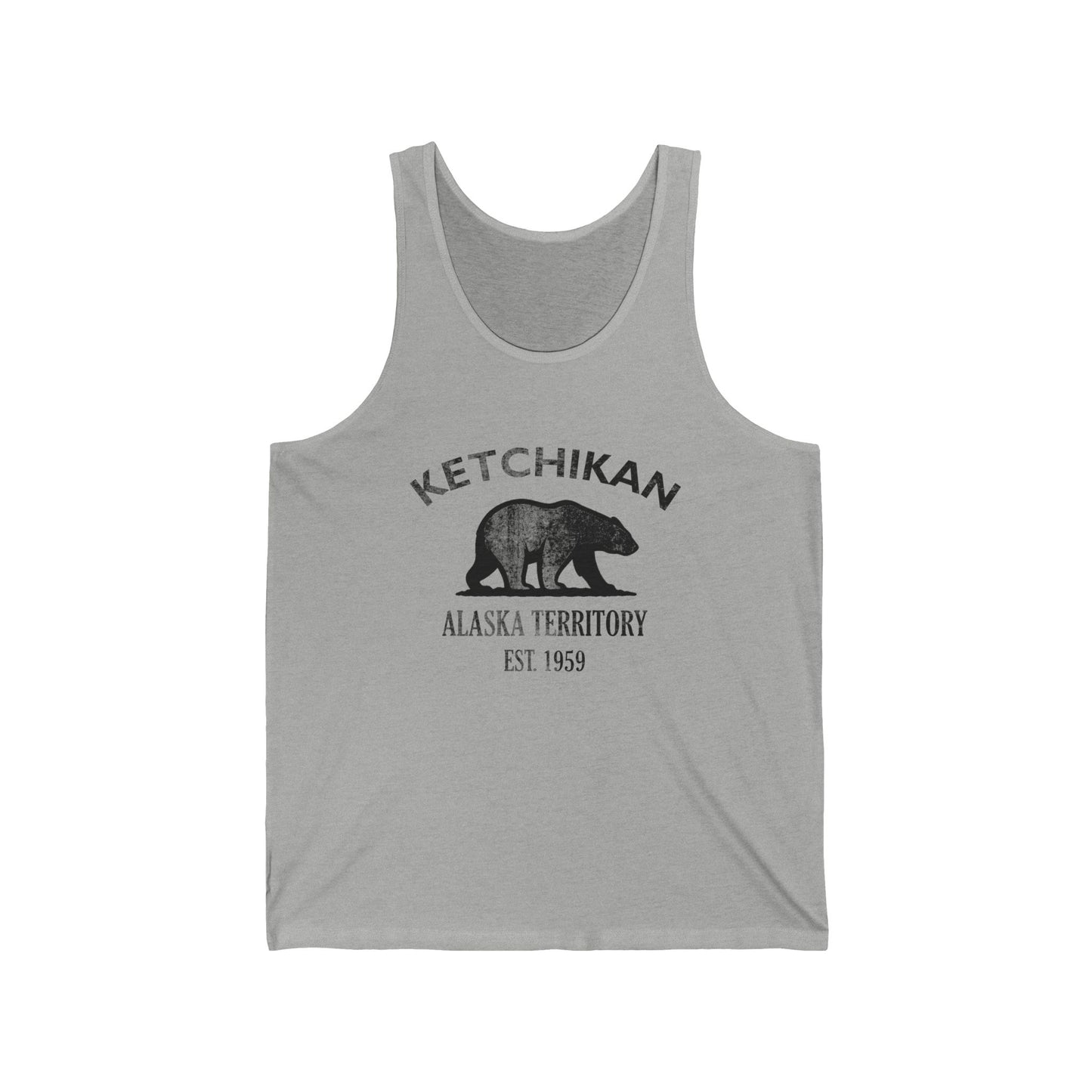
Our Ketchikan retro logo uses Alaska's distressed bear motif, symbolizing wilderness toughness, resilience, and cultural pride. The bear reflects Indigenous reverence and frontier endurance, while "1959" ties the design to Alaska's statehood. Its black-and-white styling is rugged and retro, resembling crate labels, logging brands, and outfitter stamps. The motif bridges Ketchikan's dual identity: Native heritage and salmon capital. On merchandise, it conveys authenticity, endurance, and pride, retro vintage in tone. The bear emblem honors Ketchikan's layered identity, making it a vintage symbol of Alaska's story. Retro in style, it reflects survival, heritage, and authenticity.
Why People Visit Ketchikan Alaska
- Walk Creek Street — the boardwalk on pilings on the east bank of Ketchikan Creek, the 1903-1954 licensed red-light district and now a National Register historic district. Watch for salmon spawning in the creek below in late summer. Stop at Dolly's House Museum at 24 Creek Street for the lived-in version of the story, and walk the Stedman Bridge and Married Man's Trail for the full Creek Street loop.
- Visit the Totem Heritage Center on Deermount Street — seventeen original 19th-century totem poles rescued from abandoned village sites, displayed in a semi-spiritual indoor setting with Sitka-spruce surroundings.
- Drive ten miles north to Totem Bight State Historical Park — eleven acres of restored village site with a traditional clan house and CCC-era recarved totem poles along a rainforest trail to the shore.
- Stop at Saxman Native Village just south of town — one of the world's largest collections of standing totem poles, with an active carving shed. Visit respectfully; this is a working Native cultural community.
- Stop at Potlatch Park north of town — additional totem-park grounds, longhouse, and historical exhibits along the Tongass Highway.
- Take a flightseeing or boat tour to Misty Fjords National Monument — the 2.29-million-acre Carter-proclamation wilderness 40 miles east of Ketchikan, with 3,000-foot granite walls, glacial fjords, and the volcanic New Eddystone Rock that Captain Vancouver named in 1793. John Muir compared it to Yosemite Valley.
- Stroll the Waterfront Promenade along Tongass Narrows — whale-tail benches, historical markers, and the working harbor at the south end of the Inside Passage.
- Visit the Tongass Historical Museum on Dock Street — the city's salmon, timber, and town-growth interpretive collection.
- Stop at the Southeast Alaska Discovery Center — the Forest Service interpretive center for the Tongass National Forest and Misty Fjords National Monument.
- Hike Deer Mountain — the 3,001-foot peak immediately east of downtown, the signature backdrop of Ketchikan. The summit trail is steep but day-hikeable in good weather.
- Take the ferry across Tongass Narrows to Ketchikan International Airport on Gravina Island — the airport-ferry crossing is among the most distinctive in the country.
- Watch the salmon run up Ketchikan Creek through downtown in August and September — one of the easiest wildlife sights in North America to see from a city sidewalk.