


Today Joshua Tree is a high-desert town with a double life: a national-park gateway of campgrounds and trailheads, and a bohemian outpost of artists, musicians, roadside galleries, and desert-modern cabins. Pioneertown’s 1946 movie-set saloons sit up the road; Noah Purifoy’s junk-sculpture museum sprawls across the open desert. It is rugged, weird, and wide open — a place people come to climb the rocks, watch the stars, and feel the desert get under their skin.
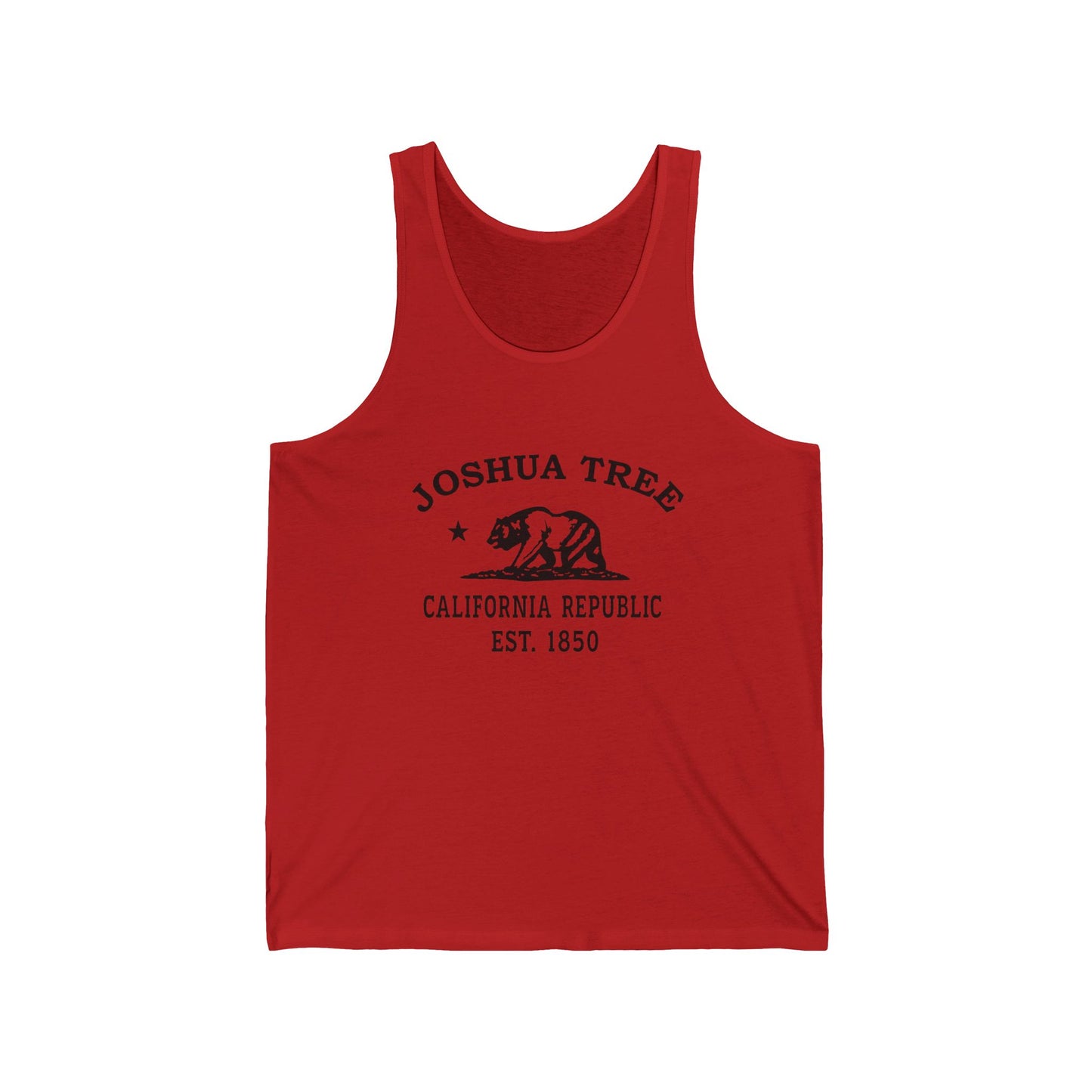
Our Joshua Tree logo carries California’s bear and star over “California Republic · Est. 1850,” the year of statehood and the shared emblem of every Merlin Classics California place. The bear and the lone star are the state in shorthand — independence, the Republic, the frontier — printed black-and-white with the worn look of an old crate label or a WPA poster. What makes this one Joshua Tree is everything behind it: the two deserts, the spiky trees, the piled boulders, and the dark, star-thick sky.
Why People Visit Joshua Tree
People come for the strangeness: trees out of a storybook, boulders made for scrambling, and a night sky so dark the Milky Way throws shadows. Pair the park with the town’s desert-arts scene and you have a high-desert getaway unlike anywhere else in California.
