




Hilo's story begins on the bay. Native Hawaiians settled this rain-fed eastern coast of Hawaiʻi Island for centuries, farming kalo (taro) in the wet lowlands, fishing the bay and reefs, and reading the rivers that run down from the mountains. In the bay sits Mokuola — Coconut Island — whose name means “island of life,” long known as a place of healing and refuge. This was a settled, cultivated landscape, rich in water and tradition, generations before any ship from the outside world dropped anchor in Hilo Bay. East of town the shoreline turns to black rock and sheltered pools — Onekahakaha, Carlsmith, Richardson — where families still swim in water warm enough to forget the rain.
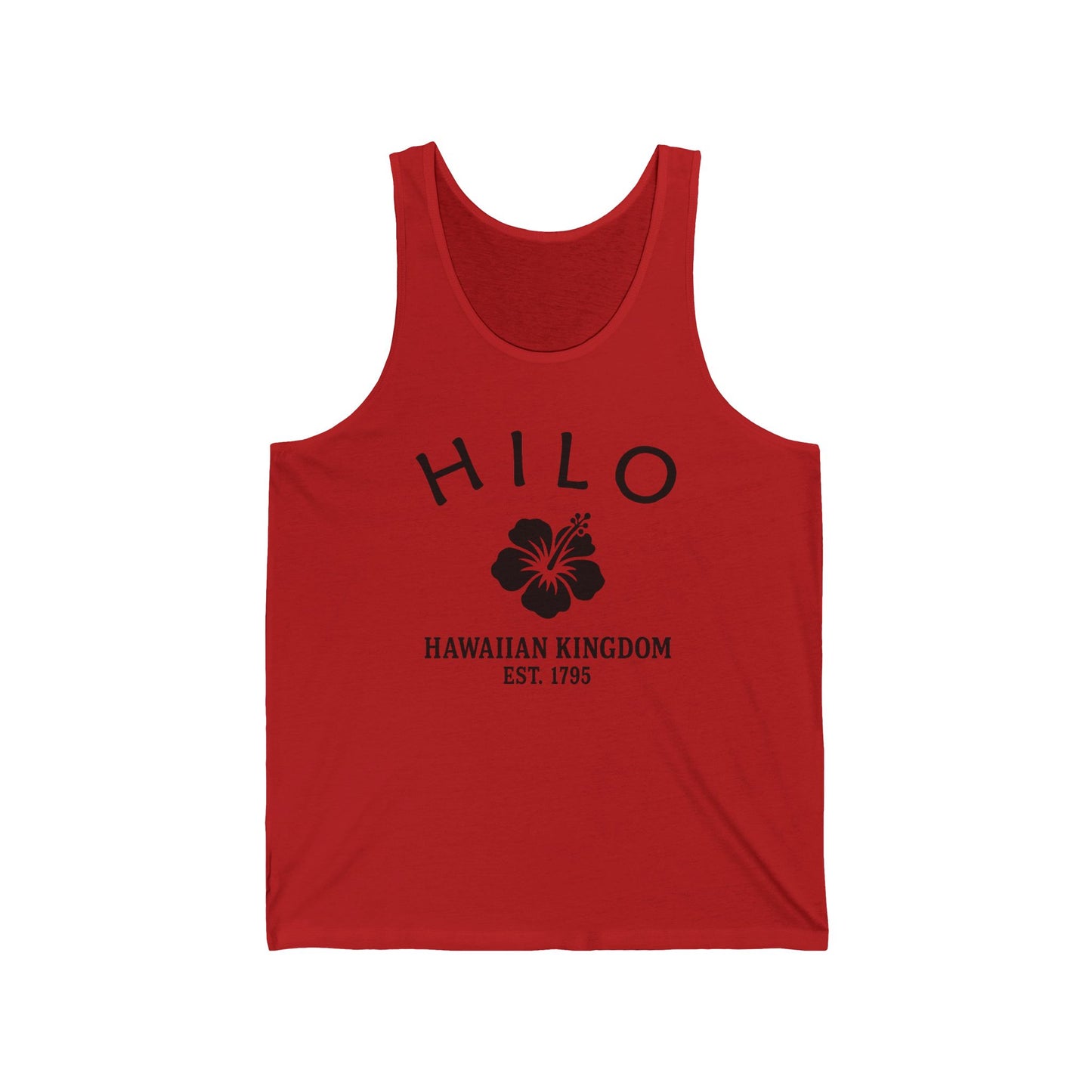
Our Hilo logo carries the same emblem every Merlin Classics Hawaiʻi place wears — the hibiscus, above “Hawaiian Kingdom · Est. 1795,” the year of unification under Kamehameha, printed in a worn, hand-pressed black and white. The hibiscus is the islands' mark, the through-line that ties Hilo to every other Hawaiʻi place we make — a nod to the aloha that defines them. What makes this one Hilo is everything around it: the bay, Rainbow Falls on the Wailuku, and the rain-green mountains behind the town.
Why People Visit Hilo
Hilo offers the most authentic, culturally rich side of Hawaiʻi Island — waterfalls, gardens, markets, and deep Hawaiian heritage, all in a relaxed bayfront town. Visitors come for the rainforest scenery and the easy access to volcanoes and coast, and stay for the unhurried, welcoming feel of a real town rather than a resort strip. From the morning rainbows at Waiānuenue to the gardens along the bay, it rewards a slow pace. It is green, genuine, and beautiful in every season on the bay.
