Skip to product information
1 of 3

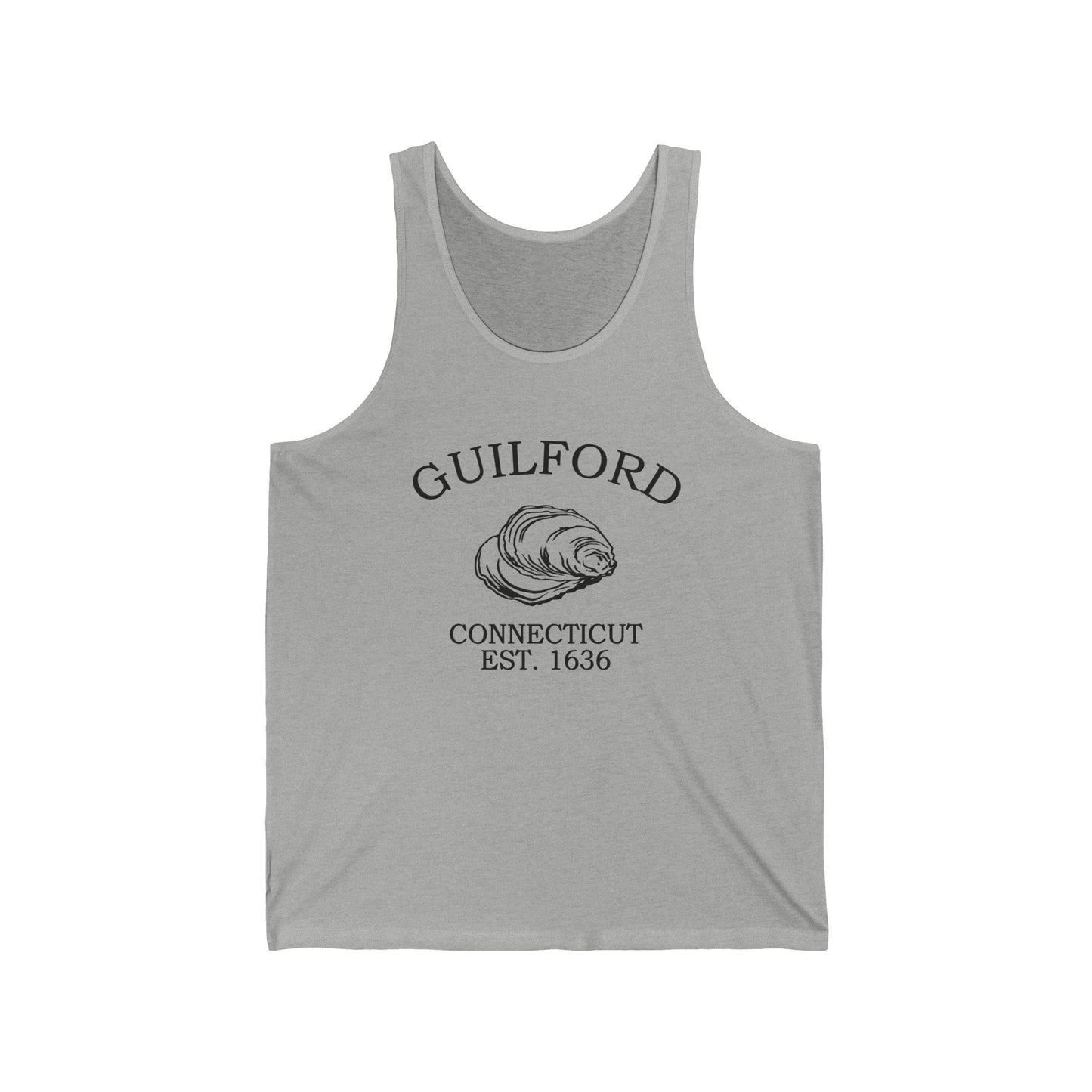
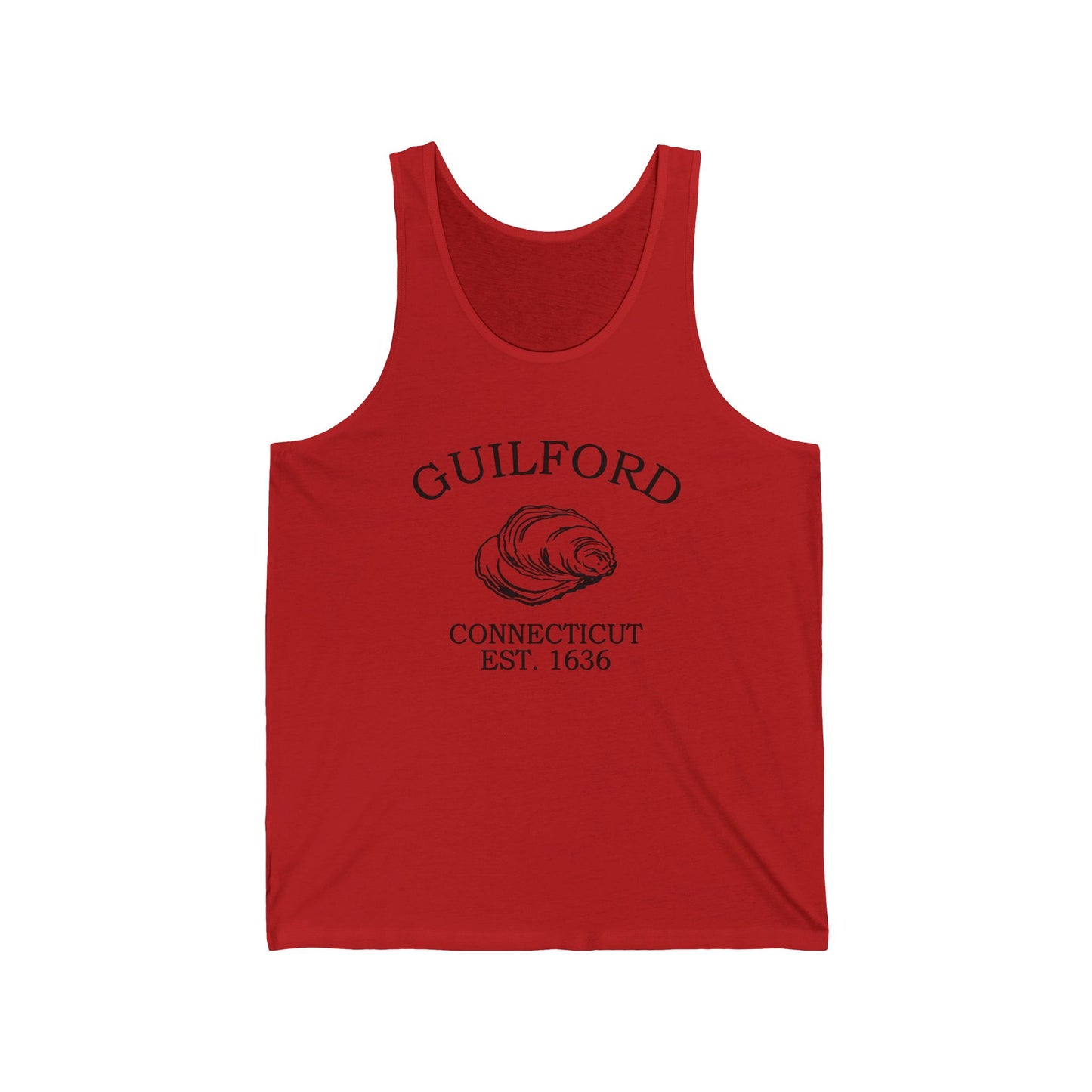
Guilford Connecticut Vintage Retro Unisex Cotton Jersey Tank Top - Black Logo

Guilford Connecticut Vintage Retro Unisex Cotton Jersey Tank Top - Black Logo

Regular price $28.00 USD
Regular price Sale price $28.00 USD
Sale
Shipping calculated at checkout.
Size
Color
Quantity
Unisex jersey tank made from lightweight Airlume combed and ring-spun cotton with a retail fit. Side-seam construction and self-fabric binding help it hold shape, with a tear-away label, and it runs true to size for adults. Solid colors are 100% cotton; select heather/prism shades may include cotton–poly or cotton–poly–rayon blends.

View full details

Guilford was settled in September 1639 by Reverend Henry Whitfield and a group of English Puritans from Surrey and Kent. The Menunkatuck people of the Quinnipiac world had farmed and fished the shoreline for generations before. Colonial settlers built farms and homes around the twelve-acre town green, still central today. Its founding identity reflects resilience, cooperation, and heritage. Guilford endured storms and hardship but thrived through community strength. Its story highlights Connecticut's duality: Indigenous continuity and colonial determination. The town's origins demonstrate a shoreline community rooted in pride, endurance, and tradition, creating a heritage that remains visible in its historic homes, churches, and community spirit across centuries.

Guilford was started with a contract. In the spring of 1639, on shipboard somewhere between Surrey and the New England coast, a Puritan minister named Henry Whitfield gathered the twenty-five men who had sailed with him and asked them to sign a covenant of association: how they would govern themselves, divide the land, build the town. They signed it before they landed. By that September, Whitfield and his planters had stepped ashore on the Long Island Sound coast just east of New Haven, purchased the country from the Menunkatuck people of the Quinnipiac world, laid out a twelve-acre green that is still one of the largest in New England, and begun building. The stone house Whitfield put up that same year — pulled together from the local fieldstone that the glaciers had left lying around for him to use — has stood ever since. It is the oldest stone house in New England, the oldest house in Connecticut, and the first house in the state to become a public museum, opened in 1899. The Hyland House went up around 1660, a saltbox of the First Period that is still on Boston Street today. The Thomas Griswold House dates to 1774 on the road to Madison. The Medad Stone Tavern was built in 1803 just north of the green. Guilford incorporated as a town in 1718. In 1802 a stone tower with an oil lamp went up on Faulkner's Island, three miles offshore in the Sound — Faulkner's Light, the second-oldest active lighthouse in Connecticut. Later in the nineteenth century the pink-grey granite quarries at Stony Creek, on the Guilford-Branford line, began shipping stone to building sites across the country: the pedestal of the Statue of Liberty, dedicated in 1886, was cut from Stony Creek granite, and so was the base of Grant's Tomb. Through all of it the green has stayed the center of town — twelve acres of grass, a Greek Revival meeting house from 1830 along one edge, and the white houses of the planters' descendants set around it in the same square those twenty-five men sketched on the deck of a ship in 1639. On the green since 1639, in the stone house since 1639, and on the Sound since long before that.

Why People Visit Guilford Connecticut

  • Tour the Henry Whitfield House, the 1639 stone house Reverend Henry Whitfield built the year he founded the town — the oldest stone house in New England, the oldest house in Connecticut, and the first house museum in Connecticut, opened in 1899; operated today as the Henry Whitfield State Museum.
  • Walk the Guilford Town Green, the twelve-acre village green laid out by the Twenty-Five Planters in 1639 and still surrounded by the white-clapboard houses of their descendants, with the 1830 Greek Revival First Congregational Church along one edge.
  • Tour the Hyland House on Boston Street, the c.1660 First-Period saltbox preserved by the Guilford Keeping Society — one of the finest surviving 17th-century New England houses on its original site.
  • Tour the Thomas Griswold House, the 1774 saltbox on the road to Madison, with period furnishings and a working blacksmith shop on the grounds.
  • Walk past the Medad Stone Tavern (1803), the Federal-era tavern just north of the green that has been maintained as a museum since the 1960s.
  • Look offshore for Faulkner's Light, the 1802 stone tower on Faulkner's Island three miles out in the Sound — the second-oldest active lighthouse in Connecticut, with seasonal Saturday boat tours run by the Faulkner's Light Brigade volunteer group.
  • Walk the Westwoods Trails, the forty-mile network of forest trails through ledges, kettle holes, glacial erratics, and beaver wetlands inland from the Sound — the largest preserved hiking area on the central Connecticut shoreline.
  • Relax at Jacobs Beach, the small Sound-front town beach with a sandy crescent, picnic groves, and views east to the Madison shoreline.
  • Visit Lake Quonnipaug for the inland lake views, the picnic area, and the seasonal swimming and fishing.
  • Drive to the Stony Creek quarry overlooks at the Guilford-Branford line — the source of the pink-grey granite that built the pedestal of the Statue of Liberty in 1886 and the base of Grant's Tomb.
  • Visit Bishop's Orchards just north of the green for pick-your-own peaches in July and August and apples September through October — a continuous family-run orchard since 1871, five generations operating on the same land.
  • Time a visit for the Guilford Fair, the September agricultural fair held on the fairgrounds every year since 1859 — one of the oldest continuous fairs in Connecticut.
  • Stop at the Guilford Free Library on Park Street for the local-history room and the genealogy collection, the best public starting point for Guilford colonial research.

Guilford Connecticut Merlin Classics retro vintage logo featuring clam shell motif and Connecticut Colony 1636 founding-era date

Wear Local. Feed Local. Stay Classic.

Product FAQs

How does your sizing work?

Because items are made to order, we can’t accept returns for sizing or color choices. We do accept returns for defects, misprints, or shipping damage. Please review the detailed photos and descriptions before purchasing. Women’s fitted tees run small; if you prefer a looser fit, consider sizing up.

How do I send gifts?

All items ship without prices and include a simple packing slip for easy gifting. Enter the recipient’s shipping address and your billing address at checkout. Use your contact info to receive tracking updates. Orders typically arrive within 6–11 business days—please allow extra time for time-sensitive gifts.

How do I care for my item?

For apparel: wash cold, inside-out, with like colors; avoid bleach and high heat; tumble dry low or hang dry. For embroidery, iron inside-out to protect the stitching. See specific care instructions in product descriptions and also follow general best practices in caring for your items for long term enjoyment.

How are items made and when will they arrive?

We make each item on demand using premium blanks, embroidery, and soft-hand prints. Production usually takes 2–5 business days (excluding weekends and holidays). You’ll receive tracking once shipped. We currently ship to U.S. addresses via USPS, UPS, or FedEx. Most orders arrive within 6–11 business days.

What’s the return/exchange policy?

We accept returns for defects, misprints, or damage on arrival. Report issues within 14 days with photos and your order number, and we’ll replace or refund. Size or color changes aren’t supported after purchase, so please consult size charts before ordering if you are at all unsure.

Who are we?

Merlin Classics is a volunteer-run, AI-assisted apparel project celebrating timeless local style. Every item is made to order, and profits (revenue minus external product/marketing cost) support hunger-relief programs in the communities our collections spotlight. Classic looks, real local impact—every purchase helps.