


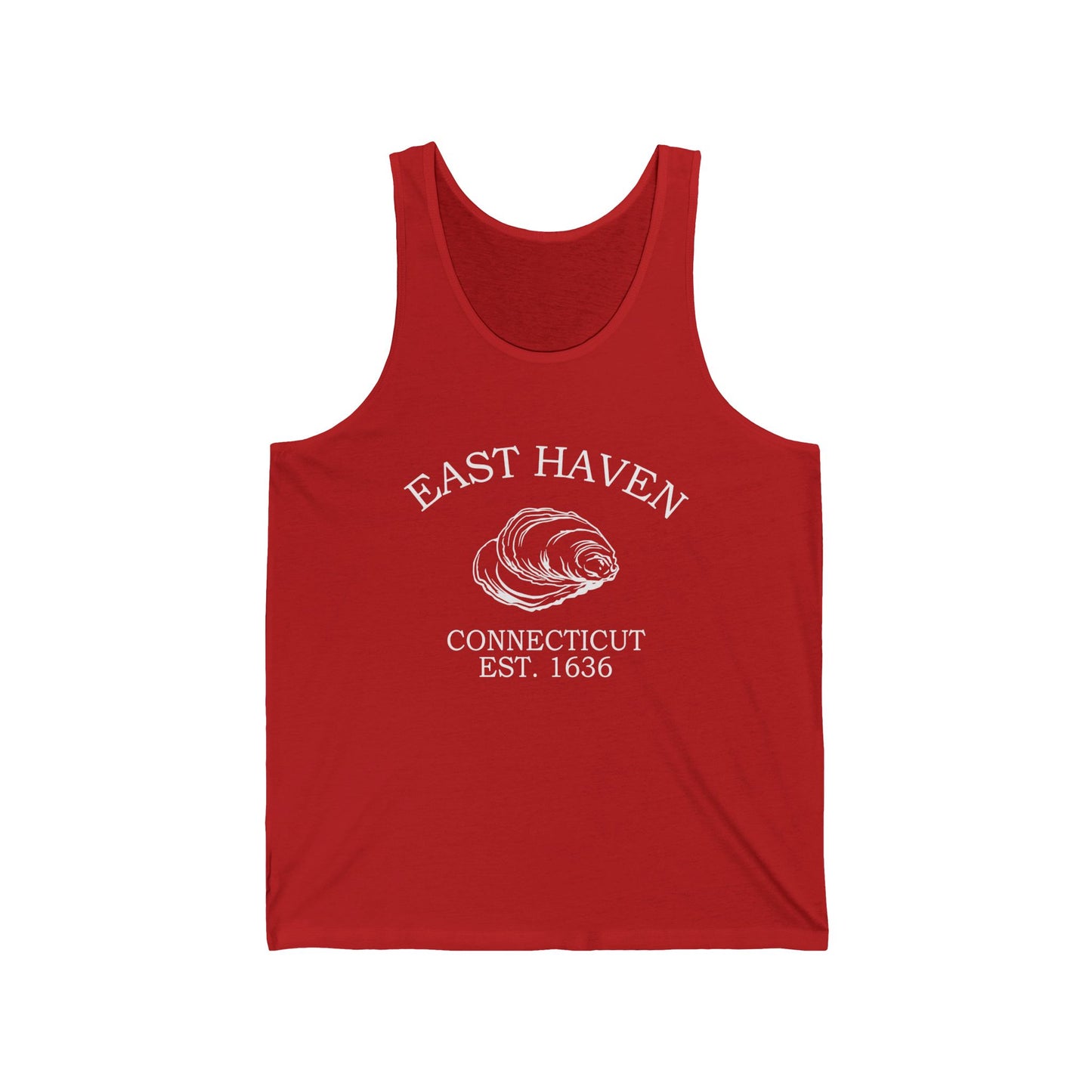
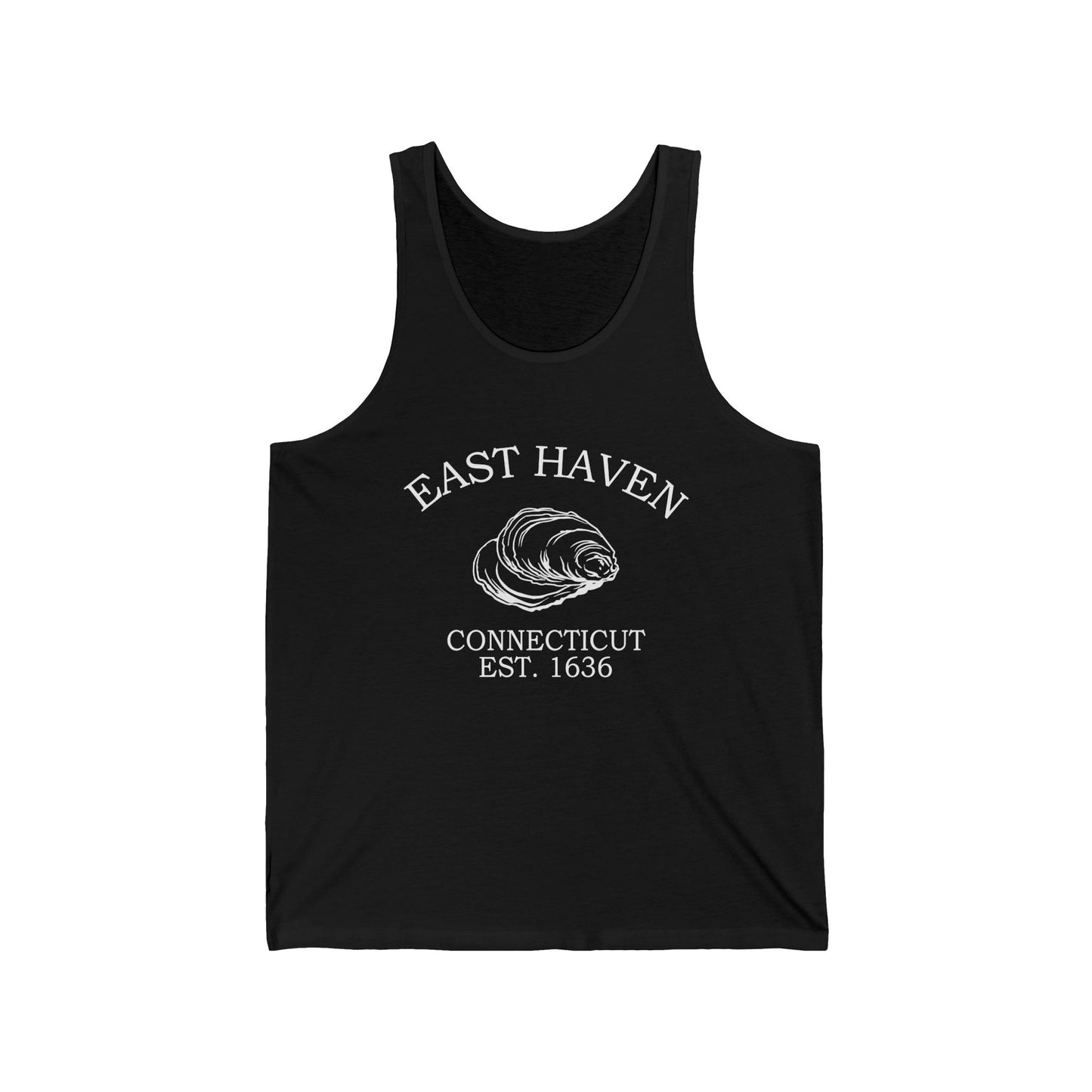
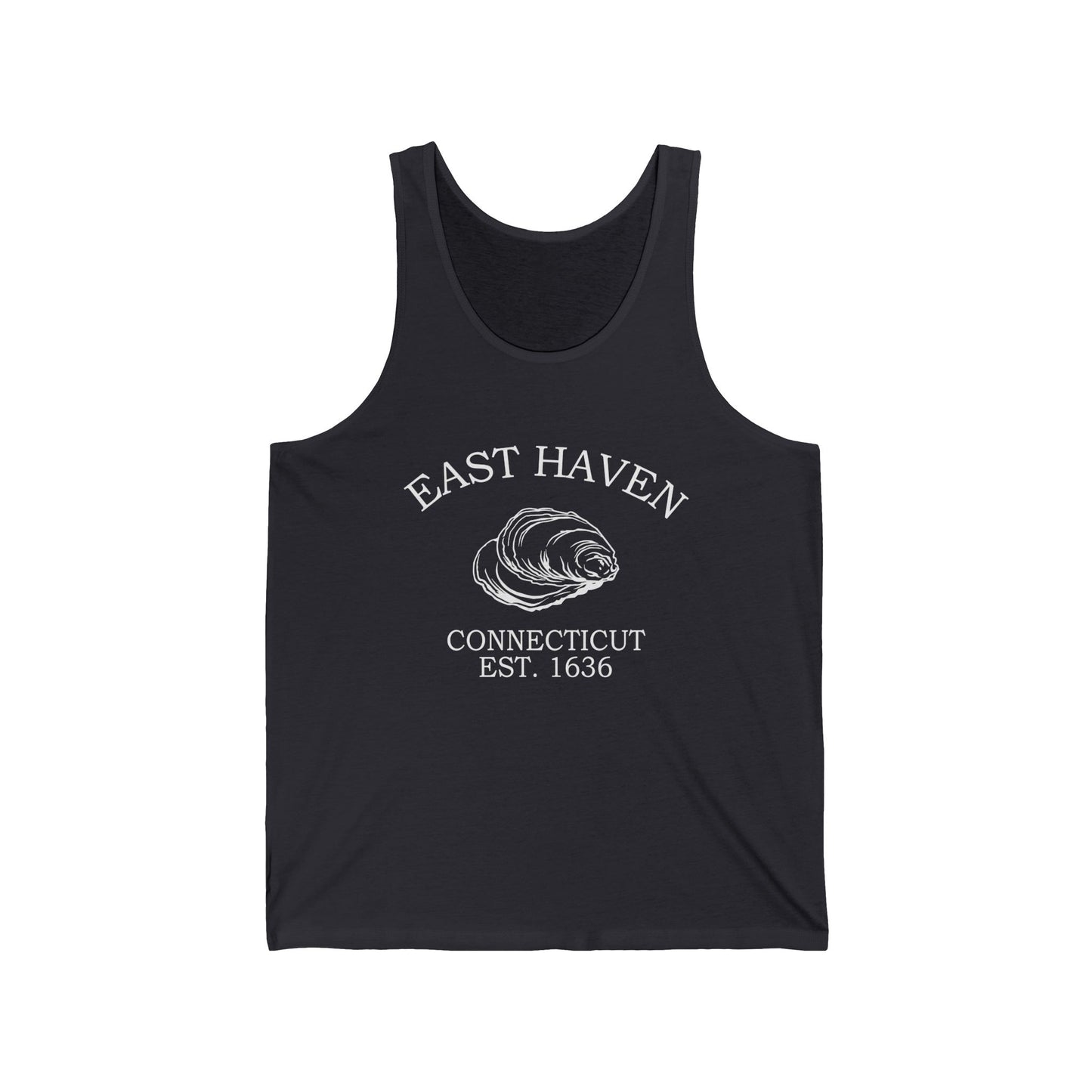
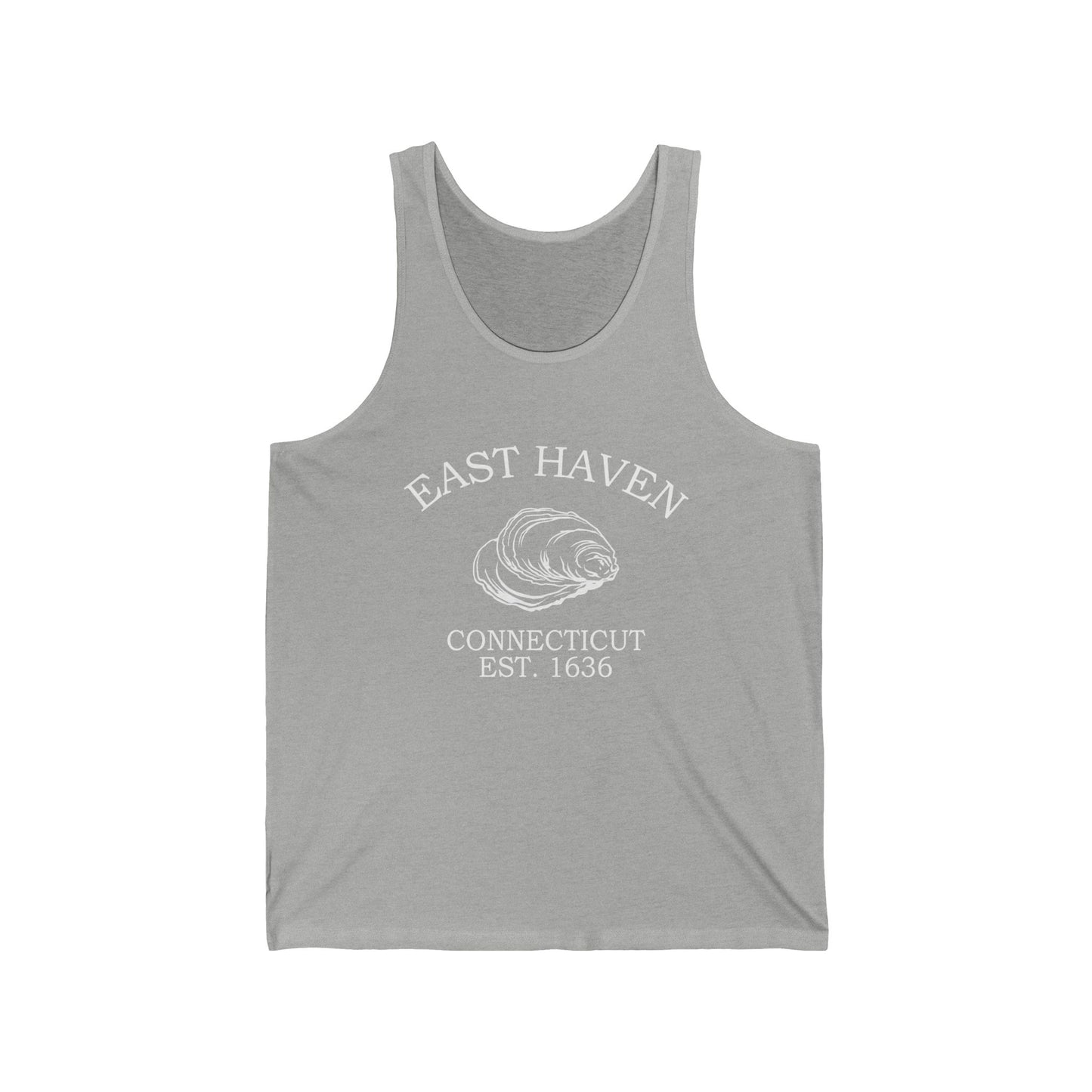
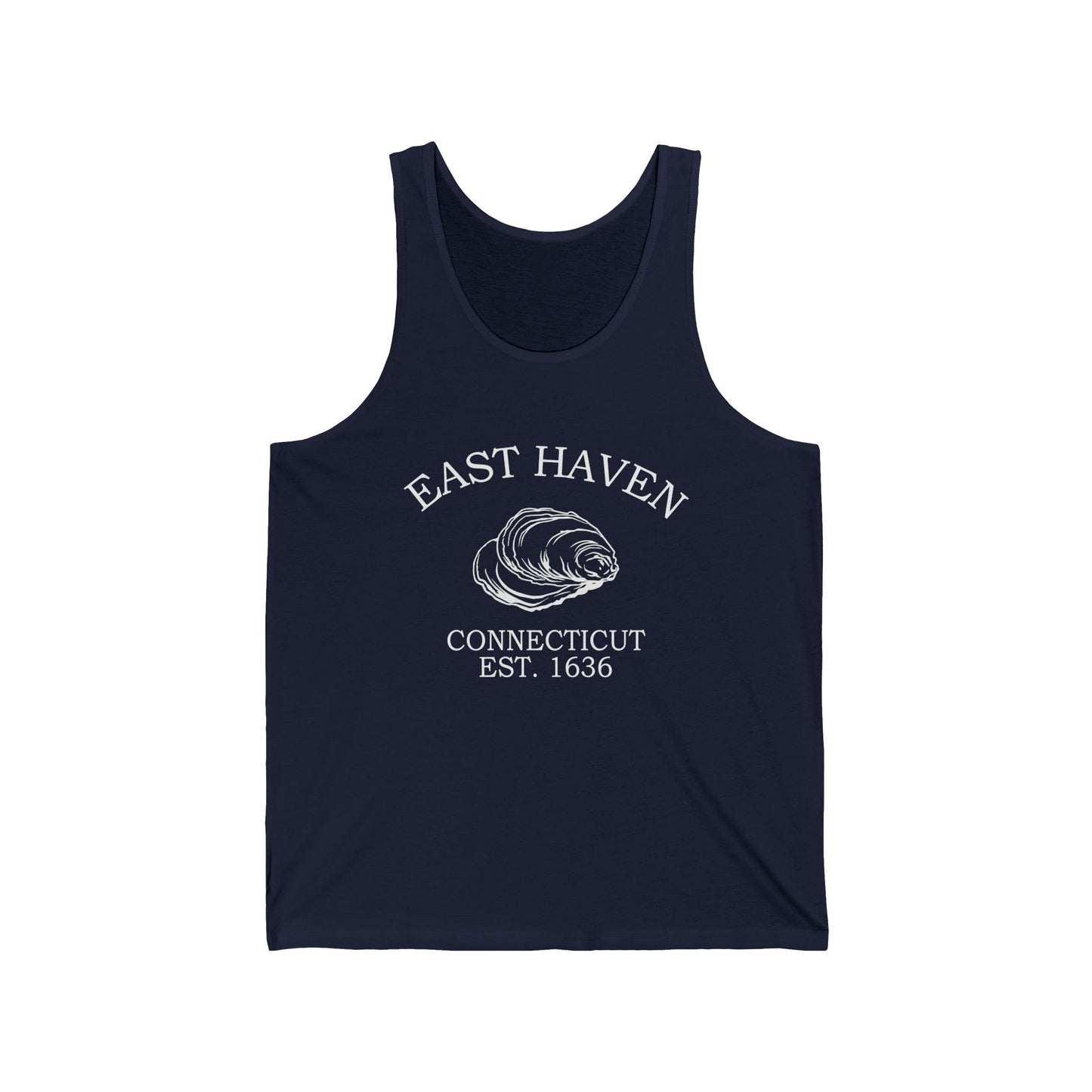
So East Haven gathers colonial iron, a fieldstone church, and the country's oldest trolley line onto a narrow shore of Long Island Sound. Our East Haven designs gather that into wearable form. Wear the history. East Haven, Connecticut — where colonial iron, a stone church, and the country's oldest trolley line meet the Sound.
In May 1785, after years of petitioning, East Haven finally won its independence and was incorporated as a separate town, with Isaac Chidsey as its first selectman. Through the nineteenth century it lived by the shore — farming the uplands, oystering the Sound, and shipping goods from its wharves — a narrow strip of Connecticut coast running from the harbor inland. Then, at the turn of the twentieth century, the electric trolley arrived, and with it the line that would outlast every other: the Branford Electric Railway, threading along the shore and the salt marshes toward Branford.
Why People Visit East Haven
Visitors come to East Haven for an unhurried slice of the Connecticut shore: a ride on a hundred-year-old trolley, a stroll past one of New England's oldest stone churches, and an afternoon on a quiet Sound-side beach. Salt marshes and shoreline trails sit a few minutes from the Town Green, and New Haven's museums and harbor are right next door. Equal parts colonial heritage and easy coastal living, East Haven rewards anyone drawn to the working shoreline of Long Island Sound.
