
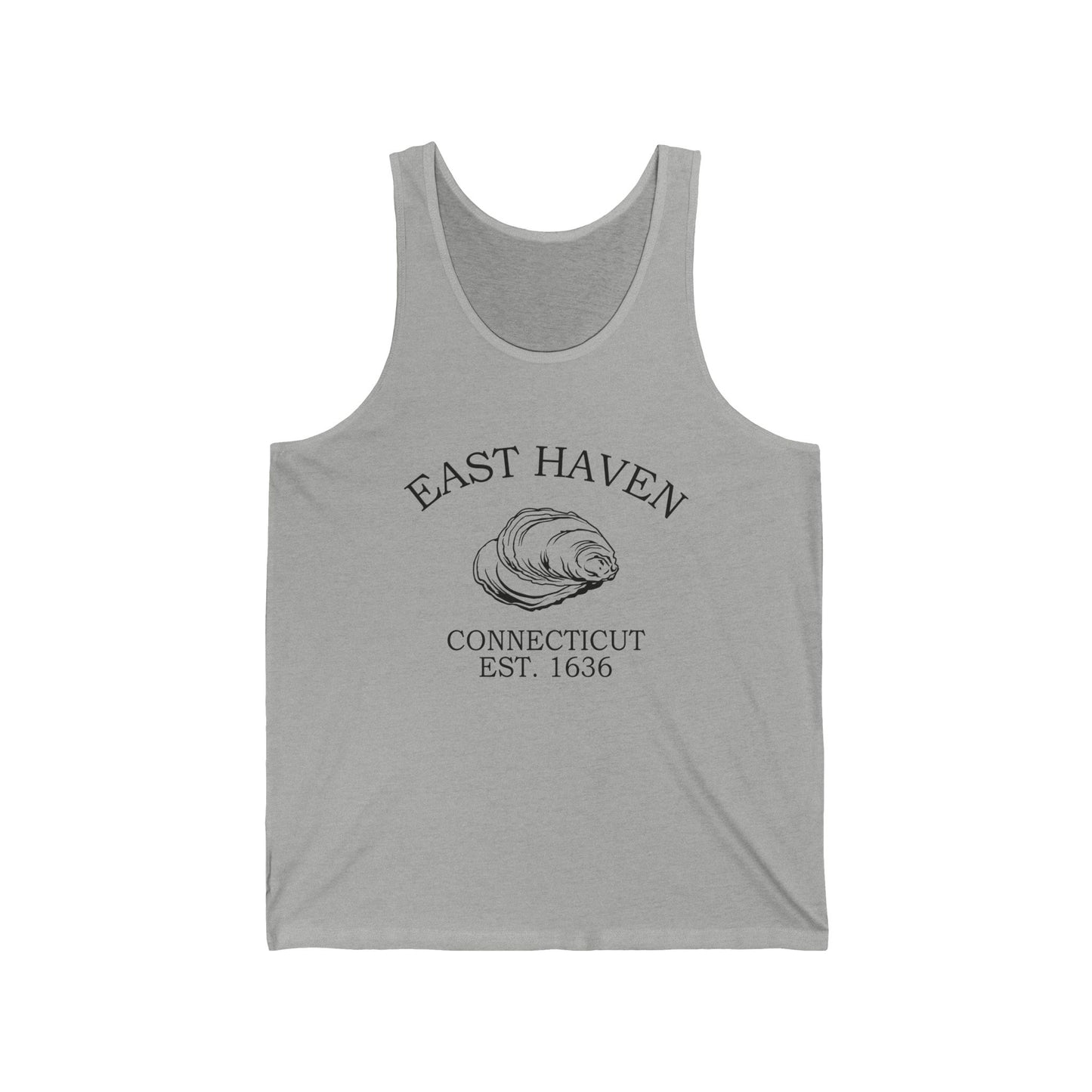
So East Haven gathers colonial iron, a fieldstone church, and the country's oldest trolley line onto a narrow shore of Long Island Sound. Our East Haven designs gather that into wearable form. Wear the history. East Haven, Connecticut — where colonial iron, a stone church, and the country's oldest trolley line meet the Sound.
In 1707 the parish shed its old name and became East Haven. The town that grew up around the Green took its lasting shape in 1774, when colonists raised the Old Stone Church — First Congregational — a steepled fieldstone meetinghouse that still stands as one of the oldest stone churches in New England. The Town Green spread out before it, a small common that would gather the town's monuments, its bandstand, and, much later, an oak grown from a sapling sent by President Theodore Roosevelt. The church and the Green remain the historic heart of East Haven.
Why People Visit East Haven
Visitors come to East Haven for an unhurried slice of the Connecticut shore: a ride on a hundred-year-old trolley, a stroll past one of New England's oldest stone churches, and an afternoon on a quiet Sound-side beach. Salt marshes and shoreline trails sit a few minutes from the Town Green, and New Haven's museums and harbor are right next door. Equal parts colonial heritage and easy coastal living, East Haven rewards anyone drawn to the working shoreline of Long Island Sound.
