


The village kept refusing the ordinary. For a hundred and ten years exactly one building in Carmel-by-the-Sea had a street address — the post office — and everyone else lived by description: the color of the door, the cypress on the corner, "Carmelo, 6 NE of 4th." The founders rejected door-to-door delivery as too citified, so every resident got a free post office box, and the daily walk to collect the mail became the town square. Residents have argued over house numbers since at least 1925; when California proposed requiring addresses in 1953, the village threatened to secede from the state. The modern world kept knocking — delivery drivers circling the pines, banks and Medicare forms rejecting P.O. boxes — and in October 2025 the council voted 5–0 to adopt a standard address system, with numbers drafted for every building and final approval still working through the county and the Postal Service. The house names stay on the gateposts, and the walk to the post office continues.
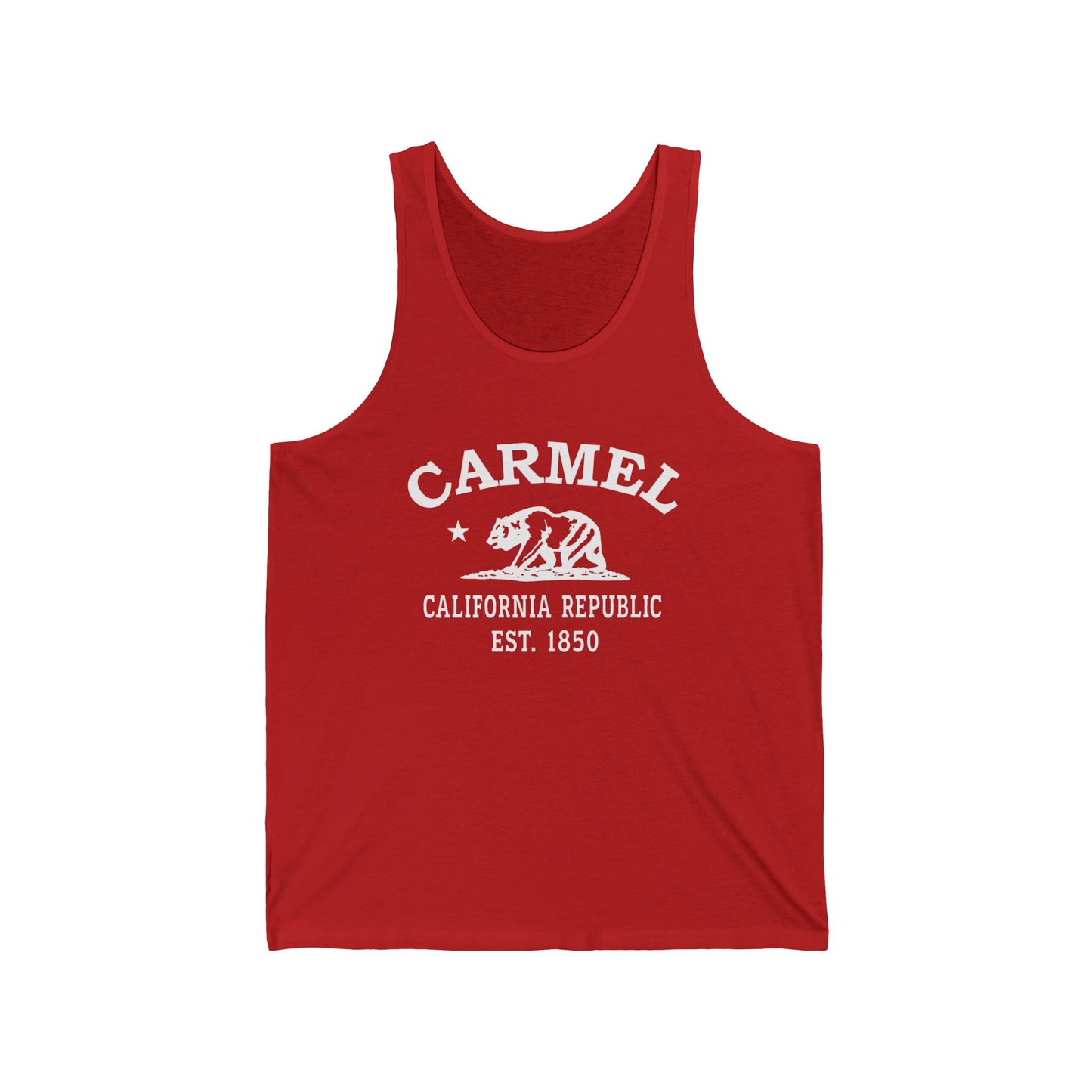
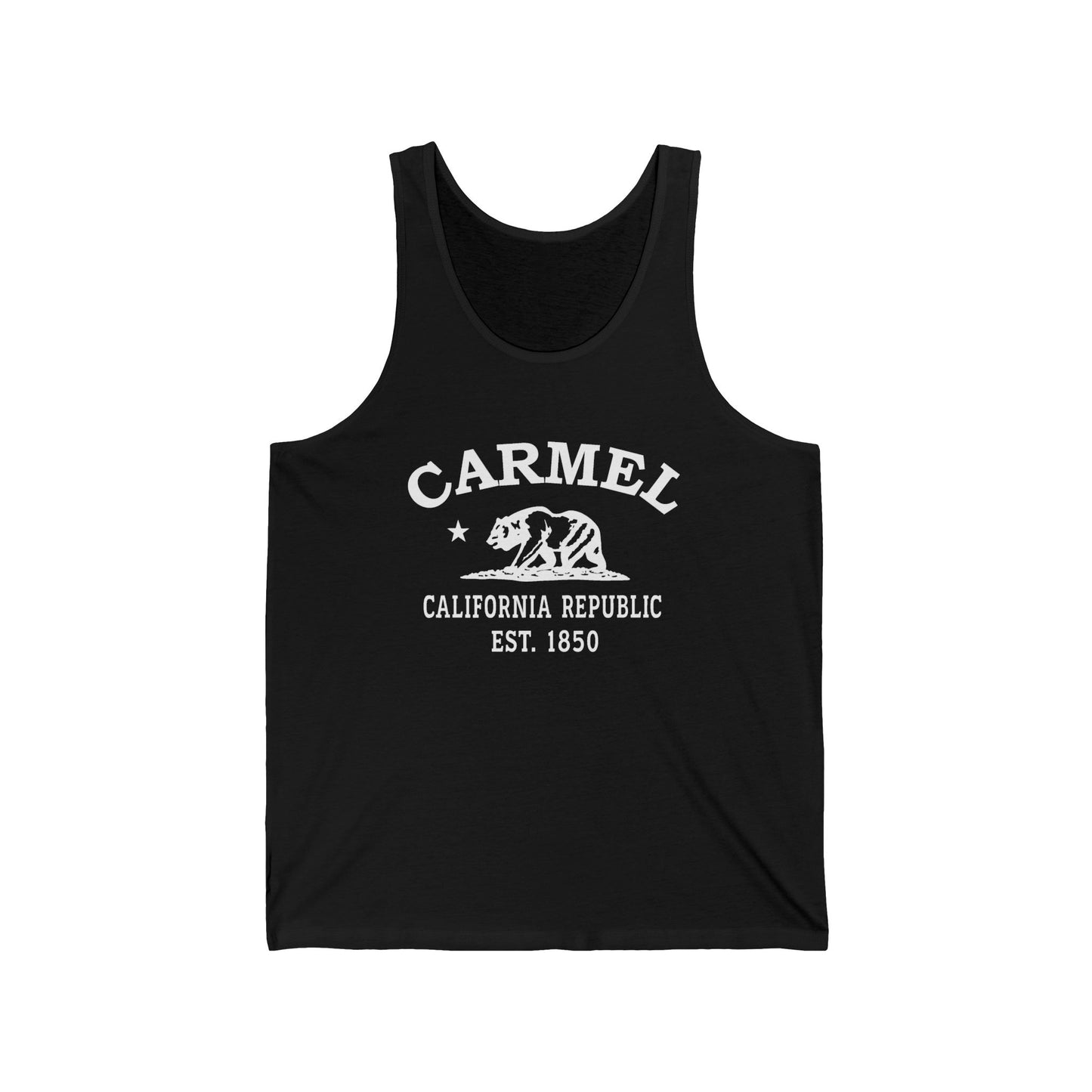
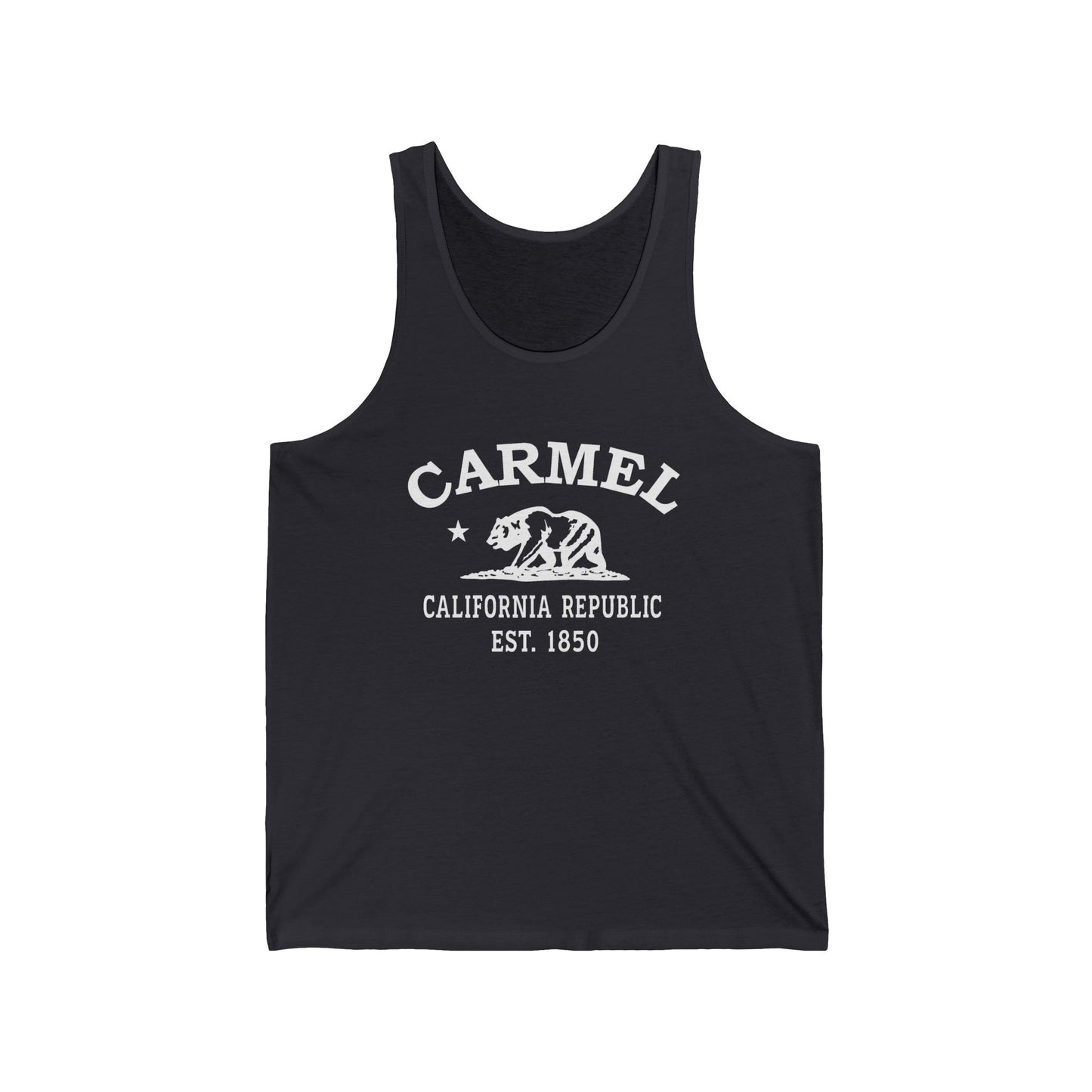
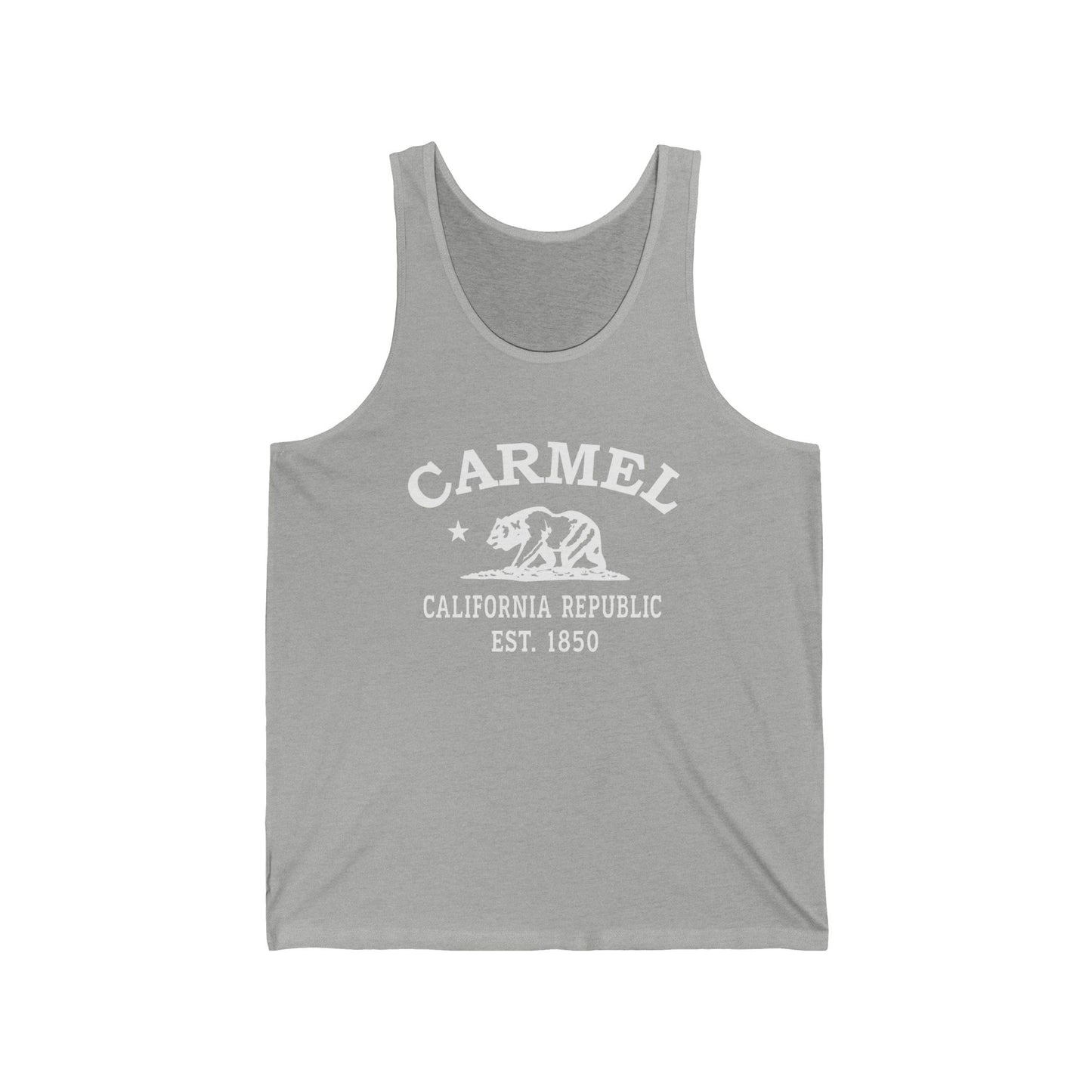
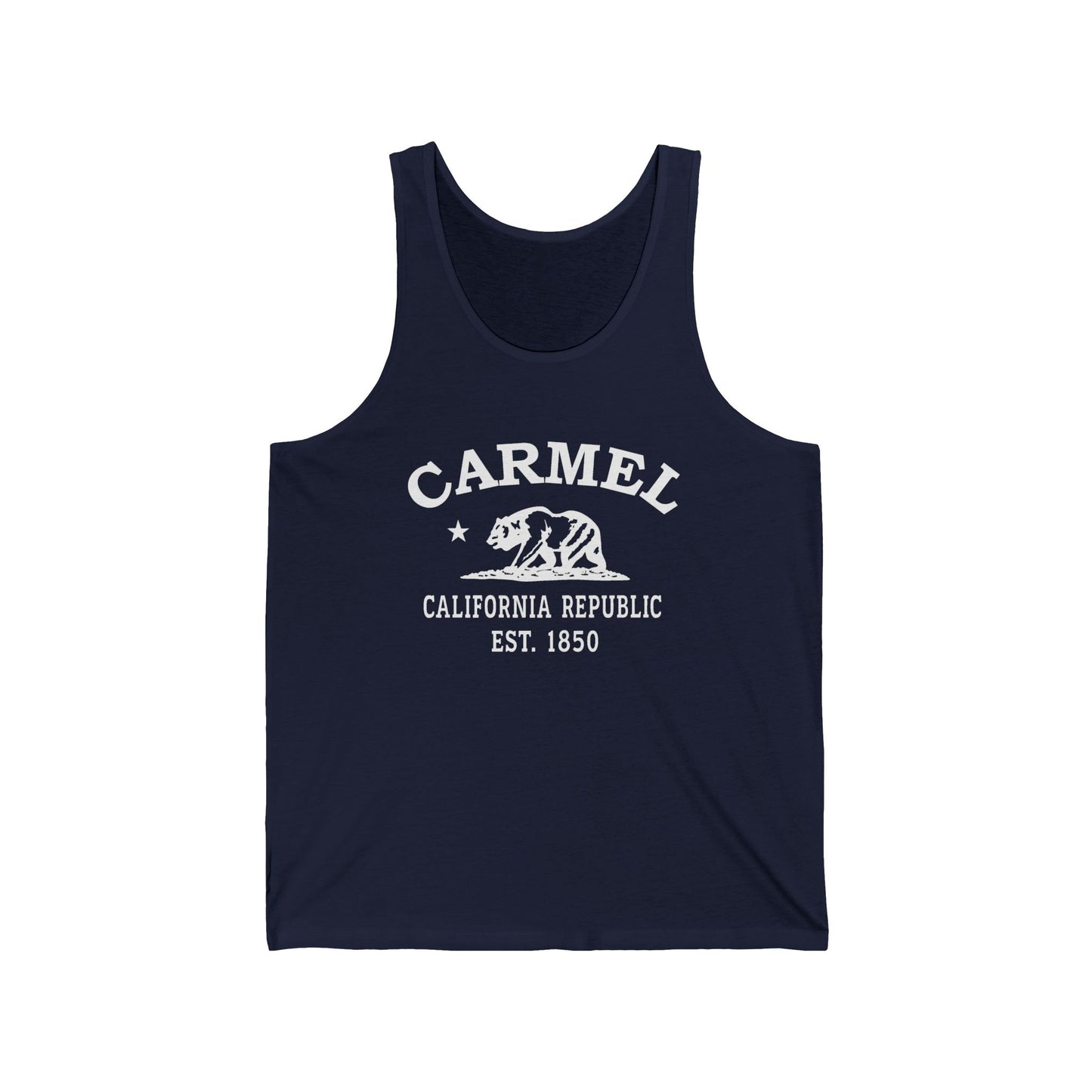
Our Carmel-by-the-Sea retro logo carries the California bear and star, marking statehood in 1850 and the wild, independent character of the coast. Rendered in black-and-white with a vintage, hand-printed feel reminiscent of WPA-era poster art, the emblem pairs the toughness of the bear with the craft sensibility that built the village. On a tee, a cap, or a wall print, it reads as a quiet badge of a singular place — the fairytale coast where artists fled the rubble of 1906 and built something gentler from stone and shingle and salt air.
Why People Visit Carmel-by-the-Sea
Carmel offers artful streets beside a protected coast. Visitors come for the storybook architecture, the mission, the coastal reserves, and the simple pleasure of strolling a walkable, dog-friendly village. It is refined, peaceful, and endlessly photogenic, with a year-round mild climate. History and everyday village culture sit side by side here in a way few towns can match.
