





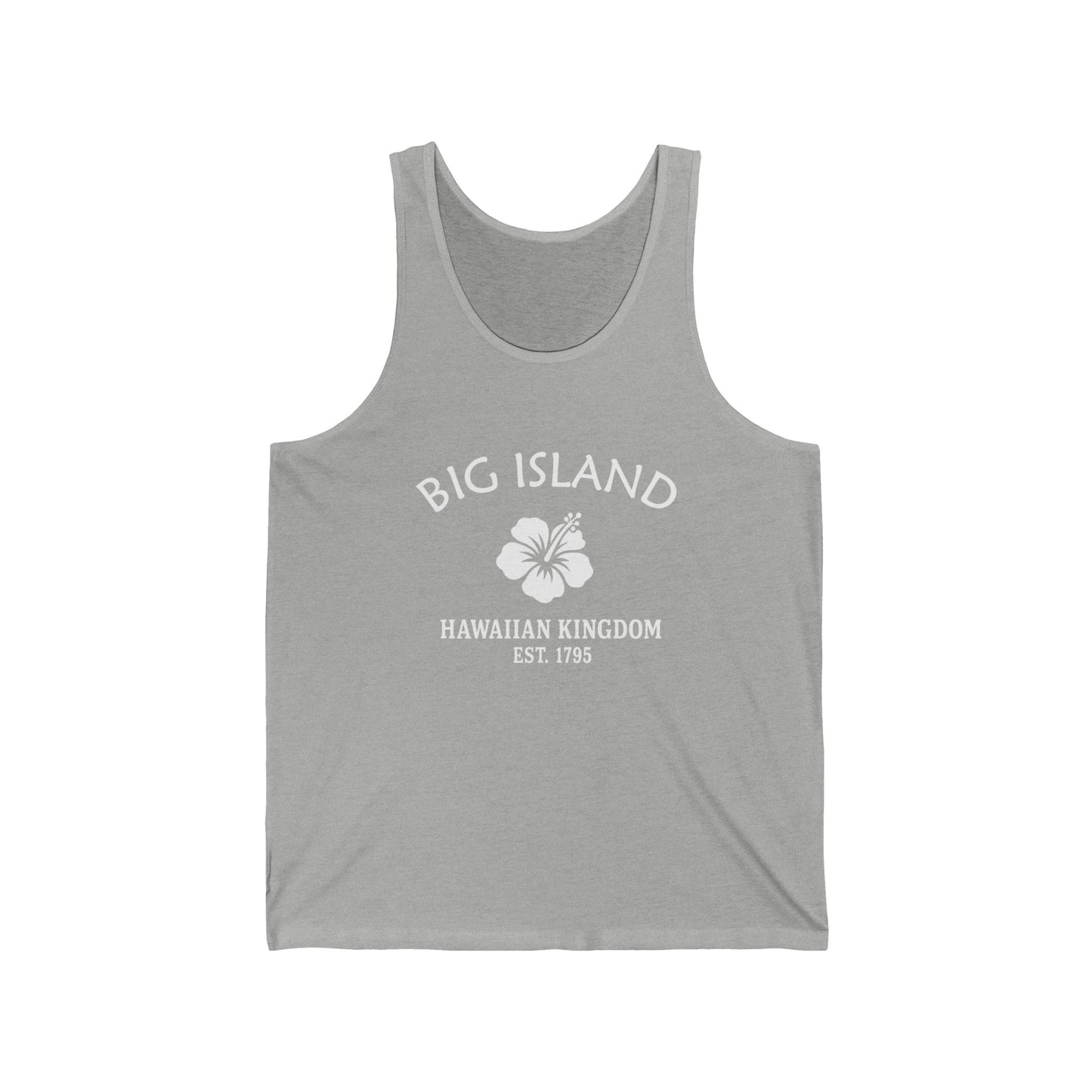
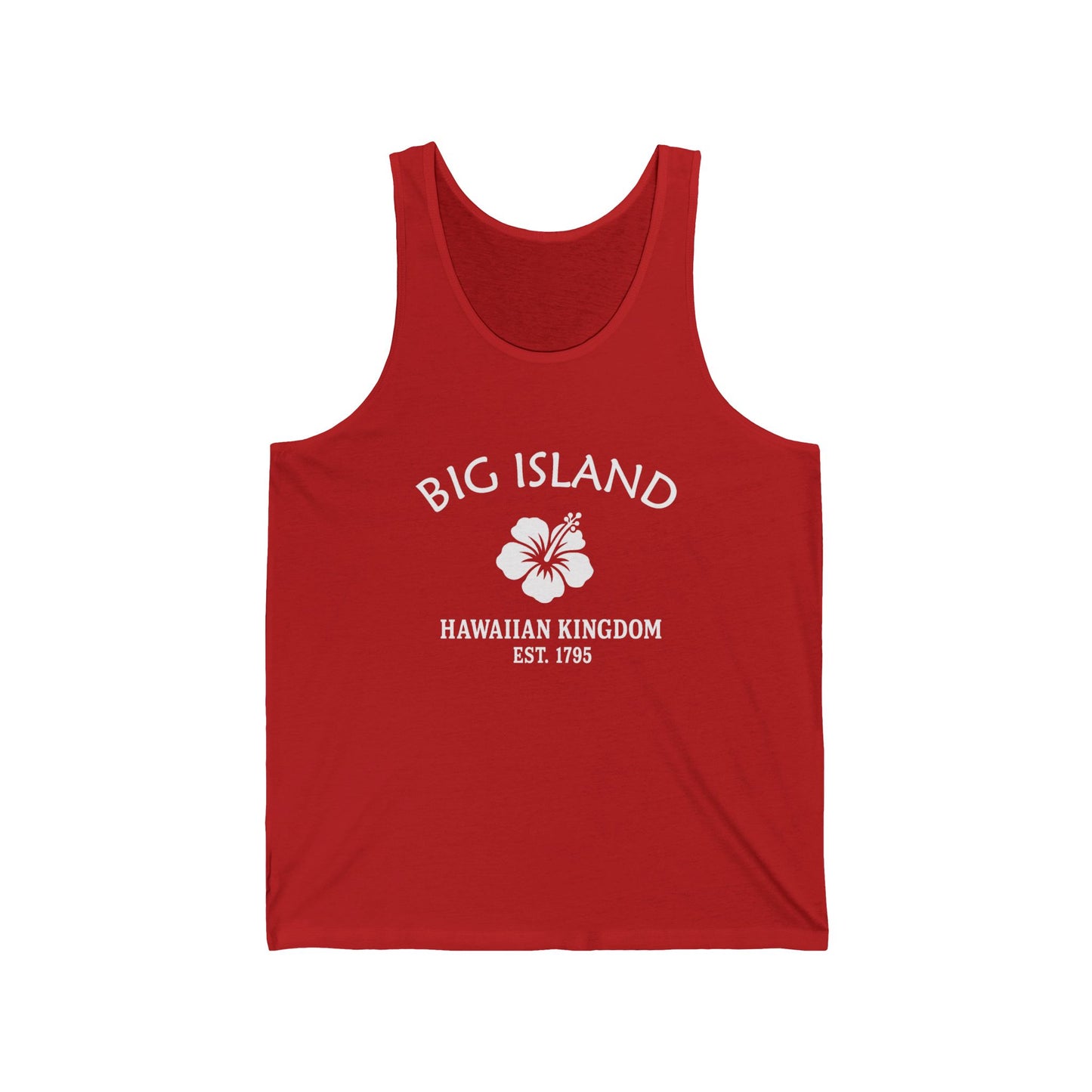
Our Big Island logo carries a hibiscus — Hawaiʻi's flower — over "Hawaiian Kingdom, Est. 1795," the year Kamehameha united the islands. The hibiscus and the date are the island's shorthand: beauty, endurance, and the Hawaiian Kingdom that began here. Printed black-and-white with the worn look of an old travel sticker or crate label, it reads as vintage island heritage. What makes this one the Big Island is the place behind it: the volcanoes, the paniolo, the coffee, the snow on Mauna Kea. On a tee or a cap it reads less like a souvenir and more like a piece of Hawaiʻi — Est. 1795, worn plain.
The Big Island keeps more landscapes than seem possible on one island. Snow can fall on Mauna Kea while the Kona coast bakes in sun; rain forest and waterfalls drape the Hilo side while lava fields stretch black and bare nearby; black-sand beaches at Punaluʻu and a green-sand beach at Papakōlea sit a coastline apart. Between them run the coffee uplands, the cattle country, and the long Saddle Road between the two great mountains. It is an island of two coasts and many worlds, with the map still being drawn at the volcano's edge.
Why People Visit the Big Island
People come to the Big Island for the volcanoes, the coffee, and the sheer range of it — snow and lava, ranch and reef, all on one island. Its towns of Hilo, Kona, and Waimea give it two coasts and a paniolo heartland, and the land itself is still being built at the volcano's edge.
