


Native Hawaiians settled Hawaiʻi Island roughly a thousand years ago, and it became the seat of the chief who would unite the islands: Kamehameha I, born in the Kohala district, had brought the major islands together under the Hawaiian Kingdom by 1795. In 1793 Captain George Vancouver had given Kamehameha a gift of cattle, which were set loose and multiplied across the uplands — the start of the island's ranch country. The first American missionaries landed at Kailua-Kona in 1820, and through the nineteenth century the island took on coffee, sugar, and cattle alongside its Hawaiian traditions. It is the largest of the Hawaiian Islands and, geologically, the youngest — still being built by its volcanoes.
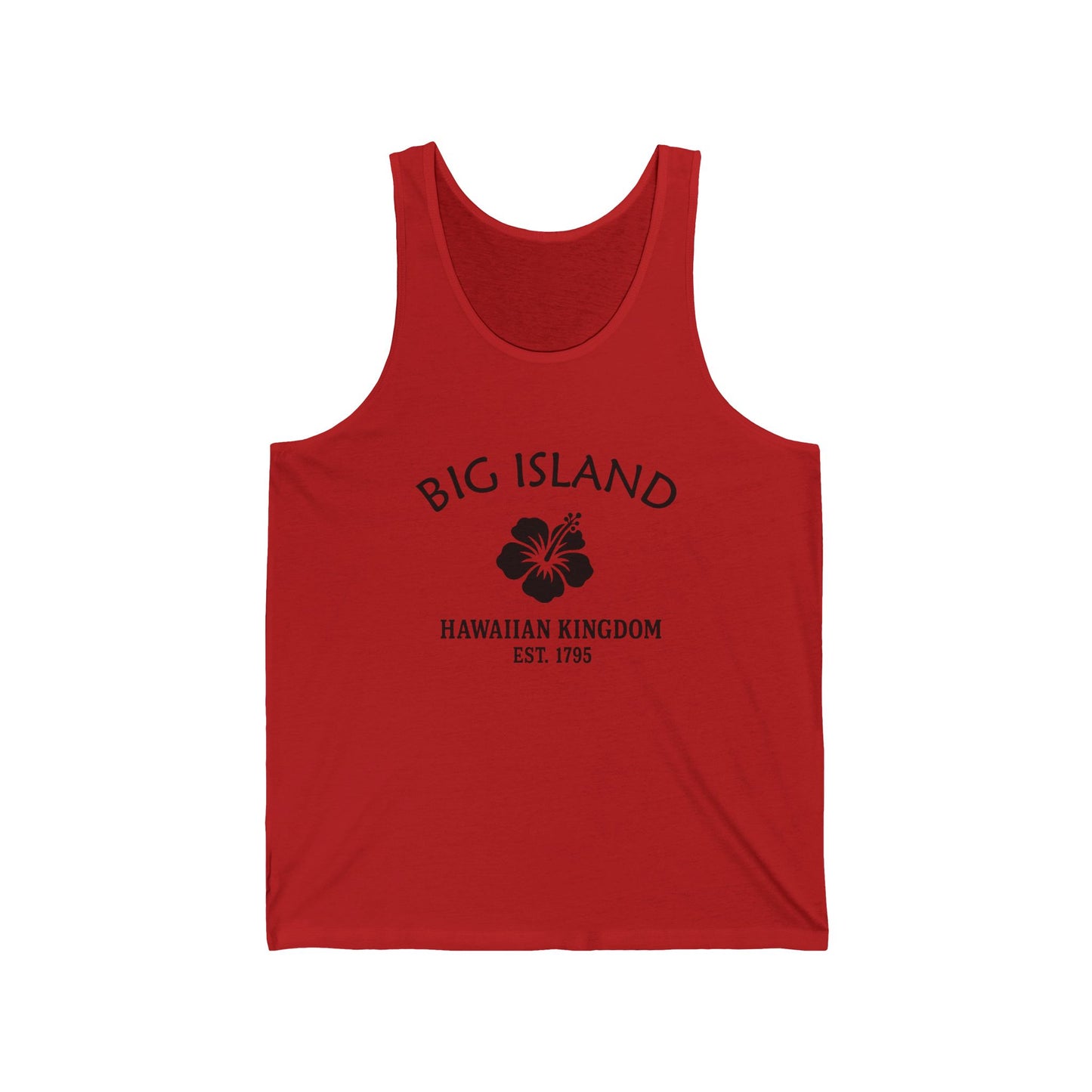
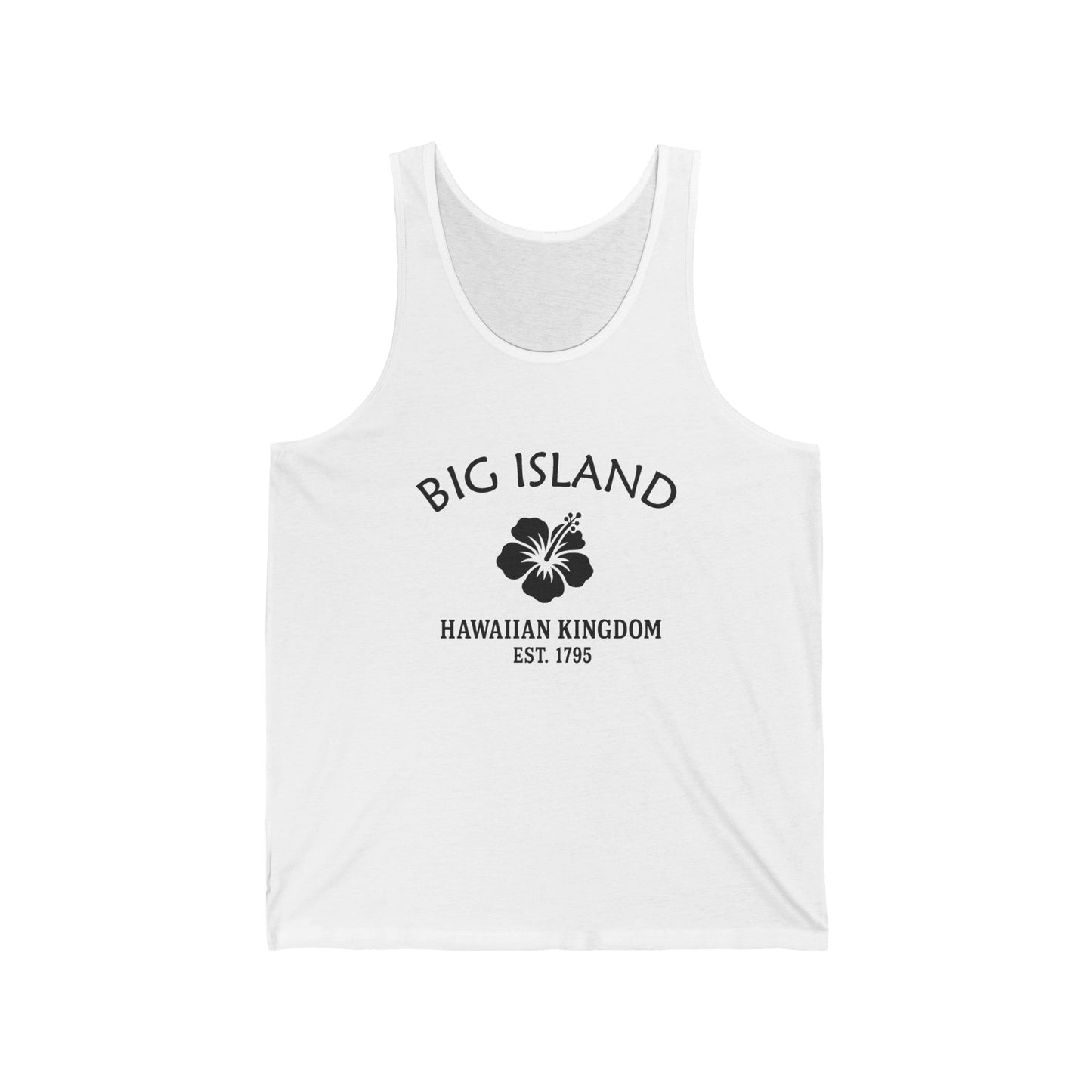
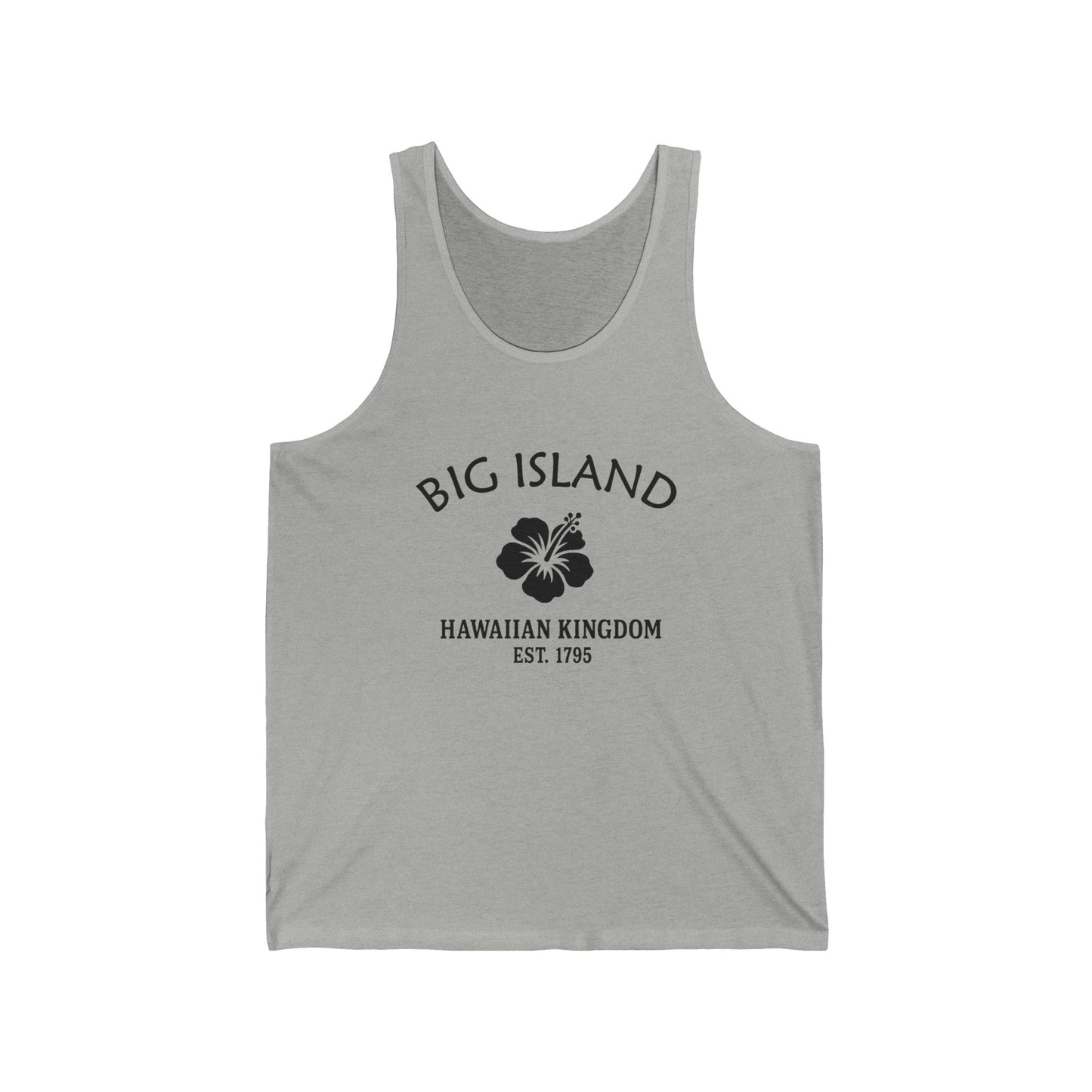
Our Big Island logo carries a hibiscus — Hawaiʻi's flower — over "Hawaiian Kingdom, Est. 1795," the year Kamehameha united the islands. The hibiscus and the date are the island's shorthand: beauty, endurance, and the Hawaiian Kingdom that began here. Printed black-and-white with the worn look of an old travel sticker or crate label, it reads as vintage island heritage. What makes this one the Big Island is the place behind it: the volcanoes, the paniolo, the coffee, the snow on Mauna Kea. On a tee or a cap it reads less like a souvenir and more like a piece of Hawaiʻi — Est. 1795, worn plain.
Why People Visit the Big Island
People come to the Big Island for the volcanoes, the coffee, and the sheer range of it — snow and lava, ranch and reef, all on one island. Its towns of Hilo, Kona, and Waimea give it two coasts and a paniolo heartland, and the land itself is still being built at the volcano's edge.
