





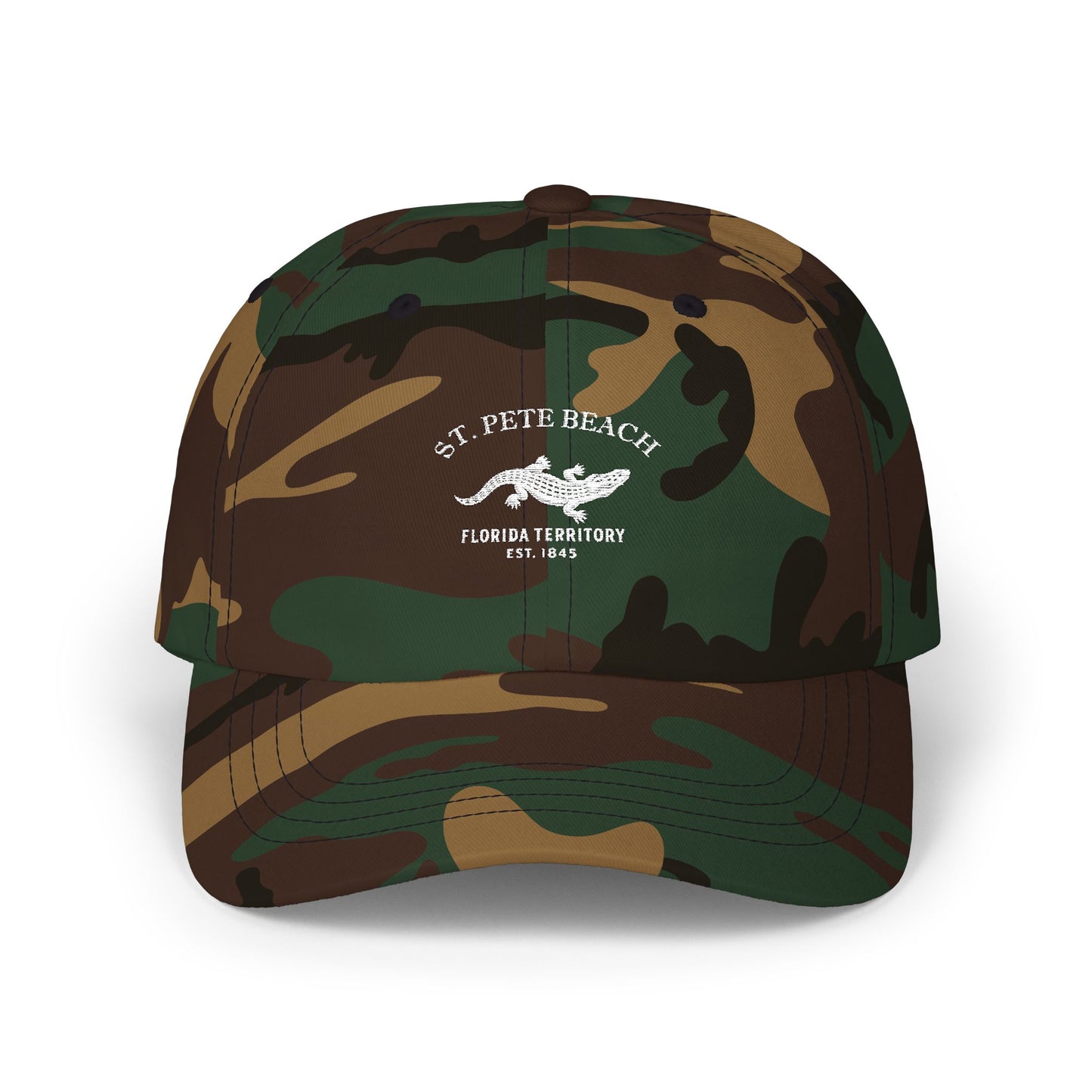



Today St. Pete Beach is celebrated as a tourist hub and resilient coastal community. Its story reflects Indigenous heritage, storms, and suburban optimism. Our St. Pete Beach designs celebrate this layered identity, pairing the alligator motif with vintage styling. They invite you to explore the St. Pete Beach collection and carry forward a reminder of Florida’s resilience. Retro in tone, the logo reflects toughness and authenticity. St. Pete Beach’s emblem honors both heritage and optimism, making it a vintage symbol of Florida identity. Explore the collection and share in St. Pete Beach’s story of endurance.
In the early twentieth century, hotels and cottages dotted the barrier islands. Hurricanes periodically devastated them, but rebuilding always followed. By the 1950s and 1960s, St. Pete Beach thrived as a tourist haven, with neon motels, boardwalks, and festivals defining its culture. Families moved into new suburban neighborhoods, balancing leisure with growth. Its timeline reflects Florida’s adaptability: frontier fishing villages evolving into mid-century resort towns. St. Pete Beach’s mid-century decades emphasized optimism, resilience, and community pride, showcasing Florida’s broader story of endurance and transformation in the face of storms and suburban expansion.
Why People Visit St Pete Beach Florida
St. Pete Beach is Old-Florida Gulf-beach heritage at its most genuine: the oldest beach resort community on the west coast at Pass-a-Grille, the 1928 Pink Palace landmark, seven miles of sugar sand on Long Key, the historic-cottage streets and "shortest main street," Fort De Soto just south, and a sunset that turns the whole beach pink. It blends wide easygoing Gulf time with real history and nearby nature — sand, shells, fishing, and the long pink hour. From the 1783 Rancho de Juaquin fishing camp and the 1886 homestead to the 1957 merger of four beach towns, history and everyday beach culture sit side by side. Sugar sand. Old-Florida pink. The first beach on the coast.
