


The next line started where the last one ended. Four Sacramento merchants — Leland Stanford, Collis Huntington, Mark Hopkins, and Charles Crocker, the "Big Four" — backed Theodore Judah's scheme for a railroad over the Sierra, and in 1863 the Central Pacific broke ground in Sacramento. Crews blasted and bored east through the mountains until, in 1869, the line met the Union Pacific at Promontory, Utah, and the country was bound together by rail. The roundhouses and shops stayed in Sacramento; today the California State Railroad Museum, the largest in the United States, anchors the Old Sacramento waterfront.
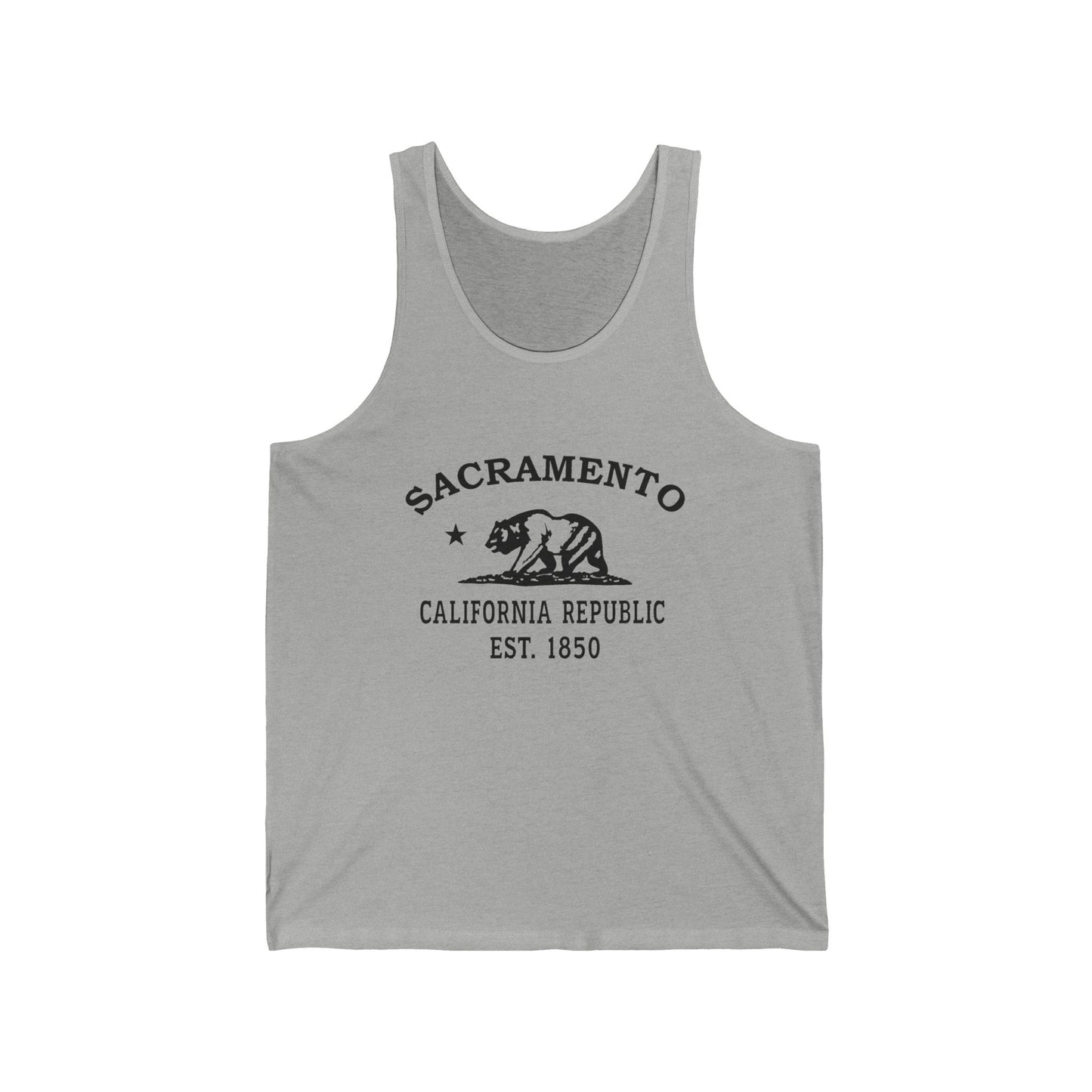
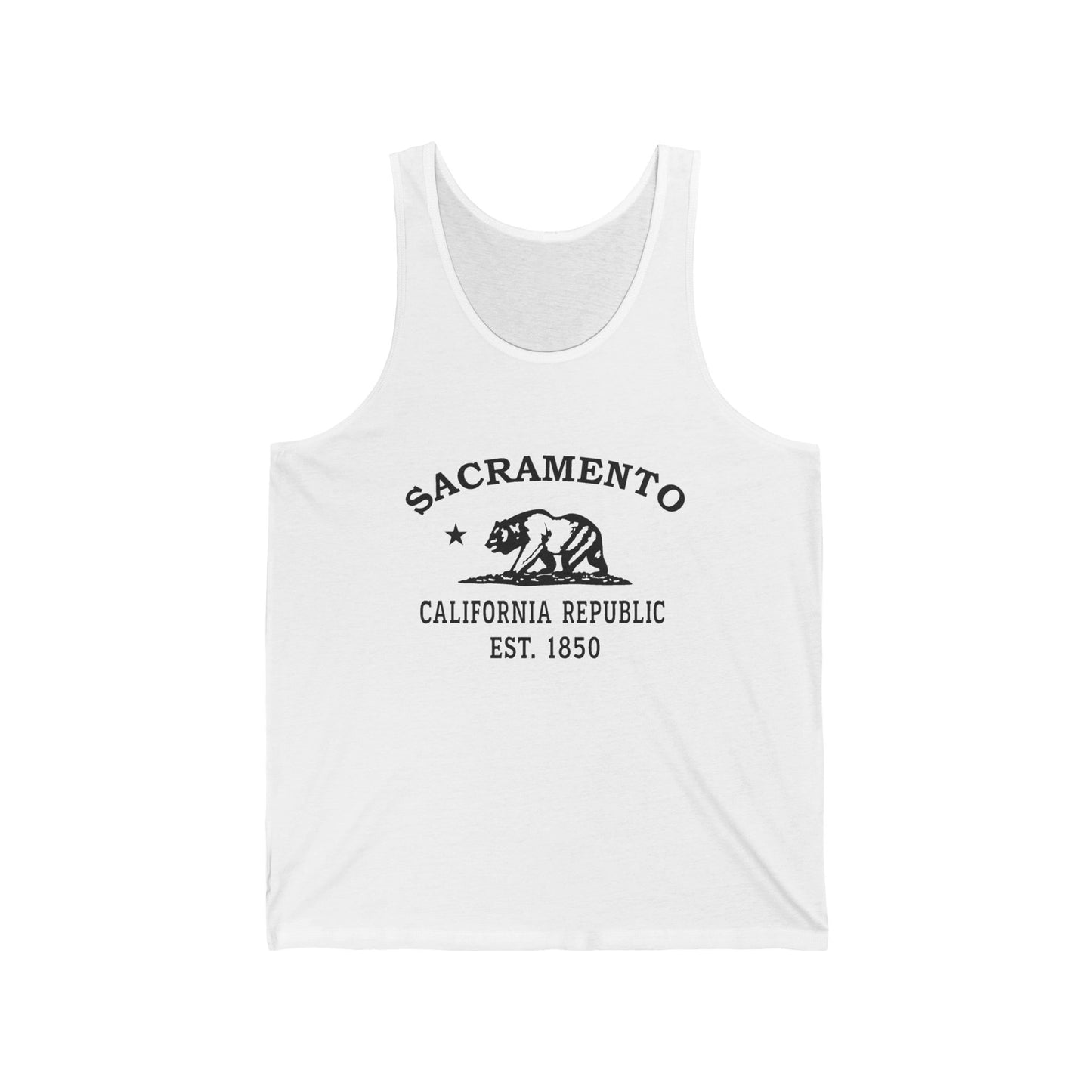
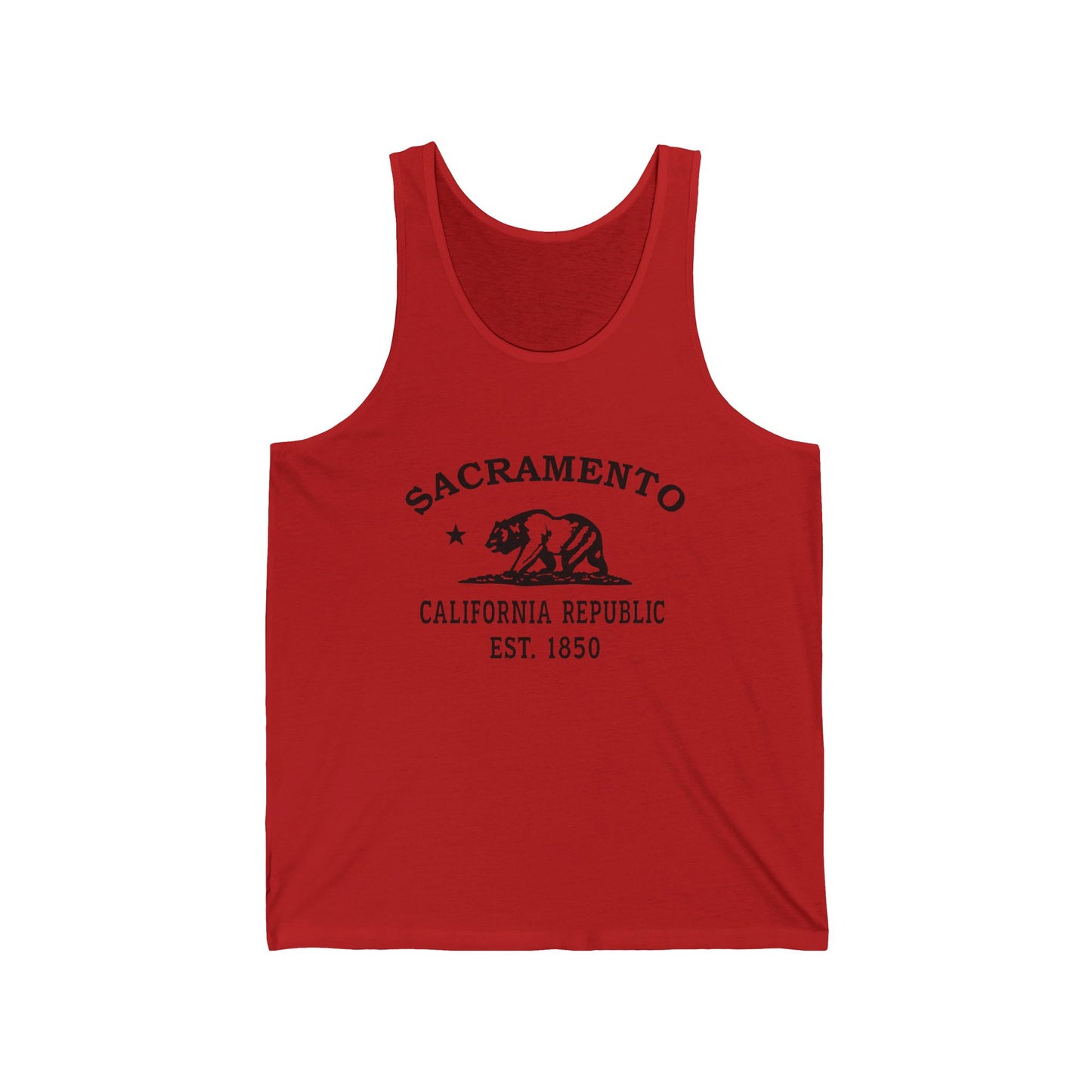
Sacramento is the End of the Line and the start of the next one — the Gold Rush's supply town, the Pony Express finish, the place the transcontinental railroad began, California's capital under a canopy of trees at the meeting of two rivers. Our Sacramento designs gather that into wearable form. Wear the Gold Rush capital. Wear the City of Trees. City of Trees. Capital since 1854.
Why People Visit Sacramento
Sacramento rewards travelers who want history, rivers, and shade rather than a beach — the Gold-Rush waterfront, the railroad that started here, the capitol, and a walkable grid under a famous tree canopy. People come for Old Sacramento and the Railroad Museum, for the Capitol and the gold bridge, and for an easy California day where frontier history and a leafy capital city sit side by side at the meeting of two rivers.
