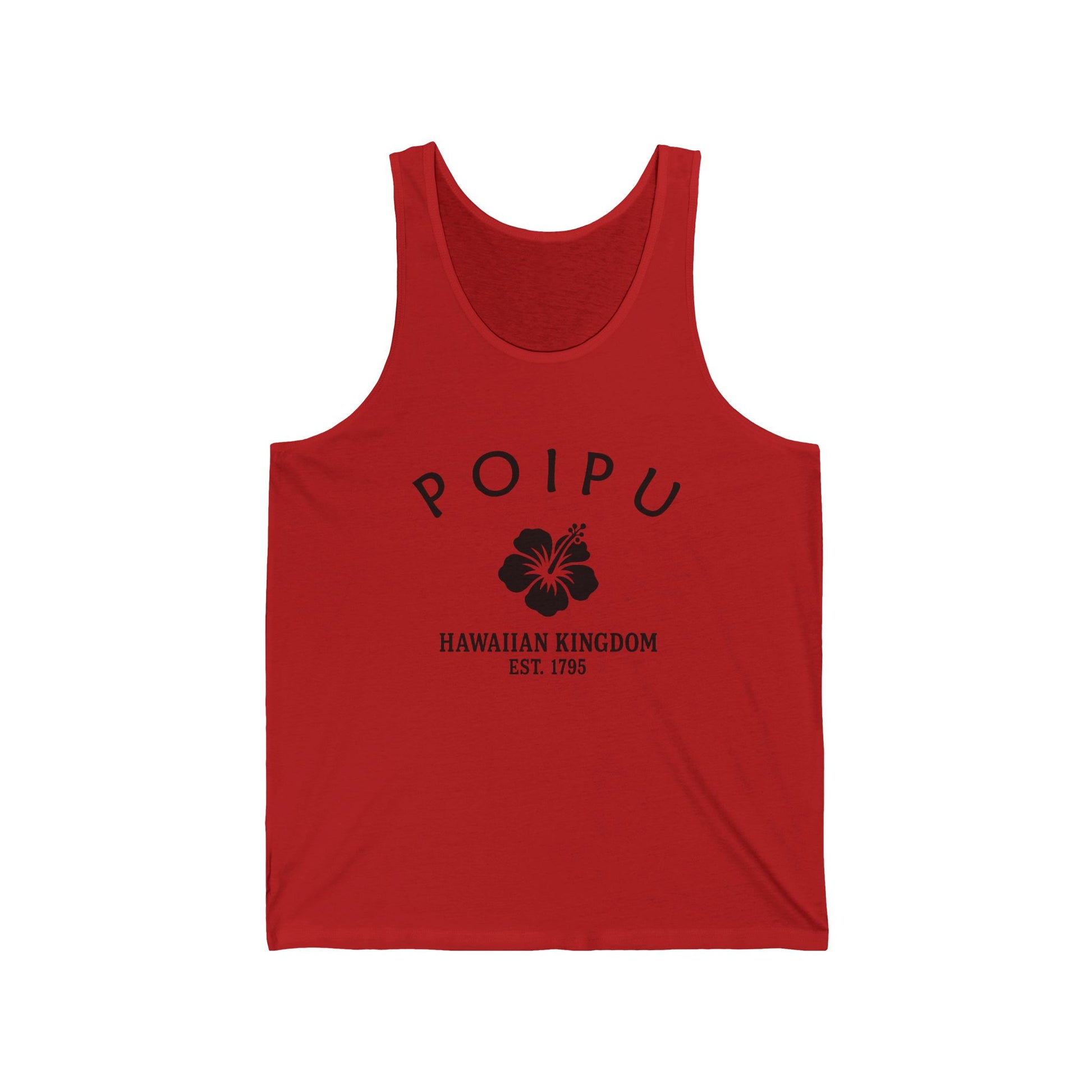
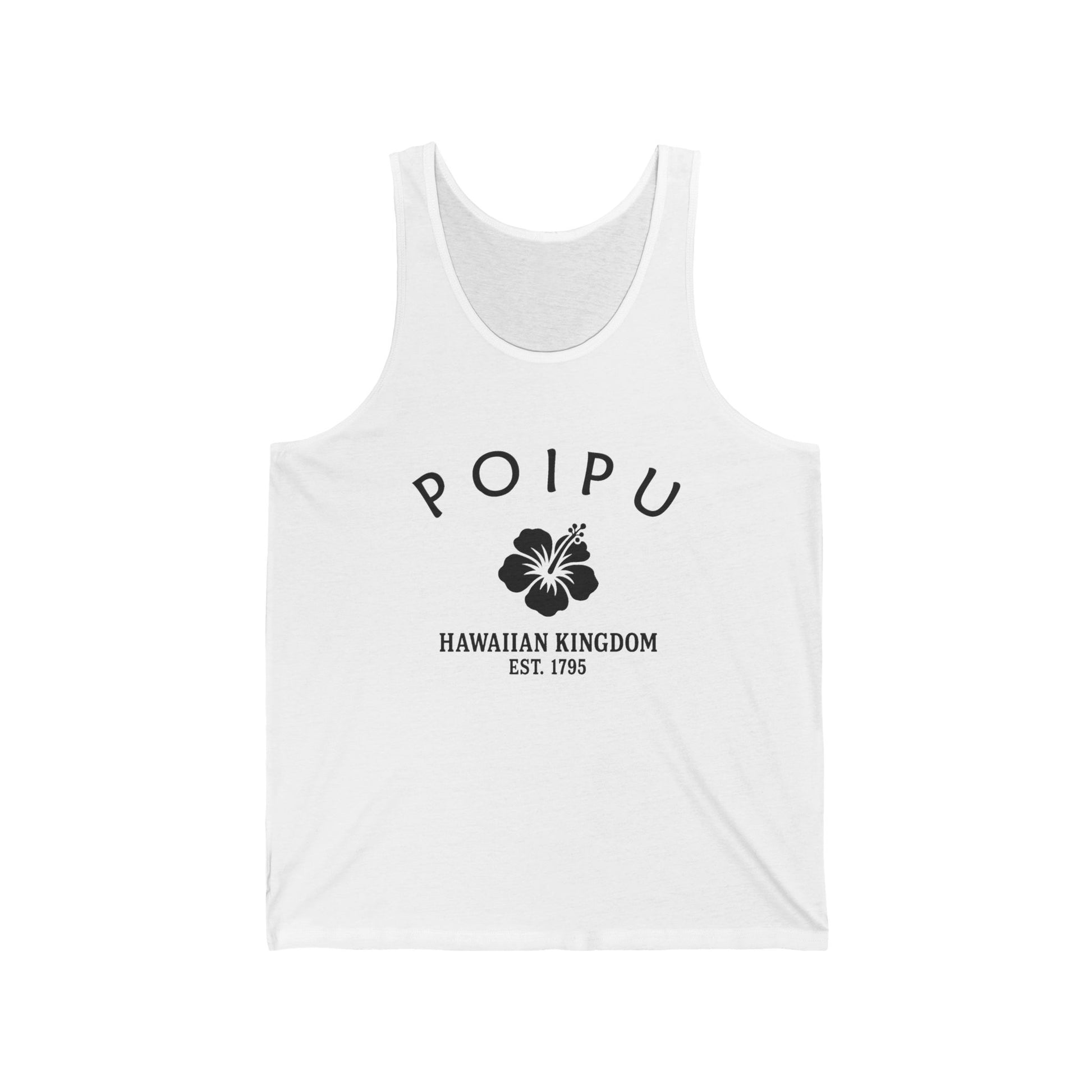
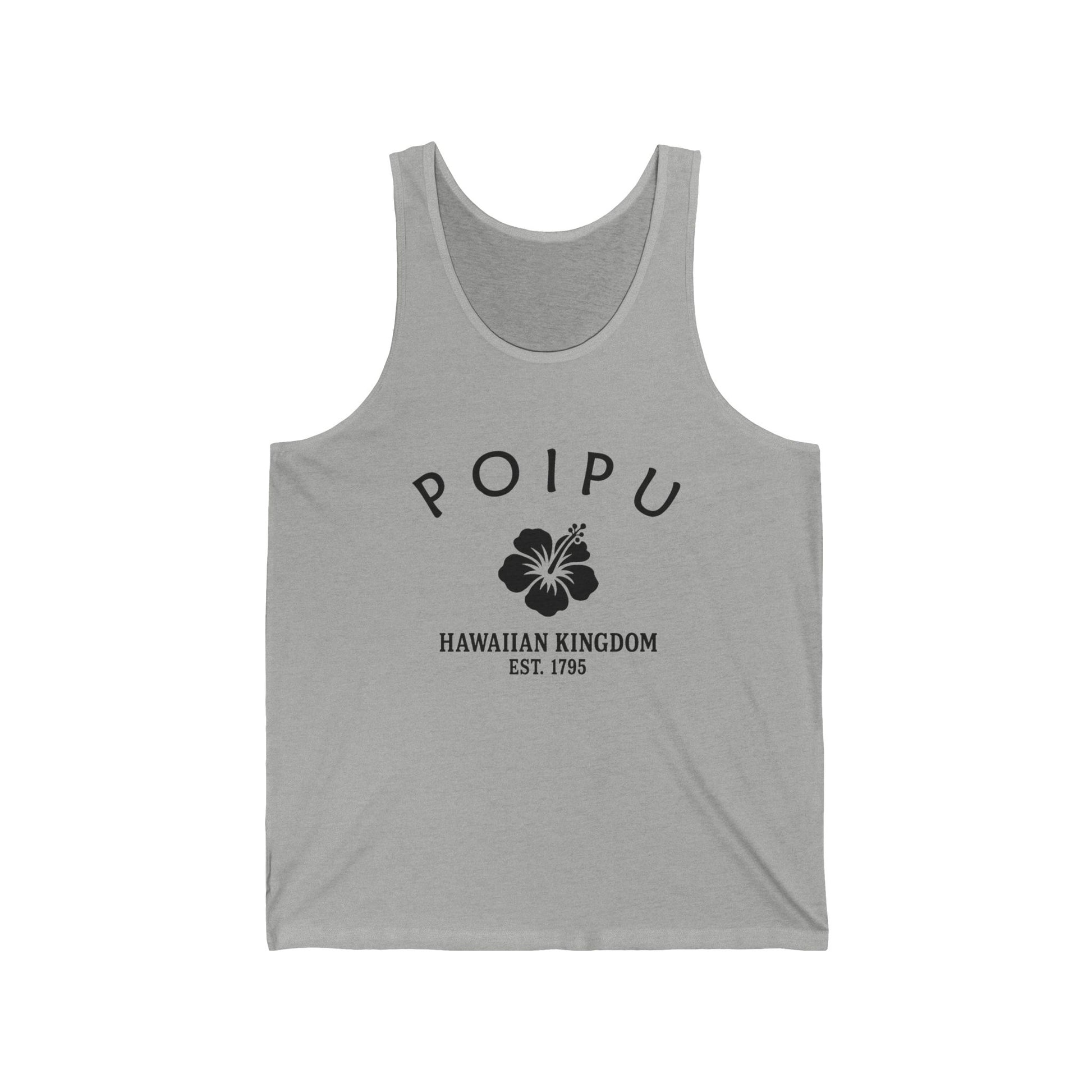
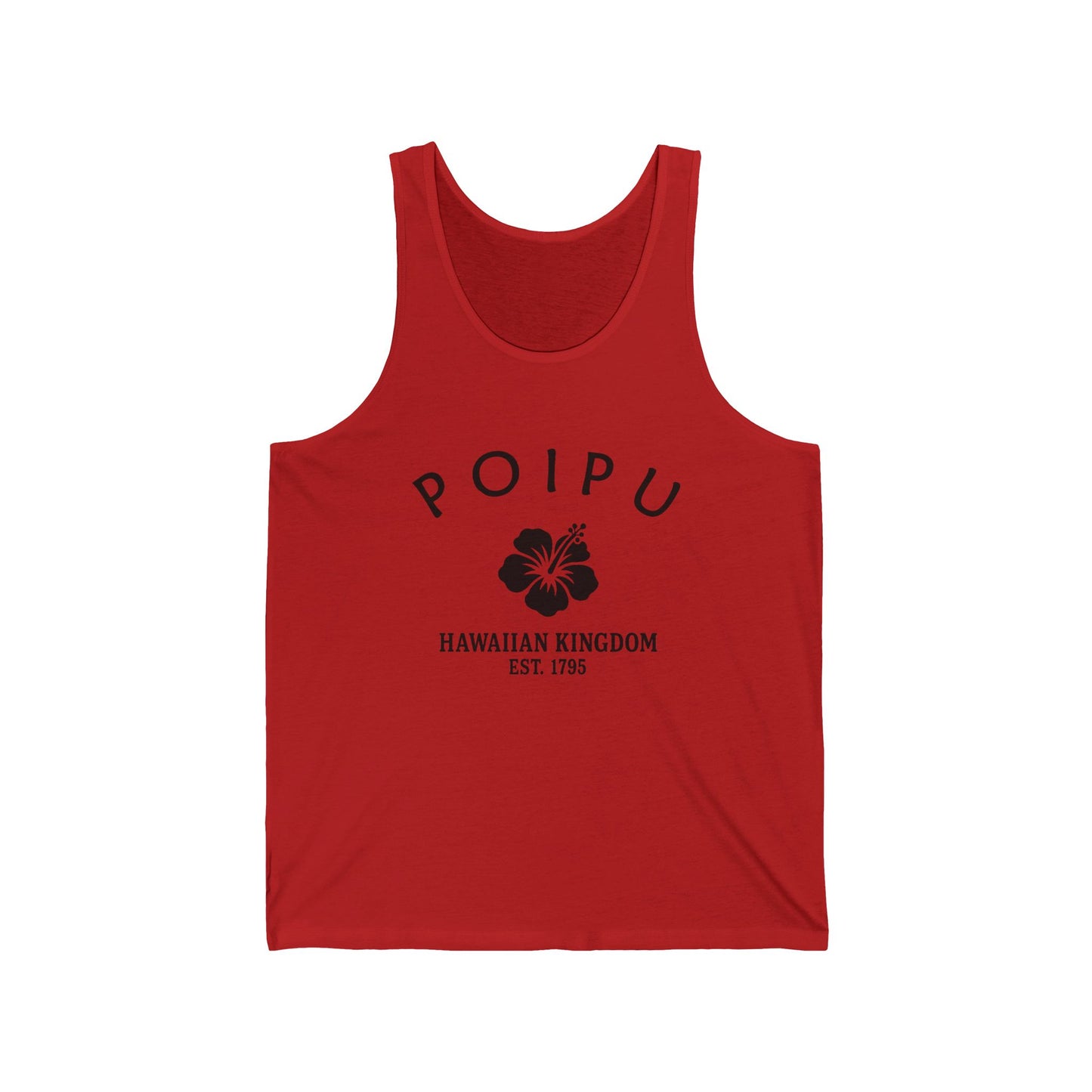
Native Hawaiians lived along this shore for centuries before any mill or resort, drawn by sheltered coves, reef fisheries, and fertile land inland — and the shore kept its royal thread: Prince Jonah Kūhiō Kalanianaʻole, "the People's Prince," was born at Poʻipū in 1871, and his birthplace is marked today at Prince Kūhiō Park in Lāwaʻi. His holiday, March 26, is one of only two U.S. state holidays honoring royalty. Kauaʻi was also the first Hawaiian island Europeans reached — Captain James Cook landed at Waimea, west of here, in 1778 — and the island entered the Hawaiian Kingdom on its own terms, when King Kaumualiʻi ceded it peacefully to Kamehameha in 1810.
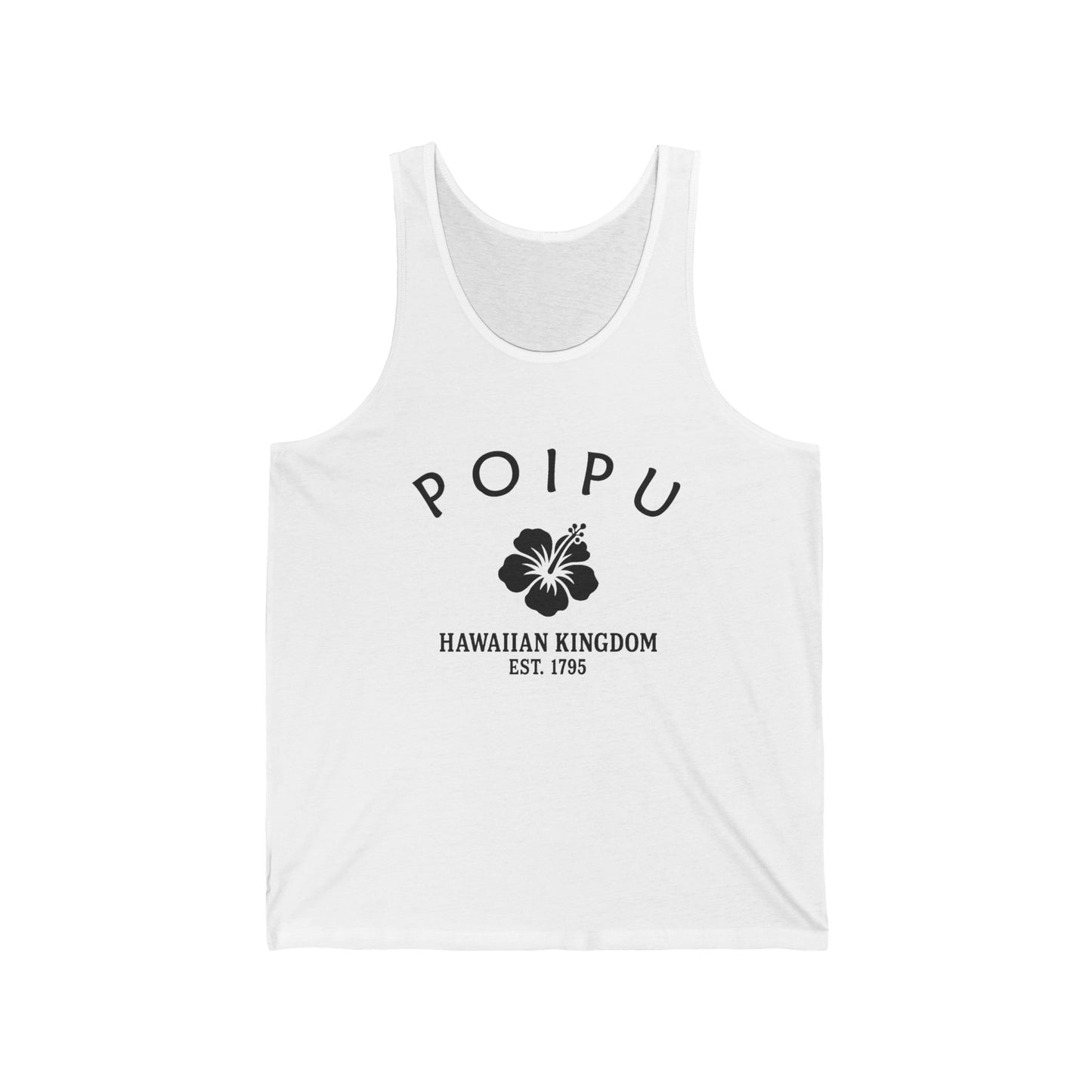
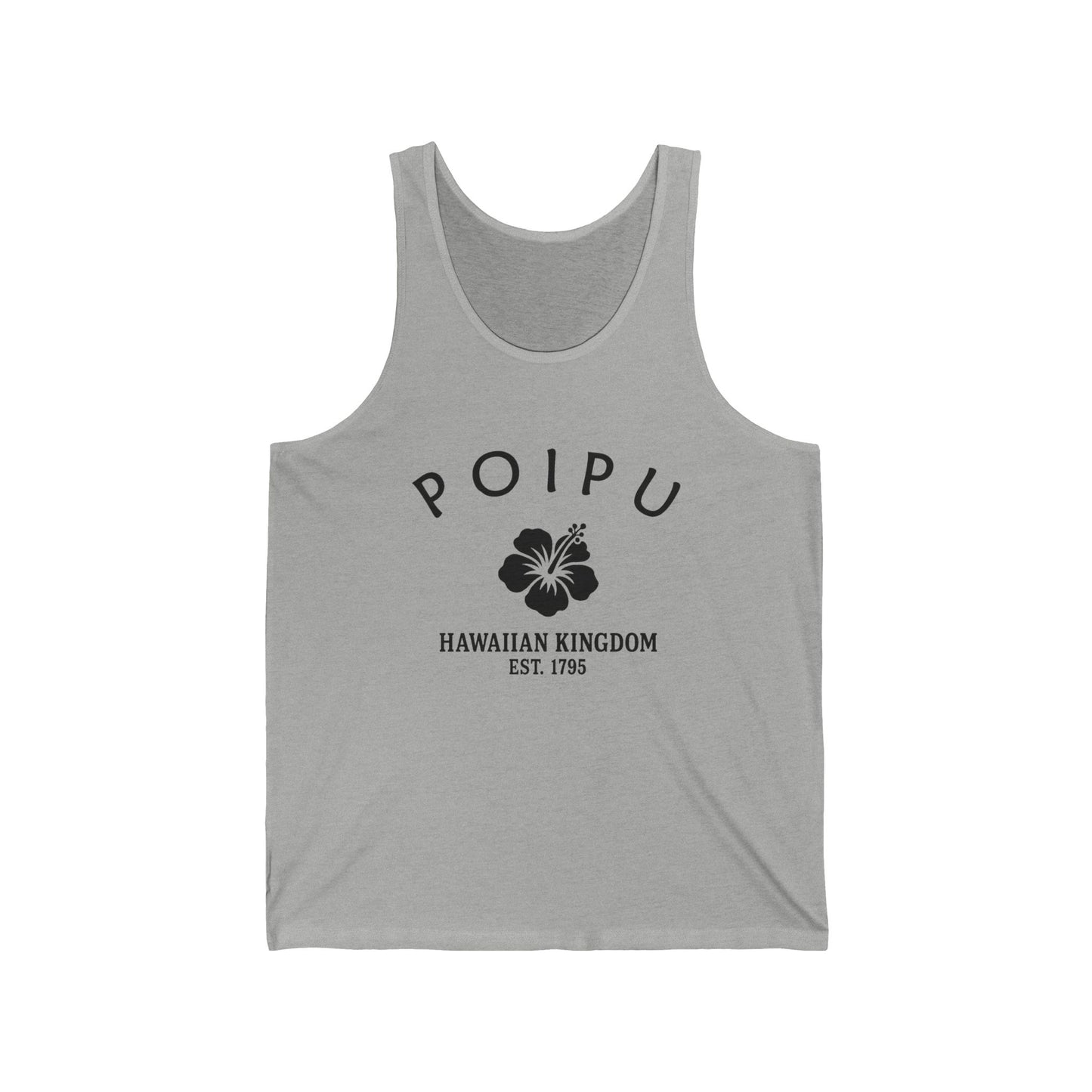
Our Poʻipū logo carries the Hawaiian hibiscus above "Hawaiian Kingdom — Est. 1795," the shared retro emblem of our Hawaiʻi places, drawn in worn black-and-white like an old travel decal. What makes this one Poʻipū is everything around it: the crashing-waves name, the sunniest shore on the Garden Isle, the People's Prince, and the honu asleep on the best beach in America. Wear the south shore.
Why People Visit Poʻipū
- Poʻipū Beach Park — the best-beach-in-America crescents, beginner surf, and honu (with monk seals as occasional guests).
- Spouting Horn — the lava-tube blowhole throwing spray forty or fifty feet, best at higher surf.
- The Tree Tunnel — the 1911 eucalyptus vault over Maluhia Road, the classic south-shore arrival.
- Old Kōloa Town & the Heritage Trail — plantation storefronts, the 1835 mill chimney, fourteen marked history stops.
- The gardens — Allerton and McBryde tours in the Lāwaʻi Valley; Prince Kūhiō Park on the shore road.
- Māhāʻulepū Heritage Trail — the wild two miles east from Shipwreck Beach along cliffs and lithified dunes.
