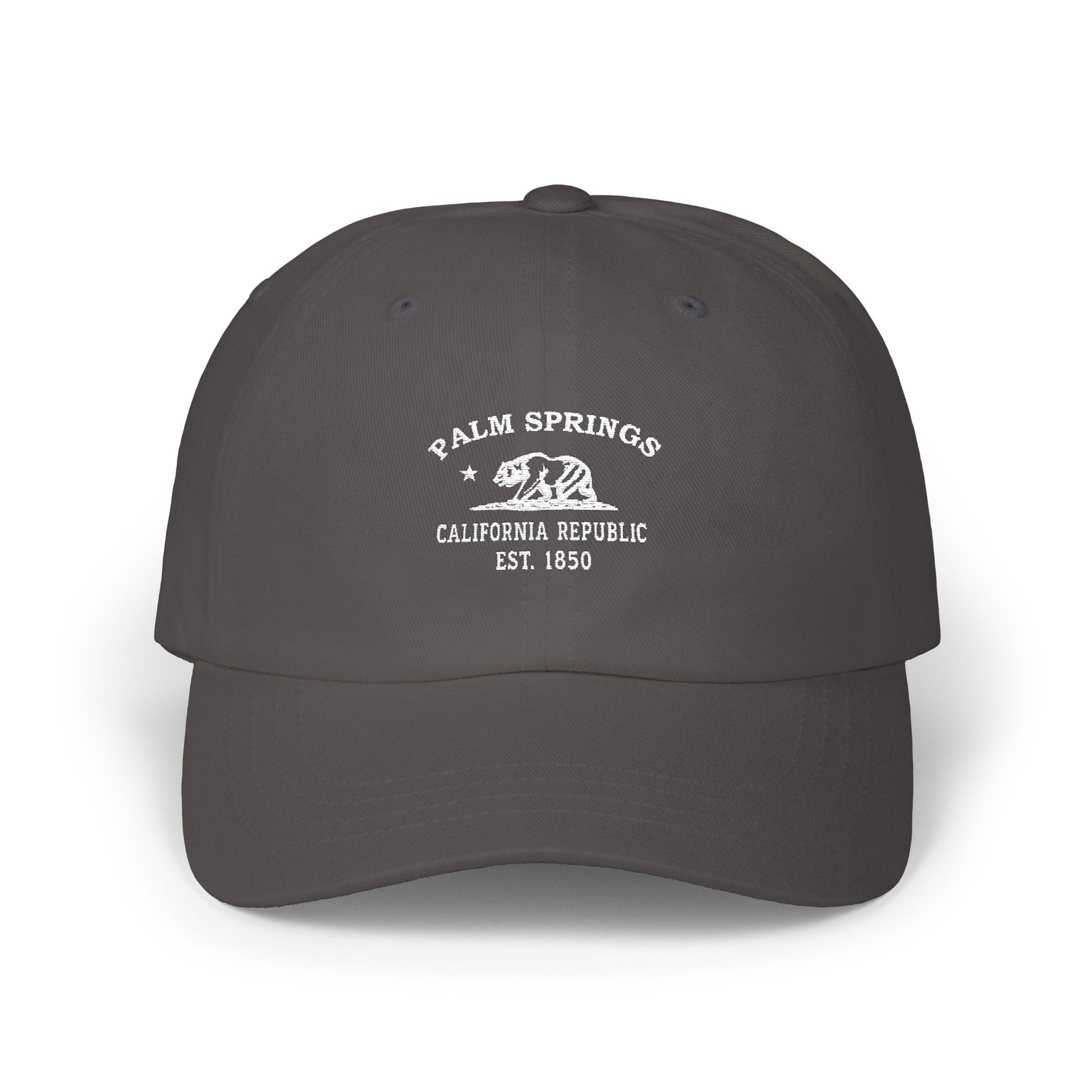
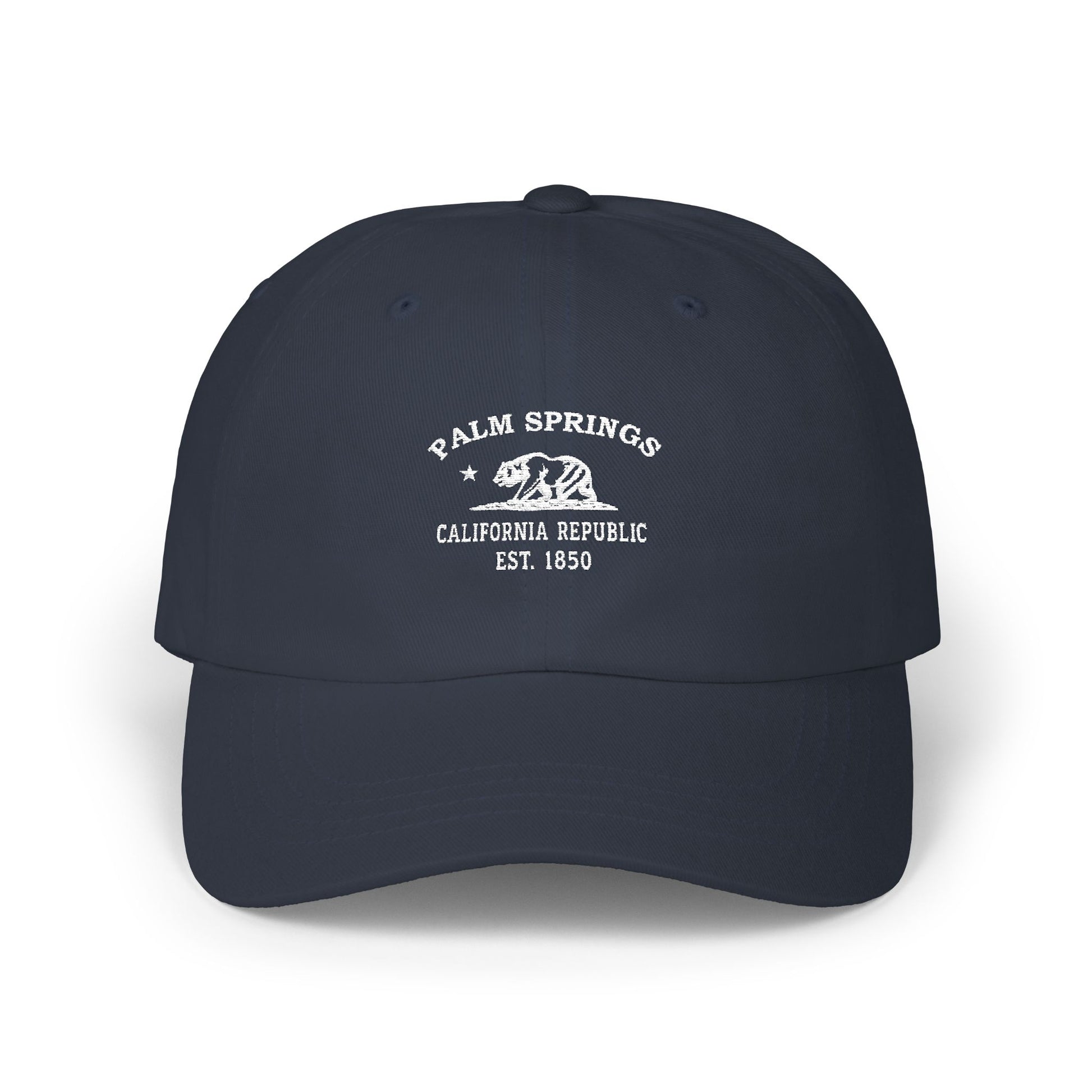
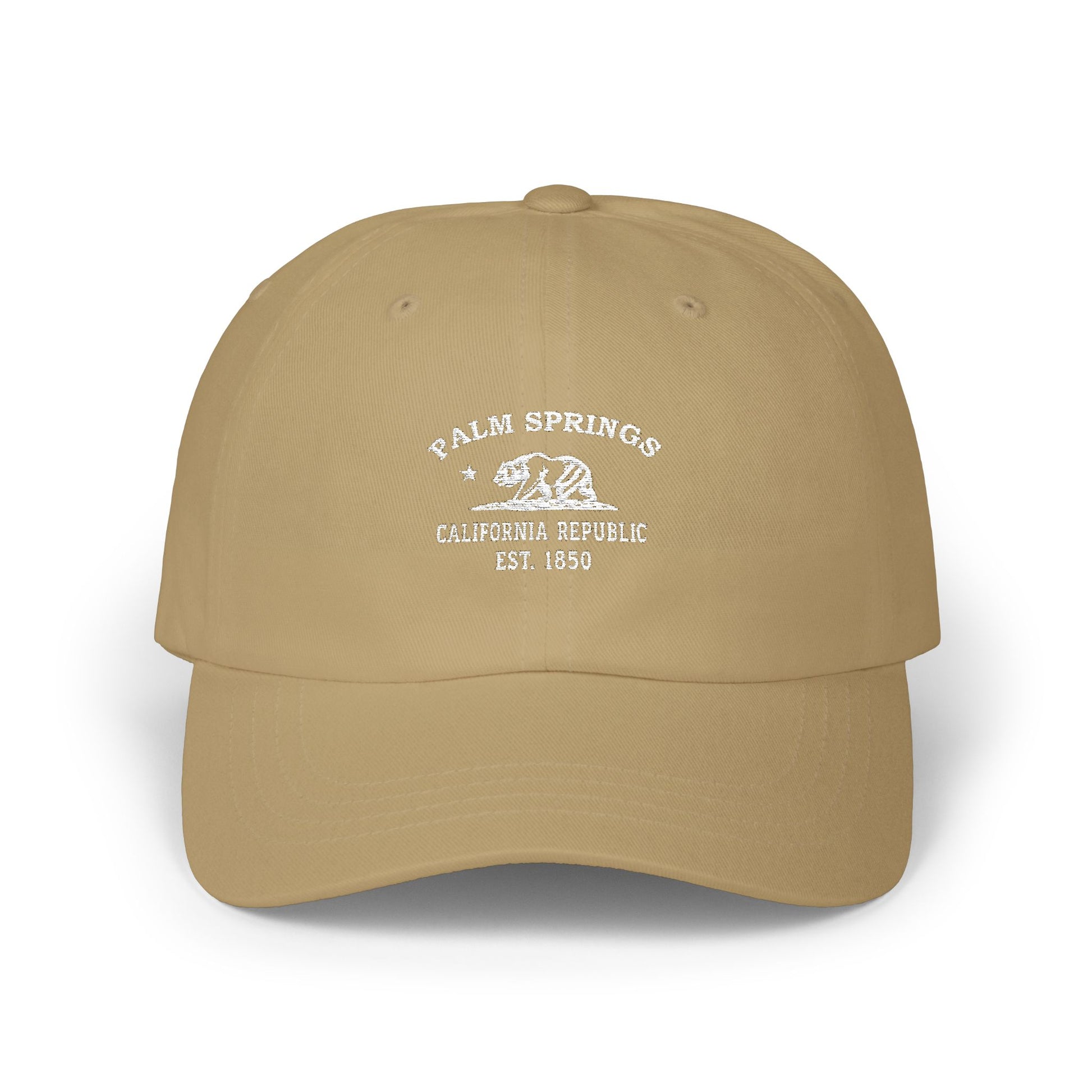

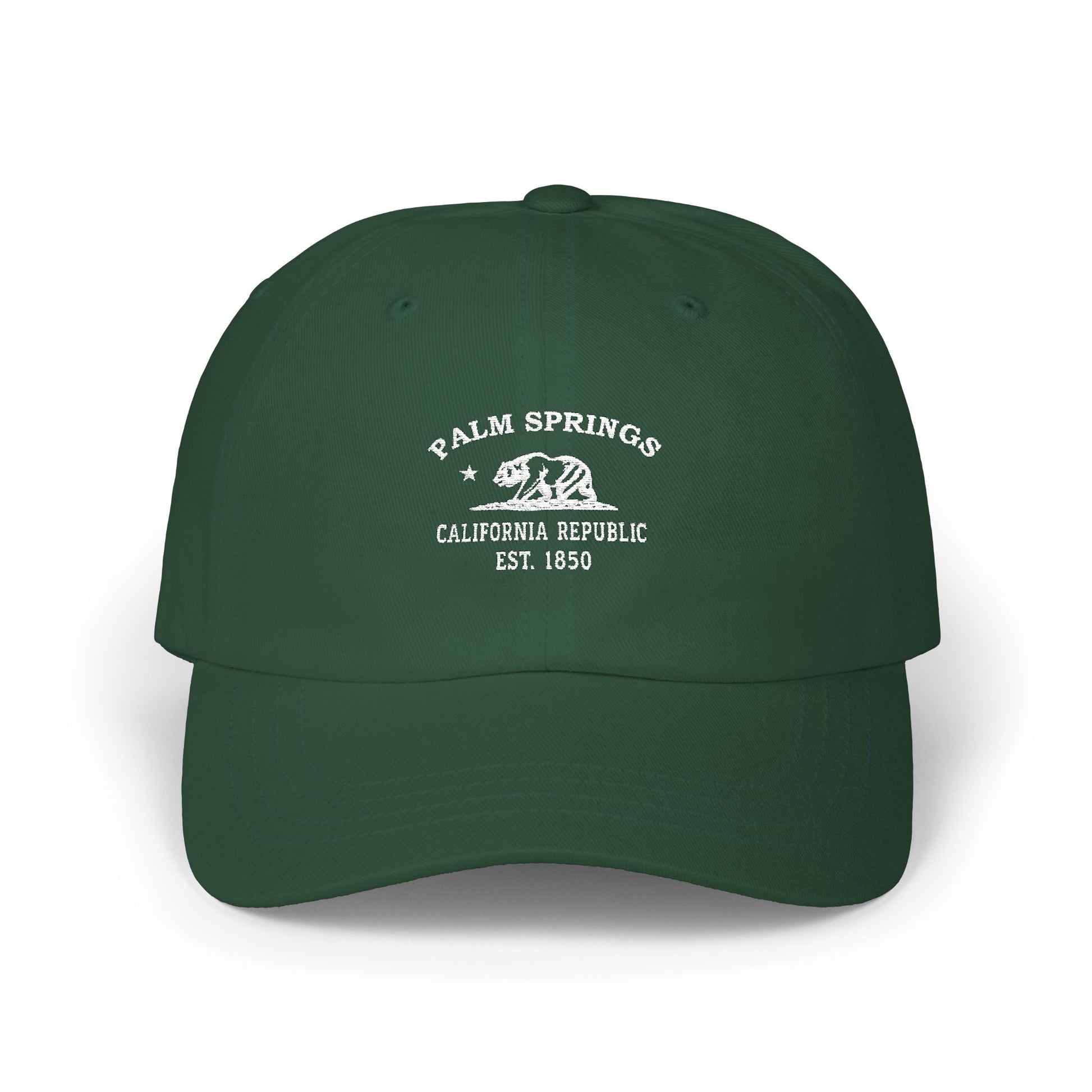
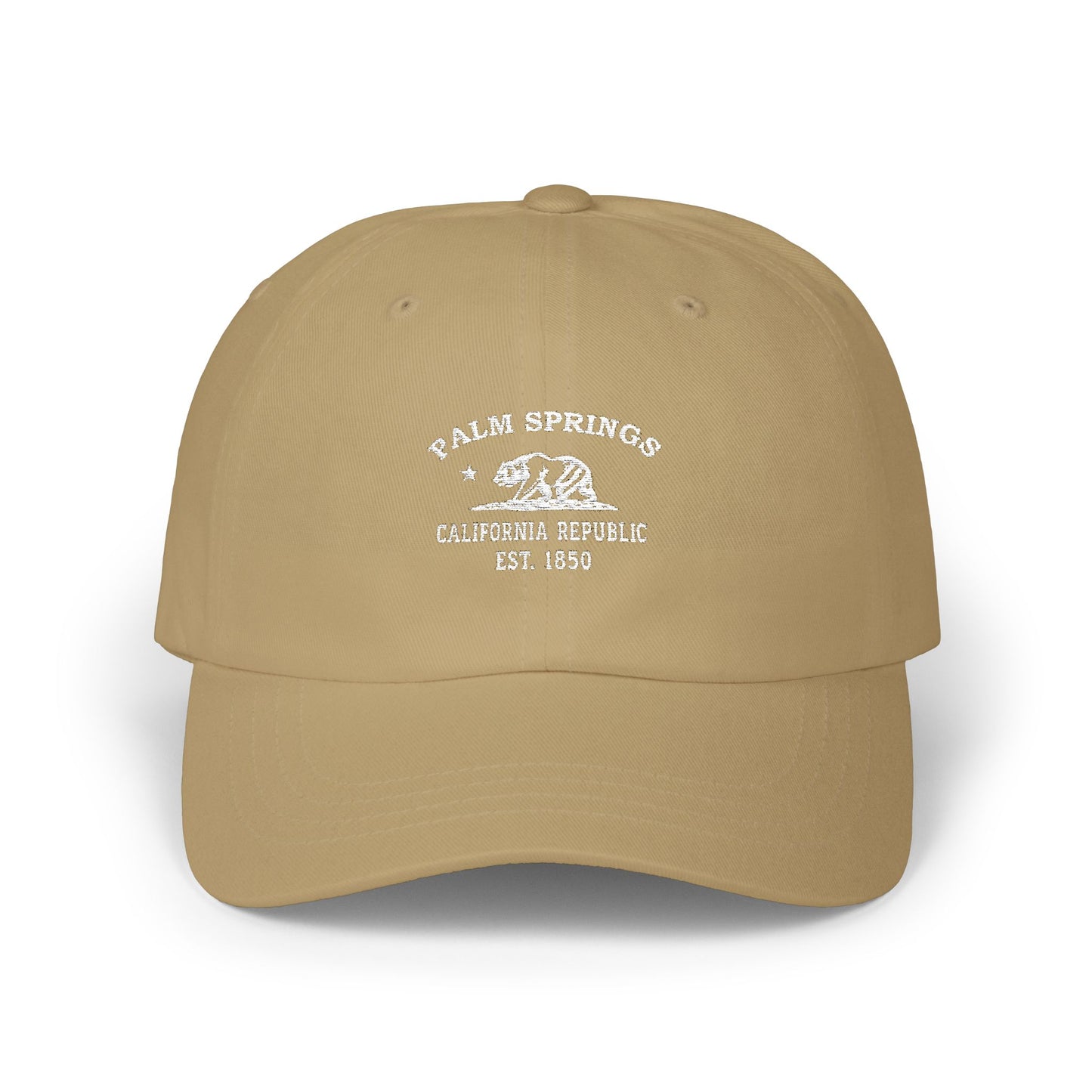

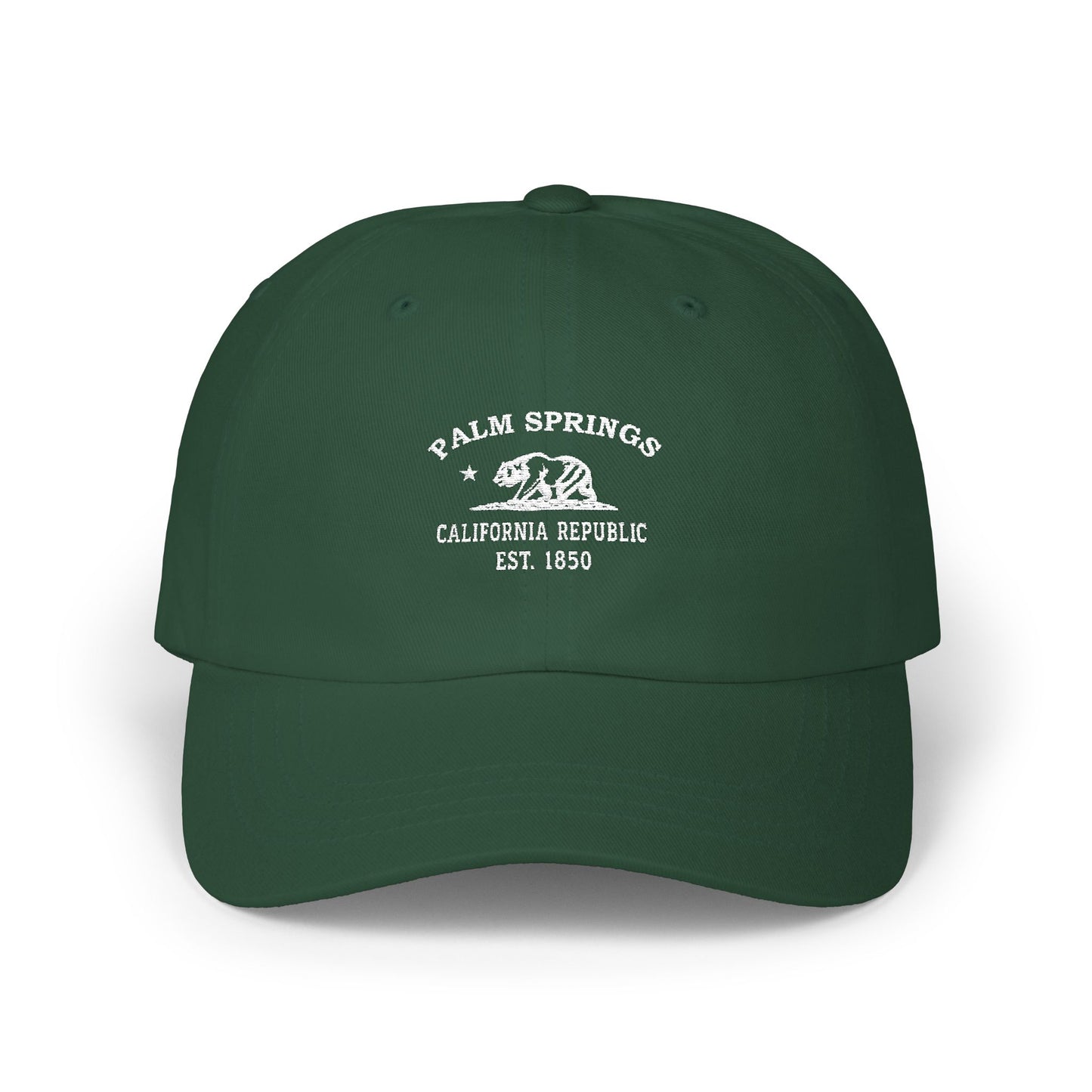
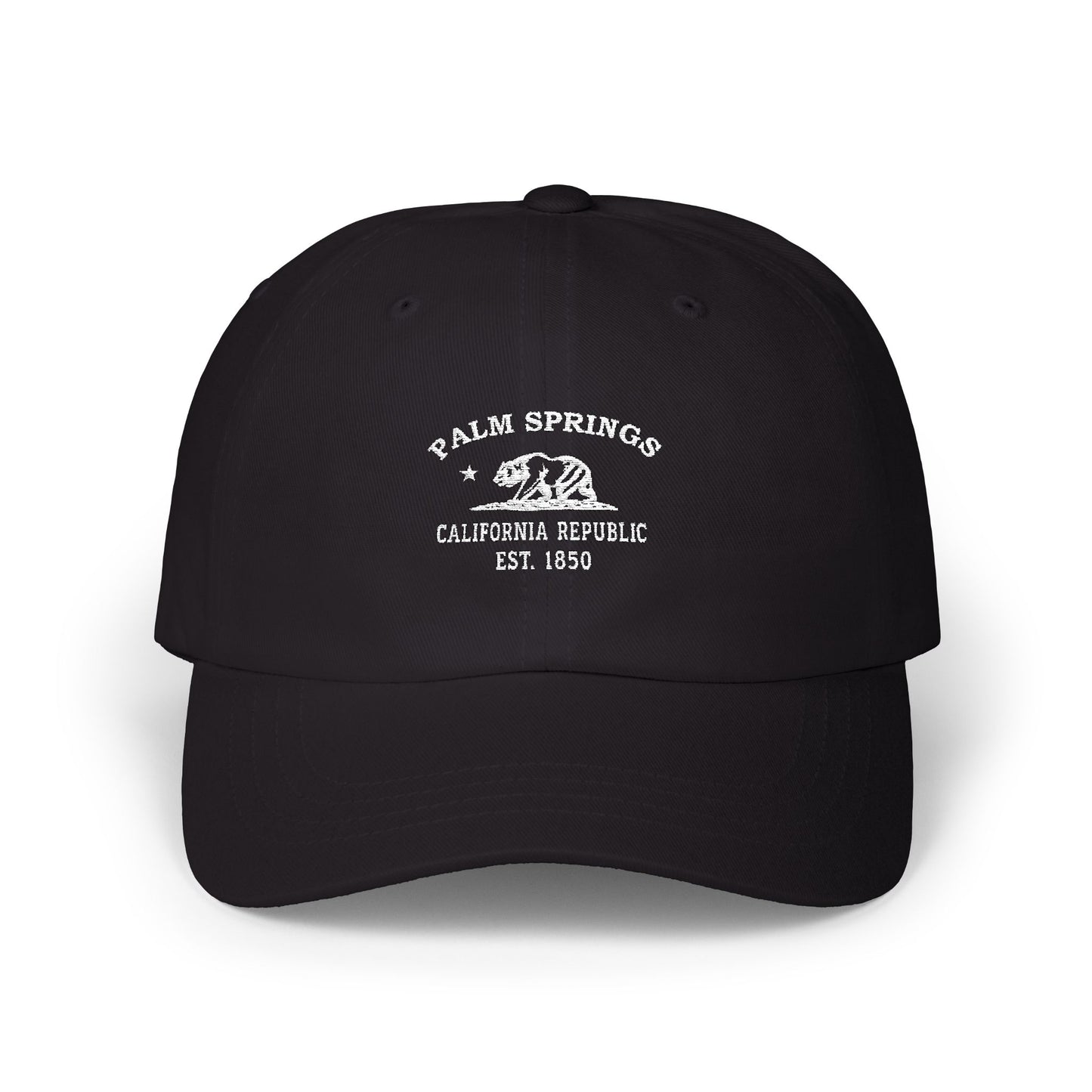
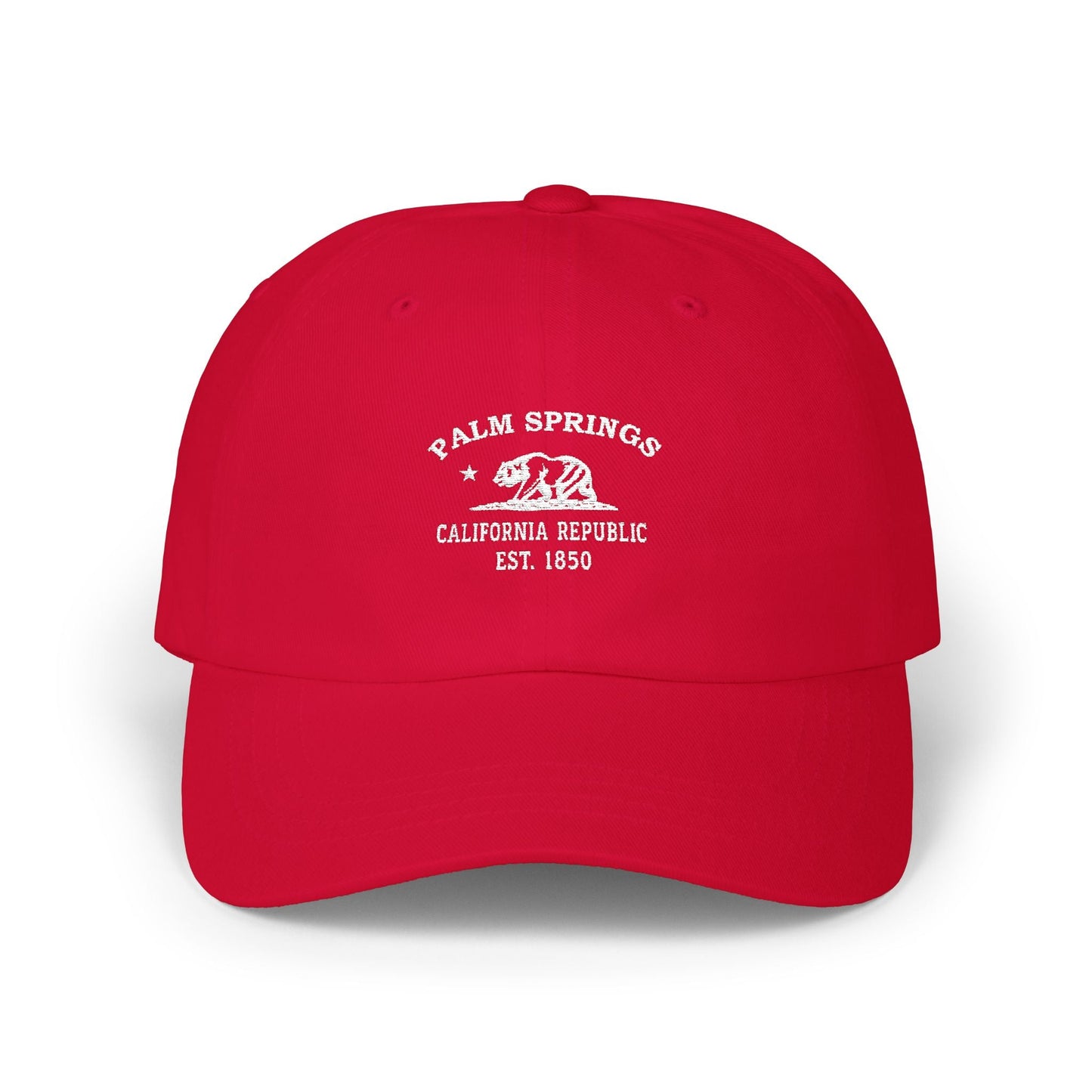
Today Palm Springs is a thriving desert resort city, proud of its mid-century modern heritage, its tramway and palm-canyon oases, and the Coachella Valley sun that draws a design-loving world back every winter. Its story runs from the Cahuilla hot springs through McCallum's 1884 adobe, the 1938 incorporation, the postwar Desert Modernism boom, and the 1963 tram into the mountains. Our Palm Springs designs gather that identity into wearable form — the desert, the design, the oasis. Palm Springs, California — mid-century modern at the foot of the mountain.
Two hours from the Hollywood studios, Palm Springs became a movie-colony retreat in the 1920s and '30s, and after the war it turned into something the world had never quite seen: the capital of mid-century modern design. Through the 1940s, '50s, and '60s, architects filled the desert with glass-walled houses, folded-plate roofs, and breeze-block screens — the style now called Desert Modernism, and still the densest concentration of preserved mid-century modern architecture in the country. In 1963 the Palm Springs Aerial Tramway opened, climbing the sheer cliffs of Chino Canyon to Mount San Jacinto State Park; rebuilt with rotating cars in 2000, it remains the world's largest rotating tramcar. Each February, Modernism Week — founded in 2006 — brings a global design crowd back to the butterfly roofs.
Why People Visit Palm Springs California
People come to Palm Springs for the sun, the mid-century modern design, and the rare pairing of desert and mountain — palm oases on the valley floor, snow-dusted pines a tram ride above. It is bright, stylish, and walkable: the desert's design capital at the foot of Mount San Jacinto.
