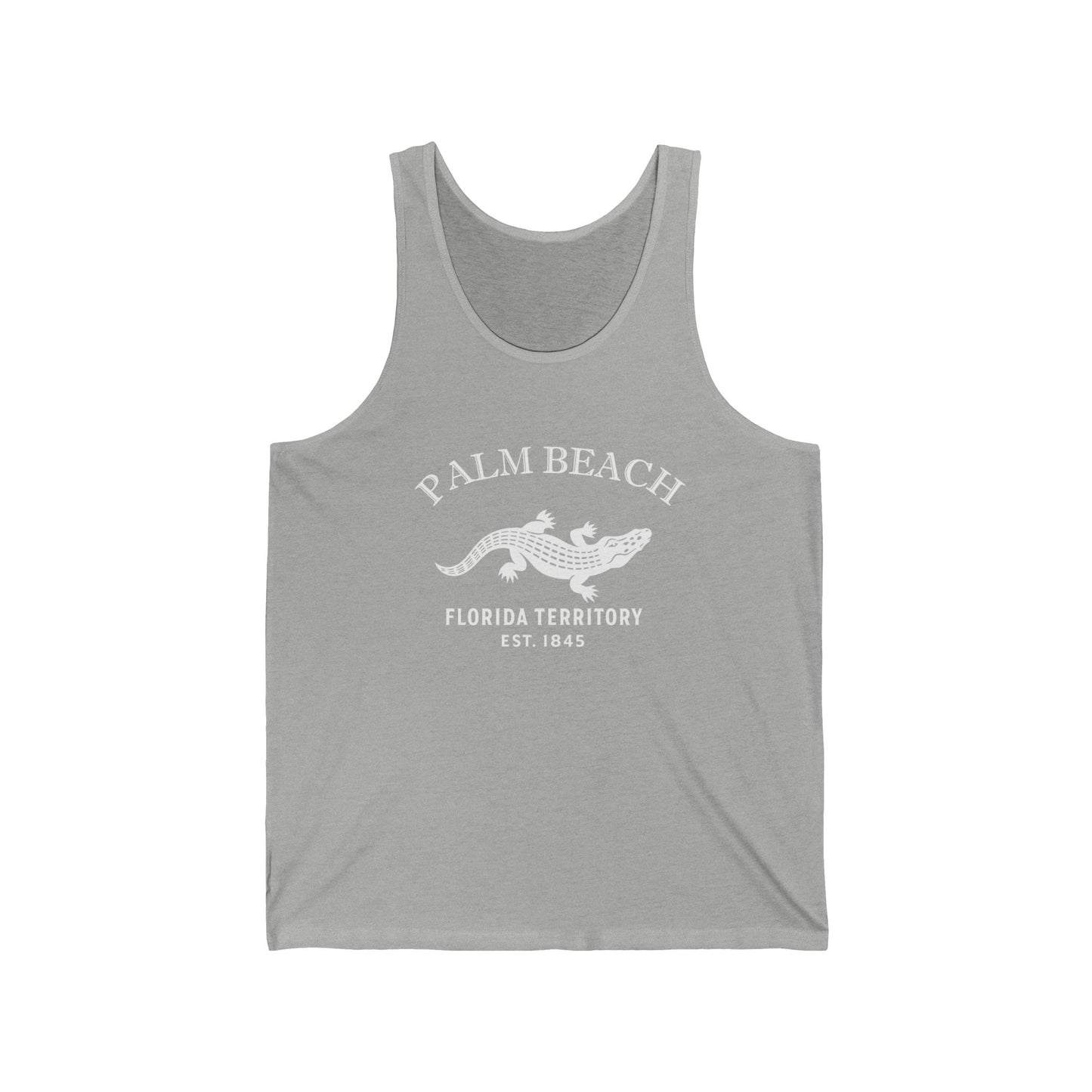
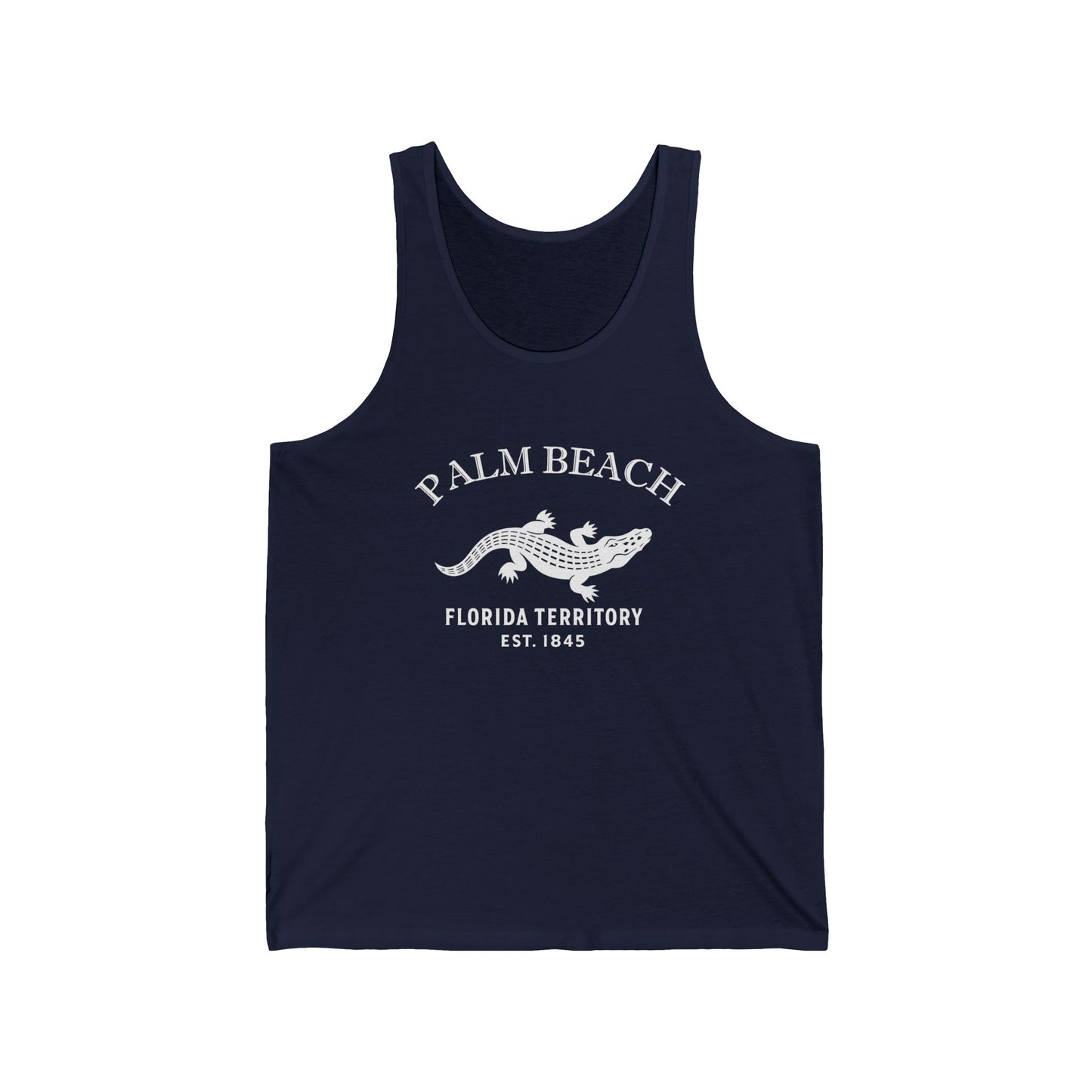
Our Palm Beach logo carries Florida's alligator above ‘Florida — Est. 1845,’ the shared retro emblem of our Florida towns. The alligator is the state's wild signature and 1845 marks Florida statehood; the emblem is the through-line that links Palm Beach to every other Florida town we make. There is a pleasing contrast in it here — the untamed Florida gator stamped over an island built on imported palms and imported elegance, rendered in the black-and-white of an old crate label. What makes this one Palm Beach is the Gilded Age glamour behind the gator: red-tile roofs, ocean light, and a hundred winters of the season.
Grand hotels are fragile things, and Palm Beach's were no exception. The Breakers burned and was rebuilt more than once; the present Italian-Renaissance hotel, with its twin belvedere towers, opened in 1926 and still anchors the oceanfront. The original Royal Poinciana — by then aging and outsized — came down in the 1930s, its lumber carried off to build homes. Through it all the island held its character: a narrow strip of sand between the lagoon and the Atlantic that had decided, early and permanently, to be beautiful.
Why People Visit Palm Beach
Palm Beach offers refined culture beside an easy ocean shoreline. Visitors pair the Flagler and Mizner heritage with museum galleries, gardens, and a quiet bike path along the water. It is polished, historic, and relaxed in pace, with year-round appeal in its parks, paths, and public spaces. The vintage Gilded Age glamour is evergreen, drawing architecture lovers and vintage-resort enthusiasts from well beyond the small island, and history and everyday island life sit side by side here in a welcoming way.
